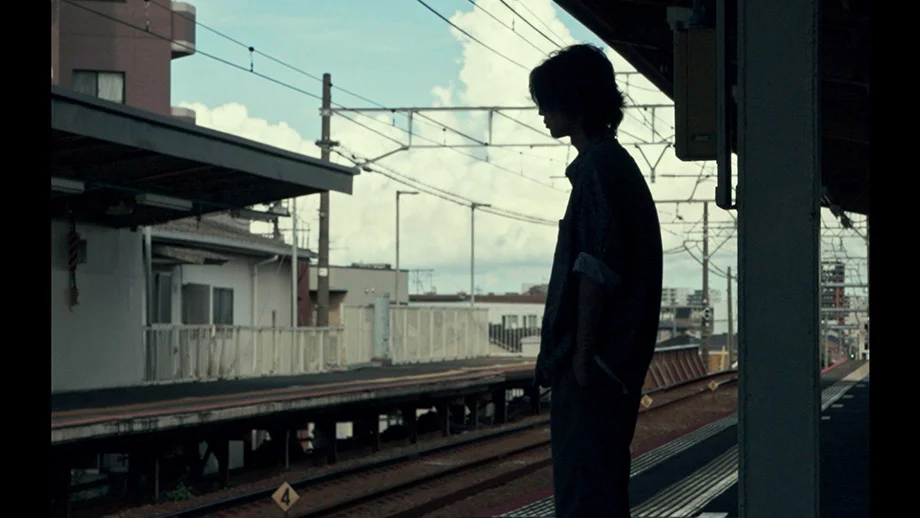
"Four in Love," a compelling new comic collection by Taiwanese artist Crystal Kung, offers an introspective and visually distinctive exploration of romance, personal growth, and emotional resilience. This unique graphic novel stands apart in the contemporary comic landscape, blending a deeply personal narrative with a sophisticated Western-influenced visual aesthetic. Kung, an alumna of Shih Chien University’s Department of Communications Design and a former artist at Pixar Animation Studios, brings a wealth of experience and a fresh perspective to her debut collection, which delves into the often-challenging journey of self-expression, emotional recovery, and the arduous process of learning to love again.
Artist Profile: A Fusion of East and West in Creative Pedigree
Crystal Kung’s artistic trajectory is marked by an early immersion in digital creation and a unique blend of cultural and professional influences. Her journey into the world of digital art began at the formative age of 16, a period that coincided with the burgeoning accessibility of digital tools for illustration and design. This early adoption allowed her to cultivate a versatile skill set and a distinctive visual language that consciously diverges from the prevalent Japanese and Korean comic styles that often dominate the Taiwanese market. Instead, Kung’s work exhibits a pronounced Western visual approach, characterized by a different emphasis on line work, color palettes, and narrative structure, often reminiscent of European graphic novels or independent American animation.
Her academic foundation at Shih Chien University’s Department of Communications Design provided a rigorous theoretical and practical grounding in visual communication. Shih Chien University is renowned in Taiwan for its design programs, fostering creativity and innovation across various disciplines, from industrial design to visual communications. The curriculum typically emphasizes conceptual thinking, design principles, and proficiency in modern design software, preparing graduates for diverse roles in the creative industries. It is within this environment that Kung refined her artistic voice, developing a keen understanding of how visual elements can convey complex emotions and narratives without explicit text.
Following her university studies, Kung’s career path led her to the esteemed Pixar Animation Studios, a globally recognized leader in computer-animated films. Working at Pixar—a studio celebrated for its groundbreaking animation, innovative storytelling, and character-driven narratives—undoubtedly provided Kung with invaluable insights into visual storytelling, character development, and the intricate process of bringing emotionally resonant stories to life through imagery. While specific projects she contributed to are not detailed, the experience at such a high-caliber studio would have exposed her to best practices in visual development, storyboarding, and the collaborative nature of large-scale creative endeavors. This background is pivotal to "Four in Love," as it underpins her ability to craft sophisticated visual narratives that transcend cultural boundaries and engage readers on a deeply emotional level.
Thematic Core: Navigating the Labyrinth of Modern Love
"Four in Love" is not merely a collection of romantic tales; it is a raw and honest portrayal of the contemporary human experience with love, filtered through Kung’s personal lens. The book directly draws from her own encounters with disappointment, the complexities of modern dating, the introspective journey of therapy, and the pervasive shadow of self-doubt. In a departure from idealized or saccharine depictions of romance, Kung presents love as an inherently painful, uncertain, and frequently confusing aspect of modern life. This realistic approach resonates deeply in an era where relationships are increasingly shaped by digital interactions, shifting societal expectations, and a heightened awareness of mental health.
A striking feature of the collection is its complete reliance on visual storytelling. The narratives unfold exclusively through images, devoid of any text or dialogue. This bold artistic choice elevates the artwork to the primary mode of communication, demanding a deeper engagement from the reader and allowing for multiple interpretations. The absence of spoken or written words forces the audience to decode emotions, intentions, and plot developments solely through facial expressions, body language, environmental details, and the intricate interplay of colors and composition. This technique not only showcases Kung’s mastery of visual narrative but also creates an intimate, almost meditative reading experience, where silence amplifies the emotional weight of each panel. It draws parallels to silent film or classical ballet, where meaning is conveyed through movement, gesture, and visual metaphor.
A Journey Through Four Distinct Chapters
The collection is structured into four distinct chapters, each exploring a different facet of love and human connection, culminating in a concluding segment that ties back to the initial narrative.
1. "Red String": The Elusive Nature of Fate and Patience
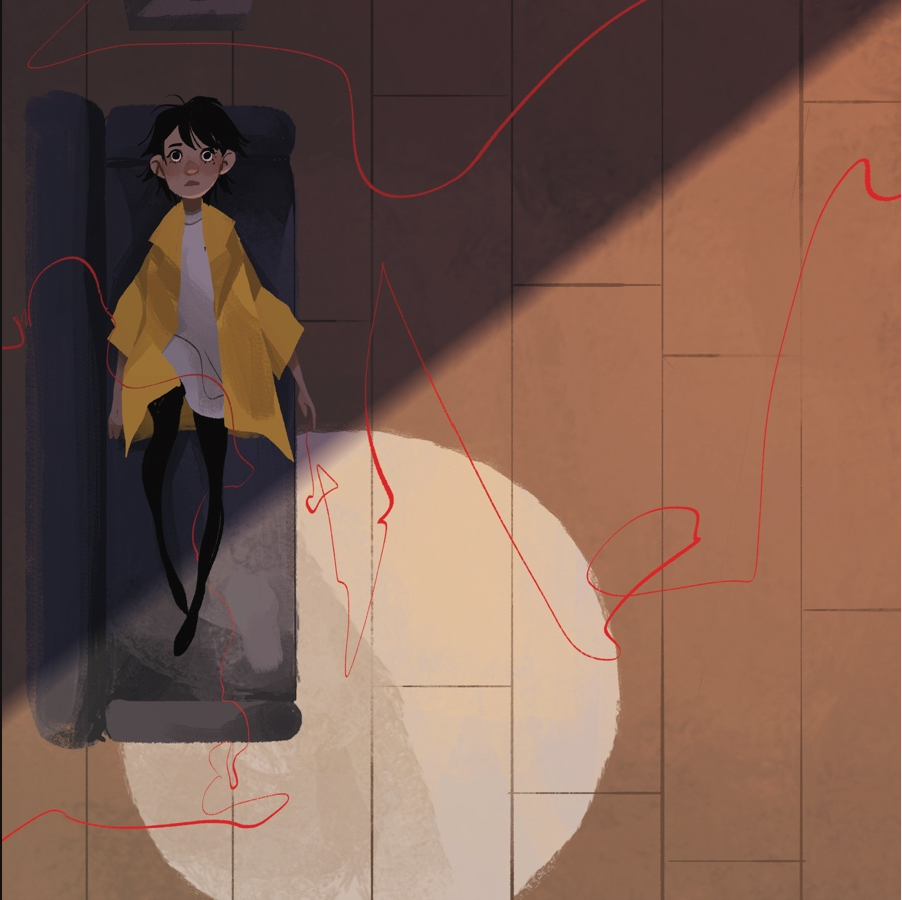
The first chapter, "Red String," immediately immerses the reader in a visually captivating narrative rooted in East Asian folklore. The concept of the "red string of fate" (or "red thread of destiny") is a widely recognized belief originating from Chinese mythology and prevalent in Japanese and Korean cultures. It posits that an invisible red thread connects individuals who are destined to meet and become lovers, regardless of time, place, or circumstances. Kung masterfully reinterprets this ancient myth.
In her rendition, a young woman discovers herself inexplicably entangled with a vibrant red string. Compelled by an unseen force, she embarks on a journey, diligently following the thread’s winding path. This pursuit leads her to the precipice of a vast canyon, a symbolic representation of a profound emotional or existential void. There, she finds the thread’s abrupt end, detached from any visible connection, signifying a moment of profound disappointment or a perceived dead end in her quest for love. Following a stark black page break, the narrative shifts, revealing a man who discovers the other end of the same thread, gazing in the direction the girl had previously taken.
This chapter brilliantly explores themes of destiny, perseverance, and the often-misaligned timing of human connections. The passing train, aboard which a couple explicitly highlights the significance of the red thread, serves as an external commentary, reinforcing the cultural weight of the symbol. Kung’s narrative implicitly suggests that the search for love often involves moments of frustration and apparent futility. The eventual discovery of the other end by the man, looking in the direction the girl was, speaks volumes about missed connections and the critical role of patience. It poses a question: does love require active pursuit, or is it about waiting for the destined moment, or perhaps both? The playful art style, with its large panels and intense pastel colors, enhances the whimsical yet poignant nature of this search, with the red thread acting as a constant visual anchor, weaving through every frame.
2. "Trade": The Cost of Transactional Affection and the Glimmer of Hope
The second chapter, "Trade," ventures into a darker, more introspective territory, focusing on a sex worker’s poignant search for genuine affection amidst a life defined by transactional encounters. The protagonist finds solace and the idealized version of love only through the mediated reality of television programs, while her own life is characterized by the stark reality of sex without intimacy. As her existence becomes increasingly enveloped in a metaphorical darkness of desperation and loneliness, a literal window of light appears, offering a fragile yet potent symbol of hope.
Kung utilizes the concept of prostitution as a powerful metaphor to illustrate the stark contrast between the ease of physical connection and the profound difficulty of achieving true emotional intimacy. This narrative echoes the pervasive theme of loneliness in modern society, where superficial connections can abound while deep, meaningful bonds remain elusive. The chapter’s progression from overwhelming darkness to a sudden burst of light is a classic yet effective visual device, transforming the story into one of cautious optimism. The precise origins of this hope are intentionally ambiguous, allowing readers to project their own interpretations—whether it stems from an internal shift, an external intervention, or simply the enduring human capacity for resilience.
Artistically, "Trade" employs a more intricate style. The neon lights of the urban environment are rendered with striking detail, indicating the superficial allure and underlying melancholy of the protagonist’s world. The visual motif of the protagonist changing clothes, dressing and undressing, eloquently underscores the performative and transient nature of her interactions, highlighting the separation between her public persona and her private yearning. The strategic use of dark backgrounds for the majority of the story intensifies the impact of the few, brightly lit panels, making these moments of hope even more resonant and visually powerful.
3. "Screen": Digital Connections and the Ambiguity of Modern Happiness
"Screen," the third chapter, addresses one of the most defining characteristics of contemporary romance: the rise of internet culture and dating applications. It centers on a man seemingly consumed by his online world, who eventually seeks and finds a connection through a dating app. Kung deliberately leaves the resolution ambiguous, questioning whether the depicted date actually materializes in the physical world or if the protagonist finds sufficient contentment in the mere online possibility of one.
Crucially, Kung’s approach is non-judgmental. She refrains from casting moral aspersions on the protagonist’s reliance on digital connections. Instead, she explores the nuanced reality that happiness, however ephemeral or unconventional, can indeed stem from such virtual concepts. This perspective challenges societal norms that often view online relationships with skepticism or pity, acknowledging that for some, the digital realm offers a legitimate pathway to connection, albeit one that might appear melancholic or even sad to an external observer. It reflects a broader societal shift where the boundaries between virtual and real-world interactions are increasingly blurred.
The chapter’s art style harmoniously blends elements from the previous two stories, oscillating between moments of profound darkness and intense light. This visual dynamic mirrors the protagonist’s internal state and the fluctuating nature of online interactions—from the isolating glow of a screen in a dark room to the hopeful brightness of a potential connection. The character design, consistent with the collection’s overall aesthetic, maintains a playful and accessible style, making the relatable human emotions at the core of the digital experience universally understandable.
4. "Brave": Love, Prejudice, and the Quest for Acceptance
The fourth and longest chapter, "Brave," tackles the vital theme of LGBTQ+ love, focusing on the relationship between two gay men. Their journey begins with reluctance, navigating societal pressures and internal fears before gradually finding comfort and commitment in each other’s company. The narrative powerfully illustrates the challenges faced by same-sex couples, particularly the societal expectation to conceal their relationship, which inevitably creates significant strain.
The core of this chapter lies in their arduous quest to find the courage to openly express their love. When they finally do, the reactions from the world are not what they anticipated. Kung unflinchingly depicts instances of prejudice, even from children, highlighting the pervasive nature of societal biases. This initial wave of anger and disappointment is palpable. However, in keeping with the collection’s underlying optimism, "Brave" ultimately steers towards a happy ending, emphasizing the resilience of love and the eventual triumph of acceptance, even if hard-won. This story serves as a powerful commentary on the ongoing struggle for LGBTQ+ rights and visibility, and the enduring strength required to live authentically.
The artistic style in "Brave" mirrors that of the preceding chapters, using the stark contrast between darkness and light to convey emotional states. Darker hues are reserved for moments of negativity, fear, and societal rejection, while vibrant light floods panels depicting love, courage, and acceptance. This visual language effectively guides the reader through the emotional peaks and valleys of the narrative. The final chapter of the book then gracefully loops back to the original "Red String" narrative, providing a definitive and satisfying conclusion that reinforces the interconnectedness of all the stories and the overarching themes of love and destiny.
Artistic Vision and Production Excellence
A pervading sense of melancholy subtly permeates all four stories in "Four in Love," a feeling enhanced by the distinctive character design. The figures often possess a gentle, almost wistful quality that invites empathy. Yet, this melancholic undertone is consistently balanced by the chapters’ endings, which radiate a palpable optimism. This dual emotional landscape suggests that the universal human experiences—the profound need to be loved, the inherent fear of choosing the wrong partner, the isolating alienation of digital dating, the stinging wounds inflicted by rejection and prejudice, and the paramount importance of finding courage after emotional trauma—are not insurmountable obstacles but challenges that can ultimately be overcome through perseverance and self-discovery.
The physical edition of "Four in Love" is as impressive as its narrative and artistic content, elevating it beyond a typical comic book. Printed on high-quality glossy paper, the collection boasts a square format with a hardcover binding and an 8"x8" trim size. These meticulous production choices are crucial, as they allow Kung’s expansive and often single-image panels to truly command attention and highlight the intricate details of her artwork. The overall quality leans closer to that of a fine art book than a conventional manga or graphic novel, particularly due to the deliberate absence of cluttered panels. This emphasis on spaciousness and clarity underscores the artistic intent, allowing each visual moment to breathe and convey its full emotional weight. Both the compelling narratives and the sophisticated manner in which they are communicated through Kung’s distinctive art style achieve a remarkably high standard.
Broader Implications and Critical Acclaim
"Four in Love" represents a significant contribution to the evolving landscape of Taiwanese comic art. By consciously moving away from the dominant Japanese and Korean aesthetic trends, Crystal Kung establishes a unique voice that broadens the stylistic spectrum of the region’s creative output. This distinctiveness positions her work not only as a refreshing addition to the local scene but also as a compelling offering to the global graphic novel market, showcasing an Asian artist whose training and influences span Eastern and Western traditions.
The book’s exploration of universal themes—love, identity, mental health, and societal acceptance—ensures its resonance with a diverse international audience. Its text-less narrative, while a bold artistic choice, also makes it accessible across language barriers, allowing the power of its visual storytelling to speak directly to readers worldwide. "Four in Love" has the potential to spark important conversations around modern relationships, the impact of digital culture, and the ongoing struggles for inclusion and understanding. Its nuanced portrayal of complex emotions, coupled with its ultimately optimistic outlook, offers both solace and food for thought.
In conclusion, "Four in Love" is an excellent and thought-provoking work. Its messages are not explicitly stated but are instead woven into the fabric of its visual narratives, inviting readers to engage actively in interpretation and reflection. This capacity for multiple readings, combined with its high artistic and production quality, cements "Four in Love" as a remarkable and enduring piece of contemporary graphic storytelling, offering a poignant and visually stunning meditation on the human heart’s enduring quest for connection and self-acceptance.