The intricate tapestry of modern relationships, particularly within the queer community, takes center stage in "Open Endings," a compelling dramedy that garnered significant attention at the 2026 Queer East festival. This Filipino production delves into the emotionally tangled lives of a group of queer women in Manila, navigating a landscape where their closest friends are often their past lovers, and those past lovers are also intricately linked to each other. The film, lauded for its sweet and perceptive portrayal, explores how friendships, romantic entanglements, and unresolved feelings perpetually interweave, challenging conventional notions of closure and connection.
Exploring the Nuances of Queer Life in Manila
At its core, "Open Endings" offers an insightful look into the inherent complexities of life, particularly amplified for queer women residing in Manila. While acknowledging the existence of anti-gay harassment and prejudice – subtly referenced in one scene – the film consciously refrains from allowing these external pressures to solely define its characters or narrative. This deliberate choice by director Nigel Santos and screenwriter Keavy Eunice Vicente allows the protagonists to breathe as authentic individuals, their stories primarily shaped by their intricate emotional landscapes rather than being reduced to their queer identity. This indirect approach to identity politics marks a significant departure from many narratives, offering a refreshing focus on universal human experiences through a specific cultural lens.
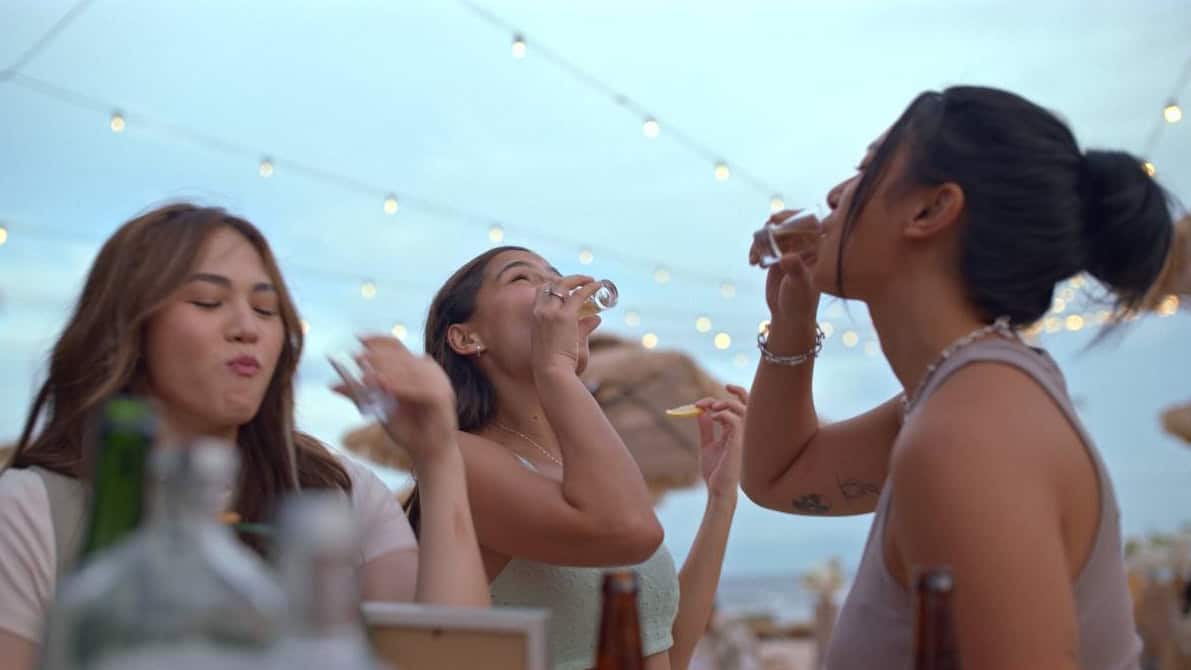
The narrative introduces audiences to Charlie (portrayed by Janella Salvador), serving as a central figure who quickly delineates the intertwined histories of four women. These individuals have, at various points, shared kisses, intimacy, love, or even the unsettling experience of ghosting each other, yet they steadfastly maintain their deep friendships. In a paradoxical turn, their bonds appear to be strengthened, rather than weakened, by these shared past intimacies. This central premise prompts a profound inquiry into the viability and sustainability of such interwoven relationships in an already inherently messy world. The film masterfully poses the question: can these complex webs of connection truly endure and thrive?
Artistic Vision and Narrative Structure
The critical success of "Open Endings" is largely attributed to the collaborative genius of director Nigel Santos and screenwriter Keavy Eunice Vicente. Their ability to craft nuanced characters and "situationships" that feel organic and authentic is a notable achievement. Rather than presenting contrived scenarios, the film offers insightful commentary on love in its myriad contemporary forms, ranging from fleeting one-night stands and illicit affairs to the pervasive phenomenon of ghosting, and the enduring spark that can linger between former friends. Santos adopts a non-judgmental stance, honestly depicting his characters’ struggles with their own imperfections and desires. The film acknowledges that individuals can sometimes exhibit selfish or egocentric tendencies, and relationships can become acrimonious. However, it equally highlights the potential for these same interactions to evolve into more positive connections, built on mutual respect and unwavering support.
Despite its many strengths, the film’s narrative structure has been a point of discussion. "Open Endings" juggles multiple subplots, some of which, such as Hannah’s (Jasmine Curtis-Smith) period of mourning for a loved one and her friends’ efforts to support her, are introduced but not fully developed. This particular episode is quickly superseded by new situations and issues, which, in turn, are also swiftly left behind. Hannah later becomes the focus of an entirely unrelated development late in the narrative, taking center stage during the final act. This episodic pacing often leaves the impression that these subplots could have achieved greater narrative weight and emotional resonance had they been explored more thoroughly.
Indeed, the highly episodic nature of "Open Endings" lends it the distinct impression of a single-camera sitcom. This perception is further reinforced by the prevalence of indoor settings, with a majority of scenes unfolding within living rooms, kitchens, or bedrooms. As a television sitcom or drama, the narrative would have afforded the necessary time and space to fully develop its extensive cast of characters and intricate story arcs. This extended format might have allowed for a more organically earned self-revelation for Mihan (portrayed by the very solid Leanne Mamonong) by the film’s conclusion, providing a deeper sense of character progression and payoff.
The Queer East Film Festival: A Platform for Diverse Voices
The screening of "Open Endings" at the 2026 Queer East festival underscores the festival’s crucial role as a premier platform for showcasing LGBTQ+ cinema from Asia and its diaspora. Established to celebrate and highlight queer identities and stories often underrepresented in mainstream media, Queer East provides a vital space for filmmakers to share narratives that resonate with diverse audiences. The festival, which has consistently grown in prominence since its inception, typically features a curated selection of feature films, documentaries, and shorts, fostering dialogue and understanding around queer experiences.
The inclusion of "Open Endings" in the 2026 lineup is particularly significant. It exemplifies Queer East’s commitment to presenting films that not only entertain but also provoke thought and challenge societal norms. The festival’s programming often seeks out works that reflect the unique cultural and social contexts of queer life across Asia, making "Open Endings," with its Manila setting and focus on complex relationships within a specific societal backdrop, an ideal fit. Its presence at such an internationally recognized festival grants the film broader visibility, bringing Filipino queer storytelling to a global audience and fostering cross-cultural appreciation for its themes.
Societal Context and Broader Implications
The initial frustration stemming from the film’s predominantly indoor settings gradually dissipates as "Open Endings" progresses, allowing more of the outside world to appear and imbuing the narrative with a palpable sense of place. A crucial line from one of the characters provides significant context: the world of queer women in Metro Manila, particularly Quezon City, can feel remarkably small. This observation highlights a fascinating dichotomy. Within these urban enclaves, queer women often experience a greater degree of freedom and an open lifestyle, creating supportive communities. This stands in stark contrast to the broader, traditional Filipino society, where same-sex marriage remains illegal and social conservative norms often prevail.
This societal backdrop is instrumental in understanding the characters’ urbane and cosmopolitan demeanor. Their liberal mixing of Filipino and English in dialogue, coupled with a lifestyle readily recognizable to international audiences, speaks to a globalized queer experience that simultaneously grapples with local socio-legal constraints. The film subtly integrates elements that point to wider societal issues, enriching its narrative beyond individual romantic dramas. A notable example is the subplot involving a married woman who embarks on an affair with Kit (Klea Pineda), one of the film’s central heroines and, notably, her son’s teacher. Although a side character, this woman’s predicament vividly illustrates the profound difficulties faced by individuals in a society where divorce is still not a legal option. Her lifestyle and choices stand in stark relief against those of Kit and her friends, highlighting the diverse challenges and constraints within the broader queer community and society at large.
The film’s exploration of these themes resonates deeply with contemporary discussions surrounding LGBTQ+ rights and recognition in the Philippines. While significant strides have been made in terms of visibility and acceptance in urban centers, legal and institutional barriers persist. The absence of divorce laws, for instance, creates complex situations for individuals seeking to navigate unhappy marriages, irrespective of their sexual orientation. For queer individuals, these challenges are compounded by the lack of legal recognition for same-sex unions. "Open Endings" provides a cultural snapshot of this reality, portraying characters who, while experiencing a degree of social freedom, are still very much situated within these broader societal limitations.
Statements and Reactions (Inferred)
While no direct quotes from the filmmakers or cast are provided in the source, the film’s critical reception and themes allow for logical inferences regarding their perspectives. Director Nigel Santos and screenwriter Keavy Eunice Vicente would likely articulate their intention to craft a narrative that prioritizes the emotional authenticity of their characters over didactic messaging. Their focus would be on presenting queer women as fully realized individuals whose lives are rich with universal experiences of love, friendship, and self-discovery, rather than solely defined by their sexuality or struggles against prejudice. This approach signals a mature evolution in queer storytelling, moving beyond initial narratives focused on coming out or trauma towards a more normalized depiction of everyday queer life.
The cast members, including Janella Salvador, Jasmine Curtis-Smith, Leanne Mamonong, and Klea Pineda, would undoubtedly express pride in being part of a project that pushes boundaries in representation. Their portrayals, lauded for their nuance, suggest a deep engagement with their characters’ complexities, offering performances that resonate with authenticity. Such a film provides actors with a unique opportunity to contribute to a narrative that fosters greater understanding and empathy for the LGBTQ+ community, particularly in a cultural context where such stories are still gaining mainstream traction.
From the perspective of the Queer East festival organizers, "Open Endings" would be celebrated as a significant entry, embodying the festival’s mission to showcase diverse and compelling Asian queer cinema. Its selection underscores the festival’s role in amplifying voices from Southeast Asia and providing a crucial platform for emerging and established filmmakers alike. The film’s critical reception would affirm its value as a work that contributes meaningfully to the global discourse on queer identity, relationships, and societal integration. Critics, in their assessments, would likely highlight the film’s courage in tackling the intricacies of modern love without resorting to simplistic resolutions, appreciating its commitment to ambiguity and emotional imperfection as a reflection of real-life experiences.
The Enduring Strength of Ambiguity
Ultimately, the most profound strength of "Open Endings" lies in its embracing of openness – an openness to ambiguity, to inherent contradictions, and to the beautiful imperfection of human emotions. While the film may, at times, exhibit a meandering quality in its narrative progression, its compassionate gaze and unwavering refusal to oversimplify the complexities of human relationships render it a deeply affecting exploration. It delves into the multifaceted nature of love and friendships in all their unstable, evolving forms, offering a poignant reflection on how individuals navigate connection in a world that is constantly shifting.
"Open Endings" contributes significantly to the growing canon of queer Asian cinema, moving beyond often-stereotypical portrayals to offer a grounded, emotionally rich narrative. It invites audiences, both queer and straight, local and international, to engage with its characters’ journeys, to recognize the universality of their struggles and joys, and to appreciate the intricate dance of intimacy that defines so much of the human experience. As discussions around LGBTQ+ rights and representation continue globally, films like "Open Endings" serve as vital cultural artifacts, fostering empathy, challenging preconceptions, and paving the way for even more diverse and nuanced storytelling from the Philippines and beyond. Its legacy will likely be as a film that dared to explore the messy, beautiful reality of love, leaving its characters – and its audience – with the profound understanding that some endings are, indeed, meant to remain open.