New York City’s Prismatic Ground festival, now in its sixth year, continues to defy predictability, establishing itself as a vital platform for global voices in contemporary avant-garde cinema. Concluding its most recent iteration from April 29 through May 3, the festival, under the visionary leadership of founder and programmer Inney Prakash, has solidified its reputation for a curatorial approach that is both galvanizing and deeply resonant. Prakash articulates his process as akin to "conducting a piece of music or slaloming down a mountain," a metaphor that hints at the intricate balance of precision and fluid responsiveness required to navigate the diverse and often challenging landscape of experimental film. This philosophy underpins a program deliberately structured across four distinct waves, allowing viewers the intellectual space to forge their own connections and parse the intricate threads woven between the selected works. In a period marked by profound shifts in the democratizing power of the moving image, Prismatic Ground offers an experience that remains surprising, generative, and fundamentally grounding.
The Genesis and Evolution of Prismatic Ground
Since its inception, Prismatic Ground has carved a unique niche within the bustling New York film scene, distinguishing itself by its unwavering commitment to showcasing experimental and avant-garde cinema from around the globe. While many festivals lean towards narrative features or documentaries with mainstream appeal, Prakash’s vision has consistently prioritized films that push formal boundaries, challenge conventional storytelling, and engage with complex socio-political themes through innovative aesthetic means. The festival’s growth over six years reflects a burgeoning appetite among audiences and critics for cinema that operates outside commercial imperatives, emphasizing artistic integrity and intellectual provocation. This sustained interest underscores a broader cultural moment where traditional cinematic forms are being re-evaluated, and new modes of expression are gaining prominence, particularly those that interrogate media itself.
Prakash’s programming is not merely a collection of disparate films but a carefully orchestrated dialogue between diverse artistic practices, geographical perspectives, and historical contexts. By inviting viewers to "parse threads and connections," he fosters an active engagement that transcends passive consumption, transforming the festival into an educational and profoundly reflective experience. This emphasis on discovery and critical thinking positions Prismatic Ground not just as an exhibition space, but as a crucible for emerging ideas and a vital archive for overlooked or rediscovered masterpieces of experimental cinema.
Feature Debuts: Intimacy, Identity, and Cinematic Innovation
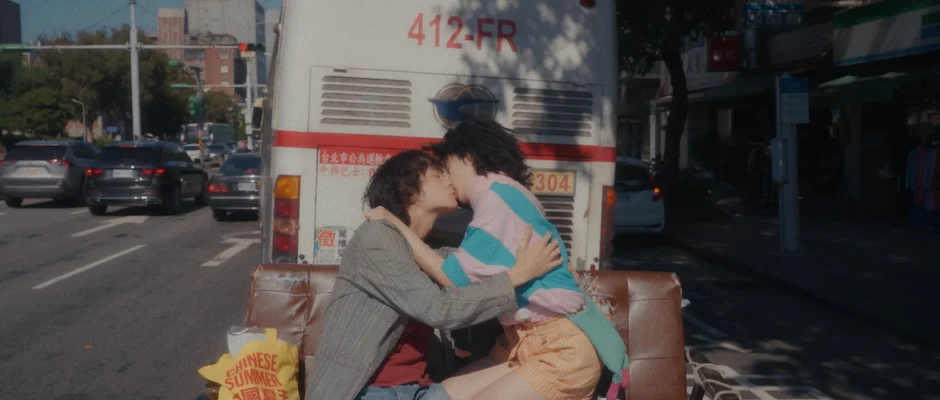
The 2026 edition of Prismatic Ground commenced with a buoyant and audacious flourish, presenting Hong Kong filmmaker Wong Ka Ki’s feature debut, I Heard That They Are Not Going to See Each Other Anymore. Building upon the metatextual whimsy evident in her earlier short films, including A Shrimp’s Daily Rehearsal—which also featured in this year’s festival—Wong’s inaugural feature delves into the intricate travails of two interwoven pairs of lovers. One narrative thread follows Tao, a filmmaker whose tumultuous relationship with her boyfriend, Shin, is meticulously documented, blurring the lines between spontaneous reality and deliberate recreation through copious amounts of footage. Parallel to this, the film introduces Mehli, a Turkish vendor whose persistent melancholia draws him into an unexpected kinship with Ping, a kindred spirit.
Wong Ka Ki’s directorial methodology, characterized by a significant degree of improvisation during production, imbues I Heard That They Are Not Going to See Each Other Anymore with a fluid, almost elusive quality. This improvisational spirit allows for moments of both iterative development and wayward momentum, mirroring the unpredictable nature of human relationships. At its most compelling, the film skillfully blends the generic signatures of neorealism, the expressive physicality of silent comedy, and the contemplative introspection of the essay film. The result is an unapologetically distinct meditation on the moving image’s profound capacity to transfigure and represent themes of intimacy and pain.
However, the film’s flashes of poignant reflexivity occasionally contend with digressions that, while perhaps intended to enrich, can feel more like affectations than organic developments of its central themes. For instance, the cosmopolitan backdrop of Taipei, while visually arresting, is granted only a rudimentary corollary with Mehli’s exilic identity, missing an opportunity for deeper thematic integration. Despite these stylistic meanderings, the lasting impression is one of a filmmaker possessing immense confidence in her creative process, yielding significant promise for her future features and signaling Wong Ka Ki as a compelling new voice in global cinema.
Another significant feature debut showcased at the festival was Isabelle Kalandar’s Another Birth. While perhaps positioned within the more conventional selections of the program, this does not diminish the film’s ambitious thematic scope. Set against the rugged, often ethereal landscapes of a small village in Tajikistan, the film centers on Parastu (portrayed by Shukrona Navruzbekova), a young girl convinced that her grandfather’s deteriorating health stems from a broken heart, caused by the absence of his estranged son. Parastu embarks on a determined quest to save her grandfather, a journey that subtly yet profoundly shifts its focus, eventually leading her towards locating the very father who inflicted heartbreak upon her own mother, played by Kalandar herself.
Another Birth is rich with cultural and literary allusions, freely interspersing the evocative poetry of Forough Farrokhzad—a seminal figure in modern Iranian poetry—alongside references to the mythic figure of Pari, a benevolent winged spirit from Persian folklore. This deliberate interweaving serves to privilege a decidedly feminist historiography, one that bravely confronts the emotional violence and profound ripple effects of absent men on the lives of girls and women. What elevates Kalandar’s work above mere miserablism is her exceptionally keen eye for an earthy poeticism, strategically situating her characters within and against the elemental forces of the land. This approach transforms the natural environment into a character in itself, grounding her narratives in a unique strain of terrestrial verses. Another Birth, the second installment in a planned trilogy, meticulously navigates a skein of tragedy that culminates in a tantalizingly ambiguous denouement, allowing its magical realist gambit to unfold into quietly moving and deeply resonant conclusions.
Reclaiming Narratives: Historical Context and the Orientalist Gaze
A beguiling quality of Prismatic Ground’s repertory slate is its ability to present rediscovered films that function simultaneously as historical time capsules and prescient gestures towards alternative futures. A prime example of this curatorial brilliance is the trilogy of shorts by Iraqi-Lebanese-American filmmaker Parine Jaddo. Produced between the aftermath of the First Gulf War and the months leading up to the second, these films are profoundly nested within their historical context, yet they transcend simple documentation by offering counter-hegemonic narratives that critically examine women’s images within and beyond an Orientalist gaze.
Thirst (1995), the inaugural film in the trilogy, meticulously observes a woman as she reads Mohammed Mrabet’s short story “The Big Mirror.” Jaddo deftly contrasts the tale’s illicit sensationalism with quotidian glimpses of life in post-war Lebanon, highlighting the disjunction between exoticized narratives and the lived realities of a region grappling with conflict and recovery. The film subtly critiques how narratives, even those from within the culture, can perpetuate certain perceptions.
The trilogy then shifts geographical focus with Surviving (1998), moving to the United States. This change of setting deepens the films’ interrogation of subjectivity, as a young woman embarks on a pseudo-documentary project about her cousin and the American men who have fetishized her. Surviving directly confronts the insidious nature of the Orientalist gaze, exposing how cultural stereotypes and power dynamics influence perception and identity, particularly for women navigating dual cultural identities. This film was particularly poignant given the geopolitical tensions of the late 1990s, where perceptions of the Middle East were often shaped by Western media.

The final installment, Astray (produced in 2002 but screened for the first time at Prismatic Ground), narrows the trilogy’s focus to claustrophobic and intensely personal ends. Following the seismic events of the September 11 attacks, a woman grapples with profound questions of belonging and identity in a world suddenly redefined by fear and xenophobia. It is in the closing passages of this powerful final film that Jaddo articulates her enduring position as an artist: “I may get lost in this world, but I refuse to lose myself there.” This statement serves as a potent summary of her artistic ethos, one of resilience, self-preservation, and a refusal to be defined by external, often hostile, forces. Jaddo’s trilogy, collectively, offers a crucial historical document and a timeless exploration of identity, representation, and the enduring impact of geopolitical events on individual lives.
Picking up the thread of Orientalist othering and the broader implications of violence in media, Kevin B. Lee’s Afterlives offers a timely and formally inventive exploration. Utilizing his signature desktop documentary format, Lee constructs a compelling narrative by hopscotching across various interviews with scholars and archivists. Their responses primarily concern the deliberate destruction of cultural artifacts by ISIS, a campaign of iconoclasm that sought to erase history and terrorize populations. However, Lee’s interests extend beyond a simplistic binary between reconstruction and annihilation. He delves more broadly into the complex cycles of sectarian violence, posing the fundamental question of whether a cycle of exploitation—both of images and of people—can ever truly be broken.
Lee’s film is remarkably striking in its deft employment of multiple onscreen images, each contending with the immense psychic and sociopolitical weight of violent media in constant circulation. In one memorable instance, behind a specialist reviewing harrowing ISIS execution videos, a poster featuring the recognizable visage of Werner Herzog is visible. This subtle visual cue is deliberate, as Lee indeed channels a Herzogian clinicism in his detached, analytical observation, yet without sacrificing his own deeply personal positionality as a consumer and interpreter of these brutal images. The resulting film is a formally dexterous and resolutely humane riposte to the atomization of our species, particularly in an era increasingly defined by our own digitized creations and the fragmented ways we interact with them. Afterlives stands as a critical commentary on the ethics of viewing, archiving, and disseminating images of violence in the digital age.
The Medium’s Reckoning: Cinema in a Fractured World
If the mournful yet quietly hopeful fervor of Kevin B. Lee’s Afterlives offers a glimmer of redemption for digital media, Isiah Medina’s Gangsterism barrels headfirst into that existential angst with a furious elasticity unmatched by anything else at Prismatic Ground this year. This film, which can be described as a film about filmmaking, is constructed from fragmented conversations between a Canadian-Filipino filmmaker, Mark Bacolcol, and his crew. Their discussions span a vast intellectual landscape, encompassing economics, colonialism, and the very nature of criticism itself. Medina’s recognizable and distinct style, characterized by a mathematically-inflected array of rapid cuts, is simultaneously exhilarating and exasperating. This deliberate aesthetic choice gestures towards both the immense, untapped possibilities of cinema as a medium and the overwhelming dearth of meaningful information that often inundates our synaptic processes in the contemporary era.
Comparisons to seminal works such as Jean-Luc Godard’s La Chinoise and the structuralist films of Hollis Frampton are entirely warranted when discussing Gangsterism. Medina engages deeply with these cinematic forebears, yet he runs the risk of stitching his citations together like the familiar patchwork of a quilt, potentially diluting his unique voice. However, what ultimately saves Gangsterism—or rather, what transforms it into such an oddly vivifying watch—is its fierce and unyielding conviction in the enduring relevance of the medium in this fraught moment.
The film is neither romantic nor despairing in its outlook. Instead, it offers a trial by fire, a cinematic crucible that is quite literally actualized in its final moments. Gangsterism cheekily concludes on a title card that simply reads “Intermission.” This pause, Medina seems to suggest, is not merely a break in the narrative but a profoundly needed moment for collective reflection. It is an invitation for viewers to take stock of how the redemption of our vocation as filmmakers and engaged citizens is inextricably linked to salvaging the best qualities of a dying empire—an empire of ideas, of systems, and perhaps even of conventional cinematic structures. The film’s provocative ending leaves audiences pondering the future of art, society, and the very act of seeing in a world undergoing radical transformation.
Broader Implications and the Future of Avant-Garde Cinema
The Prismatic Ground festival, through its thoughtful curation and the impactful films it presents, offers significant insights into the broader implications for contemporary cinema and the enduring role of avant-garde art. In an era dominated by algorithmic content, franchise blockbusters, and an unprecedented deluge of digital media, the festival serves as a crucial counter-narrative, championing cinematic expressions that prioritize artistic exploration over commercial viability.
The themes explored in the 2026 program—from the intimate complexities of relationships in Wong Ka Ki’s debut to the geopolitical traumas and identity struggles in Jaddo’s trilogy and Lee’s desktop documentary, and finally to Medina’s searing critique of filmmaking itself—collectively underscore the power of cinema to engage with the most pressing issues of our time. Prismatic Ground demonstrates that experimental film is not merely an academic exercise but a vibrant, evolving art form capable of offering profound social commentary and challenging dominant perspectives.
The festival’s commitment to "foregrounding global voices" is particularly pertinent in a fragmented world. By showcasing filmmakers from Hong Kong, Tajikistan, and those with Iraqi-Lebanese-American and Canadian-Filipino heritage, Prismatic Ground actively contributes to a more inclusive and diverse cinematic landscape. This global perspective not only enriches the artistic dialogue but also fosters a deeper understanding of varied cultural experiences and political realities, effectively countering the often-homogenizing tendencies of mainstream media.
Moreover, Prismatic Ground’s approach to curation, described by Prakash as "surprising, generative, and ultimately grounding," highlights the festival’s role as an intellectual anchor. In a tumultuous moment where the sheer volume of "moving images" can lead to sensory overload and superficial engagement, the festival encourages a slower, more contemplative, and critically engaged viewing experience. This is vital for cultivating media literacy and fostering an audience capable of discerning depth and nuance in complex visual narratives.
The consistent growth and critical acclaim of Prismatic Ground over its six years suggest a robust and enduring interest in experimental cinema. It provides a platform not only for established avant-garde artists but also for emerging talents, nurturing the next generation of filmmakers who dare to challenge conventions. As technology continues to reshape how films are made and consumed, festivals like Prismatic Ground are indispensable for preserving the integrity of cinematic art, fostering innovation, and ensuring that the moving image remains a powerful tool for critical inquiry, emotional resonance, and cultural dialogue in the 21st century. The "Intermission" proposed by Medina’s Gangsterism at the festival’s close is perhaps a metaphor for this broader moment in cinema—a necessary pause to re-evaluate, re-imagine, and recommit to the profound and transformative potential of the medium.