Adapted from a profound work by the acclaimed 20th-century novelist Kim Seung-ok, "Night Journey" (야행) is a significant cinematic artifact from an often-overlooked era of South Korean filmmaking. Shot in 1973, the film’s journey to public exhibition was fraught with the pervasive challenges of censorship under the authoritarian Park Chung-hee regime, leading to a four-year delay before its truncated release in 1977. The version currently available through the Korean Film Archive’s YouTube channel, while more complete than its initial theatrical run, still bears the marks of these historical interventions, a fact the film’s director, Kim Ho-sun, has publicly acknowledged. This pervasive censorship likely contributes to some of the narrative discontinuities observed in the film, although it may not entirely account for every perceived issue.
A Troubled Genesis: Production Amidst Strict Censorship
The production of "Night Journey" in 1973 occurred during a particularly restrictive period in South Korean history. The Park Chung-hee government, which seized power in a 1961 coup, had by the 1970s consolidated its authoritarian grip through the Yushin Constitution of 1972. This period was characterized by severe political repression, economic development prioritized over civil liberties, and strict control over all forms of media and artistic expression. Filmmakers operated under the constant threat of censorship, with committees scrutinizing scripts, dailies, and final cuts for any content deemed politically subversive, morally objectionable, or culturally inappropriate according to government standards.
For "Night Journey," the rejection by the censorship committee in 1973 and its subsequent delayed release in a heavily cut version four years later highlights the intensity of this control. Films tackling complex social issues, psychological dramas, or narratives that subtly critiqued societal norms—especially those touching upon female agency, sexual themes, or the disillusionment of individuals—were particularly vulnerable. The director’s assertion that even the currently accessible version remains censored underscores the profound and lasting impact of these historical conditions on the film’s artistic integrity and narrative flow. This environment forced filmmakers to employ allegorical storytelling, visual metaphors, and fragmented narratives, often making their works challenging for audiences to fully decipher even without official cuts. The struggle for artistic freedom during this era led to a unique cinematic language, born out of necessity and resilience.
Kim Seung-ok’s Literary Foundation: A Deep Dive into Social Realism
The literary foundation of "Night Journey" is rooted in the acclaimed work of Kim Seung-ok, a pivotal figure in 20th-century Korean literature. Born in 1941, Kim Seung-ok emerged in the 1960s as a leading voice of a new generation, often associated with the "Hangul Generation" or "4.19 Generation," writers who came of age after the Korean War and the 1960 student revolution. His distinctive style blended existential angst with a keen observation of societal change, often portraying the alienation, confusion, and moral ambiguities of individuals navigating a rapidly modernizing yet politically stifled South Korea. He was known for his lucid, almost detached prose, which belied the profound psychological depth of his characters.
His novella "Mist" (무진기행, Mujin Gihaeng, 1964), also adapted into a film, shares thematic echoes with "Night Journey," particularly in its exploration of individuals trapped by their pasts and the stifling realities of their present. Kim Seung-ok’s works frequently delved into the psychological landscapes of characters grappling with societal expectations, personal desires, and the lingering scars of historical events like the Korean War and the subsequent military dictatorships. His narratives often featured protagonists who were educated but disillusioned, seeking meaning or escape in a world that offered little solace. For "Night Journey," adapting a work from such a nuanced and critical author meant the film inherently carried a potential for social commentary that would inevitably clash with the censors’ mandate for control and conformity. His literary legacy provided a powerful, if challenging, blueprint for the film’s exploration of identity, trauma, and societal hypocrisy.
Hyeon-joo’s Ordeal: A Microcosm of 1970s Korean Womanhood
The narrative core of "Night Journey" revolves around Hyeon-joo, a woman whose life vividly illustrates the complex pressures faced by women in 1970s Korean society. Despite her beauty and a respectable job at a bank, Hyeon-joo finds herself ensnared in a web of societal expectations and personal trauma. Her secret relationship with Assistant Manager Park, a married man, is a clandestine affair driven by convenience and fear of social repercussions, particularly for Park. This situation immediately highlights the double standards prevalent at the time, where male indiscretion might be tolerated or ignored, while a woman in Hyeon-joo’s position would face severe social condemnation.
Adding to her predicament, Hyeon-joo is the last unmarried woman among her colleagues, a status that subjects her to relentless ridicule and the derogatory label of "Old Maid." This societal stigma against unmarried women was deeply ingrained, reflecting a culture where a woman’s primary value was often tied to marriage and procreation. Her economic independence, rather than liberating her, seems to intensify the scrutiny and pressure. Assistant Manager Park, characterized by his alcoholism and unwillingness to commit, embodies a certain archetype of male immaturity and self-interest prevalent in the film’s world. His relationship with Hyeon-joo appears to be purely transactional, devoid of genuine affection or respect, leaving her in a perpetual state of emotional precarity and fueling her "fits" of frustration.
During one such emotional outburst, and granted a paid vacation, Hyeon-joo retreats to her provincial hometown. This return is not merely a physical journey but a descent into her past, which continues to haunt her. The immediate act of donning her old high school uniform and revisiting childhood haunts with her younger sister signifies a yearning to relive or perhaps rewrite a more innocent past. However, her hometown ultimately reveals itself as the source of deep-seated trauma. It emerges that she was ostracized, a "pariah," forced to leave after the public revelation of an illicit relationship with one of her teachers, a man later killed in the Vietnam War. This devastating past provides a crucial psychological underpinning for her present "masochistic tendencies" in her relationship with Park, suggesting a cyclical pattern of seeking validation or even punishment through emotionally damaging encounters. Despite a new suitor’s approach in her hometown, the powerful, almost magnetic pull of the city, with its promise of anonymity and a certain kind of freedom, ultimately calls her back, underscoring the enduring struggle between escape and confrontation with her past.
Unveiling Societal Critiques: Gender, Trauma, and the Psychosexual Landscape
Kim Seung-ok’s narrative, skillfully translated to the screen, offers a trenchant critique of the place of women in 1970s Korean society, while simultaneously delving into profound psychosexual dimensions. Hyeon-joo, despite her attributes, is consistently depicted as "unfulfilled" due to her unmarried status and, subtly, her family’s likely poverty. This highlights how a woman’s worth was often externally defined, regardless of personal accomplishments. The casual disdain and ridicule she endures at work, coupled with Park’s exploitative behavior, paint a stark picture of the patriarchal structures that confined women. Her tolerance of Park’s actions, however, shifts the narrative into a more complex psychological terrain, suggesting a deeper wound—the trauma stemming from her childhood relationship and its devastating consequences.
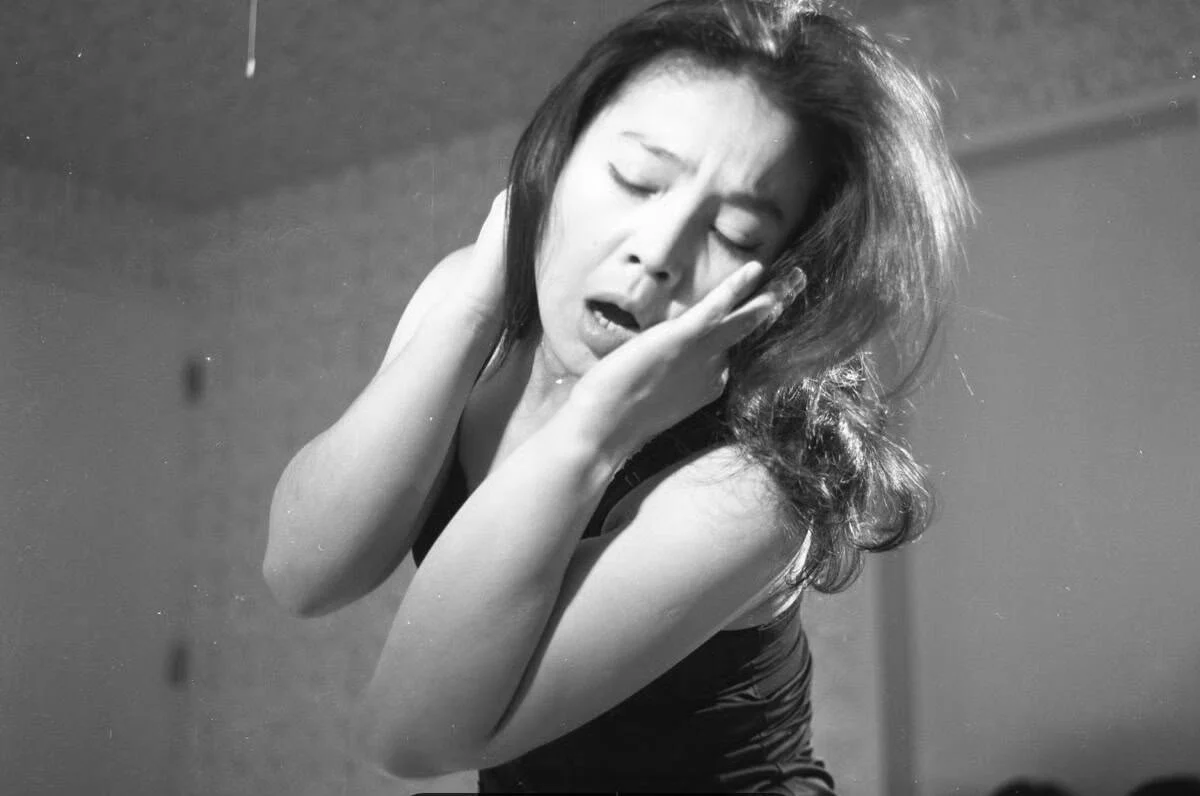
The experiences with her teacher are presented as the catalyst for her complex emotional state, where she unconsciously seeks a peculiar form of "excitement through violence" or emotional intensity. This is powerfully illustrated not only in her tumultuous relationship with Park but also in a particularly evocative incident on a bridge. This narrative thread pushes the film into psychosexual territory, exploring how past trauma can warp an individual’s emotional and relational patterns. The film achieves this with considerable sensualism, not through explicit nudity—which is almost non-existent, likely due to censorship—but through the nuanced gaze of DP Kim Deok-jin. His cinematography captures Hyeon-joo’s beauty and vulnerability in the erotic scenes, using lighting, framing, and close-ups to convey psychological states and unspoken desires, creating an atmosphere of intense intimacy and unease without relying on overt visual representation. This subtle approach makes the psychosexual undercurrents all the more potent, inviting the audience to engage with Hyeon-joo’s internal world rather than merely observing her external circumstances.
Artistic Triumphs and Narrative Challenges: The Impact of Censorship on Form
Despite the narrative complexities and production hurdles, "Night Journey" showcases significant artistic strengths, particularly in its lead performance and visual composition. Yoon Jeong-hee, a prominent actress of the era, delivers a compelling portrayal of Hyeon-joo. Her performance is lauded for its multi-layered complexity, capturing Hyeon-joo as simultaneously a victim of circumstance, a seductress navigating her desires, a serious professional, a figure of shame, a playful spirit, and a woman grappling with masochistic tendencies. Yoon Jeong-hee’s ability to embody these contradictions provides a crucial anchor for the film’s challenging themes, making Hyeon-joo a deeply empathetic and memorable character.
Furthermore, the film features several artful montages that stand out for their visual eloquence. The sequence involving men in a bar, and another on the beach, are particularly effective in conveying mood, societal dynamics, or the protagonist’s fragmented mental state, often transcending the limitations of dialogue. These moments underscore the potential for visual storytelling that directors often turned to under censorship, using abstract or symbolic imagery to communicate what could not be explicitly stated.
However, the film’s narrative structure presents considerable challenges. The frequent shifts between past and present, the interweaving of flashbacks, and the deliberate blurring of what constitutes reality versus dream sequences make the storyline difficult to follow. While some of these stylistic choices might be intentional, reflecting Hyeon-joo’s fractured psyche, it is plausible that censorship significantly exacerbated these issues. Cuts imposed by authorities could have disrupted narrative coherence, removed crucial transitional scenes, or forced filmmakers to re-edit in ways that made the story more convoluted. In this regard, the editing, while sometimes artful, also emerges as a point of contention, contributing to the film’s demanding nature. At a concise 65 minutes, the film does not overstay its welcome, yet its brevity might also be a consequence of aggressive cuts, leaving plot points underdeveloped.
A notable narrative weakness lies in the character of Assistant Manager Park. His behavior is largely justified through a broad, almost stereotypical lens of "all men are immature scum," offering little individual psychological depth. When contrasted with the meticulous and nuanced exploration of Hyeon-joo’s character, Park appears shallow, which diminishes the complexity of their toxic dynamic and the broader social commentary about male-female relationships in the era. This uneven character development is a significant flaw that, while not entirely overshadowing the film’s strengths, undeniably impacts its overall effectiveness.
The 1970s Korean Cinema Landscape: A "Celluloid Fever" Era
"Night Journey" is currently screening as part of "Korean Cinema’s Celluloid Fever: The 1970s," a series presented by Film at Lincoln Center (FLC) and Subway Cinema. This series is vital for rediscovering and re-evaluating a decade of South Korean cinema often overshadowed by the later Golden Age of the 1980s and 1990s. The 1970s, despite the oppressive political climate, were a period of intense artistic struggle and, surprisingly, significant innovation for those filmmakers who managed to navigate the stringent censorship.
This era witnessed a shift from the melodramas of the 1960s towards more realist dramas, psychological thrillers, and genre films, often infused with subtle social commentary. Filmmakers like Kim Ho-sun, Lee Man-hee, and Ha Gil-jong were pushing boundaries, experimenting with narrative forms and visual styles, often at great personal and professional risk. The "Celluloid Fever" title aptly describes the passionate, sometimes desperate, efforts of these artists to create meaningful cinema under duress. Films from this period often explored themes of alienation, urban decay, social inequality, and the psychological impact of rapid modernization, all while carefully sidestepping explicit political criticism to avoid the censors’ axe. "Night Journey" stands as a prime example of this trend, using a personal story of trauma and societal pressure to reflect broader anxieties and gender inequalities of the time. The series offers contemporary audiences a rare opportunity to appreciate the resilience and creativity of these filmmakers and to understand the historical context that shaped their art.
Rediscovery and Legacy: "Night Journey" in the Modern Gaze
The re-emergence of "Night Journey" through the efforts of the Korean Film Archive and international retrospective series marks a crucial step in preserving and re-contextualizing South Korean cinematic heritage. For decades, many films from the 1970s remained obscure, poorly preserved, or simply unavailable, their historical and artistic significance largely unacknowledged. The digitization and accessible streaming of these works allow scholars, cinephiles, and a new generation of viewers to engage with a vital, yet challenging, chapter in film history.
In the modern gaze, "Night Journey" serves not only as a psychological drama but also as a powerful historical document. It provides invaluable insight into the social fabric of 1970s Korea, particularly concerning the roles and struggles of women. The film’s nuanced exploration of trauma, gender dynamics, and the subtle ways societal pressures manifest in individual lives remains remarkably relevant. While its narrative demands patience and critical engagement due to its fragmented nature—partially a consequence of external forces—its thematic depth and the enduring power of Yoon Jeong-hee’s performance resonate strongly. The film’s legacy lies in its courageous attempt to articulate discomfort and critique within a highly controlled environment, making it a testament to artistic resilience and a significant contribution to understanding both Korean social history and cinematic evolution. Its rediscovery ensures that the "Celluloid Fever" of the 1970s continues to inform and inspire, offering crucial lessons on the interplay between art, society, and political power.
Ultimately, "Night Journey" is an intriguing cinematic work, particularly for its sophisticated implementation of its female protagonist as a conduit for various, multi-layered social and psychological commentaries. While the narrative’s inherent demands for patience may test some viewers, its profound insights into an individual’s struggle against societal and personal demons firmly secure its place as a compelling and historically significant piece of Korean cinema.