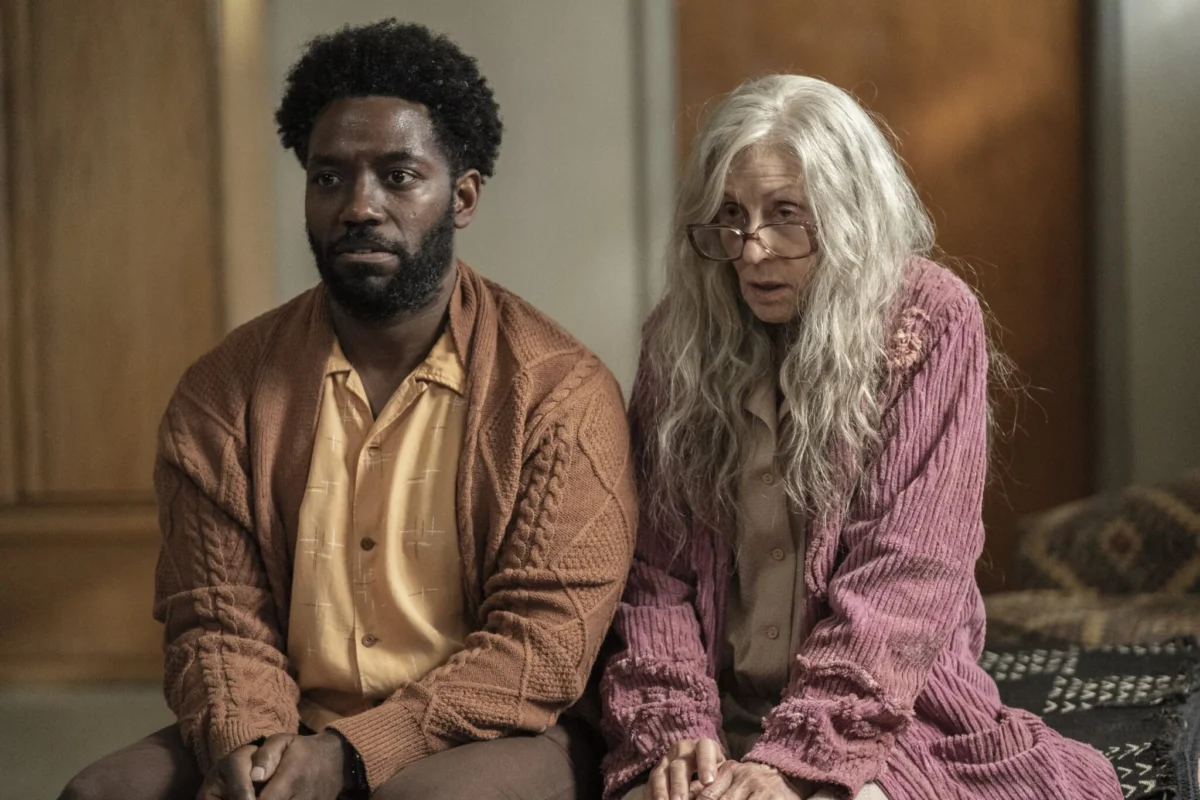
As The Terror: Devil in Silver crosses the critical halfway point of its season, the narrative intensifies, propelling viewers into a maelstrom of psychological horror, existential dread, and deeply personal conflicts. The fourth episode, in particular, serves as a pivotal juncture, introducing a disturbing blend of mundane hospital life – a pizza party – with profound personal loss and an encroaching, all-consuming void that challenges the very perception of reality within the New Hyde psychiatric facility. This episode not only escalates the supernatural and psychological threats but also delves deeper into the complex interpersonal dynamics and the systemic failures that define the series’ unsettling landscape.
The Lingering Shadow of the Silver Door
The immediate aftermath of Pepper’s violent encounter, attributed by staff to self-harm following an alleged theft, sets a tone of pervasive denial and obfuscation. The official narrative, designed to maintain control and suppress any acknowledgment of the inexplicable, paints Pepper as a danger to himself, requiring restraint. However, the lingering question of whether the attacker was a monstrous entity or a fellow patient underscores the pervasive ambiguity and fear gripping the inhabitants of New Hyde. This uncertainty fuels differing interpretations among the patients: Loochie perceives the entity behind the silver door as a manifestation of her deepest nightmares, Coffee grapples with the notion of a literal devil, Dorry clings to the belief that it is merely a man, and Pepper himself oscillates between the image of a buffalo monster. This spectrum of belief highlights the subjective nature of trauma and the desperate search for rational explanations in an increasingly irrational environment.

The narrative suggests that survival within New Hyde is predicated on a form of surrender, an acceptance of the institution’s oppressive reality. Loochie, self-identified as a "lifer," represents a unique case: her resignation to her fate makes her a compelling, yet seemingly non-threatening, presence. The entity’s targeting of patients like Pepper, who harbor aspirations of escape, and those like Badger and Louie, who possess the influence to draw external attention to Northwest, indicates a calculated, almost predatory, intelligence at play. The enigmatic figure of Dr. Walter, whose continued presence suggests an agelessness that borders on the supernatural, remains a central mystery, his potential involvement adding another layer of historical dread to the unfolding events.
The Futility of Resistance and the Haunting Echoes of the Past
The reappearance of Badger, a character consistently more preoccupied with projecting authority than with genuine patient care, underscores the superficiality of the institutional response. His interactions with Pepper are characterized by threats of non-compliance rather than empathy or an attempt to understand the patient’s distress. His dismissive handling of Pepper, a common grievance among wheelchair users when their autonomy is disregarded, further illustrates his detachment. Badger’s failure to confront Dr. Anand directly or to arrange a private consultation with Pepper highlights his inherent timidity. His eventual, albeit belated, attempt to advocate for the patients through a strongly worded email ultimately mirrors the tragic fate of Officer Louie, reinforcing the futility of resistance against the entrenched power structures of New Hyde.
The episode delivers a significant shock with the unexpected return of Officer Louie, who was previously believed to have died by suicide. His spectral reappearance, engaging Pepper in a lucid conversation about devils and pacts, serves as a stark reminder of the porous boundary between life and death within the narrative’s reality. Pepper, unaware of Louie’s demise, is drawn into a dialogue that transcends the influence of drugs or delusion. The introduction of Ahriman, an evil spirit in Zoroastrianism, suggests a potential thematic exploration of ancient malevolence, raising questions about the origins of the horrors at New Hyde. Pepper’s subsequent decision to make a deal with this spectral entity, driven by a desperate desire for escape, foreshadows further perilous consequences.

A Son’s Pain and a Father’s Self-Interest
Pepper’s personal life intrudes upon the grim reality of New Hyde with the arrival of his son, Anthony. The phone call, followed by a personal visit, offers Pepper moments of genuine emotional connection, albeit tinged with his ingrained self-interest. His plea to Coffee to contact someone who can help is not for the benefit of other patients but for his own release. This desperate gambit, including an attempt to leverage familial ties, results in a profound heartbreak for Anthony. The scene powerfully illustrates Pepper’s recurring pattern of choosing immediate self-gratification at the expense of others, a choice that inflicts deep emotional wounds. The reviewer’s personal connection to this narrative thread—a similar confrontation with a distant father—lends a poignant, raw authenticity to the analysis of Anthony’s experience, emphasizing the enduring pain of unmet expectations and dashed hopes. The potential significance of Anthony’s character, not present in the source material, suggests a narrative arc aimed at facilitating his eventual detachment from his father’s destructive influence.
The reviewer draws a parallel between Pepper’s ill-fated romance with Antoinette and his relationships within New Hyde, suggesting that his negligence and self-interest exacerbate the struggles of those around him. While Pepper’s physical interventions in defense of patients against perceived patriarchal violence might appear heroic, they are framed as stemming from a distorted sense of masculinity rather than genuine altruism. The introduction of Scotch Tape to defend Loochie against an attack at Sal’s, while a moment of relief for the reviewer witnessing an act of solidarity against the abuse of CCH Pounder, highlights the broader societal indifference. Dr. Anand’s interpretation of such events as mere non-compliance, devoid of any attempt to understand the underlying causes, underscores the institution’s commitment to control over care.
Glimmers of Backstory and Systemic Critique
The episode offers a rare glimpse into Coffee’s past, revealing a devastating account of his experience with medication withdrawal in 2009, where he felt a sense of "blue skies," contrasted with his current emotional numbness. The reviewer expresses a desire for more in-depth exploration of Coffee’s history, particularly the identity of the young woman in a photograph, to contextualize his present state. This narrative thread underscores the profound impact of psychiatric treatment, both its absence and its potentially damaging application.
A significant critique is leveled against the show’s portrayal of mental health treatment, which appears to present a false dichotomy between being "crazy" and being overmedicated. The reviewer advocates for a more nuanced depiction that includes the benefits of properly administered psychiatric medications. The current portrayal, it is argued, inadvertently reinforces harmful stereotypes and disinformation surrounding psychiatric drugs and the mentally ill. Dr. Anand’s justification for prescribing medication, ostensibly for patient well-being, is exposed as a means of ensuring docility and compliance for the staff’s convenience.
Furthermore, the article addresses the broader societal tendency to isolate and marginalize individuals with disabilities. Drawing parallels from historical "ugly laws" and the era of deinstitutionalization following Reagan’s policies, the reviewer points to the systemic failure to provide adequate community-based care. The hostile reception patients receive from the outside world at Sal’s, characterized by slurs and physical attacks, emphasizes that New Hyde is not merely a last resort but a symptom of a society unwilling to confront and support its most vulnerable members.
The Fabric of Stories: Reality and Fiction at New Hyde
The thematic core of this episode is revealed to be the power of narratives and the stories individuals tell themselves to navigate their harsh realities. The patients’ debates over the nature of the entity behind the silver door reflect their attempts to make sense of their experiences, projecting their fears onto an external force. Josephine’s reiteration of Pepper’s injury, despite her disbelief, highlights the persistence of ingrained narratives. The patrons at Sal’s construct a narrative of the patients’ worthlessness to avoid confronting the systemic horrors. Dorry’s perception of lorazepam and pizza as comforts, rather than tools of control, exemplifies self-deception. Coffee’s selective memory of his medication-free past, omitting the manic-depressive episodes, illustrates a coping mechanism. Loochie’s bravado in recounting her encounters with the devil masks her underlying terror. Badger’s performance of authority crumbles upon his death, revealing his failure to truly see the patients as individuals. Anand’s feigned composure stems from the fear of job loss. Anthony’s terse explanation of his mother’s death—"She fell. A long way down."—speaks volumes about unresolved grief. Pepper’s self-perception as a victim, while acknowledging his own harmful actions, underscores his internal conflict. The narrative of Jaws, referenced within the episode, serves as a meta-commentary on mythmaking and the transformation of natural behavior into monstrous narratives. The episode concludes by emphasizing the profound ambiguity at New Hyde, where the distinction between reality and fiction remains perpetually blurred for both patients and staff.

Looking Ahead: Escalating Horror and Systemic Decay
This installment of The Terror: Devil in Silver delivers a potent blend of psychological depth and visceral horror, with several moments of profound shock. The escalating tensions and the deepening mystery surrounding the silver door and its inhabitants suggest that the true horrors of New Hyde are yet to be fully revealed. The episode’s exploration of self-deception, societal neglect, and the corrupting influence of power leaves the audience with a sense of foreboding, anticipating even darker revelations in the episodes to come. The pervasive sense of unease, coupled with the characters’ desperate attempts to construct meaning in a chaotic environment, solidifies the series’ position as a compelling examination of the human psyche under extreme duress and the systemic failures that can lead to profound suffering. The episode effectively sets the stage for a climactic confrontation with both the external supernatural threat and the internal demons that plague the residents of New Hyde.