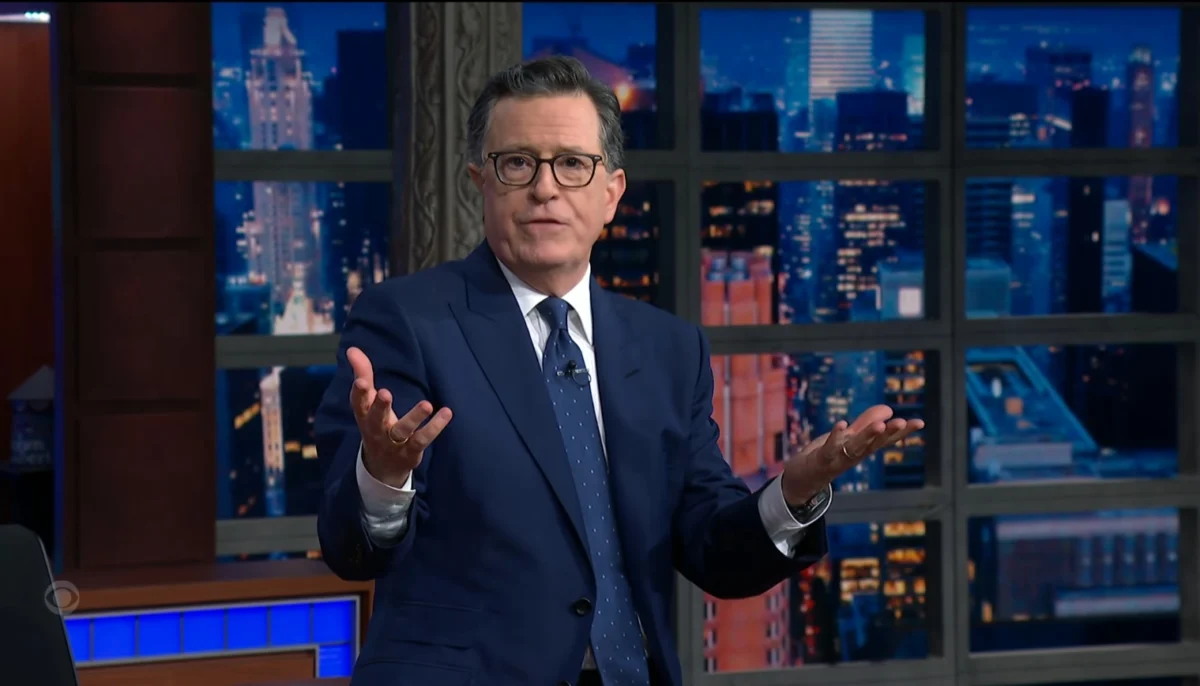
Stephen Colbert concluded his eleven-year tenure as the host of The Late Show on Thursday, May 21, delivering a final broadcast that blended high-concept comedy, political poignancy, and a star-studded farewell. The departure follows a period of significant upheaval for the program, which Colbert inherited from legendary broadcaster David Letterman in 2015. While the show remained a pillar of CBS’s late-night programming and a consistent winner in the Emmy Awards’ variety talk categories, its conclusion was marked by an abrupt cancellation that has ignited widespread industry debate regarding the intersection of media mergers and political influence.

The termination of The Late Show became a focal point of controversy last year following reports that Paramount Global, CBS’s parent company, sought to streamline its operations ahead of a high-stakes merger with Skydance Media. Analysts have noted that the show’s cancellation appeared to coincide with external political pressures, specifically from the Donald Trump administration, which had frequently targeted Colbert for his sharp satirical critiques. Although Colbert himself has maintained a diplomatic stance, refusing to publicly accuse the network of political capitulation, his peers and predecessors have been less reserved. David Letterman and musical icon Bruce Springsteen both alluded to the political optics of the move during appearances leading up to the finale.
A Legacy of Political Satire and Late-Night Dominance
Stephen Colbert’s transition from the character-driven satire of Comedy Central’s The Colbert Report to the more traditional—though still pointed—format of The Late Show was initially viewed as a gamble. However, following the 2016 U.S. presidential election, Colbert’s Late Show found its footing as the primary destination for viewers seeking a nightly critique of the Trump administration. This shift catapulted the show to the top of the ratings, frequently surpassing NBC’s The Tonight Show Starring Jimmy Fallon in total viewership.

During his 11-year run, Colbert hosted over 1,800 episodes. Under his leadership, the program garnered multiple Emmy Awards and helped revitalize the historic Ed Sullivan Theater as a center for cultural discourse. The finale served not only as an end to a specific program but as a bookend to an era of late-night television that was defined by its direct engagement with the political zeitgeist.
Chronology of the Final Broadcast
The final episode began with a pre-recorded message sent to CBS affiliates across the country. In a display of his trademark dry humor, Colbert thanked the local stations for their support, specifically noting the often-repetitive nature of local news "lead-ins" involving wildlife breaking into coffee shops. "Having your broadcast as a lead-in has been a huge help," Colbert told the affiliates, "whether you were covering a moose that broke into a local coffee shop or a deer that broke into a local coffee shop."

The Opening Monologue: The Joy Machine
Breaking from the traditional format of walking out to a roaring standing ovation, Colbert chose to address both the studio audience and the viewers at home directly from the stage floor. He referred to the production as "The Joy Machine," a nickname he and his staff used to describe the grueling but rewarding process of daily television production.
"We call it the joy machine because to do this many shows, it has to be a machine," Colbert explained. "But the thing is, if you choose to do it with joy, it doesn’t hurt as much when your fingers get caught in the gears." He transitioned into a heartfelt tribute to his staff, quoting Tennyson’s "Ulysses" by referring to them as "all the great Achilles whom we knew." Colbert also reflected on his mission statement, noting that while he started his career promising to "feel the news at" people, he realized his true job at The Late Show was to "feel the news with" the audience.

A Procession of A-List Cameos
The first half of the finale was structured around a series of comedic "interruptions" by Hollywood stars, each feigning disappointment that they were not the night’s "most special" guest.
- Bryan Cranston: The Breaking Bad star appeared in the audience wearing a show-branded hat, jokingly petitioning for the honor of being the final A-list guest.
- Paul Rudd and Tim Meadows: Rudd interrupted a news segment to offer bananas as a "retirement gift," only to be joined by Meadows. The two engaged in a comedic bit regarding the hierarchy of celebrity guests before "storming off" in a mock huff.
- Tig Notaro and Ryan Reynolds: Stand-up comedian Tig Notaro claimed she was unaware it was the final show, while Ryan Reynolds appeared to celebrate band member Corey Bernhardt, adding to the evening’s chaotic, celebratory energy.
The Intersection of Science and Solidarity
The episode took a surreal turn during its third act, utilizing a "wormhole" plot device to facilitate appearances by Colbert’s late-night rivals and mentors. After a series of intentional technical glitches, Colbert went backstage to find astrophysicist Neil DeGrasse Tyson. Tyson explained that the cancellation of a "number-one show" had created a cosmic disturbance, opening a rift in the space-time continuum.

This segment allowed for a significant moment of late-night solidarity. Jon Stewart, Colbert’s longtime mentor and former boss at The Daily Show, appeared to offer parting wisdom. Stewart encouraged Colbert to face the "darkness" of the show’s end with the same laughter he had utilized for thirty years of his career.
This was followed by the appearance of the "Strike Force Five"—the collective of late-night hosts including John Oliver, Jimmy Fallon, Jimmy Kimmel, and Seth Meyers. The group, which formed a public bond during the 2023 writers’ strike, stood together on the Ed Sullivan stage. Jimmy Kimmel provided a notable moment of industry commentary, referencing his own past brushes with network cancellation, stating that "the wormhole goes away after about three days."

Historical Resonance: Sir Paul McCartney at the Ed Sullivan Theater
The centerpiece of the evening was an extended interview and performance by Sir Paul McCartney. The choice of McCartney carried immense historical weight, as the Ed Sullivan Theater was the site of The Beatles’ American debut in 1964. McCartney presented Colbert with a photograph of the band performing on that very stage decades earlier.
The conversation touched upon McCartney’s memories of the theater, including a humorous anecdote about the "very orange" makeup he was given during his first appearance. Colbert joked that McCartney’s experience might have been the origin of the "orange" political figure he had spent years satirizing. McCartney also reflected on the current state of the United States, expressing his hope that the country remains "the land of the free."

The musical portion of the evening featured a festive rendition of Elvis Costello’s "Jump Up," performed by Colbert alongside current bandleader Louis Cato and former bandleader Jon Batiste. This was followed by the final musical performance of the series: Paul McCartney leading the entire cast and crew in a rendition of the Beatles’ classic "Hello, Goodbye."
Analysis of Media Implications and the Future of Late Night
The end of The Late Show with Stephen Colbert signals a transformative moment for broadcast television. Industry data suggests that the "traditional" late-night model is under intense pressure from several fronts:

- Streaming Shifts: Viewership has increasingly migrated to YouTube and social media clips, reducing the value of the linear 11:35 PM time slot.
- Production Costs: High-profile talk shows with large writing staffs and house bands are expensive to produce. In an era of corporate consolidation (such as the Paramount-Skydance merger), networks are increasingly looking to lower-cost alternatives, such as game shows or unscripted content.
- Political Polarization: Colbert’s departure removes one of the most prominent satirical voices from the airwaves at a time of heightened political tension. Critics argue that the "sanitizing" of late-night lineups may be an attempt by media conglomerates to avoid alienating portions of their audience or risking regulatory friction with future administrations.
Final Reflections
As the broadcast concluded, Colbert’s family and the entirety of The Late Show staff joined him on stage. In a final nod to the show’s surrealist humor and its place in the cultural landscape, the building was "sucked into the wormhole," ending with an image of the Ed Sullivan Theater encased within a snow globe.
While CBS has yet to announce a permanent successor for the time slot, the legacy of Stephen Colbert’s 11-year run is firmly established. He navigated the program through a global pandemic, multiple national crises, and a total shift in how audiences consume comedy. By transforming the "machine" of late-night production into a "joy machine," Colbert left a blueprint for how satire can serve as a form of communal catharsis. For now, the lights at the Ed Sullivan Theater have been dimmed, marking the end of one of the most influential chapters in the history of American late-night television.