Focus Features has officially released the second and final US trailer for Pressure, a high-stakes historical thriller centered on the meteorological decisions that determined the success or failure of the D-Day landings. Directed by Anthony Maras and starring Brendan Fraser and Andrew Scott, the film is scheduled to arrive in United States theaters on May 29, 2026. This domestic launch precedes the United Kingdom release, which is currently slated for September 9, 2026. The film serves as a cinematic adaptation of the acclaimed 2014 stage play by David Haig, who also co-wrote the screenplay alongside Maras. By focusing on the 72 hours leading up to June 6, 1944, the production shifts the traditional lens of World War II cinema away from the front lines of combat and toward the intense psychological and scientific battle occurring within the Allied high command.
The Narrative Focus: A Battle Against the Elements
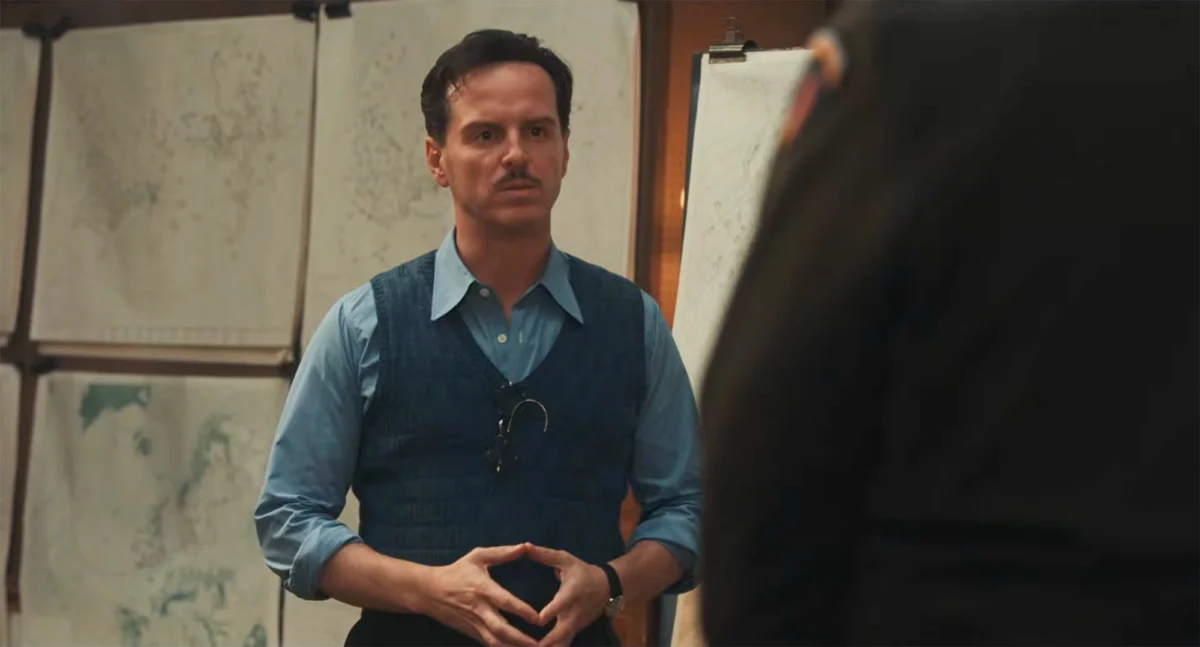
Pressure explores one of the most consequential but least discussed aspects of Operation Overlord: the weather. While history often remembers the bravery of the troops on the beaches of Normandy, the film highlights the immense burden placed on Captain James Stagg, played by Andrew Scott. As the Chief Meteorological Officer for the Royal Air Force, Stagg was tasked with providing General Dwight D. Eisenhower (Brendan Fraser) with a definitive forecast for the English Channel.
The trailer emphasizes the friction between Stagg’s cautious, data-driven approach and the aggressive optimism of his American counterpart, Irving P. Krick (Chris Messina). With millions of lives at stake and the geopolitical future of Europe hanging in the balance, the film portrays the weather not merely as a background detail, but as an unpredictable antagonist. The narrative tension is driven by the fact that a storm in the English Channel could have grounded the Allied air cover and capsized the landing craft, potentially leading to a catastrophic defeat that would have prolonged the Nazi occupation of Europe for years.
Historical Context: The Science of June 1944
To understand the stakes presented in Pressure, it is necessary to examine the actual historical conditions of early June 1944. Operation Overlord required a specific set of environmental conditions to succeed: a late-rising moon for paratrooper visibility, a low tide at dawn to expose German beach obstacles, and relatively calm winds to facilitate the landing of heavy equipment.

Historically, the invasion was originally scheduled for June 5. However, Captain James Stagg identified a massive depression moving in from the Atlantic that promised gale-force winds and low clouds. Despite immense pressure from General Montgomery and other high-ranking officials to proceed, Eisenhower trusted Stagg’s grim forecast and postponed the operation by 24 hours. This decision was vindicated when June 5 saw some of the worst weather in the region for decades. Stagg then identified a brief "lull" or window of improved conditions for June 6, which Eisenhower famously seized with the command, "Okay, let’s go."
The film’s focus on this technical and psychological drama aligns with a growing trend in historical cinema that favors "behind-the-scenes" intellectual conflict over traditional battlefield spectacle. By highlighting the clash between Stagg’s British methodology and Krick’s American forecasting techniques, Pressure provides a nuanced look at the internal tensions within the Allied coalition.
Cast and Creative Leadership
The production features a high-profile ensemble cast, led by Brendan Fraser in the role of General Dwight D. Eisenhower. Fraser, whose career saw a significant resurgence following his Academy Award-winning performance in The Whale, portrays Eisenhower not as a distant icon, but as a leader under unimaginable duress. Andrew Scott, known for his roles in Ripley and All of Us Strangers, takes on the role of James Stagg, bringing a sense of frantic intellectual rigor to the character.
The supporting cast includes:
- Kerry Condon as Captain Kay Summersby, Eisenhower’0s trusted aide and driver.
- Damian Lewis as Field Marshal Bernard Montgomery, the commander of the Allied ground forces.
- Chris Messina as Irving P. Krick, the American meteorologist whose conflicting reports added to the command’s anxiety.
- Henry Ashton as John Eisenhower, the General’s son.
Director Anthony Maras, who previously garnered critical acclaim for the 2018 film Hotel Mumbai, brings his experience in tension-building to this project. Maras has noted in industry interviews that his goal was to capture the claustrophobia of the decision-making process. The film was produced by Tim Bevan and Eric Fellner of Working Title Films, a production house with a long history of successful historical dramas, including Darkest Hour.

Chronology of Production and Release
The journey of Pressure from stage to screen has spanned several years, reflecting the complexity of producing a period-accurate drama of this scale.
- 2014: David Haig’s play Pressure premieres at the Royal Lyceum Theatre in Edinburgh, later moving to the West End to critical acclaim.
- 2023: Working Title Films announces the film adaptation, with Anthony Maras attached to direct.
- 2024–2025: Principal photography takes place in various locations across the United Kingdom, utilizing historical sites to replicate the atmosphere of Southwick House, the headquarters of the Allied Expeditionary Force.
- Early 2026: Focus Features begins the marketing campaign, releasing the first teaser trailer to establish the tone of a psychological thriller.
- May 21, 2026: The final US trailer is released, confirming the May 29 theatrical debut.
- September 9, 2026: The scheduled release for the United Kingdom and international markets.
The decision to delay the UK release until September suggests a strategic move to position the film for the autumn awards season in Europe, while the US May release capitalizes on the Memorial Day weekend, a period traditionally associated with the commemoration of military history.
Supporting Data and Technical Specifications
Pressure is expected to have a significant presence in the 2026 cinematic landscape. According to industry analysts, historical dramas focusing on World War II remain a cornerstone of the mid-budget theatrical market. Focus Features, a subsidiary of Universal Pictures, has a track record of successfully distributing "prestige" adult dramas that perform well during both the initial theatrical run and subsequent streaming cycles.
Technical aspects of the film include:
- Cinematography: The film utilizes a muted, atmospheric color palette to reflect the somber and overcast conditions of the English coast in 1944.
- Screenplay: The script maintains much of the dialogue-driven intensity of the original play but expands the scope to include the broader logistical movements of the Allied fleet.
- Score: The musical composition is designed to emphasize the "ticking clock" nature of the 72-hour window, heightening the audience’s sense of urgency.
Industry Implications and Analysis
The release of Pressure comes at a time when audiences are showing renewed interest in "process-oriented" historical films. Following the success of Christopher Nolan’s Oppenheimer, which focused on the scientific and political maneuvering behind the atomic bomb, Pressure occupies a similar niche. It treats science and logistics as the primary drivers of historical change, rather than individual combat heroics.

From a distribution standpoint, the film represents a significant investment for Focus Features. By casting Brendan Fraser, the studio is leveraging his current popularity and "prestige" status to attract a broad demographic. Furthermore, the inclusion of Andrew Scott and Damian Lewis ensures strong appeal in the British and international markets.
The film also serves an educational purpose, bringing attention to James Stagg, a figure who remained largely in the shadows of history despite his pivotal role. By dramatizing the uncertainty of the forecast, the film challenges the hindsight bias that often makes the success of D-Day seem inevitable. In reality, as the film depicts, the operation was a massive gamble predicated on a few millibars of barometric pressure.
Official Reactions and Future Outlook
While official reviews are embargoed until closer to the release date, early reactions from industry insiders who viewed footage at trade screenings suggest that the film is a taut, expertly acted drama. Representatives from Working Title Films have stated that the production aimed for "unwavering historical accuracy" regarding the meteorological data used in the script.
The final trailer has generated significant engagement on social media platforms, with many viewers noting the striking transformation of Brendan Fraser into Eisenhower. The contrast between the internal quiet of the weather office and the external roar of the gathering war machine is a central theme of the marketing material.
As the US release date of May 29 approaches, Focus Features is expected to hold several special screenings for veterans’ organizations and historical societies. The film’s ability to balance technical detail with emotional stakes will likely determine its success at the box office and its longevity during the year-end awards deliberations. Pressure stands as a testament to the fact that sometimes, the most important battles of a war are fought not with weapons, but with charts, maps, and the courage to tell the truth in the face of immense power.