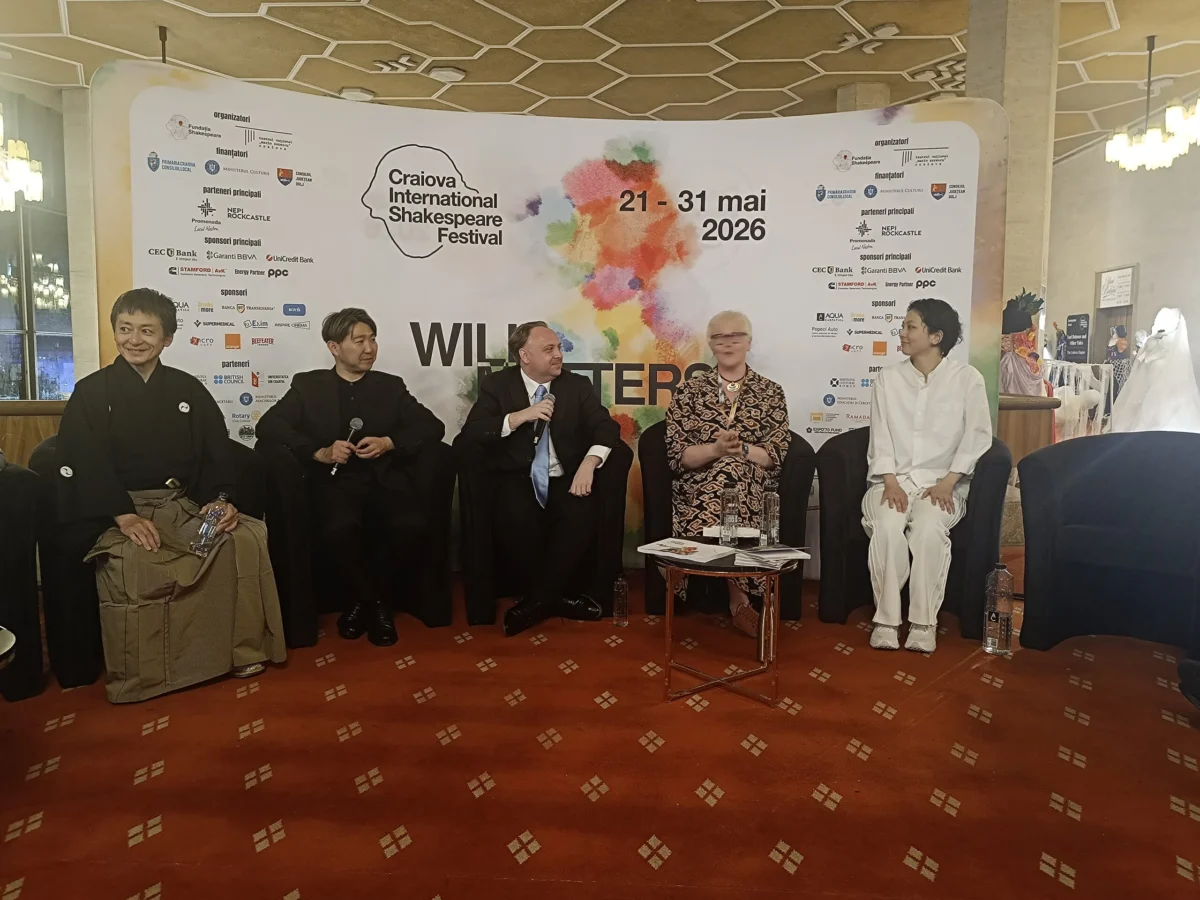
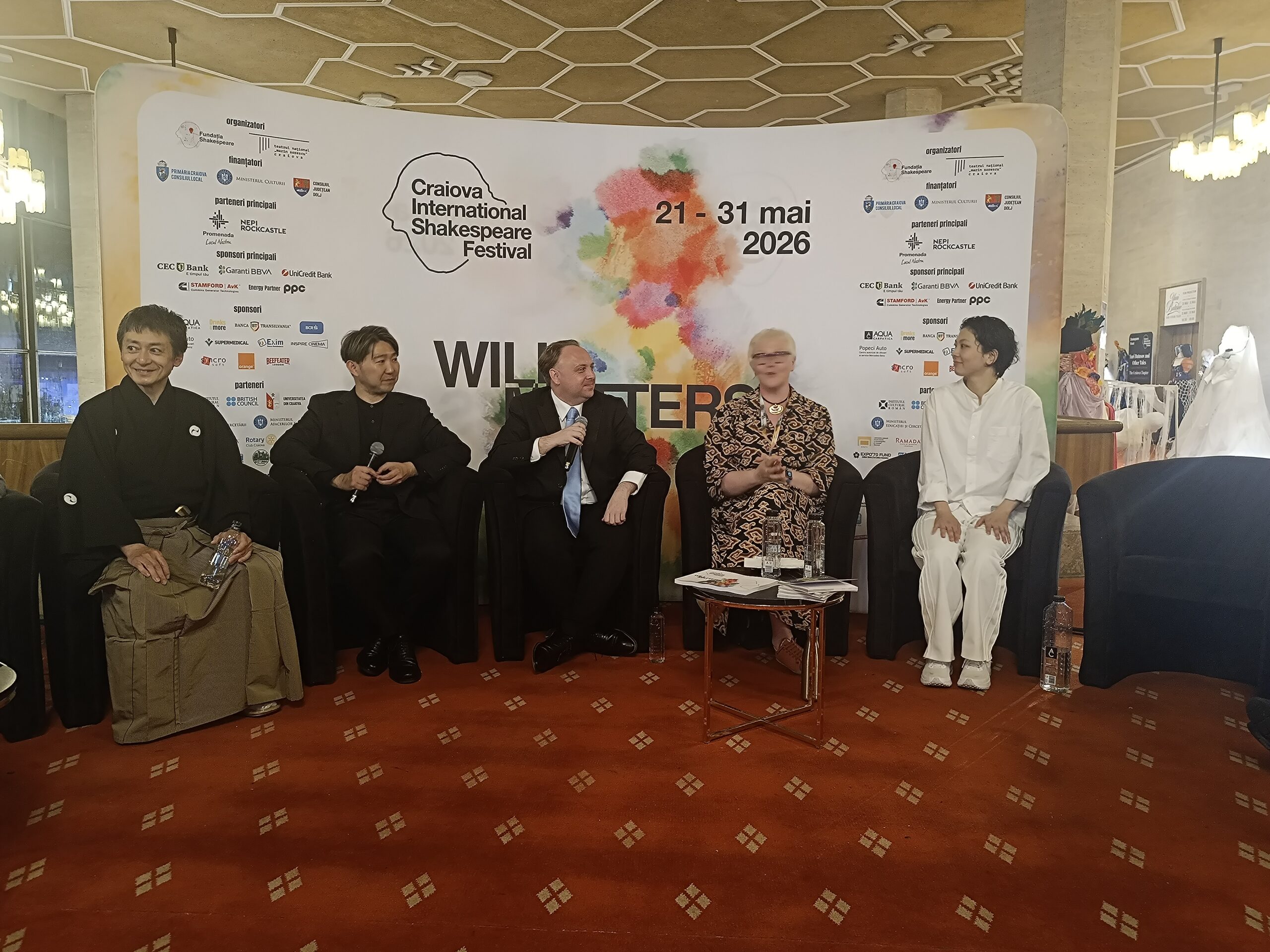
Following the presentation of "Titus Andronicus: Reborn" at the Craiova Shakespeare International Festival, director Ryunosuke Kimura, renowned Noh actor and Living National Heritage Yamai Tsunao, and actress Rion Yanagimoto participated in a public discussion that delved into the intricacies of the production’s genesis, its profound relationship with William Shakespeare’s seminal tragedy, and the powerful resonance of Japanese performance traditions in addressing contemporary global issues. The panel, a highlight of the festival’s extensive public program, offered invaluable insights into what many critics and attendees hailed as one of the most striking and thought-provoking productions of this year’s edition.
Craiova International Shakespeare Festival: A Global Stage
The Craiova International Shakespeare Festival, held biennially in Craiova, Romania, has long established itself as a significant nexus for global theatrical exchange, particularly focusing on innovative interpretations of Shakespeare’s canon. Founded in 1994, the festival has grown in stature, attracting leading theatre companies, directors, and scholars from across five continents. It is celebrated for its commitment to showcasing diverse artistic approaches to Shakespeare, fostering intercultural dialogue, and pushing the boundaries of classical theatre. The 2026 edition, where "Titus Andronicus: Reborn" premiered to critical acclaim, continued this tradition by featuring productions that challenged conventional perspectives and engaged deeply with current societal challenges. The inclusion of KAKUSHINHAN’s "Titus Andronicus: Reborn" underscored the festival’s dedication to presenting avant-garde works that bridge cultural divides and illuminate the timeless relevance of Shakespeare’s narratives.
The Production’s Genesis Amidst Global Turmoil
The discussion commenced with director Ryunosuke Kimura outlining the inherent challenges of adapting a theatrical production, initially conceived and developed in Japan, for presentation in a markedly different theatrical and cultural environment. Kimura articulated a vision where Shakespearean theatre transcends geographical and architectural constraints, echoing the foundational principles of Peter Brook’s "empty space" concept. For Kimura, the essence of theatre does not reside in the physical edifice of a venue but in the fertile imagination of the creator, the nuanced interpretation of that imagination by the actors, and, critically, the intangible bond forged with the audience. He posited that Shakespeare’s works inherently facilitate an unseen connection between performers and spectators, a universal language that allows his narratives to adapt and resonate across diverse spaces and cultures, making them perpetually adaptable.
The journey of "Titus Andronicus: Reborn" to the Craiova stage was particularly fraught, marked by significant obstacles imposed by the global COVID-19 pandemic. Kimura revealed that his company, KAKUSHINHAN, had made two prior attempts to stage the production during the pandemic’s height. Both endeavors, however, were tragically derailed when key personnel contracted the virus, forcing cancellations and profound artistic setbacks. The eventual realization of "Titus Andronicus: Reborn" thus emerged from a crucible of pain, sadness, and unforeseen circumstances. This difficult gestation imbues the production’s central themes – violence, trauma, and the arduous path to renewal – with an additional layer of poignant resonance, reflecting the collective anxieties and experiences of a world grappling with unprecedented crises.
The Evolving Role of the Director in a Post-Pandemic World
Kimura further reflected on the seismic shifts in the role of the director, particularly in the wake of the pandemic. He observed that prior to this global event, directorial practice often gravitated towards the pursuit of a singular artistic goal or a predetermined narrative path. However, the pandemic, with its forced introspection and reevaluation of human existence, has reshaped his perception of the director’s mission. He now views it as a more "transcendental" endeavor, requiring an ability to fluidly navigate between past, present, and future, and to bridge the conceptual divides between Eastern and Western theatrical traditions. In this reimagined role, the director’s paramount task is to synthesize disparate elements into a cohesive and compelling theatrical world, all while maintaining an acute awareness of the pressing issues confronting contemporary society and the specific cultural and social context of the audience being addressed. This holistic approach, Kimura suggested, is vital for theatre to remain relevant and impactful in a rapidly changing world.
Deconstructing Tragedy: Violence, Humor, and the "Bare Naked Shakespeare"
One of the most intriguing aspects of Kimura’s direction, as discussed during the panel, was his deliberate integration of humor into "Titus Andronicus," a play widely acknowledged as one of Shakespeare’s most brutal and blood-soaked tragedies. Kimura emphasized that Shakespeare’s genius lies in his refusal of straightforward categorization. Even within the darkest narratives, tragedy and comedy are inextricably intertwined, with moments of intense brutality abruptly giving way to unexpected laughter. His directorial objective was not to reduce "Titus Andronicus" to mere parody but to illuminate the multifaceted nature of Shakespeare’s dramatic universe. He described this approach as presenting a "bare naked Shakespeare," stripping away layers of reverence and historical distance to allow the audience to encounter the playwright not as an untouchable literary monument, but as a deeply human observer of the human condition, capable of both profound tragedy and ironic humor. This nuanced portrayal, Kimura argued, makes Shakespeare more accessible and resonant for contemporary audiences.
The Crow: Shakespeare Reborn as a Living Organism
A particularly innovative element of "Titus Andronicus: Reborn" involves the audacious introduction of Shakespeare himself into the play’s narrative through the symbolic figure of the Crow. Kimura elaborated on this creative choice, conceptualizing Shakespeare not as a static historical figure but as a dynamic, living organism – a "living brain or cell" that continues to respond and adapt to the evolving circumstances of the world. The central question animating this artistic decision was: what would Shakespeare articulate if he were alive today, particularly in confronting the unspeakable horrors depicted in "Titus Andronicus"? This concept also directly informs the "Reborn" aspect of the production’s title. Kimura posits that Shakespeare is perpetually reborn through each successive generation’s interpretation and engagement with his work. The dialogue between the Crow and the Boy within the play thus functions as a powerful metaphorical conduit, transmitting the profound questions posed by the tragedy into the future, urging ongoing reflection and engagement.
Kimura articulated his specific rationale for selecting "Titus Andronicus." He viewed the play as an unparalleled vehicle for confronting the pervasive nature of violence across multiple strata of human existence: at the national level, the state level, and the deeply personal level of the individual. These problems, he observed, remain stubbornly unresolved in the modern era. His core interest lay in exploring how Shakespeare, if contemporary, might endeavor to address these enduring conflicts through the medium of theatre. Consequently, the production ingeniously employs Japanese theatrical heritage not as mere aesthetic ornamentation but as a potent analytical tool, a means of rigorously examining and responding to the manifestations of violence in the contemporary world.
Noh Tradition Meets Roman Tragedy: Yamai Tsunao’s Profound Contribution
Central to this innovative cross-cultural approach was the formidable presence and artistry of Yamai Tsunao, a revered Noh actor and a designated Living National Heritage of Japan. Kimura drew a direct lineage between Yamai’s profound work and the enduring legacy of Zeami Motokiyo, the foundational figure of Noh theatre. He suggested that the rich traditions embodied by Yamai offered a unique and powerful framework for processing the visceral violence and complex spiritual inquiries embedded within Shakespeare’s tragedy.
Yamai Tsunao, during his segment of the discussion, elucidated his approach to embodying the character of Titus through three overarching conceptual frameworks:
-
Knighthood and the Warrior Figure: Yamai initiated his explanation by drawing parallels between the Roman general Titus and Japan’s own deeply rooted warrior traditions, particularly those of the samurai and bushi. He approached Titus partly through this lens, connecting Shakespeare’s portrayal of duty, honor, and martial identity to the rigorous codes of conduct and spiritual discipline inherent in Japanese warrior culture. This allowed for a unique interpretation of Titus’s actions and motivations, viewed through a culturally distinct understanding of heroism and tragedy.
-
The Mask and the Demon: The second pivotal idea Yamai explored was the profound significance of the mask, particularly the demon mask (Hannya mask) employed in the production. He explained that within Noh theatre, a demon is far more complex than a simple figure of fear or revulsion. Often, it represents an entity that has returned from the realm of the dead, a pitiable presence tormented by unfulfilled vows, lingering pain, or an insatiable hunger for revenge. This nuanced understanding profoundly complicates the character of Titus himself. While he undeniably commits monstrous acts, he is simultaneously presented as a figure consumed by grief, bound by an inflexible sense of duty, and steeped in profound ambiguity. Yamai articulated a universal truth: human beings are perpetually locked in a struggle between the forces of good and evil, yet what one individual perceives as righteous, another may condemn as evil. In this philosophical sense, the "demon," he concluded, resides within the heart of every human being, a potent symbol of our inherent duality.
-
The Gesture of Peace: The third concept Yamai elaborated upon was the profound significance of "peace." He specifically referenced a particular movement or gesture from Noh theatre that symbolically signifies peace, expanding its meaning beyond mere human societal harmony to encompass the very land itself. This gesture, deeply rooted in Japan’s agrarian culture, conveys a philosophy of communal living, sharing resources, and meticulously maintaining harmony not only among people but also in respectful coexistence with the natural world. Within the brutal context of "Titus Andronicus: Reborn," this concept assumes extraordinary significance. The production, Yamai conveyed, does not merely depict the relentless cycle of violence; it actively seeks a pathway beyond it, offering a glimmer of hope for reconciliation and renewal.
Rion Yanagimoto: Bridging Gender, Age, and Performance Style
Actress Rion Yanagimoto, who undertook the challenging role of Lucius, Titus’s son, addressed the complex interplay of gender, age, race, and disparate performance styles within the production. She underscored a fundamental truth about Shakespearean acting: the words themselves are the genesis, the origin point of all theatrical creation. She poetically described actors as a "flock of sheep striving to digest those words," highlighting the rigorous intellectual and emotional labor involved in interpreting Shakespeare’s dense language. For Yanagimoto, Shakespeare’s text became the indispensable foundation for her immersion into the role of Lucius, a male warrior and soldier. Through the sheer power and specificity of Shakespeare’s language, she discovered a profound means to inhabit and comprehend the character. Furthermore, she spoke of the deep artistic connection she forged with Yamai Tsunao, a connection born from the shared, arduous process of physically and emotionally carrying the weighty text of the play. Her performance transcended conventional gender roles, demonstrating the transformative power of theatrical interpretation.
Broader Implications for Global Theatre and Cultural Dialogue
The public discussion at the Craiova International Shakespeare Festival unequivocally demonstrated that "Titus Andronicus: Reborn" transcends the simple categorization of a "Japanese version" of Shakespeare’s tragedy. Instead, it stands as a meticulously conceived and deeply resonant artistic endeavor that orchestrates a compelling dialogue between Shakespearean drama, the ancient art form of Noh, contemporary global trauma, the pervasive uncertainties of the pandemic era, the complexities of violence, the unexpected intrusion of humor, and the very future trajectory of theatrical art.
Through Ryunosuke Kimura’s innovative direction, Yamai Tsunao’s masterful Noh-inspired embodiment of Titus, and Rion Yanagimoto’s nuanced engagement with language and gendered performance, the production courageously poses fundamental questions: How can classical tragedies be authentically "reborn" for new, diverse audiences? And, more profoundly, how might theatre, in its most essential form, continue its relentless search for peace and understanding within a world perpetually scarred by conflict and bloodshed? "Titus Andronicus: Reborn" serves as a powerful testament to the enduring capacity of art to confront humanity’s darkest impulses while simultaneously illuminating pathways towards healing and reconciliation, solidifying its place as a significant contribution to the global theatrical landscape. The ongoing success of such cross-cultural collaborations at festivals like Craiova reinforces the notion that artistic boundaries are not impediments but rather fertile grounds for innovation and deeper human connection, ensuring that Shakespeare’s voice, amplified by diverse traditions, continues to speak to the universal human experience.