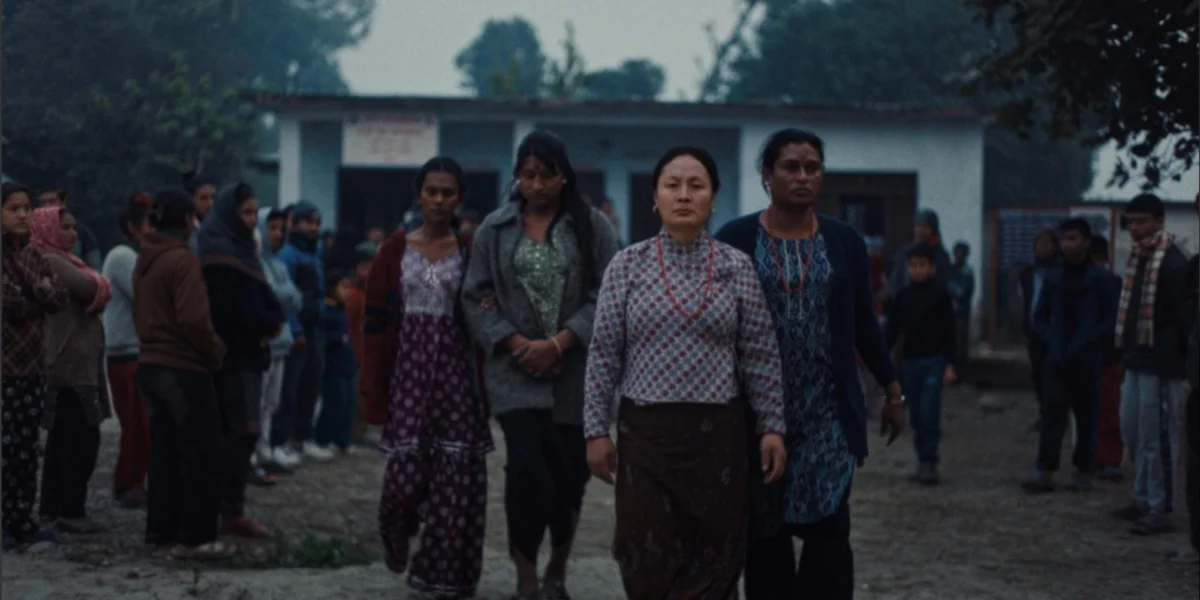
Narrative Structure and the Kinnar Experience
The central narrative of Elephants in the Fog revolves around Pirati, portrayed by real-life activist Pushpa Thing Lama. Pirati serves as the emotional and structural anchor for a group of transgender women who have formed a chosen family in a landscape that is often hostile to their existence. The community, referred to as Kinnar—a term used across South Asia to describe individuals of the third gender—lives in a state of precarious peace.
The plot is set in motion by two conflicting desires. Pirati dreams of escaping the village to live a life of domesticity with a man she loves, a Drum Master played by Aashant Sharma. This internal yearning for a traditional romantic life is complicated by her role as a protector and "mother" to several trans daughters. Among them is Apsara, played by Aliz Ghimire, a young woman characterized by a carefree spirit and a tendency to challenge the community’s internal regulations.
The tension reaches a breaking point when, following a confrontation with Pirati, Apsara disappears during an "elephant watch"—a communal ritual intended to protect the village from the encroaching wildlife. This disappearance shifts the film’s tone from a meditative character study into a search-and-rescue narrative, forcing Pirati to confront the weight of her leadership and the consequences of her potential departure.
Cultural and Legal Context: The Third Gender in Nepal
To understand the weight of the film’s themes, it is necessary to examine the socio-political climate for transgender individuals in Nepal. Nepal has often been cited as a progressive leader in LGBTQ+ rights within South Asia, yet significant gaps remain between legal recognition and social acceptance.
In 2007, the Supreme Court of Nepal issued a landmark ruling in the case of Sunil Babu Pant and Others v. Nepal Government, which mandated the state to recognize a "third gender" category based on an individual’s self-identification. This was followed by the inclusion of a third gender option on passports in 2015 and the 2011 census being the first in the world to allow a third-gender category. However, despite these legislative strides, the Kinnar community continues to face systemic discrimination, limited employment opportunities, and social ostracization, particularly in rural regions.
Elephants in the Fog captures this duality. While the women have built a home and a functioning social unit, they remain targets of transphobic abuse from some villagers. The film’s depiction of Pirati as a fierce protector is a direct reflection of the real-world necessity for communal solidarity among transgender people in Nepal to ensure physical and economic survival.
Environmental Symbolism and Human-Elephant Conflict
The presence of wild elephants in the film serves as both a literal threat and a profound metaphor for the external pressures facing the community. Nepal is home to an estimated 100 to 150 wild Asian elephants, primarily concentrated in the Terai region and the lowlands. Human-elephant conflict (HEC) is a persistent issue in these areas, exacerbated by deforestation and the encroachment of human settlements into ancient migratory corridors.
In the film, the elephants are rarely seen but constantly felt. The fog that envelopes the village acts as a physical barrier and a psychological state, representing the uncertainty of the characters’ futures. The villagers use bright clothing on scarecrows and constant vigilance to ward off the animals, a ritual that mirrors the community’s efforts to ward off societal judgment.
When the elephants eventually breach the village boundaries, it serves as a catalyst for the film’s climax. This intersection of environmental vulnerability and social marginalization highlights a broader reality: those on the fringes of society are often the most exposed to the consequences of ecological instability.
Artistic Direction and the Vision of Abinash Bikram Shah
Director Abinash Bikram Shah brings a distinct aesthetic to the film, characterized by a "leisurely pacing" and a focus on "simmering glances and meaningful rituals." Shah is no stranger to the international stage; his short film Lori (Melancholy of my Mother’s Lullabies) won the Special Jury Mention at the 75th Cannes Film Festival, making him the first Nepalese filmmaker to receive such an honor.
In Elephants in the Fog, Shah continues his exploration of marginalized voices and the complexities of maternal bonds. His decision to cast Pushpa Thing Lama, a prominent Kinnar activist, adds a layer of authenticity to the production. Lama’s performance is noted for its "immeasurable courage and calm," grounding the film’s more dramatic elements in a lived reality. The supporting cast, including Deepika Yadav, Jasmine Bishwokarma, and Dura Sanjay Gupta, contribute to a collective portrait of resilience.
The film’s cinematography utilizes the natural landscape of Nepal to evoke a sense of "quiet power." The use of fog as a visual motif allows for a transition from "the precipice of uncertainty" to a "soothing level of clarity," mirroring the internal journey of the protagonist as she decides where her loyalties truly lie.
Chronology of Production and Festival Impact
The development of Elephants in the Fog follows a period of increasing visibility for Nepalese cinema on the global circuit. The production involved extensive collaboration with members of the Kinnar community to ensure that the representation was both respectful and accurate.
- Pre-Production: Extensive research into the daily lives and rituals of Kinnar communities in rural Nepal, focusing on the intersection of tradition and modern identity.
- Casting: The selection of Pushpa Thing Lama was a pivotal moment, shifting the film from a standard drama to a project with deep ties to social activism.
- Filming: Conducted on location in Nepal, the production had to navigate the atmospheric conditions (such as actual fog and rural terrain) that define the film’s visual style.
- Post-Production and Distribution: The film has been positioned for the international festival circuit, aiming to follow in the footsteps of recent Nepalese successes like The Red Suitcase and Halkara.
The film’s structure—moving from a portrait of community life to a relationship drama and finally a thriller—has been described as "ebbing and flowing" in momentum. While some critics have noted that the final act feels "rushed," the overall consensus emphasizes the film’s "unwavering determination to help marginalized communities feel seen."
Analysis of Implications and Broader Impact
The release of Elephants in the Fog carries several implications for the film industry and for LGBTQ+ representation in South Asia.
1. Shift in Representation
Historically, transgender characters in South Asian cinema have often been relegated to caricatures or peripheral roles. Shah’s film challenges this by placing a trans woman at the center of a complex, multi-layered narrative that is not solely defined by her gender identity, but also by her roles as a mother, a leader, and a lover.
2. The Rise of Nepalese "New Wave"
The film contributes to the growing "New Wave" of Nepalese cinema, which prioritizes realism, social commentary, and local storytelling over the commercial tropes of larger neighboring industries like Bollywood. This movement is gaining traction globally, helping to redefine Nepal’s cultural exports.
3. Advocacy through Art
By casting an activist in the lead role, the film bridges the gap between art and advocacy. The visibility of Pushpa Thing Lama on screen provides a platform for the Kinnar community’s grievances and aspirations, potentially influencing public discourse on gender rights in the region.
4. Environmental Awareness
The inclusion of human-elephant conflict as a central plot point brings attention to the conservation challenges in Nepal. It frames environmental issues not as distant scientific concerns, but as immediate threats to the safety and stability of human communities.
Conclusion
Elephants in the Fog stands as a robust and "strong-willed portrait of collective courage." While it navigates the complexities of a "thorny relationship drama" and a "whirlwind search-and-rescue thriller," its true strength lies in its quiet moments—the rituals, the glances, and the shared dreams of a community living on the edge of the forest.
Abinash Bikram Shah has delivered a feature debut that is both "absorbing" and "meditative," providing a necessary spotlight on the Kinnar community while exploring universal themes of belonging and the heavy cost of responsibility. As the film continues to reach international audiences, it serves as a testament to the power of authentic storytelling and the enduring resilience of those who must find their way through the fog of societal marginalization.