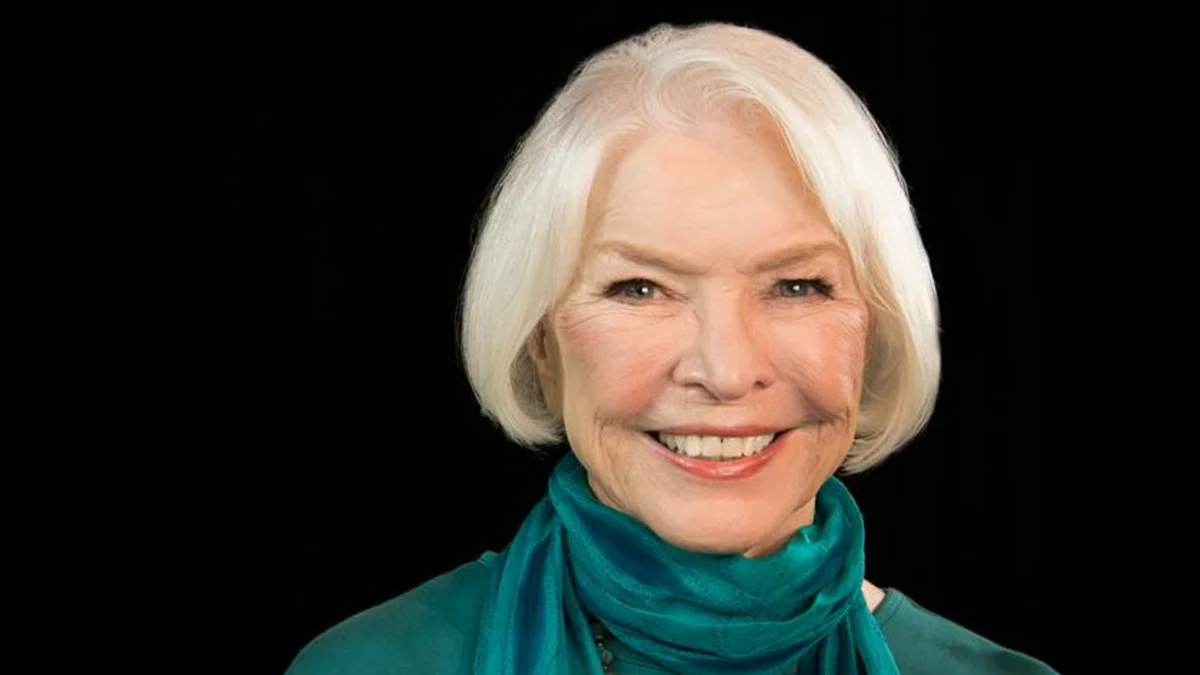
The esteemed Oscar-winning actress Ellen Burstyn, celebrated for her profound and transformative performances in cinematic touchstones such as Alice Doesn’t Live Here Anymore and The Exorcist, is set to be honored with a Golden Lion for lifetime achievement at the upcoming 83rd Venice International Film Festival. The accolade recognizes a career spanning over five decades, marked by an unwavering commitment to authenticity and an unparalleled ability to embody complex female characters on screen. Burstyn, now 93, continues to be a vibrant force in the industry, with her latest work poised for a special screening at the festival.
A Momentous Recognition and Burstyn’s Heartfelt Response
The veteran actress is scheduled to personally attend the venerable Italian festival, which runs from September 2-12, to accept her distinguished award. The presentation will take place during a special screening of Flesh Impact, a new short film directed by Maggie Gyllenhaal, in which Burstyn stars alongside Dakota Johnson, Peter Sarsgaard, and Sepideh Moafi. This moment underscores Burstyn’s enduring relevance and her ongoing collaboration with contemporary filmmakers, bridging generations of cinematic talent.
Reacting to the announcement, Burstyn conveyed her profound gratitude and excitement. In a statement, she exclaimed, "Wow! I not only get to travel to one of my top most favorite cities in the whole world. I get to return home carrying a Golden Lion in my arms! I feel so honored — so happy — so filled with gratitude! Wow indeed!" Her words capture a sense of joyous disbelief and deep appreciation for an honor that places her among the pantheon of cinema’s most revered figures. This emotional response highlights not just the personal significance of the award for Burstyn, but also the enduring magic that Venice, with its rich cultural tapestry and cinematic heritage, holds for artists worldwide.
The Golden Lion: A Symbol of Cinematic Immortality
The Golden Lion (Leone d’Oro) for lifetime achievement is one of the most prestigious accolades in the global film industry, bestowed by the Venice Film Festival to individuals who have made an indelible mark on cinema. Established in 1949, the Golden Lion is the highest honor presented at the festival, recognizing artistic excellence and groundbreaking contributions to the art form. The lifetime achievement variant, specifically, celebrates a cumulative body of work that has profoundly influenced and shaped the landscape of film. Previous recipients represent an illustrious roll call of cinematic giants, including filmmakers like Akira Kurosawa, Orson Welles, and Bernardo Bertolucci, and actors such as Sophia Loren, Al Pacino, and Catherine Deneuve. To join this esteemed company is to receive an affirmation of one’s lasting legacy and artistic impact, placing Burstyn firmly in the annals of cinema history.
The Venice Film Festival itself boasts a storied history, predating Cannes and Berlin as the oldest film festival in the world, having been founded in 1932. Held annually on the Lido of Venice, it serves as a crucial platform for launching new films and celebrating established masters. Its setting, against the backdrop of one of the world’s most beautiful and culturally significant cities, imbues the event with an unparalleled glamour and prestige, making the Golden Lion a particularly coveted honor. The festival’s artistic director, Alberto Barbera, plays a pivotal role in shaping its vision and selecting its honorees, ensuring that the awards reflect both historical significance and contemporary relevance.
Alberto Barbera’s Poignant Tribute to an Icon
Venice’s artistic director, Alberto Barbera, delivered a heartfelt and insightful tribute to Burstyn, describing her as an actress "of rare intensity and truth." Barbera emphasized her remarkable longevity and consistency, noting her continuous presence in American cinema for more than fifty years. He lauded her ability to "bring depth and complexity to unforgettable female characters embodying the contradictions and transformations in the contemporary woman." This statement succinctly encapsulates Burstyn’s unique gift: her capacity to portray women not as monolithic archetypes, but as multifaceted individuals grappling with the evolving realities of their lives, reflecting broader societal shifts.
Barbera meticulously highlighted Burstyn’s most celebrated performances, which have garnered her six Academy Award nominations, five of which were for Best Actress. Among these, he specifically cited her Academy Award-nominated roles in Peter Bogdanovich’s poignant drama The Last Picture Show (1971), William Friedkin’s terrifying masterpiece The Exorcist (1973), and Darren Aronofsky’s harrowing Requiem for a Dream (2000). Crucially, Barbera underscored her triumphant portrayal in Martin Scorsese’s Alice Doesn’t Live Here Anymore (1974), the film that earned her the coveted Best Actress Oscar. These roles, each distinct in genre and character, collectively showcase her extraordinary range and her fearless approach to challenging material.
Beyond these iconic, commercially successful works, Barbera also took care to acknowledge Burstyn’s significant contributions to independent cinema, underscoring her willingness to collaborate with indie auteurs. He detailed her collaborations with some of the most important film directors of her time: Alain Resnais in the enigmatic Providence (1977), Paul Schrader in the intense Hardcore (1979), Bob Rafelson in the critically acclaimed The King of Marvin Gardens (1972), and Paul Mazursky in both Alex in Wonderland (1970) and Harry and Tonto (1974). More recently, he noted her work with contemporary visionary Christopher Nolan in the science fiction epic Interstellar (2014), demonstrating her continuous appeal to filmmakers across diverse styles and generations. This breadth of collaboration speaks volumes about her versatility and the respect she commands within the creative community.
Barbera further elaborated on Burstyn’s profound artistic impact, stating, "Her artistry, which could illuminate pain and everyday resilience with dignity, irony and courage, remains an absolute model of authenticity in performance and civic engagement within the craft of acting." This description touches upon the core of Burstyn’s appeal: her ability to imbue characters with a raw, unvarnished humanity, reflecting both vulnerability and strength. Her performances often delve into the psychological depths of her characters, exploring themes of grief, despair, hope, and determination with a rare honesty that resonates deeply with audiences. This commitment to truth in her craft, coupled with her long-standing advocacy for actors through institutions like the Actors Studio, exemplifies the "civic engagement" Barbera refers to, solidifying her status not just as an actress, but as a significant cultural figure.
A Career Defined by Depth and Resilience: A Chronology of Milestones
Ellen Burstyn’s journey in acting is a testament to perseverance, artistic integrity, and a relentless pursuit of truth in performance. Born Edna Rae Gillooly in Detroit, Michigan, in 1932, her early career saw her navigate various paths, including modeling and stage work, before making her Broadway debut in 1957. Her transition to film in the late 1960s marked the beginning of her ascent.
- 1960s: After several television appearances and minor film roles, Burstyn gained critical attention for her role in Alex in Wonderland (1970), directed by Paul Mazursky.
- 1971: A pivotal year, she earned her first Academy Award nomination for Best Supporting Actress in Peter Bogdanovich’s critically acclaimed The Last Picture Show, a poignant coming-of-age drama that captured the disillusionment of small-town life. This role established her as a serious dramatic actress.
- 1972: She delivered a memorable performance in Bob Rafelson’s The King of Marvin Gardens, further cementing her reputation for nuanced portrayals.
- 1973: Burstyn achieved global recognition and her first Best Actress Oscar nomination for her terrifying and emotionally grueling portrayal of Chris MacNeil, a mother battling demonic possession, in William Friedkin’s horror classic The Exorcist. The film was a cultural phenomenon and remains one of the most impactful horror films ever made.
- 1974: Her career reached its zenith with Alice Doesn’t Live Here Anymore, directed by Martin Scorsese. Her performance as Alice Hyatt, a widow chasing her dreams of becoming a singer while raising her son, earned her the Academy Award for Best Actress. The film was a landmark for its realistic depiction of female independence and resilience.
- 1915-1980s: Burstyn continued to deliver powerful performances in films like Alain Resnais’ Providence (1977) and Paul Schrader’s Hardcore (1979), showcasing her versatility across European and American cinema. She also made significant contributions to television, earning an Emmy Award for her work.
- 1990s: While maintaining a steady presence in film and television, Burstyn also dedicated herself to theatre. She became a co-president of the Actors Studio in 1982, a role she still holds, guiding generations of actors in method acting techniques. Her work in theatre earned her a Tony Award.
- 2000: Burstyn received her sixth Academy Award nomination, this time for Best Supporting Actress, for her unforgettable and heartbreaking performance as Sara Goldfarb, an elderly woman spiraling into addiction, in Darren Aronofsky’s Requiem for a Dream. This role introduced her to a new generation of filmgoers and reaffirmed her status as a powerhouse performer.
- 2010s-Present: She continued to appear in a diverse array of projects, from blockbusters like Christopher Nolan’s Interstellar (2014) to acclaimed independent dramas such as Pieces of a Woman (2020), where she played a pivotal supporting role. Her recent work includes re-teaming with Pieces of a Woman director Kornél Mundruczó for his upcoming drama Place to Be.
Burstyn’s long and distinguished career is not merely a collection of roles, but a continuous exploration of the human condition, often through the lens of strong, complex women navigating challenging circumstances. Her commitment to her craft is exemplified by her deep involvement with the Actors Studio, where she has served as co-president for decades alongside Al Pacino and Harvey Keitel. This leadership role underscores her dedication not only to her own artistry but also to the perpetuation and evolution of acting as a serious craft.
Continued Relevance: Flesh Impact and Beyond
The decision to honor Burstyn at the 83rd Venice Festival is particularly timely, given her ongoing artistic contributions. Her starring role in Maggie Gyllenhaal’s new short film, Flesh Impact, serves as a powerful testament to her continued relevance and her willingness to engage with new directorial voices. Maggie Gyllenhaal, herself an acclaimed actress, has successfully transitioned into directing, earning critical praise for her feature debut The Lost Daughter. Her collaboration with Burstyn, along with a cast featuring talents like Dakota Johnson and Peter Sarsgaard, signals an exciting new project that brings together multiple generations of highly respected actors.
Burstyn’s active career trajectory, defying conventional expectations for actresses of her age, sends a significant message to the industry. In a landscape often criticized for its ageism, particularly towards women, Burstyn remains a sought-after talent. Her recent work with Kornél Mundruczó on Place to Be further demonstrates her enduring appeal and the unique depth she brings to any project. This continued output underscores Barbera’s assessment of her as a model of authenticity, inspiring younger actors and challenging preconceived notions about longevity in Hollywood.
The recognition of Ellen Burstyn with the Golden Lion for lifetime achievement at the Venice Film Festival is more than just an award; it is a celebration of a monumental career, an enduring artistic spirit, and a profound influence on cinematic storytelling. It is an acknowledgment of her unwavering dedication to portraying the multifaceted human experience with honesty, dignity, and unparalleled intensity. As the 83rd Venice International Film Festival prepares to unveil its full 2026 lineup on July 23, the announcement of Ellen Burstyn as a lifetime achievement honoree sets a tone of reverence for cinematic history and the timeless power of exceptional acting. Her legacy, characterized by a fearless pursuit of truth and a deep empathy for the characters she brings to life, will undoubtedly continue to inspire filmmakers and audiences for generations to come.