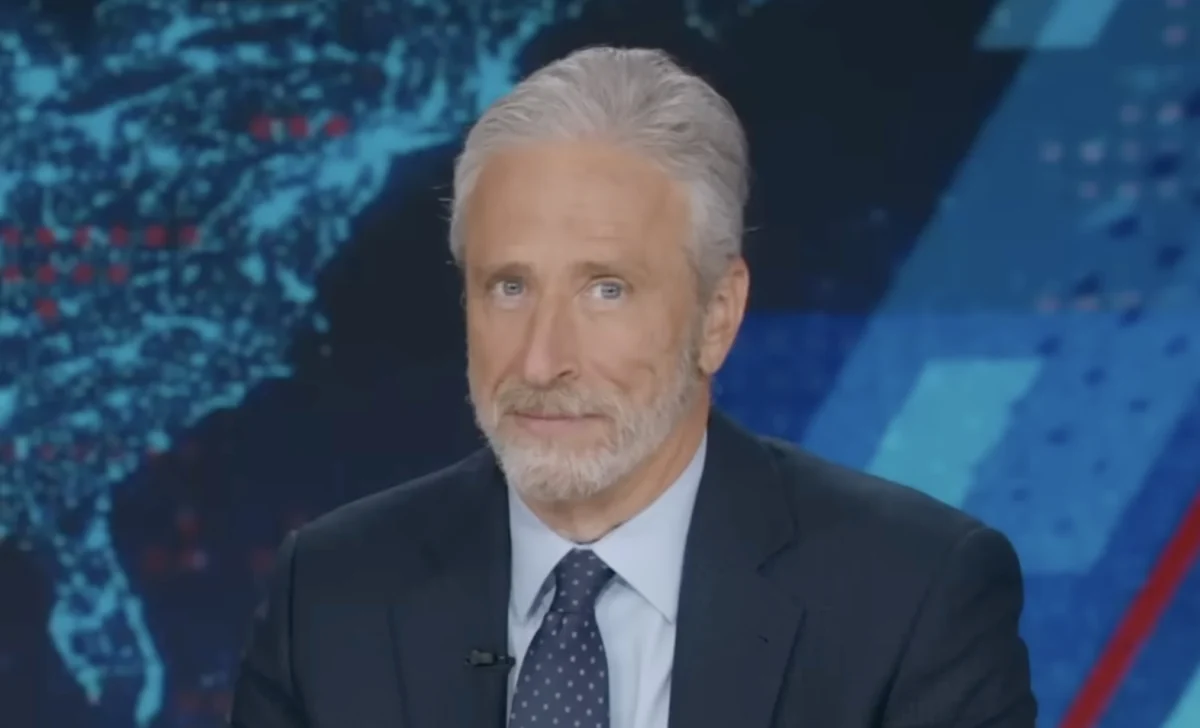
On the Monday evening broadcast of The Daily Show, dated July 13, host Jon Stewart dedicated his opening monologue to the recent passing of United States Senator Lindsey Graham of South Carolina. The veteran satirist utilized his platform to examine the public reaction to the senator’s death, focusing specifically on the series of media appearances made by former President Donald Trump. Stewart’s commentary highlighted what he characterized as a highly unconventional and often critical approach to memorializing a political ally. The segment, which blended Stewart’s signature political analysis with sharp satire, provided a detailed look at the complex relationship between the late senator and the former president, as well as the broader implications of such rhetoric within the American political landscape.
The Passing of a Political Fixture: Context and Career of Lindsey Graham
Senator Lindsey Graham, who served as a prominent figure in South Carolina and national politics for over three decades, was a central character in many of the most significant legislative and judicial battles of the 21st century. Before entering the political arena, Graham served in the United States Air Force and later as a colonel in the U.S. Air Force Reserve, where he worked as a judge advocate. His political career began in the South Carolina House of Representatives in 1992, followed by a tenure in the U.S. House of Representatives starting in 1995, where he gained national attention as a manager during the impeachment trial of President Bill Clinton.
Elected to the U.S. Senate in 2002 to succeed the legendary Strom Thurmond, Graham became known for his hawkish foreign policy and his close association with the late Senator John McCain. However, his political trajectory took a notable turn during the 2016 presidential election. Initially a fierce critic of Donald Trump—once famously calling him a "race-baiting, xenophobic, religious bigot"—Graham eventually transitioned into one of Trump’s most vocal defenders in the Senate. This evolution defined the latter part of his career, making him a polarizing figure among both Democrats and traditional Republicans.
The news of his sudden passing over the weekend sent shockwaves through Washington, D.C., prompting a flurry of official statements from colleagues across the aisle. However, it was the specific nature of Donald Trump’s tributes that became the focal point of Jon Stewart’s return to the Daily Show desk.
Trumps Media Blitz: A Series of Unconventional Memorials
Following the announcement of Graham’s death, Donald Trump engaged in a series of call-in interviews with major news networks, including Fox News, CNN, and NBC. These appearances, rather than adhering to the traditional decorum of a political eulogy, were marked by a mixture of personal grievances, critiques of Graham’s political stances, and anecdotes about their personal interactions.
On Fox & Friends, Trump’s tribute took an unexpected turn when he described his frequent phone conversations with the late senator. "He was a great guy, and he was a friend," Trump told the hosts. "He would call me all the time. He would just… I’d say, ‘Stop calling me, Lindsey.’" Stewart, reacting to this clip, noted the irony of a tribute that focused on the perceived nuisance of the deceased’s friendship. Stewart’s impression of the former president mocked this sentiment, suggesting that Trump’s primary memory of Graham was his own efforts to avoid the senator’s calls.
The former president’s rhetoric remained consistently candid in other interviews. Speaking with CNN’s Jake Tapper, Trump revisited the animosity of past political campaigns and Graham’s stance on international conflicts. "It was a nasty campaign. He was tough and nasty," Trump stated, referring to their 2016 rivalry. He further criticized Graham’s foreign policy, particularly regarding the war in Ukraine, suggesting that Graham was more interested in "keeping it going" than finding a swift resolution.
In an appearance on Meet the Press, Trump characterized Graham as a "total workaholic politician," but added a caveat: "You know, some people don’t call that work. Some people call that a lot of talking." These remarks, which Stewart described as "gently roasting someone for yapping too much," formed the basis of the monologue’s central critique: the blurring of lines between a memorial and a political grievance session.
Satirical Analysis: The Six Stages of Grief
Jon Stewart’s analysis of these events centered on the psychological and social oddity of Trump’s reactions. Stewart joked that Trump had bypassed the traditional five stages of grief—denial, anger, bargaining, depression, and acceptance—and invented a sixth stage characterized by dismissiveness and public criticism. By highlighting Trump’s comments on Graham’s golf game—where Trump noted Graham was "not exactly perfect" and "wasn’t Jack Nicklaus"—Stewart pointed out the absurdity of focusing on athletic shortcomings during a period of national mourning.
Stewart also touched upon the technical and social friction during these interviews. During the Fox & Friends segment, co-host Lawrence Jones attempted to steer the conversation toward a structured Q&A, only to be overwhelmed by Trump’s discursive rants on "Trump Derangement Syndrome" and mail-in ballots. Stewart mocked the situation by pretending to be a news producer attempting to "lose the signal" to end the awkward broadcast. This observation served to illustrate the difficulty media outlets face when managing the former president’s unscripted and often unpredictable public statements.
Political and Social Implications of the Rhetoric
The discourse surrounding Senator Graham’s death and Trump’s subsequent comments reflects a broader shift in the American political dialogue. Historically, the passing of a high-ranking official has been met with a temporary cessation of partisan hostilities, often referred to as "political civility." The departure from this norm by a former president and current political leader suggests a significant change in how political legacies are managed and perceived by the public.
From a journalistic perspective, Trump’s comments provide a window into the internal dynamics of the modern Republican Party. Graham’s shift from a "Never-Trumper" to a loyalist was a cornerstone of GOP strategy for years. Trump’s willingness to criticize Graham’s "nasty" campaign style and "workaholic" nature even after his death indicates that the former president’s personal brand of loyalty is often conditional and retrospective.
Furthermore, the role of late-night satire, as exemplified by Jon Stewart, continues to act as a secondary record of political events. By synthesizing news clips and providing a critical framework, Stewart influences how a significant portion of the electorate processes political news. The Daily Show’s focus on the "roast-like" nature of Trump’s tributes serves to highlight the perceived erosion of traditional political decorum, a theme that has been central to Stewart’s commentary since his return to the show.
Reactions from the Political Community
While Trump’s comments garnered the most media attention, other political figures offered more traditional responses. Senate Minority Leader Mitch McConnell praised Graham as a "tireless advocate for his state and a fierce defender of our nation’s security." Democratic colleagues, while often at odds with Graham’s policy positions, generally focused on his decades of public service and his ability to work across the aisle on specific judicial appointments.
However, the contrast between these formal statements and Trump’s media appearances created a fragmented narrative regarding Graham’s legacy. Political analysts have noted that this fragmentation is emblematic of the current state of U.S. politics, where even the death of a major figure is viewed through the lens of individual grievances and ongoing electoral strategies.
Looking Ahead: The Future of the South Carolina Seat
The passing of Senator Graham also triggers immediate political consequences for the state of South Carolina. According to state law, the Governor—currently Henry McMaster—is tasked with appointing a temporary successor to fill the vacancy until a special election can be held. This appointment will be crucial for maintaining the balance of power in the U.S. Senate and will likely spark intense debate within the South Carolina Republican Party.
Potential candidates for the seat include various high-profile state officials and members of the U.S. House of Representatives. The selection process will be closely watched by national political organizations, as South Carolina remains a pivotal state in both the Senate and the upcoming presidential election cycle.
Conclusion
Jon Stewart’s monologue on The Daily Show provided more than just a comedic take on a news event; it offered a critique of the changing nature of political tributes in the United States. By documenting Donald Trump’s various media appearances and contrasting them with the gravity of Senator Lindsey Graham’s passing, Stewart highlighted a unique moment in political history. As the nation moves forward from the loss of a long-standing senator, the discourse surrounding his death serves as a reminder of the complex, often contradictory relationships that define the highest levels of American government. The blend of humor and factual reporting in Stewart’s segment continues to serve as a vital component of the national conversation, challenging viewers to consider the implications of how we remember—and criticize—those who have shaped the country’s political landscape.