The courtroom exchange, stark and revealing, encapsulates the core of E. Jean Carroll’s prolonged legal battle with Donald Trump. When Trump’s lawyer, Alina Habba, posed the pointed question, "If you were concerned about being dragged through the mud, why would you choose to sue Donald Trump?" Carroll’s measured response, captured in the new documentary Ask E Jean, delivered a powerful truth: "Because he called me a liar. He called me a liar. And I couldn’t let it stand." This simple yet profound declaration underscores the unwavering resolve of a woman who, despite decades of ingrained societal pressure and the formidable power of her accuser, refused to allow her truth to be buried or dismissed.
A Woman of Grit: The Genesis of a Legal Odyssey
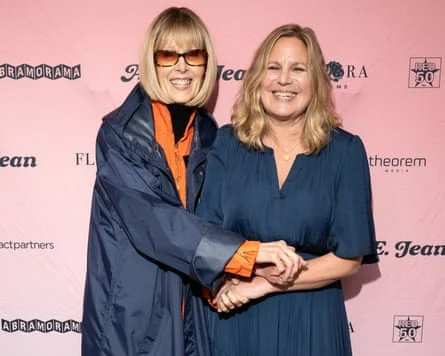
Ask E Jean, directed by Ivy Meeropol, offers an intimate portrait of E. Jean Carroll, a journalist, author, and celebrated advice columnist. The film delves into the life of a woman characterized by her indomitable spirit, profound resilience, and sharp intellect. Carroll, now 82, stands as a singular figure, having successfully sued Donald Trump in court not once, but twice. Her allegations stem from an incident in the mid-1990s, where she claims Trump sexually assaulted her in a Bergdorf Goodman dressing room. The subsequent legal proceedings have captivated the nation, transforming a personal grievance into a landmark case with significant implications for public discourse and accountability.
The documentary meticulously examines Carroll’s decision to come forward after decades of silence. Meeropol posits that Carroll belongs to the "silent generation," a cohort of women conditioned by societal norms to absorb and endure male predatory behavior with stoic resignation. Carroll herself articulates this in the film: "I was born in 1943. We are the chin-up, move-it-on, grin-and-bear-it generation. We didn’t complain. It would never occur to me. We actually smiled about it and moved on. That’s how we handled things." This historical context is crucial to understanding the immense personal courage required for Carroll to break from the ingrained patterns of her upbringing and confront a powerful figure.
A Multifaceted Career Forged in Independence
Carroll’s background is as rich and varied as her legal fight. A former Miss Indiana University and Miss Cheerleader USA, she shattered glass ceilings early in her career, becoming the first female contributing editor at Playboy magazine. Her iconic "Ask E Jean" column, which ran in Elle from 1993 to 2019, offered candid and often unconventional advice, resonating with a generation of women navigating evolving societal expectations. She also hosted her own cable television show, contributed to Saturday Night Live, and penned an unauthorized biography of the legendary gonzo journalist Hunter S. Thompson, demonstrating a fearless approach to her work and a willingness to challenge conventions.
The Catalyst for Legal Action: Defamation and the Power of Truth
The film highlights that Carroll’s journey to the courtroom was not a premeditated pursuit of litigation. Inspired by the #MeToo movement, she initially compiled a list of "hideous men," including Trump, as a means of processing her own experiences and responding to readers seeking guidance on how to report their own encounters with abuse. However, it was Trump’s forceful and public denial of her allegations that ignited the legal firestorm.
On the White House lawn, Trump, who has faced numerous accusations of sexual misconduct over the years, vehemently dismissed Carroll’s claims, labeling her a "liar" and a "whack job," and asserting she was "not my type." For Carroll, a woman who had meticulously built her career on credibility and wit, this sustained defamation was an unbearable assault on her integrity. The documentary underscores how Trump’s aggressive counter-narrative, particularly his assertion that Carroll was not his type, became a critical vulnerability in his defense. Evidence presented during the deposition phase, including Trump misidentifying Carroll in a photograph as his ex-wife Marla Maples, directly undermined this claim.

A Legal Titan and the Fight for Justice
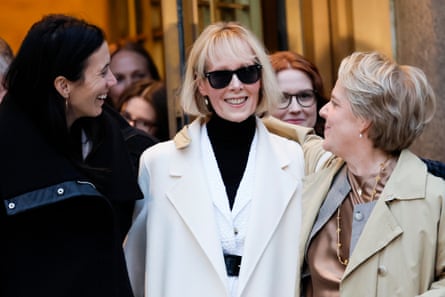
To confront this onslaught, Carroll enlisted the formidable legal expertise of Roberta Kaplan, a civil litigator widely recognized for her tenacity and strategic prowess. Together, they embarked on a legal campaign that would unfold over several years.
In 2023, a jury found Donald Trump liable for sexual abuse and defamation. While the jury did not determine that he raped Carroll, they awarded her $5 million in damages. This verdict marked a significant victory, validating Carroll’s claims of sexual assault and defamation against a former U.S. president.
The legal battle, however, was far from over. In 2024, a second jury awarded Carroll an additional $83.3 million in defamation damages. This substantial award was intended not only to compensate Carroll but also to serve as a punitive measure, aiming to deter Trump from further defaming her. Despite these jury decisions, Trump’s legal team has continued to challenge the rulings, and Carroll has yet to receive any of the awarded funds, highlighting the protracted and often frustrating nature of legal recourse, especially when powerful figures are involved.
The "Silent Generation" and the Burden of Laughter
The documentary skillfully navigates the complexities of Carroll’s past, particularly her initial reaction to the alleged assault. Meeropol’s empathetic direction reveals how laughter, in the context of Carroll’s generation, often served as a desperate shield against uncomfortable or threatening situations. "She is unapologetic and so many women will recognize that in themselves," Meeropol stated in a virtual interview. "Of course, you can try to laugh because it’s – ‘Wait a minute, what’s happening here? I don’t want this person to get angry.’ It makes perfect sense but it gets so warped by how we talk about these things." This societal conditioning meant that women like Carroll often internalized their experiences, confiding in a few trusted friends and then burying the memory, a coping mechanism that was later weaponized against them in legal and public forums.
From Private Life to Public Scrutiny: The Documentary’s Creation
Securing Carroll’s participation in the documentary was a testament to Meeropol’s persistence. Initially, Carroll was hesitant, famously relaying through her agent that she "would rather eat my shoe." The breakthrough came when a mutual acquaintance convinced Carroll to watch Meeropol’s acclaimed HBO documentary, Bully. Coward. Victim. The Story of Roy Cohn, a film that explored the life of the notorious lawyer who mentored Trump and prosecuted Meeropol’s own grandparents, Julius and Ethel Rosenberg. This connection, rooted in shared experiences of confronting powerful, ethically compromised figures, paved the way for a subsequent Zoom meeting, after which Carroll agreed to the project.
Meeropol describes discovering a woman who remains vibrant, eccentric, witty, and generous, yet fiercely protective of her private life. "She needs her time alone; she’s a writer; that’s what she loves to do. She likes to be in her cabin with her dogs, drinking her tea and writing or reporting. A lot of what she had to endure with the trials and all the publicity was very hard for her."
Navigating Obstacles: Funding and Archival Discoveries
The path to bringing Ask E Jean to the screen was fraught with challenges. Financiers and studios repeatedly rejected the project, citing "Trump fatigue," an oversaturation of #MeToo narratives, or Carroll not being famous enough. Meeropol expressed surprise and disappointment, stating, "I thought, we’ve got the most incredible character in documentary history, possibly."
Ultimately, the film secured independent equity investment in 2023 with a modest budget of under $2 million. During the production process, Meeropol and her team embarked on an extensive archival search, sifting through boxes of old VHS tapes from Carroll’s storage unit and her home basement. A stroke of luck, or perhaps a dramatic twist of fate, occurred when a basement flood threatened to destroy irreplaceable footage. Miraculously, the rescued tapes, along with an additional 25 episodes unearthed by NBCUniversal, provided invaluable material: recordings of Carroll’s 1990s television show, which aired on America’s Talking cable network, a platform then managed by Roger Ailes.
Progressive Voices from the Past
Reviewing this unearthed footage, Meeropol was struck by the radical progressiveness of Carroll’s advice during the mid-1990s. "She is giving incredible advice at a time when women were not hearing that. Like, ‘You don’t have to be married at 30. Who told you that? Don’t beat yourself up because you’re not married at 30. If you’re bored at home because your husband goes off to work and you drop your kid off at school, go to college.’" This historical perspective highlights Carroll’s pioneering role in encouraging women to prioritize their careers and personal fulfillment, even when societal norms dictated otherwise. Her own journey, forging a path in the male-dominated magazine industry, served as a powerful testament to her independent spirit.
Beyond Victimhood: Redefining Resilience
Crucially, Meeropol was determined not to portray Carroll as a victim. "She rejects those terms herself – even ‘survivor’," the director noted. This deliberate framing challenges conventional narratives surrounding sexual assault survivors, emphasizing agency and strength. Meeropol draws parallels to figures like Gisèle Pelicot and the Epstein survivors, who have spoken about the imperative of shifting shame away from the victim.
Carroll’s own candidness, her willingness to admit to flirting with Trump, to attempting to laugh off the situation, and her enduring affection for men, is presented as a refreshing departure from expected narratives. As Carroll herself states in the film, the most detrimental outcome for her would have been to "make yourself the victim." Her approach embodies a powerful counter-narrative, one that focuses on reclaiming one’s story and refusing to be defined by the actions of an aggressor.
A Call for Truth in the Public Sphere
Meeropol hopes Ask E Jean will resonate beyond Carroll’s individual experience, serving as a broader call to action. "We can’t let these stories be buried," she insists. "The Trump administration or whoever is hiding in the Epstein files? I’m sick of it and E Jean is too. Many of us, men and women, are fed up so put things out and show the truth." In an era marked by ongoing debates about accountability, the integrity of public figures, and the enduring impact of sexual misconduct allegations, Carroll’s story, as illuminated by Meeropol’s documentary, offers a compelling and timely examination of courage, truth, and the long, arduous fight for justice. The film stands as a powerful reminder that even in the face of overwhelming adversity, one voice, amplified by resilience and truth, can challenge deeply entrenched power structures.