Mark Williams, a familiar face to audiences worldwide for his portrayal of Arthur Weasley in the beloved Harry Potter film series and for his comedic brilliance in "The Fast Show," recently offered a candid glimpse into his experiences on set and his thoughts on his diverse career. In a wide-ranging interview, Williams reflected on the highs and lows of his time in the Wizarding World, shared amusing anecdotes about his co-stars, and discussed his ongoing passion for various aspects of British culture and technology.
The Dual Nature of Filming the Wizarding World
When asked about the best and worst moments of shooting the Harry Potter films, Williams succinctly captured the essence of a long-running, demanding production. "The worst part was being away from home and the long hours," he admitted. The immersive nature of the magical world, while captivating on screen, required significant time and dedication from its cast and crew. The principal photography for the Harry Potter films spanned over a decade, from 2000 to 2010, with each film demanding months of intensive work. For actors like Williams, this meant extended periods away from their families and a rigorous schedule that often involved early mornings and late nights.
However, the challenges were significantly outweighed by the positives. "The best bit was the work and talking to the other actors," Williams stated, looking back with evident warmth. "I look back with great fondness on that. I remember saying to Alan Rickman that the collective noun for actors is an anecdote." This observation highlights the camaraderie and shared experiences that often develop on such extensive film projects. The bonds formed between actors, particularly those who spend years together, can become a significant source of support and enjoyment.
Williams specifically lauded the storytelling prowess of his colleagues. "Michael Gambon was the king of stories," he recalled. Gambon, who took over the role of Albus Dumbledore from the second film onwards, was known for his captivating presence both on and off-screen. "He’d start a joke and you never knew where he was going. But he’d hone them; they were finely crafted – some of his best work was backstage." Similarly, Richard Griffiths, who played the formidable Vernon Dursley, was described as a "great raconteur. His stories were brilliant, and completely unpublishable." The presence of such seasoned performers undoubtedly enriched the on-set atmosphere, providing levity and shared moments of mirth amidst the demanding production schedule.
Even the more flamboyant personalities on set contributed to the unique environment. Williams recounted an amusing interaction with Maggie Smith, known for her sharp wit as Professor McGonagall. "Maggie [Smith] liked to be Maggie," he said. "I remember at one premiere I wore this blazer a friend had made for me and could see her glinting across the room. Then she bowled over and went: ‘Have you just been at Henley?’ She was delighted with herself for that." This anecdote captures Smith’s characteristic dry humour and keen observation.
The camaraderie extended to more unexpected shared interests. Williams revealed a peculiar bond with Robbie Coltrane, who played Rubeus Hagrid. "With Robbie Coltrane I used to like going through Plant Trader, which was a sales magazine for big stuff: cranes, tractors, earthmoving equipment. We never purchased anything, but we came close." This shared, niche interest underscores the diverse personalities and unexpected connections that can form within a large cast.
Unexpected Encounters and the Unseen World of Extras
The sheer scale of the Harry Potter productions meant that the sets were often populated by hundreds of extras. When questioned about the oddest place he’d been recognized for his role, Williams cleverly flipped the question, sharing an anecdote about recognizing someone unexpected amidst the crowd. "I’m gonna flip that question and tell you the oddest person I recognised making the films," he began.

"We were shooting in the Ministry of Magic: an enormous set with a huge number of extras. This guy walked past me and I thought: that’s my accountant. When we’d stopped shooting I went over and said: ‘Harry? What are you doing?’ He said: ‘Oh, it’s a group of us. We just come and do supporting artist extra work for a laugh. That guy over there is a high court judge, and he’s a contract law specialist.’" This revelation offers a fascinating insight into the diverse backgrounds of individuals who contribute to large-scale film productions. It underscores the idea that behind the glamour of Hollywood, many individuals pursue acting as a hobby or a way to experience a different facet of life.
Williams concluded this anecdote with a valuable lesson learned: "I told the assistant directors: never underestimate the extras." This sentiment resonates with the often-overlooked contributions of supporting artists, who play a crucial role in bringing fictional worlds to life. The sheer volume of people involved in a production like Harry Potter, from principal actors to the thousands of extras, creates a complex ecosystem where surprising connections and individuals can be found.
Enduring Connections and the "Dark Side"
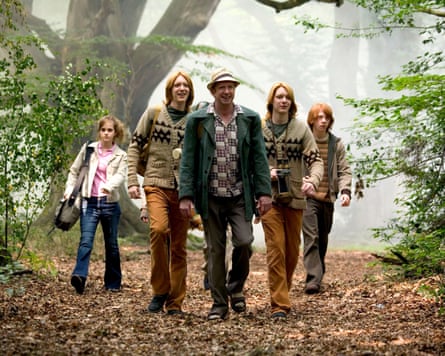
Despite the passage of time, the bonds forged on the Harry Potter sets have, in many cases, endured. When asked about staying in touch with the actors who played his on-screen children, the Weasley twins, Williams acknowledged a continuing connection, though not necessarily in the form of regular reunions. "We don’t really have reunions, but we are sort of in touch," he explained. "I’ve worked with the twins on one of their documentaries. We went to Singapore: very nice, too." This indicates a lasting professional and personal connection with James and Oliver Phelps, who portrayed Fred and George Weasley.
Interestingly, Williams finds himself more in touch with the "dark side" of the Harry Potter universe. "But I keep more in touch with the death eaters like Nick Moran and Jason Isaacs." Isaacs, who played the formidable Lucius Malfoy, and Moran, who portrayed Scabior, are notable figures within the antagonistic ranks of the films. This preference for maintaining connections with those who played the more villainous characters might speak to a shared experience of embodying characters who often operate outside the mainstream, or perhaps simply a different circle of friendships that developed during filming.
Aspirations Beyond the Wizarding World
Williams’s career is marked by its diversity, spanning from beloved children’s fantasy to gritty dramas and popular comedy. When presented with the hypothetical of action hero roles like James Bond or Superman, and the iconic science fiction series "Doctor Who," he revealed his existing connection to the latter. "I’ve been in Doctor Who: I was Brian Williams, who’s the sort of antihero," he stated. His appearance in the 2010 episode "The Eleventh Hour" saw him play the father of the Eleventh Doctor’s companion, Amelia Pond.
While he hasn’t been offered a traditional superhero role, Williams humorously suggested that his current role as the titular character in "Father Brown" is edging towards that territory. "Never been offered a superhero role, although I suppose Father Brown’s heading towards superhero status," he mused. This self-aware observation acknowledges the enduring appeal and unique problem-solving abilities of the kindly Catholic priest detective.
The Art of Collaboration and Costume
Williams’s appreciation for collaboration extends beyond his acting colleagues to the often-unsung heroes of film and television production: the costume departments. When asked about his favorite collaborations, he placed Hugh Laurie, with whom he worked on "101 Dalmatians" and "The Borrowers," at the top of his list. However, he quickly added, "Secondly, all costume departments. Those have been very fruitful collaborations."
He elaborated on the impact of thoughtful costume design on an actor’s performance. "I remember going to meet Bunny Christie on Shakespeare in Love, and she looked me up and down like she does and went: ‘Hmm, a make, I think.’ I felt like I’d arrived: I wasn’t getting something off-the-peg." This anecdote highlights how a bespoke costume, tailored to a character’s specific needs and personality, can be a transformative experience for an actor. It signifies a deeper engagement with the role, moving beyond a generic portrayal to something uniquely crafted.
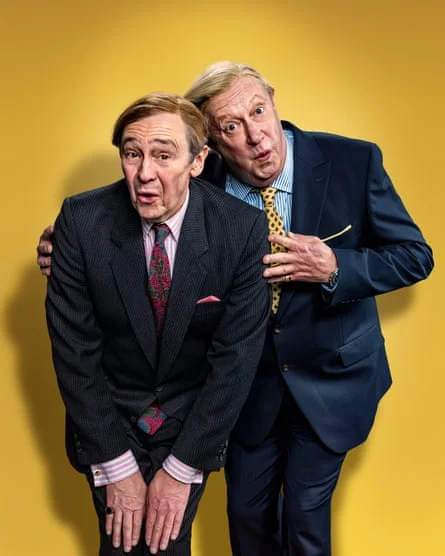
Williams also reflected on the evolving perception of certain attire. "These days, I’m getting into wearing suits. Before, it was ringfenced: if you wore a suit, you became a suit. But now it’s ironic." This observation points to a cultural shift where formal wear is no longer strictly indicative of a particular persona, allowing for more playful and ironic interpretations of style.
The Enduring Appeal of the Harry Potter Studio Tour
The Harry Potter films have left an indelible mark on popular culture, and the Warner Bros. Studio Tour London – The Making of Harry Potter continues to draw millions of fans annually. Williams expressed his appreciation for the new additions to the tour, particularly "Fluffy’s paw [Hagrid’s three-headed dog]." His fondness for this particular animatronic element stems from a deeper appreciation for the craft of filmmaking. "I just like the idea of a giant animatronic hand. It makes me think of Ray Harryhausen. You only have that kind of thing in films." This sentiment connects the modern magic of the Harry Potter films to the pioneering work of legendary stop-motion animator Ray Harryhausen, recognizing the lineage of cinematic artistry.
A Passion for British Industry and Maritime Culture
Beyond his acting career, Williams has a notable passion for industrial history and technology, as evidenced by his work on the series "Industrial Revelations." When asked about returning to presenting, he expressed a keen interest in exploring the maritime culture of the British Isles. "I’d like to do something about the maritime culture of the British Isles," he stated. "I’m very, very interested in that. I’d like to deal with the nuts and bolts of the technology, the how and why. We contributed so much to that globally."
His vision for such a program involves a deep dive into the historical and technological aspects of Britain’s seafaring heritage. "I’d go to Chatham, Hartlepool, the west coast ports, Brixham and stuff. You’ve got docks everywhere, which still have enormous archaeological potential." This demonstrates a desire to connect with the tangible history and engineering achievements that have shaped the nation.
Distinguishing Between Film and Television
When it comes to the perceived challenges of acting in film versus television, Williams maintains a pragmatic approach. "I don’t differentiate. I just like working." This straightforward answer reflects a dedication to the craft itself, regardless of the medium. For many actors, the core principles of character development, performance, and storytelling remain consistent, whether on a film set or a television studio.
The Echoes of Catchphrases
The enduring popularity of "The Fast Show" means that Williams’s iconic catchphrases often resurface in public interactions. However, he finds that these phrases don’t necessarily spill over into his everyday speech. "Not really," he replied when asked if he finds himself saying "Suits you sir" or "Nice." Instead, he noted a peculiar echo of his mother’s speech. "But my mum did without ever acknowledging it. She used to go: ‘Which was nice.’ I’d look at her and think: do you know that was me, mum?" This adds a touching, personal layer to the legacy of his most famous lines.
The train driver’s perfectly timed utterance of "You ain’t seen me, right" at Clapham Junction, a nod to his "Fast Show" persona, was met with admiration. "Which I thought was majestic timing and I’d like to congratulate him," Williams commented. This highlights his appreciation for wit and spontaneous humor, even when directed at him.
When contemplating which catchphrase he wishes he had originated, Williams thoughtfully considered several options before settling on Catherine Tate’s "How very dare you?" "I thought long and hard about this. I wondered about ‘I’m free!’ and ‘Ooh, matron!’, but I was talking to my wife and the one I actually use more is ‘How very dare you?’, which is a work of genius from Catherine Tate. I just love it. You’ve just got so much politics in there. It’s wonderful." His admiration for the phrase underscores its multifaceted nature, encompassing social commentary and a sharp, witty delivery.
Musical Talents and the Charm of Music Hall
Williams’s vocal talents have been showcased, notably when he sang "The Spaniard That Blighted My Life" in "Father Brown," and he possesses an uncanny George Formby impression. Despite these abilities, he has no aspirations for a singing career. "No," he stated unequivocally. However, he expressed a deep affection for music hall traditions. "I have done [Doctor] Dolittle on tour, though, and I’m a big fan of the music hall. I love the Britishness: that sense of humour, the lunacy, the madness of it." This appreciation for the theatricality and uniquely British comedic sensibilities of music hall reveals a significant influence on his own performance style.
Critiquing Performances and the Joys of Old Films
Williams has opinions on his predecessors, even those as revered as Alec Guinness. Regarding Guinness’s portrayal of Father Brown, Williams offered a surprisingly critical assessment. "I have and much as I love Alec Guinness, I think he’s terrible at Father Brown. He does the same voice as he does for the bishop in Kind Hearts and Coronets. He sort of acts clerical – and that’s not the point of Father Brown. Maybe he thought it was unassuming. But it is a bit weird, the voice." This candid critique suggests a strong belief in his own interpretation of the character and a nuanced understanding of what makes Father Brown unique.
His television viewing habits are modest. "I don’t really watch any football any more. I’m terrible at watching the telly. I mostly watch old films on my phone in bed." This preference for classic cinema, consumed in a relaxed setting, speaks to a deep appreciation for the history of filmmaking and a more personal, intimate way of engaging with the medium.
Bromsgrove’s Most Famous?
When playfully challenged about being the most famous living Bromsgrovian, Williams deferred to Rufus Norris, the former head of the National Theatre. "Rufus Norris, the former head of the National Theatre, is from Bromsgrove. I think he can have it." However, he then humorously highlighted his own international recognition, suggesting his global reach, particularly in Japan and China, might surpass Norris’s. His mention of "Father Brown" being shown in China and his desire to ride the maglev train in Shanghai underscore a global perspective and a fascination with technological advancements.
Williams also used this opportunity to advocate for greater unity and forward-thinking infrastructure in the UK. "We’re so unjoined-up with our concerns and angers. We need to stop protesting and start working together, and putting maglevs in airports, and the post office tunnels under London." This passionate plea reflects a broader concern for societal progress and efficient infrastructure.
A Sweet Tooth and a Fondness for Marzipan
Finally, Williams addressed a lighthearted query about his past appearance in a cherry bakewell advertisement. He confirmed his enjoyment of the pastry, but revealed a greater affection for another sweet treat. "I like cherry bakewells, but best of all is battenberg: a great cake. Big fan of marzipan. I love that sugar sheath. But I don’t unwrap it separately. I just eat it." This simple, yet relatable, admission about his culinary preferences adds a final, personal touch to his reflections.