The season one finale of "The Testaments" has concluded, leaving viewers to grapple with the intricate web of power, survival, and burgeoning rebellion within the dystopian theocracy of Gilead. While the show has been renewed for a second season, signaling the continuation of Margaret Atwood’s novel’s narrative arc on screen, the first season’s conclusion offered a surprisingly subdued yet potent examination of Gilead’s inner workings. This season, in particular, has served as a crucial onboarding process for audiences new to the world of Gilead, drawing parallels to the societal anxieties that fueled the original "The Handmaid’s Tale" during the Trump administration, while "The Testaments" appears to resonate with the post-Epstein era revelations about systemic abuse and power.
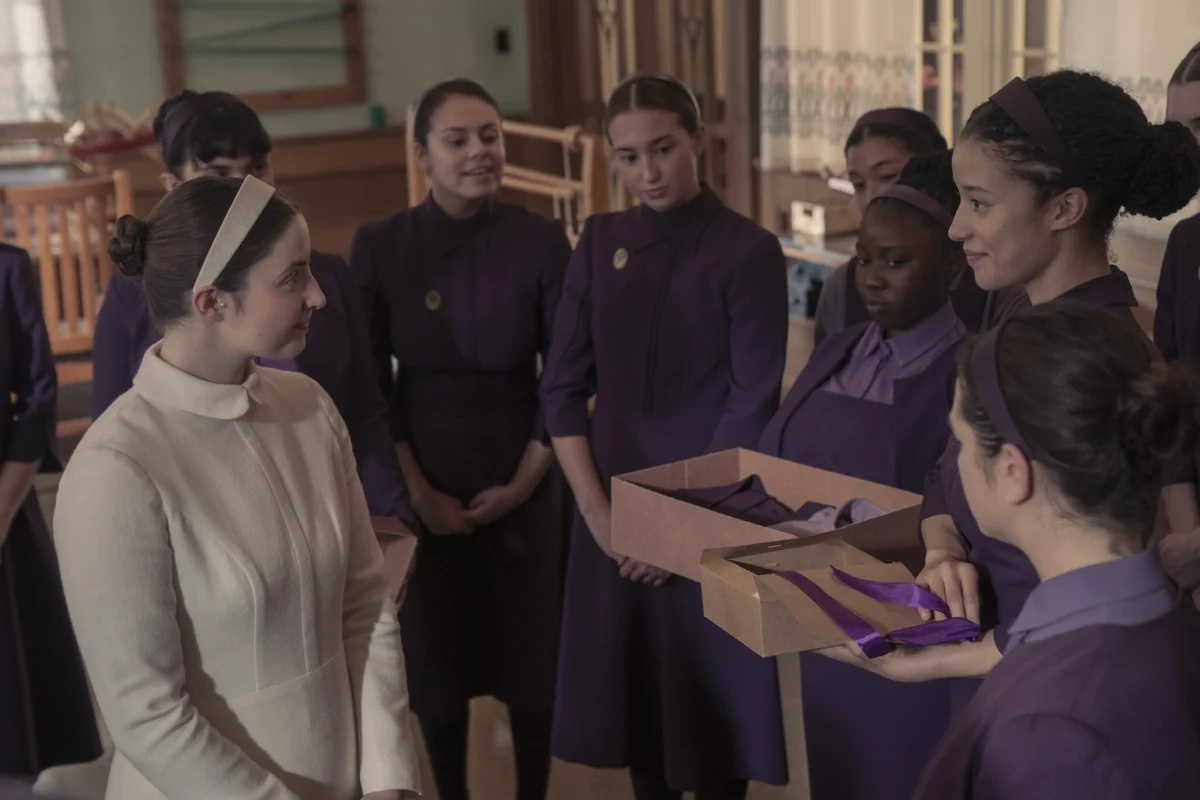
The finale, titled "Secateurs," employed the imagery of pruning shears not only to symbolize the harsh realities of Gileadean justice, as embodied by Becka’s decisive actions, but also to foreshadow the severing of bonds and the pruning of youthful potential within the rigid societal structure. The season, while rich in spectacle with its depiction of rites of passage like the menarche initiation, tea parties, assemblies, and field trips, ultimately focused on the muted wedding ceremonies in its finale. Becka’s was a private, hasty affair, while others presumably occurred off-screen, underscoring the lack of genuine celebration or personal choice in these mandated unions.

A Glimpse into Gileadean Society and its Deep-Seated Corruption
The narrative has consistently highlighted Gilead’s commitment to perpetuating its cycle, even in the face of murder and the forced marriages of underage girls to older Commanders. The fact that some of these unions proceed with minimal disruption serves as a stark testament to Gilead’s capacity for self-preservation. However, this very resilience also hints at the systemic rot festering at its core, a corruption that is poised to unravel the entire structure from within. The season has presented a clear dichotomy: on one hand, the chilling efficiency of Gilead’s indoctrination and control; on the other, the quiet, persistent acts of defiance and the deep-seated yearning for justice.
This season’s structure, with its significant focus on flashbacks, particularly those detailing Aunt Lydia’s early days in the new world order, has been a point of discussion. While these sequences effectively illustrate Lydia’s chillingly swift adaptation and her willingness to embrace the oppressive ideology – even participating in the execution of a colleague – their placement within the first season raises questions about narrative pacing. For viewers already familiar with the book’s intricacies, these flashbacks might have felt like an extended setup. However, for newcomers, they were crucial in understanding the motivations and the chilling transformation of key figures. The episode detailing Lydia’s selection of the Aunts’ signature colors and her ruthlessness in executing Vidala served as a potent, albeit perhaps overly drawn-out, illustration of her descent into complicity.
The Spectacle and the Subtext of Gileadean Weddings
The visual grandeur of Gileadean ceremonies, such as the menarche initiation and the Assemblies, has been a consistent feature. The finale’s weddings, however, were intentionally subdued. Becka’s marriage, conducted privately, and the implied off-screen ceremonies for others, stand in stark contrast to the supposed sanctity of matrimony. The episode’s title, "Secateurs," aptly captures the essence of these events – a pruning, a cutting away of individual desire in favor of societal mandate. Becka’s act of wielding pruning shears for justice, a visceral and violent response to her father’s sexual predation, is a powerful moment that resonates with the show’s exploration of trauma and retribution. Her father’s transgressions extended beyond moral boundaries, violating Gileadean laws of ownership and exploiting vulnerable girls seeking his dental care. Becka, a Plum-turned-Green, raised on a diet of retribution, felt compelled to deliver judgment, preventing further harm to her peers and potentially younger girls.

The swift, almost transactional nature of Commander Weston’s involvement in bringing Becka home, allowing her mother to take the fall and Becka to assume a pre-ordained "Wife" role, highlights the disposable nature of individuals within Gilead. The consequence for Agnes, once Weston discovered her status as a victim, was immediate rejection – deemed "damaged goods." This callous dismissal underscores the patriarchal control and the devaluation of women’s autonomy and worth.
The kiss shared between Agnes and Becka, while seemingly a tender moment, is imbued with profound bittersweetness. Agnes faces the simultaneous loss of her best friend and her romantic interest. While the kiss may hold a shared significance on an emotional level, its true meaning, particularly in the context of adolescent complexities, is left open to interpretation, promising fertile ground for exploration in the next season.
Surrogates and the Complexities of Mayday’s Mission
The confrontation between June and Daisy, though deviating from the novel’s specifics, offered a compelling emotional arc. This season’s Daisy is presented not as June’s biological daughter Nichole, nor directly connected to other prominent characters from "The Handmaid’s Tale," but rather as a surrogate daughter figure for multiple women who managed to escape Gilead. This detachment from direct familial ties grants Daisy a certain agency, allowing her to challenge June, a figure of legendary defiance. June’s initial impulse to extract Daisy from Gilead is complicated by Daisy’s mention of Agnes, a revelation that fundamentally alters the course of their argument and prompts June’s reluctant agreement to keep Daisy involved.

This development, however, raises critical questions about Mayday’s overarching strategy. The decision to place Daisy, a Pearl Girl, into a random section of Gilead seems like a scattershot approach, rather than a targeted infiltration aimed at rescuing Agnes or gathering intelligence. June’s visceral reaction to the possibility of Daisy encountering Hannah, a moment of maternal anguish that transcends her own mission, injects a powerful emotional layer. Yet, it also exposes the ambiguity of Mayday’s operations. While their past actions, such as the attack on school buses, have been controversial, their objectives remain unclear – are they aiming to harm the girls or to save them? Despite June’s past success in eliminating Commanders, the continued presence of predatory older men eager to marry young girls highlights the persistent systemic issues that Mayday seems to be struggling to dismantle effectively. The question of Mayday’s precise plan and its efficacy remains a central enigma.
The Handmaid’s Daughter’s Tale: A Shifting Landscape
The "daisy chain" of revelation continues as Daisy informs Agnes about her mother’s true identity, confirming Agnes’s repressed suspicions. Agnes’s acknowledgment of her lineage to Lydia establishes a fragile bond, hinting at a potential future collaboration between them to secure Agnes’s future. The series appears to be withholding the direct mirroring of the novel’s plot point, where Becka and Agnes become Aunt-in-training. This deliberate divergence suggests a strategic narrative choice to explore alternative paths for these characters in the upcoming season.
Furthermore, the season has clarified the ongoing role of Handmaids in Gilead, despite Lydia’s loss of control over the Red Center. The continued availability of Handmaids for families underscores the persistent demand for childbearing, even as June’s actions have led to the liberation of numerous Handmaids. The question of who will be chosen for this role in the future, especially given June’s disruptive impact, remains open. The possibility of Agnes following in her mother’s footsteps and becoming a Handmaid seems unlikely, given her background as the daughter of a prominent Commander, even as a jilted Green.

Pinky Swears and the Seeds of Future Resistance
Becka’s transition to Wife signifies a new phase in her life, one that will confine her to her new household with Garth. This shift will inevitably alter her interactions with Agnes and the other girls, limiting their ability to steal moments together. The world-building here is keen, highlighting how societal roles dictate the proximity and nature of relationships. Agnes, Daisy, and Shu must now renew or strengthen their bonds through more deliberate means, like a pinky swear, to maintain their connections. The fate of characters like Hulda, who is likely to be married off soon, adds another layer to the pervasive cycle of these young women’s lives.
The final image of Agnes, Daisy, and Shu, reminiscent of June’s later-season connections with women across Gilead’s social strata – Marthas, Jezebels, and Wives – suggests a burgeoning network of resistance. As this new generation matures into their roles, their growing discontent and dissent hold the potential to spread across households and even influence their Commander husbands, particularly with Garth’s continued clandestine work with Mayday.
The season’s voiceover, culminating in the resonant assertion that "there’s nothing more dangerous than a teenage girl," while impactful, feels somewhat circular. Given the significant pre-series promotion of this theme, its reappearance as a concluding statement suggests a return to the initial premise rather than a forward progression. However, upon closer examination, the finale does subtly fulfill the traditional wedding rhyme: Agnes recalling herself as Hannah represents "something old and something new," Daisy receiving June’s hug is "something borrowed," and Becka’s mother, taking the fall for her daughter’s actions, embodies "something blue." These elements, though perhaps less overtly spectacular, tap into a shared cultural language, hinting at the deeply embedded traditions and emotional undercurrents that continue to shape lives within Gilead.

Pearls and Pins: The Enduring Threat of Gilead
The season concludes with unanswered questions regarding Mayday’s operational effectiveness and the broader implications of their actions. The persistent threat of powerful men exploiting young girls, despite June’s past victories, underscores the deep-seated nature of Gilead’s patriarchal structures. The ongoing cycles of forced marriage and control, particularly for the younger generation like Agnes, Becka, and Daisy, raise significant concerns about the future. The question remains: what is the ultimate plan to dismantle this oppressive regime, and how will the next generation of young women, now more aware of the injustices, forge their path towards liberation? The implications of these unresolved narratives promise a compelling and potentially explosive second season.