A Kaleidoscopic Vision of Lebanon’s Enduring Crises
Daher’s directorial vision for Do You Love Me transcends conventional storytelling, deliberately blurring the lines between reality and artifice. The film masterfully intercuts scenes from action movies with raw newsreel footage depicting street violence in Beirut, challenging viewers to discern the staged from the tragically real. This technique underscores the pervasive nature of conflict in Lebanon, where the everyday experience often mirrors the dramatic intensity of cinematic narratives. The film presents a polyphonic chorus of voices, with everyday civilians and intellectuals alike offering their perspectives on the Lebanese Civil War and the intricate system of political confessionalism, conversing in both Arabic and French.
Amidst these reflections on conflict and governance, the film weaves in moments of profound human experience: newlyweds dancing, children celebrating birthdays, and families grappling with the agonizing search for missing loved ones or mourning those lost to violence. The auditory landscape is equally dynamic, transitioning seamlessly from traditional Middle Eastern melodies to contemporary hip-hop, reflecting Lebanon’s rich cultural fusion and its evolving identity. Notable archival inclusions feature an excerpt from Joana Hadjithomas and Khalil Joreige’s 2008 Beirut-set film, I Want to See, where the iconic Catherine Deneuve, playing a famous actress, inquires about an empty apartment building, only to be informed it now stands as a war monument. Earlier, the pioneering filmmaker and journalist Jocelyne Saab, in a poignant clip from one of her own documentaries, expresses weary lament over the loss of 150 years of family history amidst the wreckage of her demolished home, a consequence of yet another Israeli bombardment. These layered narratives coalesce to reinforce Daher’s initial thesis: "disorientation is part of the journey" to understanding her beloved, perpetually challenged homeland.
The Genesis of a Personal Archive: From Research to Love Letter
The origins of Do You Love Me trace back to 2018, initially conceived as an academic research project delving into the intricate relationship between war and music—specifically, how music serves as a vessel for memory and navigates through periods of conflict. The initial focus honed in on the popular Lebanese band, the Bendaly Family, whose song lent the film its evocative title. While always intended to be an archive-based documentary, the project gradually evolved, driven by Daher’s growing realization that its true essence lay in a much more personal connection: her own relationship with Beirut, her childhood experiences, her personal traumas, and the collective societal relationship to memory and history. This deeply personal resonance ultimately shaped the film into its current form.

At its heart, Do You Love Me stands as a profound love letter to Beirut, born from an urgent need to convey the lived reality of life in Lebanon, perpetually scarred by crisis, and how this constant state of flux has molded Daher at every stage of her existence. The filmmaker emphasized the importance of capturing not merely historical events, but the rich tapestry of emotions, inherent contradictions, and the resilient humanity of people navigating life in a country defined by perpetual instability. This nuanced approach sought to present a holistic emotional truth rather than a dry historical recount.
Navigating the Archival Labyrinth: A National Hunt for Memory
The process of gathering source material for Do You Love Me was akin to an arduous "hunt" rather than a straightforward search, a challenge amplified by Lebanon’s lack of a centralized national archive and, remarkably, a unified history textbook. This institutional void meant Daher and her team had to scour diverse and often disparate sources. Over half of the film’s footage originated from independent Lebanese cinema, encompassing approximately 106 fiction and documentary features produced between 1958 and the present day.
Beyond professional cinematic productions, the archive expanded to include journalistic footage, intimate home videos, static photographs, podcasts, vibrant music videos, radio broadcasts, and even forgotten, abandoned archives. The oldest fragment unearthed dates back to 1928—a precious home video offering a glimpse into a bygone era. In total, Daher amassed an overwhelming collection of over 20,000 audiovisual fragments, stored across multiple hard drives. Of this vast trove, roughly seven percent ultimately made it into the final 76-minute cut, a testament to the rigorous selection process. The painstaking legal process involved clearing close to 400 rights contracts, a significant undertaking for any independent film.
Daher’s personal connection to this archival void fueled her determination. Like many Lebanese families, her own had lost much of its historical record—personal archives, photographs, and documents—due to the devastating wars and successive waves of migration that have plagued the country. This personal absence of family history, coupled with limited access to Lebanese cinema itself during her upbringing, catalyzed her desire to construct a narrative "from the inside," allowing Lebanese people to articulate their experiences in their own voices and through their own eyes, thereby creating a collective memory where official records failed.

The Art of Non-Linearity: Editing Trauma and Collaboration
The editing process was undeniably the "heart of the film" from its inception, given Daher’s commitment to constructing the entire narrative solely from archival material, eschewing traditional voiceovers or a single central figure. Daher dedicated nearly five solitary years to this initial phase, occasionally collaborating with junior researchers, before the pivotal meeting with Paris-based Syrian editor Qutaiba Barhamji. By then, Daher had a four-hour rough cut, but upon their collaboration, she decisively opted to "start from scratch," recognizing the fresh perspective Barhamji could bring.
Daher’s choice to work with an editor who was not Lebanese was deliberate. She sought someone unburdened by the same deep-seated attachments to the images, events, and collective traumas that she, as a Lebanese citizen, inherently carried. This objective distance allowed them to evaluate material with a critical eye, ensuring that each scene resonated universally and transcended its specific Lebanese context. Any segment that failed to achieve this broader appeal was thoughtfully discarded.
Strict rules were established early in their collaboration: no full scenes were to be lifted verbatim from existing films, and crucially, no Lebanese politicians were to appear on screen or on the soundtrack. The editing then proceeded intuitively, fragmenting and recombining isolated shots to build new meaning. The decision to forgo a strict linear chronology was a conscious artistic choice, rooted in the understanding that neither memory nor trauma adheres to a sequential progression. Instead, the film’s cohesion is maintained through an emotional logic, driven by the rhythm and associations meticulously crafted through the editing and sophisticated sound design. Barhamji’s extensive experience, evident in his work on critically acclaimed films like Kaouther Ben Hania’s Four Daughters (2023) and the Oscar-nominated The Voice of Hind Rajab (2025), brought a refined expertise to the challenging task of weaving such a fragmented narrative into a coherent and emotionally resonant whole.
Centering the Female Gaze: Legacy and Overlooked Histories
The film’s integration of numerous clips from the oeuvre of journalist and filmmaker Jocelyne Saab, particularly from her seminal 1975 work Lebanon in Turmoil, underscores a profound thematic connection. This resonance is further amplified by the accompanying "Jocelyne Saab: Letters from Lebanon" series currently running alongside Do You Love Me at Metrograph. Daher openly expresses immense admiration for Saab’s work, acknowledging that through Saab’s films, she gained a vital understanding of Lebanon’s tumultuous history and the underlying reasons for the state of her surrounding world. Saab’s courage in documenting the horrors of her time as they unfolded left a lasting impression.
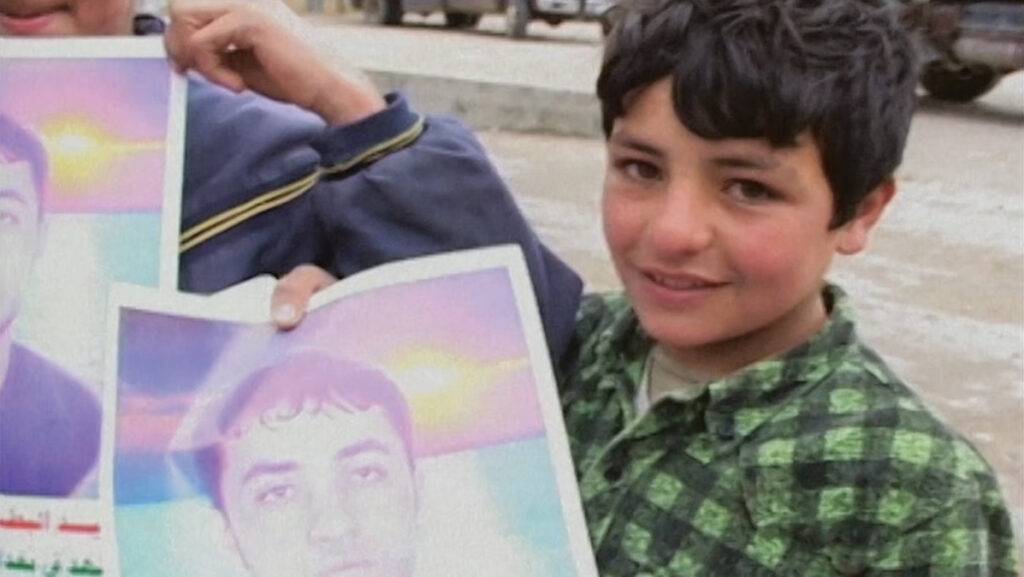
While acknowledging Saab’s significant influence, Daher clarifies that her inspiration extends beyond any single filmmaker, often drawing more from the creative process behind a work than its final aesthetic result. More broadly, Daher was acutely aware throughout the filmmaking process of the pronounced presence—and conversely, absence—of women’s perspectives within the existing archives. A powerful female perspective thus permeates Do You Love Me, a deliberate choice by Daher precisely because this narrative lens is often severely underrepresented in official historical accounts.
She highlights that much of what endures as "the record"—home videos, family photographs, personal collections—was often shot, preserved, and passed down by women, even when they weren’t the primary operators of the camera. Women frequently served as literal "witnesses to time," safeguarding what institutions often neglected to formalize. Working with this material naturally led the film to center women’s gazes and their enduring presence, offering a vital counter-narrative to male-dominated historical frameworks.
Ultimately, Do You Love Me functions as an expansive homage to the myriad filmmakers, journalists, musicians, photographers, and writers whose work forms its very fabric. Daher believes that by layering her own representation of Beirut over their existing contributions, their collective energy and profound love for the place are intrinsically woven into the film, even when not explicitly stated. This collaborative spirit transforms the film into a living archive, breathing with the collective memory and passion of those who have sought to understand and express Lebanon’s complex soul.
Lebanon’s Enduring Crisis: Recontextualizing the Present
The enduring relevance of Do You Love Me is starkly highlighted by Lebanon’s current geopolitical landscape, which finds the country once again caught in the throes of regional conflict. Daher, however, firmly pushes back against the simplification of the current situation as merely a confrontation between Israel and Hezbollah. She argues that such a framing overlooks a much deeper and longer history, emphasizing that Israel and Hezbollah are not on equal footing, and the nature of the ongoing conflict is inherently asymmetrical. The devastation in South Lebanon, with entire towns and villages erased, predates the founding of Hezbollah, as Israel first invaded Lebanon in 1978 and has repeatedly occupied parts of the country over five decades.
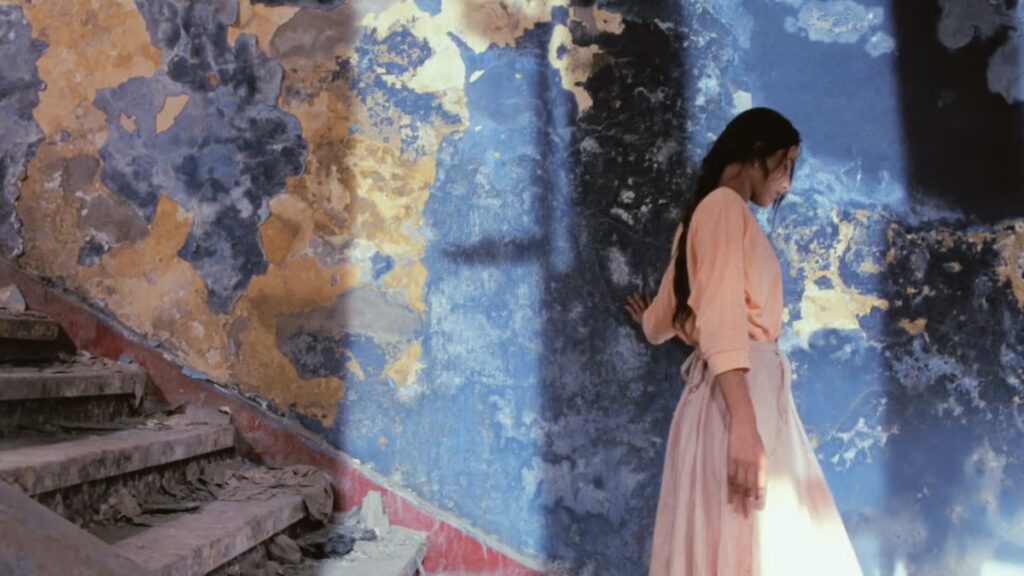
Diving into the archives for the film meant confronting a history that is neither officially taught nor readily accessible, revealing a distressing pattern of historical cycles. As Lebanon endures yet another war, Daher posits that the nation’s deepest challenge stems not solely from external adversaries but also from its profound internal fragmentation. This realization led her to abandon conventional attempts to explain the country, embracing instead its full, unresolved complexity.
The experience of screening the film in Beirut for its Lebanese premiere amidst the ongoing conflict was particularly poignant. Daher recounted a screening where the distant hum of an Israeli drone became an unintended part of the film’s sound design, creating an unsettling collapse between cinematic reality and immediate lived experience. The audience reactions have been varied, with some finding solace and a reminder of the Lebanese people’s desire for life over conflict, while others depart with a sense of profound sadness, fearing they are born into and destined to die in perpetual war.
Daher expresses a heartfelt hope that Do You Love Me serves as a powerful reminder that Lebanon is not merely another war-torn nation reduced to statistics of death. It is a land populated by people with rich stories, vibrant humor, tender humanity, and an unyielding zest for life. This inherent humanity, she insists, deserves to be seen and acknowledged. Trauma, in Lebanon, is an inherited burden, passed down through generations, often through silence as much as through overt speech. If the film can function as a "national archive"—unofficial, incomplete, yet profoundly alive and deeply felt—Daher believes it will have achieved its most crucial purpose: to "hold space" for the collective emotions and experiences of a nation in constant flux, a role it has demonstrably fulfilled since its premiere.