Universal Pictures has officially cemented its status as the dominant force in the global theatrical market, becoming the first studio to surpass the $5 billion threshold at the worldwide box office for the 2026 calendar year. The milestone, confirmed by the studio on Friday, reflects a historic run of commercial successes that have redefined the landscape of post-pandemic cinema. With $1.788 billion generated domestically and $3.218 billion sourced from international territories, Universal’s performance marks the third time in its history the studio has reached this rarified financial altitude, echoing its previous record-breaking years of 2015 and 2017.
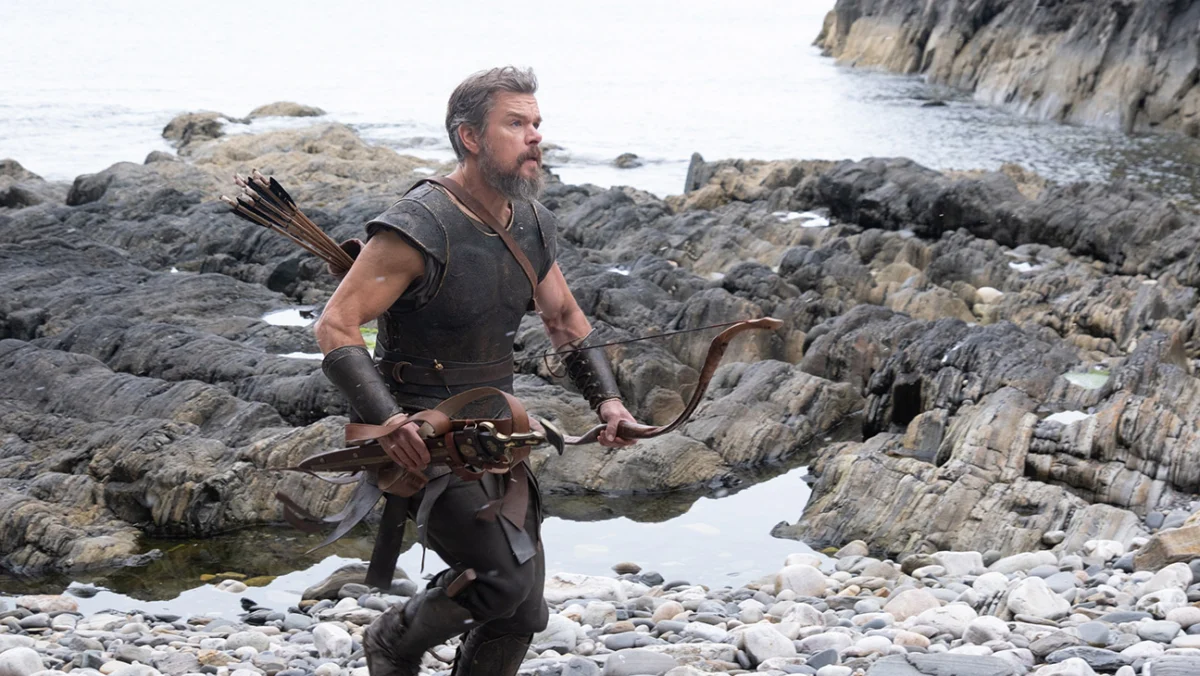
The achievement is not merely a product of volume but a testament to a strategic slate that balanced tentpole spectacles with high-concept original properties. At the heart of this success is Christopher Nolan’s sprawling mythological epic, The Odyssey. The film has ascended to become the highest-grossing release in Universal’s corporate history, commanding a global haul in excess of $1.7 billion. With a marquee cast featuring Matt Damon, Robert Pattinson, Tom Holland, and Anne Hathaway, the film has bridged the gap between critical prestige and massive audience appeal, positioning itself as the frontrunner for the upcoming awards season.
The Anatomy of a Record-Breaking Slate
The path to $5 billion has been paved by a diverse collection of projects that have resonated across multiple demographics. Central to the studio’s financial narrative are three specific titles that have individually cleared the coveted $1 billion mark: The Odyssey, The Super Mario Galaxy Movie, and the Michael Jackson biopic, Michael.
The Super Mario Galaxy Movie, building upon the massive goodwill established by its predecessor, expanded the franchise’s reach into new narrative territories, proving that video game adaptations remain the most reliable engine for theatrical growth. Simultaneously, the success of Michael serves as a case study in collaborative distribution. By leveraging Lionsgate’s domestic strength while maintaining control of the international rollout, Universal capitalized on the global appeal of the subject matter, ensuring that the film achieved maximum penetration in emerging markets.
Beyond these billion-dollar giants, the studio’s mid-tier and specialized releases provided the vital secondary momentum necessary to push the aggregate total over the line. Illumination’s latest animated venture, Minions & Monsters, continued the studio’s streak of dominance in the family animation sector. Perhaps most impressively, the low-budget horror entry Obsession, released through Focus Features, has emerged as a cultural phenomenon. As the highest-grossing title in the history of both Focus Features and the Blumhouse-Atomic Monster partnership, Obsession demonstrates the continued viability of the "high-concept, low-cost" model that has become a staple of Universal’s risk-mitigation strategy.
Chronology of a High-Stakes Year
The trajectory of 2026 was defined by a steady accumulation of wins rather than a singular breakout moment. Q1 began with measured optimism, but the momentum shifted significantly in late spring and early summer as the tentpole releases began their theatrical runs.
- Q1-Q2 (January – June): Initial growth was driven by consistent performance in genre-focused films and the strong tail-end of the 2025 holiday slate.
- July 2026: The release of The Odyssey served as the primary catalyst, immediately altering the studio’s year-to-date trajectory and setting the stage for the $5 billion climb.
- August 2026: The international rollout of Michael bolstered the overseas figures, solidifying the gap between Universal and its closest competitors in the market share race.
- September 2026: With the release of DreamWorks Animation’s original feature Forgotten Island, Universal reached the final stretch, securing the milestone amidst a competitive autumn slate.
Industry Implications and Strategic Shifts
Analysts suggest that Universal’s success in 2026 signals a definitive shift in how major studios perceive "event cinema." For years, the industry leaned heavily on established superhero IP. However, the performance of The Odyssey—a project rooted in classical literature—and the success of original animated works like Forgotten Island suggest that audiences are increasingly hungry for intellectual property that feels fresh and distinct.
"Universal has managed to strike a delicate balance between prestige storytelling and pure commercial entertainment," says industry analyst Marcus Thorne. "By giving directors like Christopher Nolan the runway to execute large-scale, non-superhero epics, they have tapped into a segment of the audience that had been feeling underserved. This $5 billion milestone isn’t just about money; it’s about the validation of a specific distribution strategy that prioritizes theatrical exclusivity and high-production value."
The implications for the broader industry are significant. As the theatrical window continues to stabilize, studios are increasingly scrutinizing their budgets. Universal’s ability to generate massive revenue while maintaining a diverse portfolio—ranging from animated family fare to gritty horror—provides a roadmap for sustainability in an era of rising production costs.
Looking Toward the Future
While the $5 billion mark is a cause for celebration, the studio’s focus has already pivoted toward the final quarter of the year. The release of Forgotten Island this weekend is viewed as a key indicator of whether the studio can sustain its momentum into the holiday season. The upcoming slate includes a variety of high-profile titles, such as Other Mommy, Sense & Sensibility, Focker-in-Law, Violent Night 2, and the supernatural thriller Werwulf.
These titles are expected to keep the studio’s domestic and international revenue streams active through December. Furthermore, the critical success of The Odyssey has effectively cleared the way for a strong showing during the 2027 awards cycle, which often leads to "second-wave" interest and continued engagement with the studio’s brand.
Official Stance and Corporate Outlook
While executives at Universal Pictures have remained characteristically focused on the upcoming slate, the internal sentiment is one of cautious pride. The studio has consistently emphasized that its success is a result of long-term planning and a collaborative approach with its creative partners.
"Our goal remains to provide content that connects with global audiences on a visceral level," noted a studio spokesperson in a brief internal communique. "Reaching this milestone is a reflection of the hard work put in by our production teams, our distribution partners, and the talented filmmakers who trust us with their visions. We are grateful to the audiences who have chosen to experience these stories in the theater, where they were meant to be seen."
As the year progresses, the focus for the industry will remain on how the remaining months of 2026 shape the final box office tallies. However, Universal’s status as the first to clear $5 billion ensures that regardless of how the final quarter performs, their 2026 run will be remembered as a high-water mark for modern studio filmmaking. The combination of established franchise power and bold, original creative choices has proven to be the winning formula for a studio currently operating at the zenith of its power. With several high-interest titles still on the calendar, the final tally for the year is expected to continue climbing, potentially setting a bar that will be difficult for competitors to match in the near term.