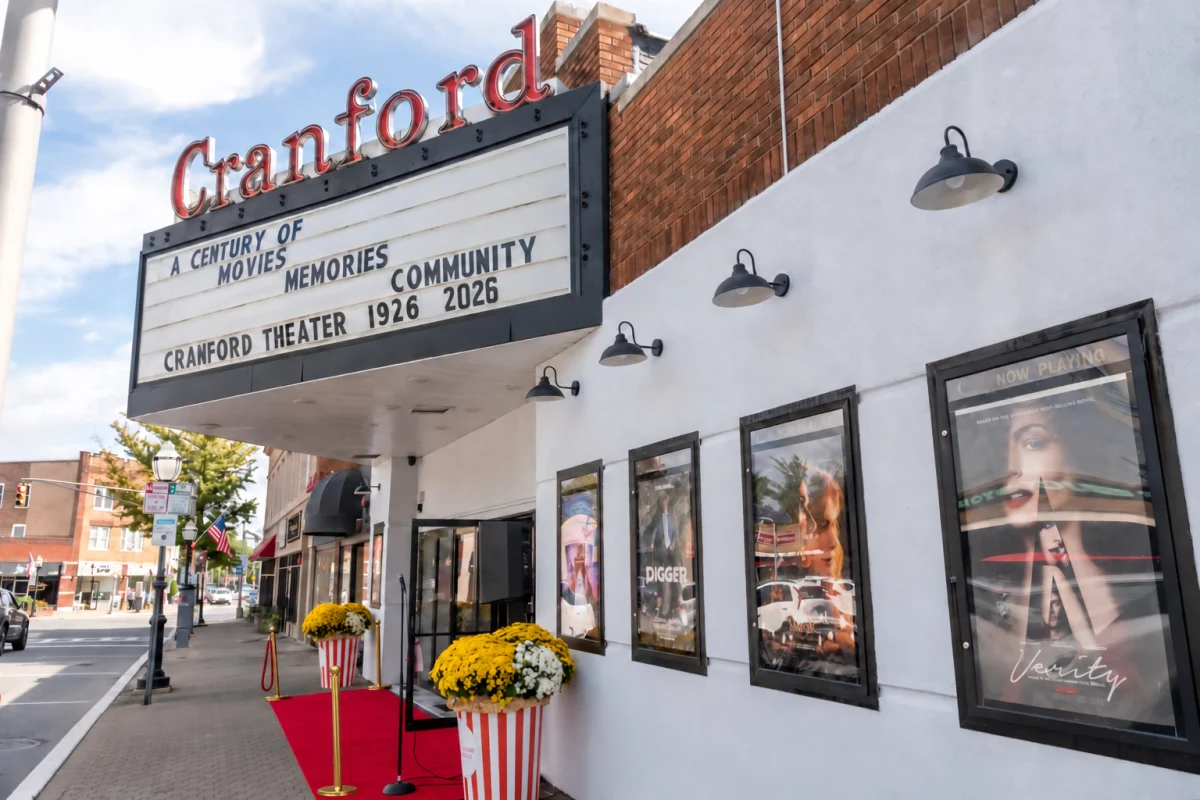
The Cranford Theater, a historic fixture in Union County, New Jersey, is preparing to celebrate its 100th anniversary, marking a rare milestone for independent, family-run cinema venues in the United States. As the last independent theater of its kind in the region, the five-screen facility serves as a testament to the endurance of community-based exhibition in an era dominated by corporate chains and digital streaming platforms. Owned and operated by Doreen Sayegh, the theater is set to commemorate its founding on November 29, 1926, by hosting a gala screening of Padlocked, the very silent film that inaugurated the space a century ago, complete with a live organ accompaniment to mirror the original experience.
A Century of Exhibition: From Silent Films to Modern Challenges
The history of the Cranford Theater is intrinsically linked to the evolution of the American moviegoing experience. When it opened in 1926, the theater was a cornerstone of downtown Cranford, designed to provide a communal hub for residents. Over the decades, the theater navigated the shift from the silent era to the talkies, the rise of television, and the multiplex boom of the late 20th century.
The Sayegh family’s tenure began in the late 1980s, when Jesse Y. Sayegh, an industry veteran, began managing independent circuits across New Jersey. In 1997, he acquired the then-twin-screen Cranford Theater from Cineplex Odeon. Recognizing the potential for growth in the local market, he oversaw a significant expansion, transforming the property into a five-screen venue by 1998. For Doreen Sayegh, the theater was an extension of her childhood. By the age of eight, she was assisting at the concession stand; by eleven, she was managing ticket sales. Her progression through the roles of usher, cashier, and manager provided a comprehensive education in the operational demands of the exhibition business.
The 2019 Rebirth and the Pandemic Crucible
In 2019, after the business had passed through several operators following Digiplex Destinations’ exit, Doreen Sayegh reached a personal and professional turning point. While scouting the location for a potential tenant, she stood on the roof, surveying the Cranford downtown area, and determined that the theater’s story was not yet finished. With the backing of her father, she spearheaded an extensive renovation, reopening the facility just in time for the 2019 holiday season.
However, the onset of the COVID-19 pandemic in early 2020 posed an existential threat to the revitalized business. By March 2020, attendance had dwindled to single digits. Rather than shuttering permanently, Sayegh pivoted to a model of survival and community engagement. She initiated a curbside service, selling popcorn and candy to families to generate revenue while the auditorium doors remained closed. Her most notable success, however, was the establishment of a pop-up drive-in theater in a nearby parking lot.
The venture became a lifeline. In a display of the local appetite for shared experiences, the drive-in’s online ticketing system crashed within 90 seconds of launch due to overwhelming demand. This initiative evolved into a six-night-a-week operation, providing a safe venue for community gathering and allowing Sayegh to shift her focus toward charitable work and fundraising during a period of widespread social isolation. Her collaboration with local businesses—such as the "Golden Ticket" scavenger hunt tied to a screening of Willy Wonka and the Chocolate Factory—solidified the theater’s role as a vital community partner.
Economic Realities and the 2025 Structural Crisis
The post-pandemic landscape brought new hurdles, including the widespread adoption of streaming services and the industry-wide disruption caused by the 2023 labor strikes involving the Writers Guild of America and SAG-AFTRA. These events constricted the flow of new content, forcing independent operators to diversify their programming. Sayegh responded by introducing live events, including comedy performances, film festivals, and recitals, to ensure the theater remained a destination for more than just first-run features.
Just as the business model stabilized, the theater faced a significant physical catastrophe in April 2025: a partial ceiling collapse. While the event caused extensive damage, the fact that no patrons were harmed allowed Sayegh to focus on the logistics of rebuilding rather than tragedy. Following a seven-month closure, the theater reopened in November 2025. The resilience demonstrated during this period has been cited by industry observers as a hallmark of independent exhibition, where the personal commitment of the operator often outweighs the capital reserves of larger conglomerates.

The Garden State’s Production Renaissance
The Cranford Theater’s recent programming has benefited significantly from the ongoing production boom in New Jersey. Bolstered by state-level tax credits and incentive programs designed to lure film and television productions away from traditional hubs like California, the state has become a magnet for high-profile projects.
Sayegh has capitalized on this trend by prioritizing local screenings. Recent offerings have included:
- Presence, the supernatural thriller directed by Steven Soderbergh, filmed locally in Cranford.
- Mother’s Instinct, featuring Academy Award winners Anne Hathaway and Jessica Chastain.
- Maybe I Do, featuring Diane Keaton and William H. Macy.
- Advance screenings of major studio projects, such as Steven Spielberg’s Disclosure Day.
These screenings serve as a bridge between the local community and the broader film industry, often drawing cast and crew members to local establishments, thereby creating a positive economic ripple effect for the downtown business district.
Looking Toward the Next Century: Legacy and Succession
As the theater looks toward its second century, the programming for late 2025 and 2026 includes the highly anticipated I Play Rocky, a drama detailing the production of the 1976 classic. For Sayegh, the film serves as an apt metaphor for her own journey. "The story of Rocky is rooted in perseverance, resilience, and continuing to fight when the odds are against you," she noted.
This philosophy of endurance is also a core value passed down from her father. Jesse Sayegh’s influence remains present in the theater’s operations, emphasizing integrity in business dealings, respect for staff, and a programming philosophy that prioritizes audience demand over personal preference.
The future of the Cranford Theater may eventually rest with the next generation. Sayegh’s five-year-old daughter, Natalia, is already a presence in the theater, mirroring the upbringing her mother experienced. While Sayegh maintains that the decision to pursue the business will be entirely her daughter’s, the presence of a third generation in the halls of the theater provides a symbolic continuity for the historic institution.
Analysis of the Independent Cinema Model
The longevity of the Cranford Theater provides a case study in the viability of the "boutique" independent cinema. According to industry data, independent theaters that successfully transition to a multi-use model—incorporating live events, local production support, and community-centric marketing—are better positioned to withstand the volatility of the theatrical exhibition market.
While the rise of home entertainment has diminished the necessity of the theater as a sole source of content, the demand for "third-place" spaces—physical locations where individuals can interact outside of the home or office—remains robust. By positioning the Cranford Theater as a venue for communal experience rather than a mere point of consumption, Sayegh has effectively insulated the business against the erosion of traditional theatrical attendance.
As the marquee lights glow once more, the Cranford Theater stands as a monument to 100 years of change. Through two world wars, the advent of television, the digital revolution, a global pandemic, and structural failure, the venue has maintained its status as a cultural anchor. Whether it will remain a bastion of independent film for another century remains a question of evolving tastes and future stewardship, but for the present, the theater remains a successful model of how heritage and innovation can coexist in the modern cinematic landscape.