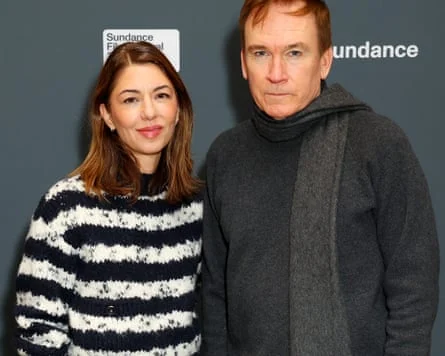
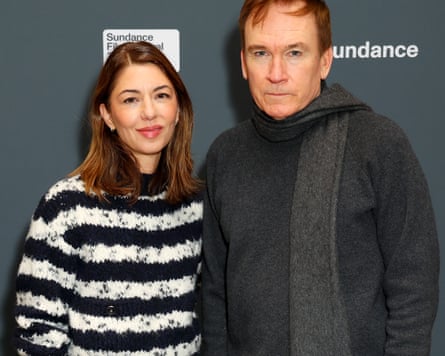
When Sofia Coppola logs on to our video call, her friend and fellow filmmaker Andrew Durham, whose directorial debut, Fairyland, she has produced, is recounting a poignant and surprisingly candid childhood memory: being nine or ten years old and inadvertently revealing his father’s homosexuality. "Have you heard this story, Sofia?" he asks breezily from Los Angeles, a hint of amusement in his voice. "About Pietro? The Italian guy that my dad was maybe having an affair with when we lived in England?" From her home in New York, Coppola furrows her brow, a familiar gesture of thoughtful consideration. "Uh, yeah. A long time ago, I think. I forgot…"
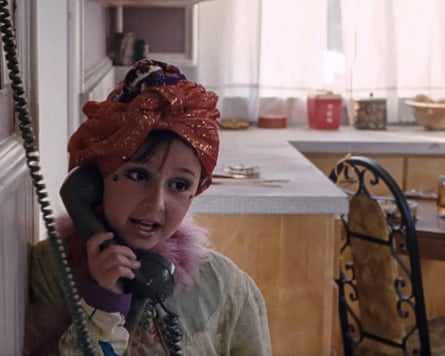
This anecdote, seemingly a casual recollection, forms the emotional bedrock of Fairyland, a cinematic adaptation of Alysia Abbott’s deeply personal 2013 memoir, Fairyland: A Memoir of My Father. The book, and subsequently the film, chronicles Abbott’s unconventional upbringing alongside her gay father, the writer and poet Steve Abbott, portrayed with remarkable nuance by Scoot McNairy. Steve Abbott’s journey of self-discovery and embracing his identity as a gay man is intrinsically linked to the profound grief following the death of his wife. His daughter, Alysia, navigates her adolescence amidst a vibrant, sometimes chaotic, circle of her father’s friends and lovers, a world illuminated by the effervescence of glitter and the dramatic flair of feather boas. One particularly vivid scene depicts a birthday party where the childhood ritual of blowing out candles is juxtaposed with the adults exploring altered states of consciousness.
The resonance between Alysia Abbott’s narrative and Andrew Durham’s own life is striking, forming the core of their creative partnership. Like Abbott, Durham spent his formative years in the culturally rich environment of the San Francisco Bay Area during the 1970s. Following his parents’ separation, his weekends were spent with his father, Jerry, a curator at a prominent museum. This parallel extends to a more somber chapter: in later life, Durham, much like Alysia, became a caregiver to his father as he battled HIV. Tragically, both Steve Abbott and Jerry Durham passed away in the same year, 1992, a shared experience that undoubtedly forged a profound understanding between director and producer.

This shared history and emotional landscape made Sofia Coppola’s decision to produce Fairyland feel not just logical, but fated. She had optioned the book years prior, recognizing its cinematic potential and the unique perspective it offered on family, identity, and resilience. Coppola and Durham’s professional connection dates back to the 1990s, a period marked by their collaboration on Coppola’s "achingly cool" television show, Hi-Octane, and her first short film, Lick the Star, a cinematic exploration of middle-school social dynamics. Since then, Durham has served as the on-set photographer for the majority of Coppola’s acclaimed filmography. "Her taste and sensibility haven’t fluctuated with the times," Durham observes, a testament to Coppola’s consistent artistic vision. "That’s the sign of a true auteur."
Despite a natural inclination to direct, Sofia Coppola maintains she never seriously considered helming Fairyland herself. Durham playfully suggests that Alysia Abbott herself might have harbored a fleeting wish for Coppola to take the directorial reins, eliciting a wry smile. "Well, who wouldn’t be?" he muses.
Coppola, who recently celebrated her 55th birthday, elaborates on the initial meeting with Alysia. "We went to meet Alysia and I was, like, ‘Just so you know, Andrew’s going to direct it and he’s never made a movie before but it’s going to be great.’" She recalls Alysia’s initial, understandable hesitation. "At first, she was a little like, ‘Errr…’ But they really hit it off." Durham concurs, emphasizing the immediate connection that transcended professional introductions. "We’d dealt with the same stuff in our lives. I always thought it was just me. I never ran into that many people who had gay dads who died of Aids." This shared experience, a tapestry woven from love, loss, and the specific challenges of growing up in a non-traditional family structure during a time of significant social change, laid the groundwork for a deeply collaborative and emotionally resonant filmmaking process.
While Fairyland marks Sofia Coppola’s debut as a producer of another filmmaker’s work, she views this role as a continuation of her father, Francis Ford Coppola’s, legacy. The legendary director, renowned for masterpieces like Apocalypse Now and The Godfather trilogy, founded Zoetrope, a production company dedicated to nurturing and championing projects that filmmakers felt passionately about. Fairyland proudly carries this torch, being a Zoetrope production itself. The film even opens with the company’s iconic 1970s logo, a detail that brought immense joy to Durham. "One thing Sofia and I have in common is we hate a bad logo," he states, a shared aesthetic sensibility that underscores their creative synergy.
A Pattern of Father-Daughter Dynamics in Coppola’s Work
The thematic exploration of complex father-daughter relationships is a recurring motif in Sofia Coppola’s directorial oeuvre. Films such as Somewhere, which garnered the Golden Lion at Venice, delves into the bond between a detached movie star father (Stephen Dorff) and his perceptive young daughter (Elle Fanning). On the Rocks presents a lighter, comedic take on paternal guidance, with Bill Murray as a charming but unreliable father assisting his daughter (Rashida Jones) in investigating her husband’s potential infidelity. Even the Oscar-winning Lost in Translation, a poignant exploration of loneliness and connection in Tokyo between a fading movie star (Bill Murray) and a young, adrift woman (Scarlett Johansson), subtly weaves in a father-daughter dynamic, blurring the lines between platonic intimacy and nascent romance.
This consistent focus on paternal figures is perhaps unsurprising, given Coppola’s own upbringing. Her father, Francis Ford Coppola, is not only a titan of the film industry but also a figure who loomed large in the very cultural landscape that shaped Durham and Abbott. Coppola’s childhood memories are infused with the distinctive style of her father and his contemporaries. "I always remember my dad in these corduroy suits," she recalls. "We were living in San Francisco in a big old Victorian house. Stylish European film-makers were coming and going. Family friends wearing 1940s vintage clothes in the late 1970s. I have this hazy little-kid memory of all these eccentric people."
Coppola’s parents, including her mother Eleanor, a filmmaker and artist in her own right (who passed away in 2024), fostered an environment where their children were actively involved in their lives. This meant accompanying them on film sets, from the bustling energy of West Coast gatherings to the exotic locales of the Philippines. "They wanted us around. We weren’t shuffled off to bed or handed over to nannies." This immersive childhood likely provided Coppola with a unique perspective on family dynamics, artistic pursuits, and the fluid boundaries between personal and professional life, experiences that have undeniably informed her cinematic storytelling.
Echoes of the 1970s San Francisco Scene
Andrew Durham’s own childhood, though distinct in its particulars, shared a similar unconventional spirit. A few years older than Coppola, Durham’s family relocated from Palo Alto to Guildford, Surrey, in England when he was seven, coinciding with his father’s tenure at the V&A Museum in London. Durham speculates that this period in the UK may have been a pivotal moment in his father’s journey of sexual self-discovery. "My dad grew up on a cattle ranch in Wyoming," Durham explains. "He’d travelled, but I think it was on that trip to the UK where he met a lot of other gay people."
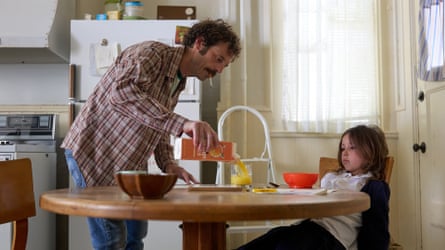
It was during this time that the enigmatic Pietro entered their lives. "We all loved him. He had a great house with these big gardens where we played croquet." Upon their return to California, the children received airmail letters from Pietro, those distinctive blue and red envelopes that held a special allure for young Durham. "They were so glamorous to me as a kid." The innocent curiosity of childhood led him to discover a crumpled airmail letter in the trash at home, which he presented to his mother. "Apparently, it was a love letter from Pietro to my father."
Durham acknowledges a degree of haziness regarding the precise conversations he and his older brother had with their parents at the time. However, after his parents’ divorce, the boys’ weekends with their father in San Francisco offered a vivid glimpse into a world far removed from traditional suburban life. "Not only was it mostly men [around] but there were these fabulous parties and we were going to the theatre and the hottest new restaurants. It was so sophisticated and flamboyant." This exposure to a vibrant, artistic, and openly gay community undoubtedly shaped Durham’s perspective and provided rich material for Fairyland.
Navigating Identity and Rebellion
The bohemian backdrop of their childhoods raises a curious question: what did Coppola and Durham find to rebel against? Durham initially dismisses the notion with a laugh. "No! Of course I did!" he exclaims, recalling his foray into the punk scene with dyed blue hair and a penchant for pogo dancing. He then teases Coppola, suggesting her teenage years were similarly marked by a "sneaky" streak. Coppola, however, demurs, her response hinting at a private history she’s not quite ready to share in print.
The film’s portrayal of Alysia’s quiet resilience as her peers engage in homophobic jokes resonates deeply with Durham’s own experiences. He explains, "I was fortunate enough to have a good group of friends, so that was never a problem. Though I found out much later in life that some people weren’t comfortable with my friends hanging out at my dad’s house. The kids didn’t care – it was their parents who were nervous." This highlights the societal prejudices that existed even within seemingly progressive circles, a reality that Fairyland confronts head-on.
Confronting Grief and the Scars of AIDS
The process of bringing Fairyland to the screen involved revisiting the deeply personal and often painful circumstances surrounding his father’s death, particularly during the film’s final scenes. "It’s still a weird trigger for me," Durham admits candidly. "When I was writing, I’d get to the third act and it would feel intense because I was drawing on my own experience of caring for my dad." He incorporated specific, harrowing details not explicitly present in Abbott’s memoir, drawn directly from his lived experience. "One is the memory loss that affects Steve at the end. I remembered that you get this kind of dementia when the virus attacks your brain. It was as if these guys were getting Alzheimer’s over a weekend. It was crazy."
The film also addresses the devastating impact of early HIV medications, such as AZT, and their severe side effects. This narrative element stems from a direct conversation between Durham and his father. "I was so concerned about AZT because it seemed to be killing everybody," he recalls. "It was the precursor to what is now PrEP. I told my dad, ‘You’ve got a compromised immune system. I don’t think you should be on this.’ And he said, ‘I’m not taking it for me. I’m taking it because we’re the guinea pigs. We have to take it for your generation, and the ones after that.’" Durham reflects on the profound impact of his father’s words. "As a young man in my 20s, that was so profound to hear. Now everyone’s on PrEP. But they need to understand where that came from – and the sacrifices that were made to get there." This powerful exchange underscores the intergenerational impact of the AIDS epidemic and the courage of those who endured it.
Enduring Relevance in a Shifting Social Climate
As Fairyland prepares for its release, the filmmakers acknowledge the unsettling resonance of its themes in the current sociopolitical climate, marked by renewed debates surrounding LGBTQ+ rights. They express surprise that these issues remain contentious in 2026. "The older you get, the more you realize that this pendulum swings back and forth," observes Durham, a somber reflection on the cyclical nature of social progress and backlash.
Coppola echoes this sentiment with palpable concern. "It’s pretty shocking," she states. "That’s why I thought it was so important in the film to show all kinds of families, because there’s so much prejudice now. I never imagined there could be this kind of attitude all these years later." Their shared conviction in the film’s message – that diverse family structures are not only valid but essential to a compassionate society – has only intensified in light of contemporary challenges. Fairyland emerges not just as a personal story of love and loss, but as a vital artistic statement on the enduring importance of acceptance, understanding, and the multifaceted nature of family.