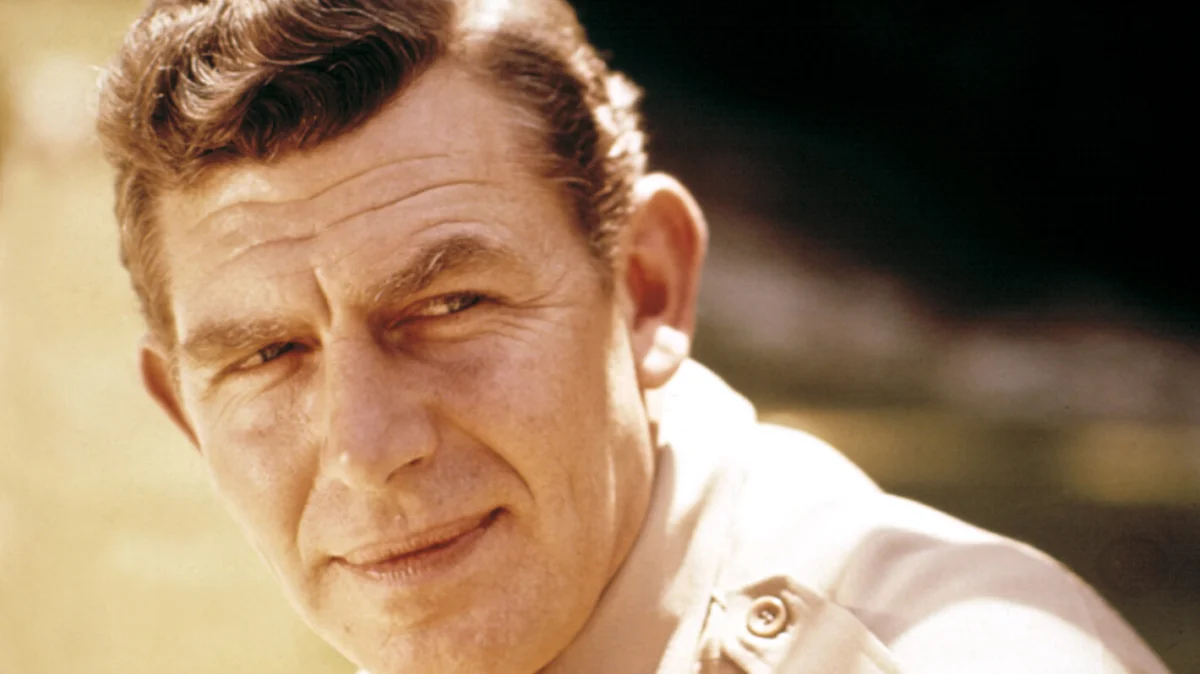
The history of American television is replete with stars who, after reaching the pinnacle of success with a definitive character, struggled to recapture that same lightning in a bottle. As the centennial of Andy Griffith’s birth approaches on June 1, 2026, television historians and enthusiasts are revisiting a lesser-known chapter of his career: a short-lived 1971 series that sought to meticulously replicate the charm of Mayberry. Griffith, who shared his June 1, 1926, birthdate with cultural icon Marilyn Monroe, remains one of the most influential figures in the evolution of the domestic sitcom. However, his path following the conclusion of The Andy Griffith Show in 1968 was marked by a series of experimental shifts and a notable, yet largely forgotten, attempt to return to his roots.
The Post-Mayberry Transition and the Failure of The Headmaster
When The Andy Griffith Show ended its eight-season run in 1968, it did so while sitting at the very top of the Nielsen ratings. This was a rare feat in television history, as most series face a decline in viewership before cancellation or retirement. Griffith, seeking to broaden his range and avoid being typecast as a rural lawman, initially pivoted toward more serious, contemporary fare.
In 1970, Griffith debuted in a program titled The Headmaster, where he played Andy Thompson, the head of a prestigious private school in California. The show was a significant departure from the folksy, slow-paced atmosphere of North Carolina. It attempted to tackle "relevant" social issues of the early 1970s, such as drug use and student protests. However, audiences who had spent nearly a decade associating Griffith with the warmth and simplicity of Sheriff Andy Taylor found the transition jarring. The Headmaster struggled in the ratings and was canceled after just 14 episodes. The failure of this project prompted CBS and Griffith to reconsider the "rural" appeal that had previously made him a household name.
The 1971 Experiment: The New Andy Griffith Show
Faced with the rejection of his more dramatic persona, Griffith returned to the familiar well of small-town Americana. In early 1971, CBS launched The New Andy Griffith Show. This series was not a spin-off, but rather a thematic reconstruction of his previous success. In this iteration, Griffith played Andy Sawyer, a man who returns to his hometown of Greenwood, North Carolina, to serve as the town’s mayor and a part-time lawyer.
The parallels between Andy Sawyer and Andy Taylor were intentional and overt. The setting of Greenwood was aesthetically indistinguishable from Mayberry. The character of Andy Sawyer was, once again, a widower with children (though this time he had a daughter and a son). To further bridge the gap for fans, the pilot episode featured guest appearances by Don Knotts and George Lindsey, playing characters that were essentially mirrors of Barney Fife and Goober Pyle.
Despite the high expectations, The New Andy Griffith Show failed to resonate. It lasted only ten episodes before it was pulled from the air. The primary criticism from both critics and viewers at the time was that the show felt like a pale imitation of a classic. Without the specific chemistry of the original ensemble—particularly the absence of Don Knotts as a series regular—the show lacked the comedic engine necessary to sustain interest.
Chronology of Andy Griffith’s Television Career (1960–1986)
To understand the context of Griffith’s 1971 attempt, it is essential to look at the broader timeline of his career transitions:
- 1960–1968: The Andy Griffith Show airs on CBS. It becomes a cornerstone of the "rural sitcom" era, finishing its final season as the number one show in the United States.
- 1968–1971: Following Griffith’s departure, the show continues as Mayberry R.F.D., starring Ken Berry. Griffith makes occasional guest appearances but largely focuses on film and new projects.
- 1970: The Headmaster premieres in September. It is canceled by January 1971 due to poor ratings and a mismatch between the actor’s persona and the show’s tone.
- 1971: The New Andy Griffith Show premieres in January as a mid-season replacement. It is canceled by May 1971.
- 1972–1985: Griffith enters a period of varied work, including television movies (notably Pray for the Wildcats and Savages) and several failed pilots. He also found success in the 1983 miniseries Murder in Texas.
- 1986: Griffith experiences a massive career resurgence with the debut of Matlock. The legal drama would run for nine seasons, proving that Griffith could succeed in a new format while retaining his signature charm.
The "Rural Purge" and the Changing Landscape of Television
The failure of The New Andy Griffith Show cannot be attributed solely to its creative choices; it was also a victim of a seismic shift in network strategy known in television history as the "Rural Purge." In the early 1970s, CBS executive Fred Silverman spearheaded a movement to modernize the network’s image.
Despite having high ratings for shows like The Beverly Hillbillies, Green Acres, and Mayberry R.F.D., CBS leadership believed that these programs appealed to an older, rural demographic that was less attractive to advertisers. The networks wanted to capture younger, urban, and more affluent viewers. Consequently, almost every program with a rural or small-town theme was systematically canceled.
The New Andy Griffith Show arrived exactly as this purge was reaching its peak. Even if the show had been a creative triumph, it was operating in an environment where the "Mayberry" brand of storytelling was being actively phased out in favor of "urban" and "sophisticated" programming like The Mary Tyler Moore Show and All in the Family.
Supporting Data: Ratings and Demographics
Data from the early 1970s suggests a clear divide in the television viewing public. While The Andy Griffith Show (in syndication) continued to pull massive numbers, the 1971 series struggled to maintain a 20-share in its time slot.
Historical analysis of the 1970-1971 season shows that The Headmaster ranked 67th out of 78 shows. When Griffith returned to the "Sawyer" role in the mid-season, the initial premiere episode saw a spike in viewership due to curiosity, but the retention rate dropped by over 30% by the third episode. Advertisers, following the lead of the "Rural Purge" philosophy, were hesitant to buy slots for a show that didn’t promise the 18-49 urban demographic. This data underscores the reality that Griffith was fighting against both a changing industry and his own legendary shadow.
Official Responses and Industry Reactions
At the time, industry publications like Variety and The Hollywood Reporter noted that Griffith seemed "trapped" by his own success. In retrospective interviews, Griffith himself was candid about the difficulties of the 1970s. He often remarked that after The Andy Griffith Show, he felt he had to "find himself" again as an actor.
Network executives from the era later admitted that the attempt to recreate Mayberry with The New Andy Griffith Show was perhaps a "reflexive" move rather than a creative one. Producers were trying to capitalize on a formula that the audience had already moved past in terms of new content, even if they still loved the reruns.
When Griffith finally found success with Matlock in 1986, critics pointed out that the character of Ben Matlock was the perfect evolution of Andy Taylor: wise, occasionally cantankerous, and deeply rooted in Southern ethics, but placed within the high-stakes environment of a courtroom drama. This shift allowed Griffith to maintain his core identity while providing the "sophistication" that modern networks demanded.
Broader Impact and Implications for Television History
The forgotten 1971 series serves as a vital case study in the risks of "rebranding" versus "reclaiming." It highlights the difficulty of a performer moving on from a role that has become a cultural touchstone. For Griffith, the decade following 1968 was a period of professional wandering that eventually led to a deeper understanding of his own brand.
As the public prepares to celebrate the 100th anniversary of his birth in 2026, the focus remains largely on the enduring perfection of Mayberry. However, the failures of The Headmaster and The New Andy Griffith Show are equally important to his legacy. They demonstrate the resilience of an actor who refused to give up after his initial peak. Griffith’s ability to eventually transition from the sheriff of a small town to a powerhouse defense attorney in Matlock secured his place as one of the few actors to lead two separate, long-running hit series in different eras.
The comparison to Marilyn Monroe, who was born the same day, provides an interesting cultural contrast. While Monroe remains frozen in time as a tragic icon of the 1950s, Griffith’s career spanned the mid-20th century well into the digital age. He witnessed the transition from black-and-white broadcasting to the era of cable and prestige television.
Ultimately, the brief existence of The New Andy Griffith Show is a testament to the power of the original series. It proved that Mayberry was not just a set or a group of actors, but a specific moment in American culture that could not be manufactured a second time. Griffith died in 2012 at the age of 86, leaving behind a body of work that continues to be studied for its technical precision, its warmth, and its unique reflection of the American spirit. As 2026 approaches, his contributions—both the massive successes and the instructional failures—remain a cornerstone of the television medium.