The cinematic world mourns the passing of Yoshihiro Nishimura, a visionary filmmaker whose unique approach to body horror and special effects defied conventional boundaries and carved out a distinctive niche in contemporary Japanese genre cinema. Nishimura’s oeuvre, characterized by its relentless embrace of mutation, transformation, and explosive gore, often resisted the very concept of death itself, instead depicting bodies as malleable canvases for grotesque artistry and societal commentary. His work, which he famously described as "entertainment" designed to create a "wave" of horror and laughter, elevated splatter into a form of pop art, recognized globally for its audacious blend of the bloody, excessive, hilarious, offensive, and often profoundly inspired.
Nishimura was a singular talent, a multi-hyphenate artist whose mastery spanned special effects, makeup design, directing, writing, editing, producing, and even occasional acting. His ability to render the splatter genre highly artistic, a feat few have achieved to his degree, stemmed from a deeply ingrained, self-taught understanding of filmmaking. His fascination with cinema began in childhood, profoundly influenced by a Salvador Dalí painting featuring distorted human bodies that he encountered in elementary school. Despite pursuing a law degree, Nishimura dedicated himself to filmmaking from junior high school, independently learning the intricacies of filming, lighting, special effects, and modeling. This hands-on, ground-up approach became the bedrock of his later career, enabling him to construct elaborate, grotesque worlds with remarkably limited resources. He often cited his experience working for a commercial production company as instrumental in developing his capacity to manage multiple tasks simultaneously, including crucial aspects like budgeting and production, affirming that directing was his true calling.

Nishimura’s journey to international cult status, however, was marked by a paradoxical reception. While his work garnered fervent admiration abroad, particularly after the release of "Tokyo Gore Police," it frequently faced marginalization within his native Japan. He candidly observed that the domestic market favored "pure love stories with teenagers and yakuza movies," offering neither significant budget nor a substantial audience for his brand of extreme splatter. This domestic "cancelling," not in the sense of a formal blacklist but rather an informal distancing, reflected an industry often unwilling to accommodate his confrontational, messy, and bodily cinematic language. Yet, overseas, audiences reacted with the immediate laughter and screams he sought, a stark contrast to the "quieter Japanese audience" he described.
The later years of Nishimura’s career were further complicated by professional isolation and whispers of being sidelined within parts of the Japanese film industry. While the precise nature of these circumstances remains challenging to ascertain definitively from an external perspective, his name became increasingly associated with a perceived lack of visibility and support. This environment compelled him to pursue more self-produced projects, which, despite reduced resources and diminished industry access, stand as powerful testaments to his unyielding creative spirit. These films showcase an artist resolute in his vision, continuing to craft his distinctive brand of cinema even when the mainstream seemed reluctant to fully embrace his excesses.
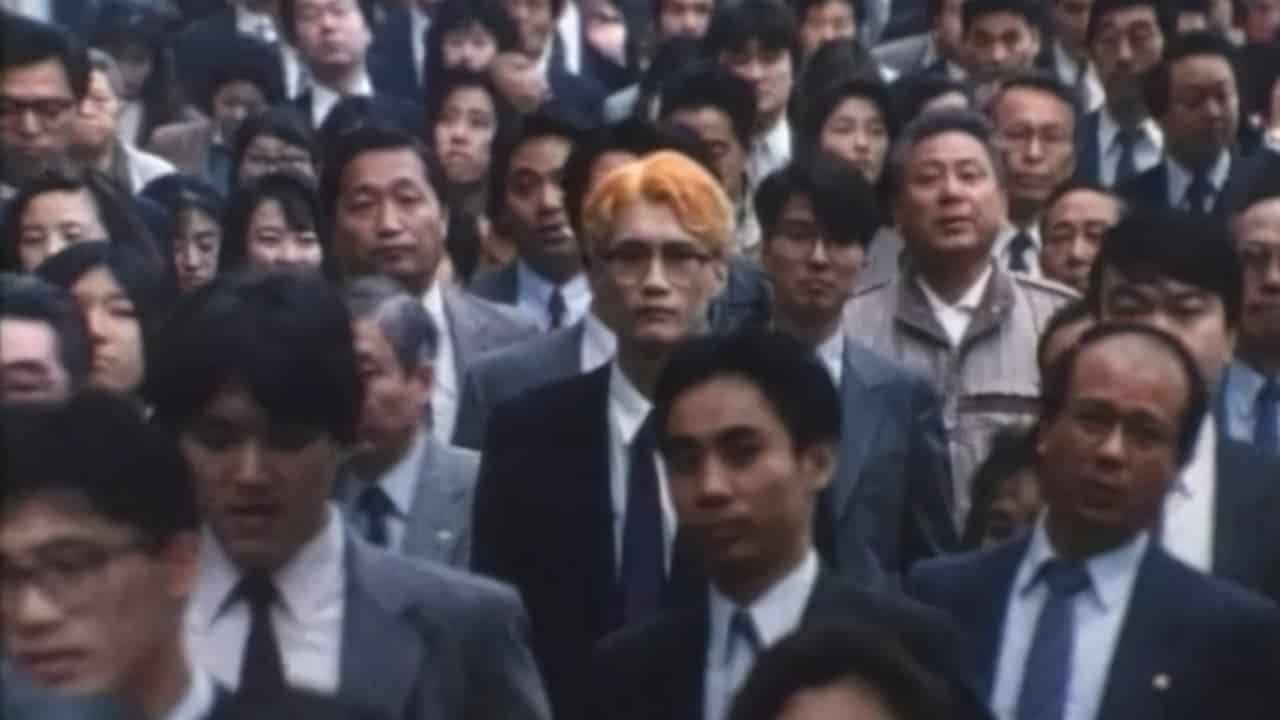
His directorial debut, "Anatomia Extinction," released in 1995, offers a crucial glimpse into the origins of his unique cinematic language. This independently produced film, for which Nishimura solely handled writing, directing, and special effects, premiered at the Yubari International Fantastic Film Festival, earning a Special Jury Award. It laid the conceptual groundwork for what would become his most globally recognized work, "Tokyo Gore Police." "Anatomia Extinction" plunges into a near-future Tokyo plagued by overpopulation and psychological distress, turning ordinary citizens into serial killers. The narrative follows a lonely businessman caught in this escalating chaos, who, after a harrowing encounter, is recruited by a group of superpowered "Engineers" committed to population control through gruesome means. His subsequent bodily transformation, starting with his heart and culminating in a monstrous form, embodies Nishimura’s early exploration of flesh as machinery and violence as societal critique. The film’s dense contextual layers, from media commentary on urban alienation to the visceral depiction of bodily mutation, revealed a profound vision beneath the initial grotesqueness, foreshadowing the thematic richness he would continue to refine.
The "explosion" of Nishimura’s international recognition arrived in 2008 with "Tokyo Gore Police." Building on years of experience as a special effects and makeup artist for notable productions like Sion Sono’s "Suicide Club" and Noboru Iguchi’s "A Larva to Love," Nishimura directed his first feature, solidifying his cult status. Set in a dystopian Tokyo ravaged by a virus that transforms humans into monstrous "Engineers," the film follows Ruka (played by the iconic Eihi Shiina), a brutal police officer tasked with hunting these creatures. The narrative, while seemingly a pretext for extreme violence, delves into Ruka’s personal quest for vengeance and her disillusionment with the corrupt, privatized police force. "Tokyo Gore Police" became synonymous with Nishimura’s style, a relentless torrent of hyper-stylized gore where blood wasn’t merely an effect but an integral part of the visual composition, gushing in theatrical, impossible volumes. Nishimura himself explained that while he could produce realistic blood for other directors, his own films demanded a more "showy," celebratory approach to gore, underscoring his conscious artistic choices.
The collaboration with actress Eihi Shiina proved pivotal to "Tokyo Gore Police"’s legacy and Nishimura’s career. Shiina, already internationally recognized for her role in Takashi Miike’s "Audition," found in Nishimura a kindred spirit. She described him as crucial to her success, a "treasure," and spoke of their shared struggle against a Japanese industry that was "the most difficult environment they worked in." Shiina characterized Nishimura as straightforward, pure, self-centered yet clever, capable of minor missteps but always delivering precise solutions under pressure thanks to his intuition. This description perfectly encapsulates the film itself: a work born of obsession and fixation, yet executed with an instinctual precision that transcended its raw aesthetic.
Following "Tokyo Gore Police," Nishimura continued to push boundaries with works like "Helldriver" (2010), a preposterous zombie splatter epic. The film opens with a meteorite unleashing a toxic gas that transforms northern Japan’s populace into zombies, led by a newly mutated queen, Rikka (Eihi Shiina). The country is then divided by a wall, and a skilled zombie killer, Kika (Yumiko Hara), is hired to venture north and eliminate the queen. "Helldriver" fully embraced Nishimura’s penchant for absurdity, featuring zombie boxers, bizarre guards, and pole-dancing fight sequences, all while maintaining his signature bloodbaths, surreal humor, and impressive battles. Beneath the outrageous surface, it offered rudimentary social commentary on issues like drug addiction and racism, demonstrating Nishimura’s refusal to separate horror from comedy or gore from absurd political allegory.

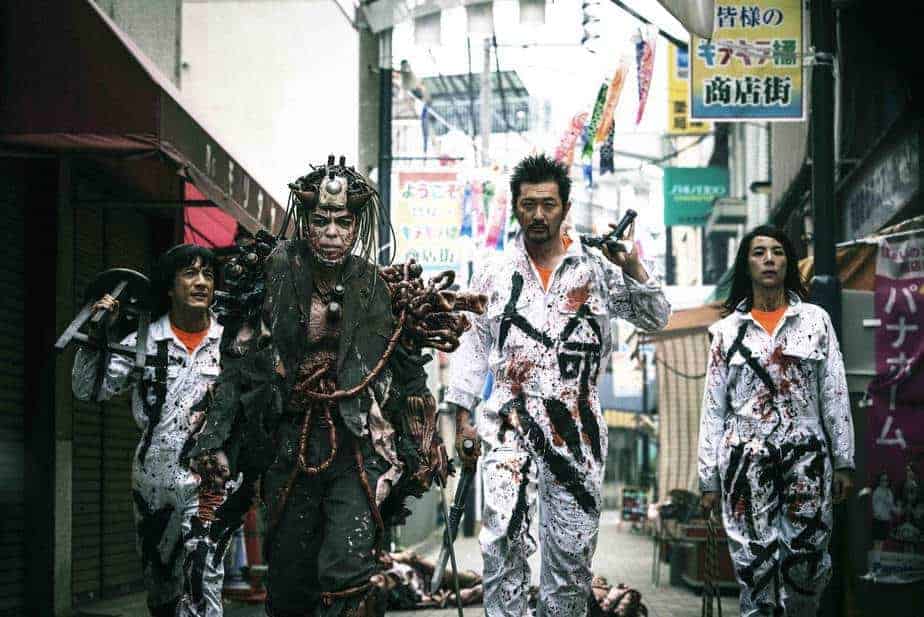
"Kodoku Meatball Machine" (2017), a spiritual successor to the 2005 film "Meatball Machine" (for which Nishimura handled special effects), solidified his reputation as the "undisputed master of Japanese splatter." The film follows Yuji, a downtrodden 50-year-old bill collector, whose miserable life of exploitation and a cancer diagnosis are suddenly interrupted by an alien invasion. These aliens transform humans into biomechanical "NecroBorgs," but Yuji, miraculously surviving the transformation, embarks on a grotesque path to fight them and save a woman he cares for. This film showcased Nishimura’s unexpected narrative depth, dedicating the first 20 minutes to character development with aesthetics reminiscent of Sion Sono’s work, before unleashing the full force of his gore. It also masterfully parodied contemporary Japanese society, skewering fanatic jingoism, exploitative cults, corrupt massage parlors, and societal misjudgment, revealing that beneath the blood and viscera, Nishimura could craft compelling narratives about loneliness, humiliation, and the desperate fantasy of empowerment.
Even in later, seemingly tamer productions, Nishimura’s distinctive imagination shone through. "Tokyo Dragon Chef" (2020) mixed yakuza, food, musical elements, and exploitation in an insane, low-budget fashion. Two ex-yakuza, Ryu and Tatsu, open a ramen restaurant, only to face competition from old rivals and a mysterious masked gang. The film’s absurd humor, particularly in its portrayal of hardcore yakuza trying to be polite to customers and hiring social media influencers, offered a satirical commentary on modern Japanese society and the fate of retired gangsters. While less gory, its action sequences remained sarcastically playful, culminating in an unexpected "Ramen Rock" finale that underscored Nishimura’s ability to transform even culinary rivalry into an arena of absurd masculinity, nostalgia, and pop nonsense.
His self-produced "Holy Mother" (2022) continued this trajectory, starring transgender actress Anna Nagasaki in a wild, bloody, and fun picture. Premiering at FANTASPOA, the film, despite some recycled elements and budgetary constraints, demonstrated Nishimura’s free and generous creative spirit. It plunged into a narrative involving a discriminated Chinese yakuza organization, a mute pink-haired woman with miraculous healing powers named Maria, and a sadistic business leader, Hime (Eihi Shiina, who playfully recreated her iconic "Audition" sequence). While its attempts at commentary on anti-Chinese racism and transphobia were sometimes clumsy, the film was celebrated for its impressive practical effects, organic body horror, and the progressive casting of a trans woman as a powerful, beloved Madonna figure.

"Onimanji" (2023), another self-produced project and a spin-off of his film "The Ninja War of Torakage," further highlighted the paradox of Nishimura’s career. Premiering abroad in Switzerland and Brazil before its eventual Japanese release, it underscored how his most devoted routes of circulation often lay outside Japan. The film resurrects a ninja samurai, Onimanji, into modern Tokyo, where he must adapt to contemporary life and join a hitman organization. Despite its chaotic narrative, the film served as a canvas for Nishimura’s visual experimentation, employing split screens, aspect ratio changes, and blinding neon flashes to amaze with limited means. While some fans might have been disappointed by the rarer, often digital blood spurts, "Onimanji" delivered his trademark blend of sudden extreme violence, uneven humor (including a running gag about crab burgers), and sexy heroines. Its raw self-produced freedom and refusal to conform to a "proper" action movie aesthetic felt like a final extension of a sensibility that prioritized visceral impact over polished refinement, leaving a valuable testament to the cheap Japanese productions beloved by cult fans.
Across Nishimura’s extensive filmography, discernible patterns emerge, revealing a consistent thematic and stylistic approach. His films frequently depict Tokyo as an overcrowded, alienated metropolis ("Anatomia Extinction"), expose corrupt and privatized authorities ("Tokyo Gore Police"), or illustrate societies fractured by societal ills, be it a zombie plague ("Helldriver") or widespread exploitation ("Kodoku Meatball Machine"). Capitalism, police brutality, loneliness, poverty, racism, social media, cult exploitation, failed masculinity, and family trauma are recurring motifs, often handled with a raw intensity that transcends crude presentation. Nishimura’s gore, far from being gratuitous, served as a revelatory force, exposing the inherent absurdity and brokenness of his cinematic worlds before the blood even began to flow.
Another striking pattern is the prominent role of women as powerful centers of violence. Nishimura often stated his belief in the strength of women, preferring female leading roles for their capacity to express force more effectively. This is vividly demonstrated by characters like Ruka, Kika, Rikka, Maria, and Hime, as well as the enduring partnership with Eihi Shiina. While his female characters could be fetishized, ridiculous, or monstrous, they were consistently active and visually central to the narrative, rarely passive observers in the chaotic tapestry of his cinema.
The constant tension between limited budgets and boundless ambition also defined Nishimura’s career. He possessed an extraordinary ability to craft impressive special effects with minimal resources, often transforming budgetary limitations into a distinctive stylistic choice. Yet, his later self-produced works, such as "Onimanji" and "Holy Mother," candidly revealed the strain of working under conditions that struggled to fully support his grander visions. Even amidst these constraints, his unwavering commitment to filmmaking on his own terms speaks volumes about his artistic integrity and perseverance.
Eihi Shiina’s insights perhaps offer the most intimate understanding of the man behind the madness. Her characterization of Nishimura as crucial, peculiar, obsessive yet profoundly professional and trusting, illuminates the unique blend of traits that allowed his singular cinematic universe to flourish. His blood was intentionally ridiculous, not careless; his monsters absurd but meticulously designed; his humor uneven yet deliberate. Nishimura’s best work was never about adhering to "good taste" cinema; it was, in essence, cinema against taste, a defiant celebration of the visceral and the unconventional.
Yoshihiro Nishimura’s passing leaves a profound and irreplaceable void in the landscape of genre cinema. While the world boasts many horror directors, splatter artists, cult figures, and low-budget eccentrics, very few managed to construct such a distinct cinematic body from blood pumps, mutated flesh, makeshift sets, warped humor, and an undeniable sincerity. His films could be exhausting, childish, offensive, brilliant, repetitive, and exhilarating, often within the same frenetic sequence, but they were never, ever anonymous.

The challenges he faced within the Japanese industry—a limited domestic audience for splatter, restrictive budgets, and difficult working conditions—only underscore the resilience that defined his career. His later productions often seemed to thrive on sheer force of will, fueled by the curiosity of international festivals and the devotion of a global cult following. This very struggle forms an integral part of his legacy. Nishimura was not a director who sought or waited for permission. He taught himself every facet of filmmaking, meticulously crafted his effects, penned his scripts, edited with frantic energy, nurtured collaborations with trusted friends and actors, and ensured that blood flew higher and more gloriously than most budgets should ever permit.
From the foundational "Anatomia Extinction" to the breakout "Tokyo Gore Police," from the zombie spectacle of "Helldriver" to the poignant grotesqueries of "Kodoku Meatball Machine," and from the culinary chaos of "Tokyo Dragon Chef" to the socio-political splatter of "Holy Mother" and the time-bending action of "Onimanji," his filmography remains an unparalleled catalogue of grotesque invention. Audiences willing to look beyond the immediate shock value will discover a rich, multifaceted context teeming with social anger, profound loneliness, biting absurdity, and an unwavering belief in cinema as a handmade, visceral spectacle. Nishimura’s desire to create a "wave" – to evoke horror, laughter, disgust, shock, and sensuality all at once – continues to ripple through Japanese cult cinema, through the actors who championed his vision, through the international audiences who screamed and chuckled, and through every aspiring filmmaker who understands that sometimes, for the image to truly come alive, the body must gloriously explode.