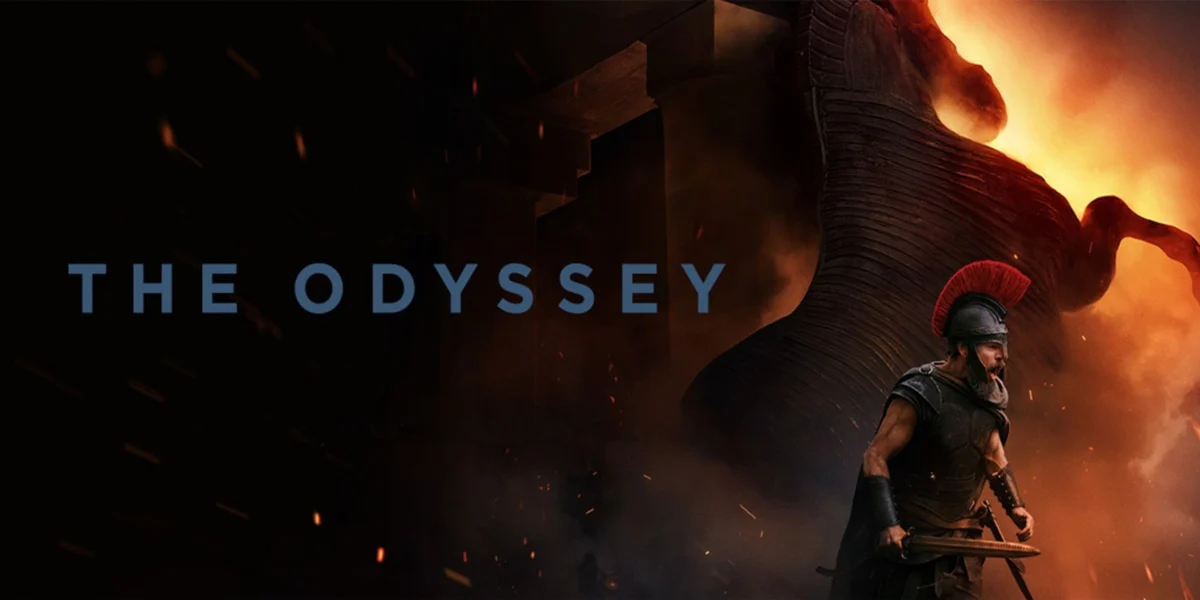
The global cinematic landscape of 2026 has been fundamentally reshaped by the release of Christopher Nolan’s latest opus, an expansive adaptation of Homer’s ancient Greek epic, "The Odyssey." Following the historical and commercial triumph of "Oppenheimer," Nolan has transitioned from the atomic age to the foundations of Western literature, delivering a production that serves as a litmus test for the capabilities of modern filmmaking. This week, the critical discourse surrounding the film reached a crescendo as the "Next Best Picture" editorial team, including Lauren LaMagna, Josh Parham, Dan Bayer, Giovanni Lago, and Brendan Hodges, convened for a comprehensive video review to analyze the film’s technical achievements, narrative choices, and its burgeoning status as an awards season heavyweight. The production, which features a sprawling A-list ensemble led by Matt Damon, Tom Holland, and Anne Hathaway, has already become a central pillar of industry conversation, specifically regarding its pioneering use of next-generation IMAX technology and its rigorous adherence to practical filmmaking.
Chronology of Production and the Evolution of the Project
The journey of "The Odyssey" from a conceptual pitch to a 2026 theatrical event followed a meticulous three-year development cycle. Following the 2024 awards circuit, Universal Pictures and Syncopy Inc. announced that Nolan’s next project would be his most ambitious to date, moving away from the grounded realism of his previous work toward a mythic, high-concept period piece. Pre-production began in mid-2024, with a heavy emphasis on location scouting across the Mediterranean to ensure geographical authenticity.
Principal photography commenced in early 2025, utilizing a production schedule that spanned nine months and multiple continents. Unlike previous adaptations of Homeric texts, which often relied heavily on digital environments, Nolan’s production team constructed massive, sea-faring vessels and practical ancient cityscapes. By the time the film entered post-production in late 2025, industry insiders were already reporting on the "unprecedented" nature of the film’s visual language. The film’s release in 2026 was synchronized with a massive global marketing campaign that positioned the movie not just as a summer blockbuster, but as a cultural event designed to revitalize the theatrical experience.
Technical Innovation: The New Frontier of IMAX
Central to the discussion of "The Odyssey" is its technical pedigree. Christopher Nolan has long been a proponent of celluloid film and large-format cinematography, but this production introduced a proprietary IMAX technology developed specifically for the rigors of sea-based filming. Industry data suggests that "The Odyssey" features the highest percentage of native IMAX footage ever recorded for a narrative feature, with reports indicating that over 90% of the film was shot on 70mm IMAX cameras.
The technical specs of the film include a newly designed, more portable IMAX camera housing that allowed Nolan and cinematographer Hoyte van Hoytema to capture intimate, handheld shots in environments—such as the interior of a trireme or the crags of a coastal cliff—that were previously inaccessible to large-format equipment. This technological leap has been cited by critics as a primary factor in the film’s immersive quality. The "Next Best Picture" review team highlighted that the practical set pieces, including the recreation of the Cyclops encounter and the harrowing Scylla and Charybdis sequence, utilized mechanical effects and massive water tanks, eschewing the "weightless" feel often associated with modern CGI-heavy epics.
A Massive Ensemble and Casting Discourse
The casting of "The Odyssey" represents one of the most significant gatherings of Hollywood talent in recent memory. The film is anchored by Matt Damon as Odysseus, the cunning king of Ithaca, whose decade-long journey home forms the narrative spine. He is supported by a cast that balances established veterans with contemporary stars:
- Matt Damon as Odysseus
- Anne Hathaway as Penelope
- Tom Holland as Telemachus
- Robert Pattinson as Hermes
- Lupita Nyong’o as Athena
- Zendaya as Calypso
- Charlize Theron as Circe
- Benny Safdie as Eurylochus
- Jon Bernthal as Ajax
The inclusion of Travis Scott and Elliot Page, along with actors like John Leguizamo and Mia Goth, has sparked significant conversation regarding the film’s tonal diversity. Critics have noted that while some casting choices initially appeared controversial or unconventional for a Greek epic, the final performances provide a textured, modern resonance to the ancient archetypes. The "Next Best Picture" panel specifically analyzed how Nolan utilized these actors’ public personas to enhance the "larger-than-life" status of the mythological figures they portray.
Narrative Adaptation and Thematic Depth
Adapting a 24-book epic poem into a coherent cinematic runtime required significant structural choices. Nolan’s "The Odyssey" reportedly focuses on the psychological toll of the journey, emphasizing the themes of nostos (homecoming), metis (cunning), and the consequences of hubris. The screenplay, also penned by Nolan, reportedly utilizes a non-linear structure reminiscent of his earlier works like "Dunkirk" or "The Prestige," oscillating between Odysseus’s trials at sea and Penelope’s struggle against the suitors in Ithaca.
The film’s symbolism has also become a focal point for analysis. The portrayal of the gods—Zeus, Poseidon, and Athena—is handled with a degree of ambiguity, questioning whether their interventions are literal divine manifestations or psychological projections of the characters’ internal states. This intellectual approach to the source material has been praised for elevating the film beyond a simple action-adventure story into a profound meditation on memory and identity.
The Auditory Landscape: Ludwig Göransson’s Score
A Christopher Nolan film is inextricably linked to its auditory experience, and "The Odyssey" marks another collaboration with Academy Award-winning composer Ludwig Göransson. Following his success with "Oppenheimer," Göransson’s score for "The Odyssey" reportedly blends ancient instrumentation with modern electronic synthesis. The score is described as "monumental," utilizing choral arrangements in ancient Greek to underscore the scale of the Mediterranean landscape.
The integration of the score with the film’s sound design—specifically the sounds of the ocean and the mechanical creaks of the ships—creates a sensory experience that the "Next Best Picture" team identified as a key contender for technical awards. The sonic palette is designed to mirror the turbulence of the sea, providing a rhythmic foundation for the film’s more contemplative sequences.
Critical Reception and Awards Season Implications
As the 2026 awards season approaches, "The Odyssey" is positioned as a frontrunner across multiple categories. Historical data from previous Nolan releases suggests a high probability of nominations in technical fields, but the scale of "The Odyssey" points toward a broader sweep. The "Next Best Picture" podcast review delved into the film’s chances for Best Picture, Best Director, and Best Adapted Screenplay, noting that the Academy of Motion Picture Arts and Sciences has historically favored "big" cinema that demonstrates the unique power of the theatrical medium.
Early critical reactions suggest that the film is a "masterclass in scale," though some have noted the challenges of condensing such a dense literary work. The performances of Matt Damon and Anne Hathaway are being singled out as career-high work, with Damon’s portrayal of a weary, aging hero providing a grounded emotional core to the spectacle.
Broader Industry Impact and the Future of the Epic
The success of "The Odyssey" carries significant implications for the film industry at large. In an era where mid-to-high-budget original films often struggle against established franchises, Nolan’s ability to draw massive audiences to a three-hour, philosophical epic is a testament to his unique "director-as-superstar" status. The film’s reliance on practical effects and high-end film stock also serves as a rebuttal to the industry’s increasing reliance on artificial intelligence and virtual production environments like "The Volume."
Furthermore, "The Odyssey" demonstrates a continued interest in the "Event Cinema" model. By utilizing new IMAX technology and a star-studded cast, Universal Pictures has created a product that cannot be fully replicated on a home streaming service. This strategy appears to be paying off, with early box office projections suggesting that "The Odyssey" could become one of the highest-grossing films of the decade, potentially rivaling the billion-dollar success of "Oppenheimer."
Conclusion: A Journey of Cinematic Magnitude
"The Odyssey" stands as a definitive moment in the 2026 cultural calendar. It represents the confluence of ancient storytelling and cutting-edge technology, guided by a director who remains committed to the grandeur of the silver screen. As the "Next Best Picture" team concluded in their review, the film is not merely an adaptation of a poem; it is an exploration of the limits of cinema itself. Whether through its breathtaking practical set pieces, its complex performances, or its revolutionary IMAX visuals, Christopher Nolan has once again demanded the world’s attention, proving that the oldest stories can still feel like the newest experiences when told on the largest possible canvas. For audiences and critics alike, the journey of Odysseus has become a journey into the future of film, leaving an indelible mark on the history of the medium.