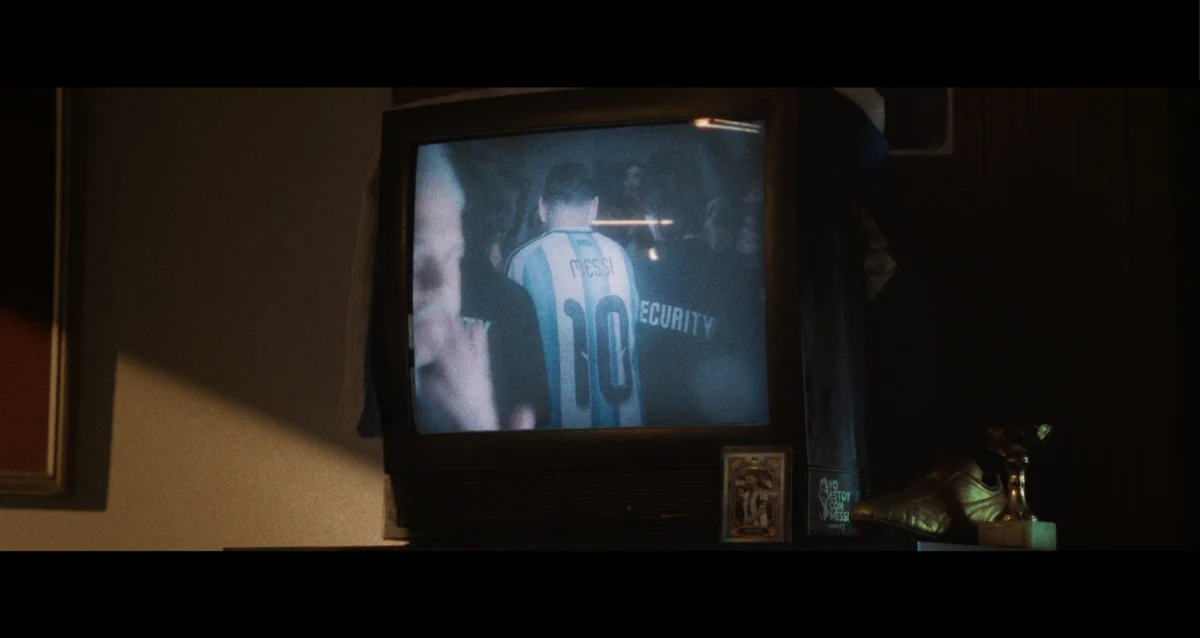
Hours before Lionel Messi takes the pitch at MetLife Stadium in East Rutherford, New Jersey, for the 2026 FIFA World Cup Final, the sports apparel and entertainment powerhouse Fanatics has unveiled a sprawling global marketing campaign centered on the legendary forward’s legacy. The campaign, titled "You Can’t Hang It Up While We’re Still Wearing It," serves as a cultural plea from the global football community, urging the 39-year-old captain to delay his anticipated retirement from the Argentinian national team. As Argentina prepares to face Spain in a high-stakes final that represents the pinnacle of the first 48-team World Cup, the Fanatics initiative highlights the unprecedented commercial and emotional gravity surrounding Messi’s twilight years in professional soccer.
The centerpiece of the campaign is a short film titled "We’re Still Wearing It," which debuted Sunday morning across digital platforms and broadcast networks. Set in the heart of Buenos Aires, the film utilizes a somber yet hopeful Spanish-language rendition of "Don’t Cry For Me Argentina," performed by Luz Gaggi, a noted finalist from Argentina’s iteration of The Voice. The visual narrative employs a poignant metaphor: a massive, building-sized replica of Messi’s iconic number 10 jersey is hoisted toward the sky, signaling the end of an era. However, the progression is interrupted by a groundswell of supporters—cast entirely from real Argentinian fan groups to ensure authenticity—who physically intervene to prevent the jersey from being "hung up."
The Global Reach of the "Number 10" Brand
The Fanatics campaign extends far beyond the borders of Argentina, reflecting Messi’s status as a global icon whose influence transcends national identity. Over the 48 hours surrounding the final, Fanatics is erecting "We’re Still Wearing It" billboards in twelve major cities worldwide. Each location was selected for its specific historical or cultural connection to Messi’s two-decade career.
In Rosario, Argentina, the billboards pay homage to Messi’s birthplace and his early years at Newell’s Old Boys. In Barcelona, the displays recognize the city where he spent 21 years and secured 35 trophies with FC Barcelona. Paris is included to mark his tenure with Paris Saint-Germain, while Miami serves as his current professional home with Major League Soccer (MLS) club Inter Miami. Notably, the campaign also reaches Lake Town, India, a region known for its fervent football culture and home to a celebrated 70-foot statue of the player. Other participating cities include London, Tokyo, Lagos, Mexico City, Los Angeles, São Paulo, and New York.
According to Fanatics, the film is embedded with "Easter eggs" designed for longtime followers of the sport. These include glimpses of jerseys spanning Messi’s entire international run—from his 2005 debut to the 2022 triumph in Qatar. The inclusion of these artifacts serves a dual purpose: it reinforces the nostalgia of his journey while driving consumer interest in the high-demand collectibles and apparel that Fanatics produces.
Chronology of an International Legacy: 2005–2026
To understand the weight of this campaign, one must look at the timeline of Messi’s international career, which has been defined by both profound heartbreak and ultimate vindication.
- 2005–2006: Messi makes his debut for the senior national team and becomes the youngest Argentinian to play and score in a FIFA World Cup during the 2006 tournament in Germany.
- 2014–2016: A period of intense scrutiny follows as Argentina loses three consecutive major finals: the 2014 World Cup Final against Germany and back-to-back Copa América finals in 2015 and 2016. Messi briefly announced his retirement in 2016 before returning months later.
- 2021: The "drought" ends as Messi leads Argentina to a Copa América title, his first major trophy with the senior national team.
- 2022: Argentina secures its third World Cup star in Qatar. Messi is awarded the Golden Ball as the tournament’s best player, cementing his status as the "Greatest of All Time" (GOAT) in the eyes of many analysts.
- 2024–2026: Following a move to Inter Miami, Messi continues to lead the national team through the 2024 Copa América and the 2026 World Cup qualifying rounds, culminating in today’s final in New Jersey.
At 39, Messi remains the focal point of Lionel Scaloni’s squad. While he has confirmed his intention to continue playing at the club level for Inter Miami, his participation in the 2026 final is widely viewed as his "Last Dance" on the international stage.
The Intersection of Sports, Collectibles, and Entertainment
The timing of the "We’re Still Wearing It" campaign coincides with a broader strategic push by Fanatics to dominate the intersection of sports culture and retail. On Friday, Fanatics hosted Messi at "Fanatics Fest," a large-scale fan convention where the World Cup final press conference was held. This event underscored the company’s shift from being a mere jersey manufacturer to a comprehensive entertainment entity.
Furthering this integration, Fanatics’ Topps brand is the primary sponsor of the 2026 World Cup’s first-ever halftime show. While FIFA has historically avoided the Super Bowl-style spectacle during the interval of matches, the 2026 final marks a significant departure from tradition. The halftime show is slated to feature an "action-packed 11 minutes" with performances by a diverse lineup of global superstars, including BTS, Madonna, Shakira, Burna Boy, Justin Bieber, and Gustavo Dudamel conducting his orchestra.
This commercial evolution reflects the changing landscape of global soccer, particularly as it gains a deeper foothold in the North American market. The inclusion of high-profile musical acts and a concentrated marketing blitz from companies like Fanatics indicates a move toward the "Americanization" of the World Cup’s presentation, aimed at capturing a broader demographic beyond traditional soccer fans.
Supporting Data: The Messi Effect on the Market
The economic implications of Messi’s presence in the 2026 World Cup are staggering. Since his move to the United States in 2023, MLS has seen a 15% increase in overall attendance, and Apple TV’s MLS Season Pass subscriptions reportedly doubled. Fanatics has reported that Messi’s Argentina jersey was the top-selling sports shirt globally in 2022 and 2023, outperforming stars in the NFL, NBA, and MLB.
Industry analysts estimate that the 2026 World Cup Final could reach a global broadcast audience exceeding 2 billion viewers. The demand for Messi-related merchandise has led to supply chain challenges, with Fanatics increasing production capacity by 30% in the lead-up to the final to accommodate the anticipated surge in "commemorative" purchases, regardless of the match’s outcome.
Official Responses and Tactical Implications
While Messi himself has remained characteristically humble regarding the Fanatics campaign, members of the Argentinian Football Association (AFA) have acknowledged the emotional weight of the project. Sources close to the team suggest that the sentiment of the campaign—that the fans are "not ready" to see him go—resonates deeply within the locker room.
From a tactical standpoint, the campaign places an immense spotlight on the final. For Argentina’s opponent, Spain, the match represents a clash between the established legend and a new generation of talent, led by young stars like Lamine Yamal. For FIFA, the success of the Fanatics campaign and the halftime show will serve as a proof-of-concept for future tournaments, potentially altering how the World Cup is marketed and consumed in the future.
Analysis: The Legacy of the Number 10
The "We’re Still Wearing It" campaign is more than a marketing tactic; it is a recognition of the singular role Messi plays in the global zeitgeist. By focusing on the jersey rather than the man, Fanatics highlights the idea that Messi has become a permanent fixture of sports history. Even if he chooses to retire after the final whistle in New Jersey, the campaign argues that his influence remains "active" through the millions who wear his name.
However, the campaign also carries a subtle risk. By centering the narrative on the potential end of an era, it adds an additional layer of pressure to a match that is already fraught with tension. For Messi, the challenge remains the same as it has been since 2005: to balance the monumental expectations of a nation with the clinical execution required on the pitch.
As the sun sets over MetLife Stadium and the world tunes in to witness Argentina face Spain, the billboards in Rosario, Barcelona, and Tokyo stand as a testament to a career that has redefined the boundaries of the sport. Whether Messi "hangs it up" tonight or continues his journey toward the 2027 season, the commercial and cultural infrastructure built around his name ensures that the "Number 10" will remain a cornerstone of the global sports economy for decades to come.