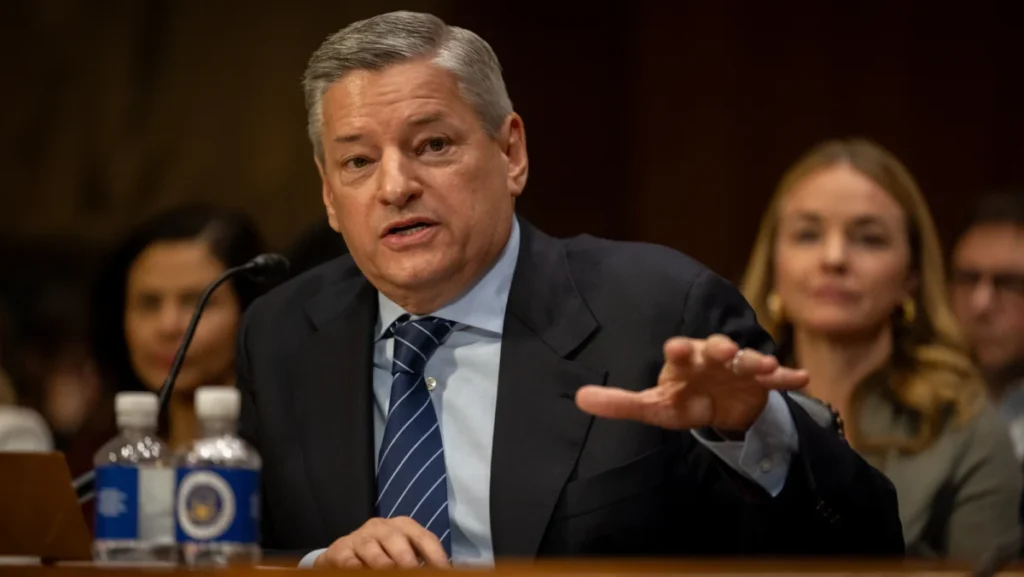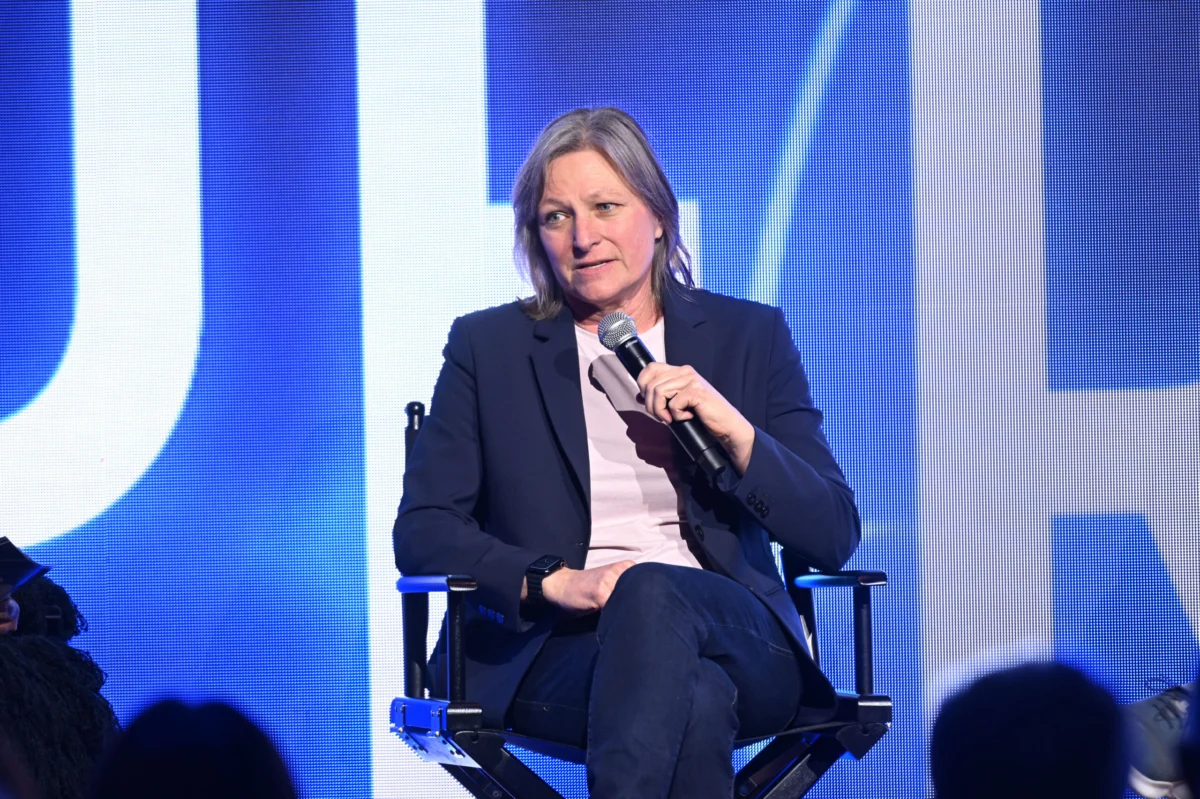
The landscape of modern media continues its aggressive consolidation as Paramount Global announced that Cindy Holland, the company’s chair of direct-to-consumer (DTC), will step down from her post effective immediately. This leadership departure is inextricably linked to the looming acquisition of Warner Bros. Discovery (WBD), a merger that represents one of the most significant realignments in the history of the entertainment industry. Holland’s exit marks the conclusion of a whirlwind tenure that saw the executive tasked with stabilizing and scaling Paramount’s streaming assets during a period of extreme volatility and corporate transition.
The decision to vacate her role comes as David Ellison, CEO of Paramount Skydance, moves to streamline the executive hierarchy in preparation for the integration of Warner Bros. Discovery’s expansive content library and subscriber base. In a memo distributed to staff on Tuesday, Holland signaled her support for the consolidation, noting that the move is designed to ensure the stability of HBO’s leadership structure within the newly merged entity.
A Chronology of Strategic Realignment
Cindy Holland’s journey to the helm of Paramount’s streaming division began long before her official appointment. A veteran of the industry and a former executive at Netflix, where she played a pivotal role in establishing the company’s original programming division, Holland initially entered the Skydance ecosystem as a strategic advisor. Her focus during that period was on refining the streaming content strategy that would ultimately underpin the Skydance-led acquisition of Paramount.
In January 2025, following the formal closing of the deal that saw David Ellison assume control of Paramount, Holland was officially tapped to lead the DTC division. Her mandate was clear: integrate the company’s disparate streaming offerings, revitalize Pluto TV, and build a cohesive, high-performing team capable of competing with the industry’s dominant players.
Over the past 14 months, the division underwent a rapid transformation. By mid-2025, Holland oversaw a series of product updates for Pluto TV—the most significant in a decade—and successfully pushed Paramount+ to record-breaking subscriber numbers. Her departure now triggers a shift in command, with industry observers widely expecting HBO Max content chief Casey Bloys to assume a more expansive role, effectively consolidating the streaming ambitions of both Paramount and Warner Bros. Discovery under his purview.
Performance Metrics and Operational Success
Holland’s tenure was marked by a series of aggressive growth metrics that demonstrated the efficacy of her strategic pivot. Despite the uncertainty surrounding the corporate merger, the DTC division reported consistent gains in engagement, revenue, and subscriber retention.
According to internal company data provided in her farewell address, the division achieved several key milestones under her leadership:
- Subscriber Growth: Paramount+ reached an all-time high in total subscribers, bolstered by a data-driven approach to content acquisition and retention.
- Content Performance: The service saw the debut of Landman, which currently holds the title of the most-watched series in the history of Paramount+, alongside the record-breaking launch of Dutton Ranch.
- Sports Integration: Recognizing the role of live events in reducing churn, Holland prioritized the expansion of sports rights. The integration of UFC and Zuffa Boxing content into the platform proved transformative. Specifically, UFC 250 became the most-watched exclusive live event on Paramount+, while UFC 329 shattered previous records for peak concurrent streams.
- Pluto TV Revitalization: Through product-led changes and improved VOD (video-on-demand) consumption strategies, Pluto TV saw a significant increase in registered users, providing a stable, ad-supported foundation that complements the subscription-based Paramount+ model.
These achievements were realized during a period characterized by high-interest rates and a broader industry move away from "growth at all costs" toward a focus on profitability. Holland’s ability to navigate these fiscal constraints while simultaneously overseeing a merger-related integration process was cited by Ellison as a defining feature of her leadership.
Official Responses and the Vision for the Future
David Ellison, in a statement accompanying the announcement, praised Holland’s impact as "a force of nature." He noted that her leadership provided the necessary stability during a volatile transition. "Under her leadership, P+ reached new heights, Pluto TV underwent its most significant transformation in a decade, and we strengthened our content and sports portfolio—all while the business exceeded the ambitious goals we set," Ellison remarked.
For her part, Holland maintained a tone of pragmatic optimism regarding the upcoming merger. "David is optimizing for HBO stability as we move into this next chapter, and I fully support that," she wrote in her farewell memo. She emphasized that the combination of Paramount and Warner Bros. Discovery represents a necessary evolution for the media industry, one that, in her view, serves the interests of both global audiences and the creative community.
The Macro Implications of the Merger
The departure of a high-profile executive like Holland is a harbinger of the "rationalization" phase that typically follows massive media mergers. As Paramount and Warner Bros. Discovery begin the process of combining their assets—which include Paramount+, Pluto TV, HBO Max, and Discovery+—the industry expects a significant overlap in both personnel and operational costs.
Analysts point to several key implications of this consolidation:
- Content Rationalization: With a bloated library of content, the new entity will likely move to cull underperforming titles to reduce licensing costs and focus on high-ROI intellectual property.
- Platform Integration: The ultimate question remains whether the combined company will maintain separate streaming apps or pursue a singular, unified platform. Bringing HBO Max and Paramount+ under one technical roof is a gargantuan task that requires the exact type of leadership stability Ellison is currently pursuing.
- Market Dominance: By uniting these two massive media houses, the new company aims to create a formidable competitor capable of challenging the market dominance of Netflix and Disney+. The success of this strategy, however, depends on whether the combined subscriber base can be retained despite the inevitable price increases and service restructuring that usually accompany such mergers.
Conclusion
As Cindy Holland exits the organization, she leaves behind a division that is, by all financial metrics, stronger than when she arrived. Her tenure serves as a case study in managing complex corporate change while maintaining operational momentum. With the transition of power now focused on Casey Bloys and the broader leadership team under David Ellison, the next chapter for the combined Paramount-Warner Bros. Discovery entity will be defined by its ability to synthesize these massive, legacy-media organizations into a singular, modern streaming power.
The industry will be watching closely to see if the momentum built by Holland during the last year can be sustained as the company moves from the planning phase of the merger into the realities of full-scale integration. For now, the departure represents the end of one of the most critical bridge-building exercises in the modern streaming era.