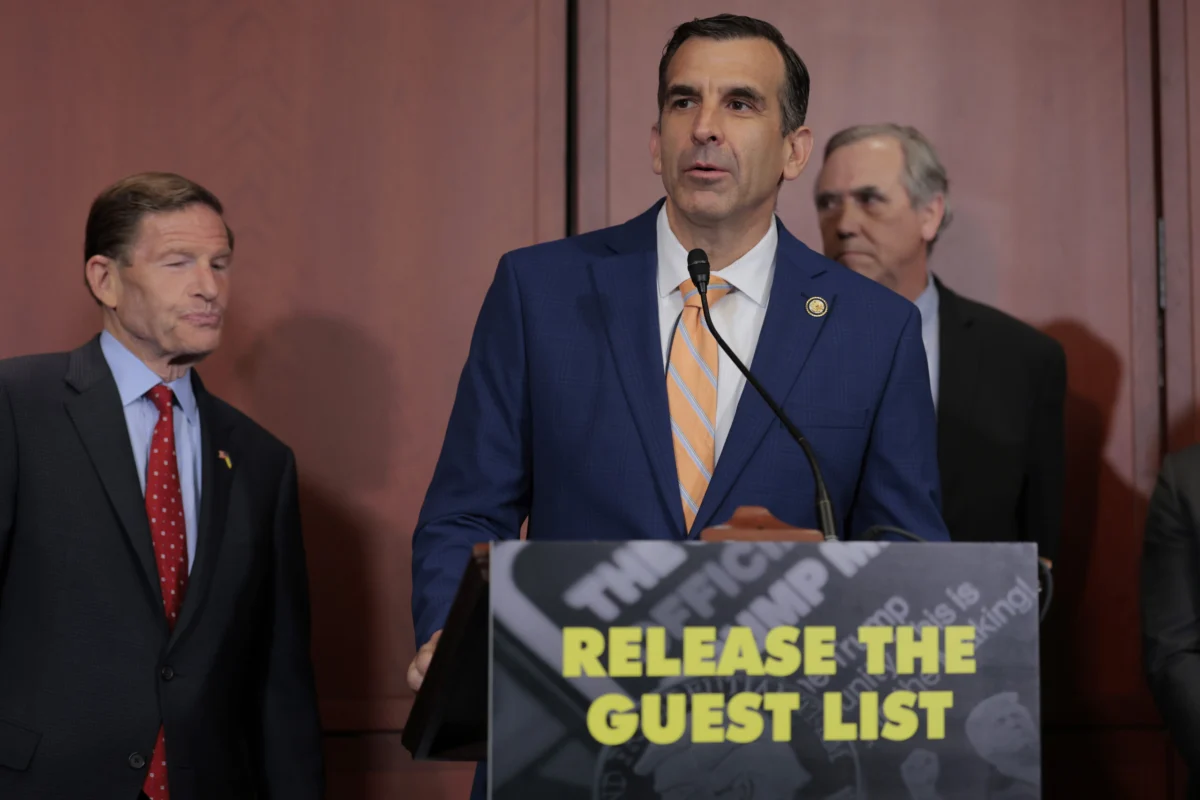
United States Representative Sam Liccardo has formally requested that the Federal Communications Commission (FCC) intervene in the proposed multi-billion dollar consolidation of the American media landscape. In a sharply worded letter addressed to FCC Chairman Brendan Carr, the California Democrat urged the regulatory body to reject a petition from Paramount Global that would facilitate a massive influx of capital from three prominent Middle Eastern sovereign wealth funds. The proposed financial structure would grant these foreign entities a significant equity stake in the conglomerate resulting from the potential takeover of Warner Bros. Discovery.
The investment in question involves Saudi Arabia’s Public Investment Fund (PIF), Abu Dhabi’s L’Imad fund, and the Qatar Investment Authority (QIA). Together, these entities have reportedly committed approximately $24 billion in equity funding. Under the current terms of the deal, these three sovereign funds would hold a combined 38.5 percent of the new entity’s equity. When factored alongside other international backers, the total foreign ownership of one of America’s most influential media and broadcast giants could approach 50 percent.
National Security and Foreign Influence Concerns
In his letter, dated May 1, Representative Liccardo raised alarms regarding the geopolitical implications of allowing foreign regimes—specifically those with controversial records on human rights and press freedom—to hold such a dominant financial position in U.S. media infrastructure. Liccardo, whose district encompasses a significant portion of the Silicon Valley region, argued that the sheer scale of the investment transcends mere financial participation and enters the realm of strategic influence.
"The scale, concentration, and sovereign nature of this foreign ownership present serious and unresolved questions about national security, foreign influence over American media, and public interest obligations the Commission is duty-bound to uphold," Liccardo wrote. He further contended that the deal stands in direct opposition to the spirit of Section 310 of the Communications Act of 1934. For nearly a century, this statute has served as a safeguard, ensuring that American broadcast infrastructure remains under domestic control to prevent foreign propaganda or interference.
Liccardo’s primary objection centers on the nature of the regimes providing the capital. He noted that the funds originate from nations with documented histories of state-directed media influence and the suppression of independent journalism. By allowing these entities to become the primary financiers of a major American broadcaster, Liccardo argues the FCC would be compromising the integrity of the U.S. information ecosystem.
The "Non-Voting" Equity Debate
The architects of the Paramount and Warner Bros. Discovery deal have structured the foreign investment as non-voting equity. This move is designed to circumvent traditional regulatory hurdles that limit foreign voting control of U.S. broadcast licenses to 25 percent. Under the proposed arrangement, David Ellison and his father, Oracle co-founder Larry Ellison, would maintain absolute voting control through a dual-class share structure, theoretically insulating editorial and operational decisions from foreign pressure.
However, Representative Liccardo dismissed this structural safeguard as a "legal technicality." He argued that financial dependence creates a de facto subservience that voting rights alone cannot mitigate. "The procedural subtlety of restricting these sovereign funds to non-voting equity shares does not resolve this conflict," the letter stated. "The scale of their ownership alone constitutes more than mere influence; the company’s financial dependence makes it beholden to its largest shareholders."
The lawmaker emphasized that the FCC’s "public interest" mandate requires more than a simple verification of who holds voting power. He asserted that broadcast licensees have an affirmative duty to serve local communities and maintain editorial independence—obligations he believes are incompatible with a capital structure dominated by foreign authoritarian interests.
Context and Chronology of the Media Mega-Merger
The push for foreign capital comes at a volatile time for the American media industry. Paramount Global and Warner Bros. Discovery have both faced significant headwinds, including declining linear television revenues, the high costs of the "streaming wars," and substantial debt loads.
A Timeline of Recent Events:
- Late 2023: Reports surface that Paramount Global, led by Shari Redstone’s National Amusements, is exploring a sale or merger to stabilize its balance sheet.
- Early 2024: Skydance Media, headed by David Ellison, emerges as the primary suitor. Simultaneously, preliminary talks between Paramount and Warner Bros. Discovery (WBD) CEO David Zaslav are reported, suggesting a three-way consolidation or a subsequent takeover of WBD by the newly formed Paramount-Skydance entity.
- April 2024: Details of the financing for the "New Paramount" begin to leak, revealing a heavy reliance on sovereign wealth funds from the Gulf region to fund the $24 billion equity requirement.
- May 1, 2024: Representative Sam Liccardo sends his formal opposition to the FCC, signaling a growing political backlash in Washington.
- Current Status: The FCC is reviewing the petition for foreign ownership. While the agency does not typically block mergers where licenses are not being transferred, it holds the power to deny the specific foreign investment thresholds requested by Paramount.
Profiles of the Sovereign Wealth Funds
The three funds involved in the transaction represent some of the largest pools of capital in the world, each with a specific strategic agenda:
- The Public Investment Fund (PIF) of Saudi Arabia: With assets exceeding $700 billion, the PIF is the central vehicle for Crown Prince Mohammed bin Salman’s "Vision 2030." The fund has been aggressive in diversifying into Western entertainment and sports, including LIV Golf and significant stakes in video game giants like Nintendo and Activision Blizzard.
- The Qatar Investment Authority (QIA): Managing over $450 billion, the QIA has a long history of media investment, most notably through its state-aligned Al Jazeera network. Its involvement in U.S. media is often viewed through the lens of regional "soft power" competition.
- L’Imad (Abu Dhabi): As part of the United Arab Emirates’ broader investment strategy, this fund focuses on long-term infrastructure and strategic assets. Like its neighbors, Abu Dhabi has sought to transform itself into a global hub for media and tourism.
Critics argue that these funds do not operate with the same transparency or fiduciary motivations as private equity firms. Instead, they are seen as extensions of state policy, leading to fears that American news outlets under their financial umbrella might avoid critical coverage of Middle Eastern geopolitics.
Regulatory and Legislative Implications
The FCC’s role in this transaction is specialized. Because the deal involves the transfer of "control" in a broad sense but perhaps not the literal transfer of individual broadcast licenses in a traditional manner, the agency’s primary lever is the approval of foreign ownership above the 25 percent cap. Historically, the FCC has granted waivers for higher foreign ownership—most notably for companies like Univision and Pandora—but those cases typically involved investors from democratic allies like Mexico or Australia.
Representative Liccardo warned that if the FCC fails to act, Congress may be forced to intervene. He suggested that future legislation could impose harder caps on foreign ownership or mandate divestitures for media companies that become overly reliant on "authoritarian" capital.
"Congress did not entrust the public airwaves to this agency so that it could auction off America to Riyadh, Abu Dhabi, and Doha," Liccardo’s letter concluded. "This will not stand."
Financial Backstops and Market Reaction
Despite the political firestorm, the deal’s proponents argue that the foreign capital is essential for the survival of these legacy media institutions. Without the $24 billion infusion, the combined entity would struggle to compete with tech giants like Netflix, Amazon, and Apple.
Furthermore, industry insiders note that the deal has a built-in contingency. Larry Ellison and RedBird Capital have reportedly agreed to "backstop" the financing. This means that if the FCC rejects the Middle Eastern funding, the Ellisons and their domestic partners would be legally required to provide the necessary capital themselves to ensure the merger closes. This backstop serves as a safety net for Paramount shareholders but raises questions about why the foreign funds were sought in the first place if domestic capital was available.
As the FCC deliberates, the broader implications for the "New Paramount" remain uncertain. The decision will likely set a major precedent for how the U.S. government balances the need for capital in the struggling media sector against the risks of foreign influence in the domestic news and entertainment industry. For now, the intervention of Representative Liccardo ensures that the deal will remain under intense scrutiny from both regulators and lawmakers on Capitol Hill.