Kaneto Shindo: A Master of Poetic Realism and Human Drama
Kaneto Shindo (1912-2011) was a prolific and influential figure in Japanese cinema, with a career spanning over six decades. Known for his unflinching exploration of human nature, often through the lens of hardship, sexuality, and the supernatural, Shindo’s filmography is characterized by a deep engagement with societal issues and psychological complexities. Prior to The Iron Crown, he had already established himself with critically acclaimed works that often featured strong female protagonists and delved into themes of survival, desire, and vengeance. Films like Children of Hiroshima (1952) depicted the aftermath of atomic warfare with stark realism, while The Naked Island (1960) offered a poetic, dialogue-free meditation on human endurance. His horror films, Onibaba (1964) and Kuroneko (1968), both starring Nobuko Otowa, cemented his reputation for blending atmospheric terror with folklore and social commentary, often using the supernatural to externalize human psychological states. The Iron Crown arrived during a period where Shindo continued to experiment with genre and form, pushing boundaries established in his earlier works by explicitly integrating classical theatre into a modern narrative framework. His personal life, particularly his long-standing relationship with actress Nobuko Otowa, frequently intertwined with his artistic output, adding layers of autobiographical interpretation to many of his films, a characteristic particularly evident in The Iron Crown.
The Avant-Garde Ethos of Art Theatre Guild (ATG)
The distribution of The Iron Crown by the Art Theatre Guild (ATG) is crucial to understanding its context and artistic ambition. Established in 1961, ATG was a groundbreaking Japanese film distribution and production company that became a vital force in the country’s independent and avant-garde cinema movement throughout the 1960s and 1970s. During a time when major studios dominated the Japanese film industry, ATG provided a crucial platform for experimental filmmakers, allowing them artistic freedom rarely afforded elsewhere. They championed directors who sought to challenge conventional narrative structures, explore controversial themes, and employ innovative visual styles. ATG’s influence extended beyond distribution; they often co-produced films, fostering a vibrant ecosystem for independent artists. Their programming included international art house films alongside domestic productions, exposing Japanese audiences to diverse cinematic expressions. Films released under the ATG banner were frequently characterized by their provocative imagery, psychological depth, and willingness to tackle social taboos, including explicit sexuality and violence. The Iron Crown, with its fusion of ancient ritual and modern erotic horror, its non-linear storytelling, and its explicit content, perfectly encapsulated the audacious and experimental spirit that defined the ATG movement. Its release was not merely a cinematic event but a cultural statement, reflecting the counter-cultural currents and artistic ferment of early 1970s Japan.
Narrative Threads: Jealousy, Betrayal, and Transcendent Vengeance
At its narrative core, The Iron Crown unfolds as a profound and disquieting exploration of jealousy, betrayal, and the relentless pursuit of vengeance. Shindo masterfully constructs a dual narrative that seamlessly alternates between two distinct yet intrinsically linked timelines: the ancient Heian period (794-1185 CE) and contemporary Japan. This structural choice is not merely an artistic flourish but a deliberate thematic device, suggesting the cyclical nature of human emotion and the enduring power of ancient curses.
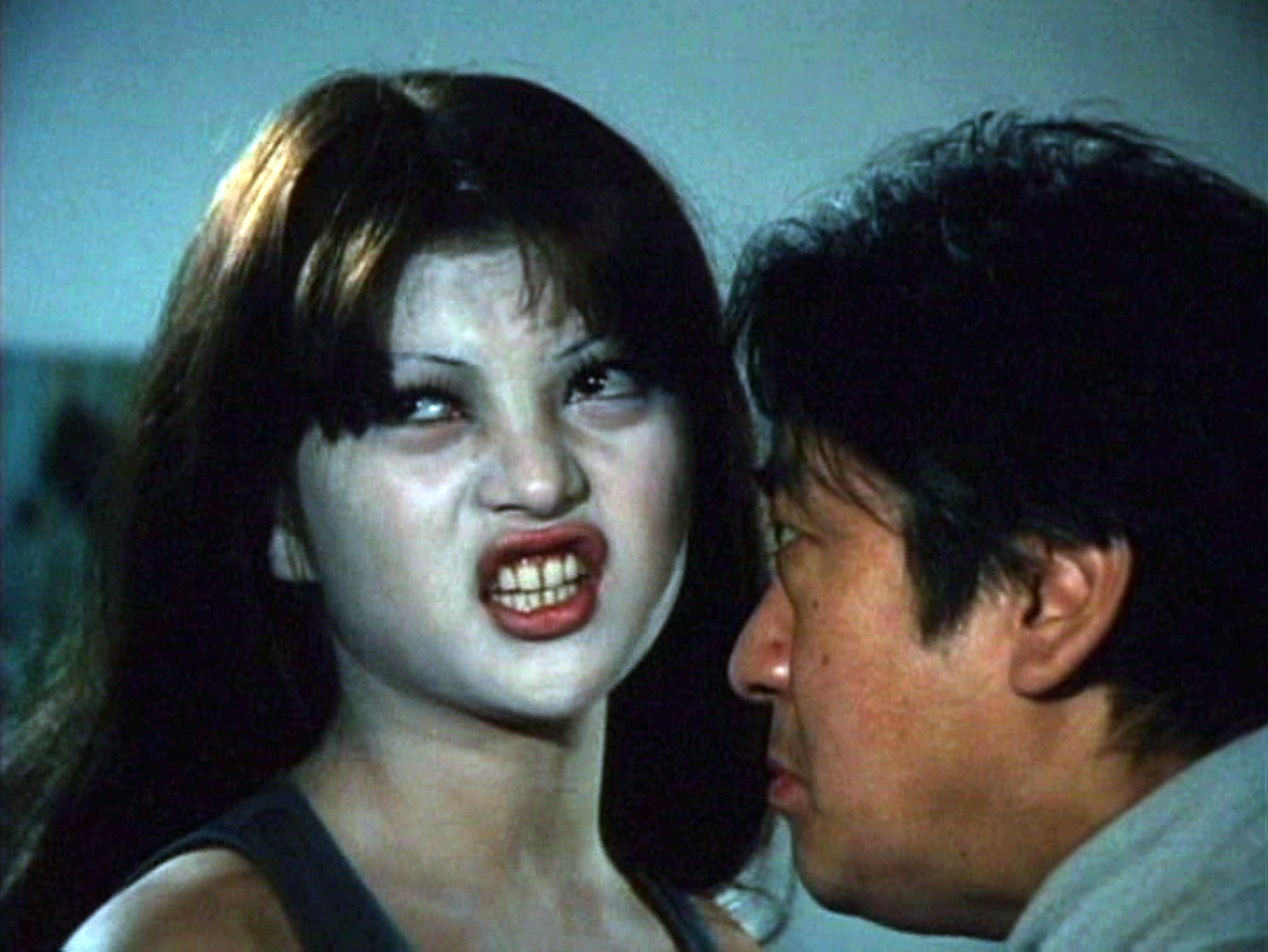
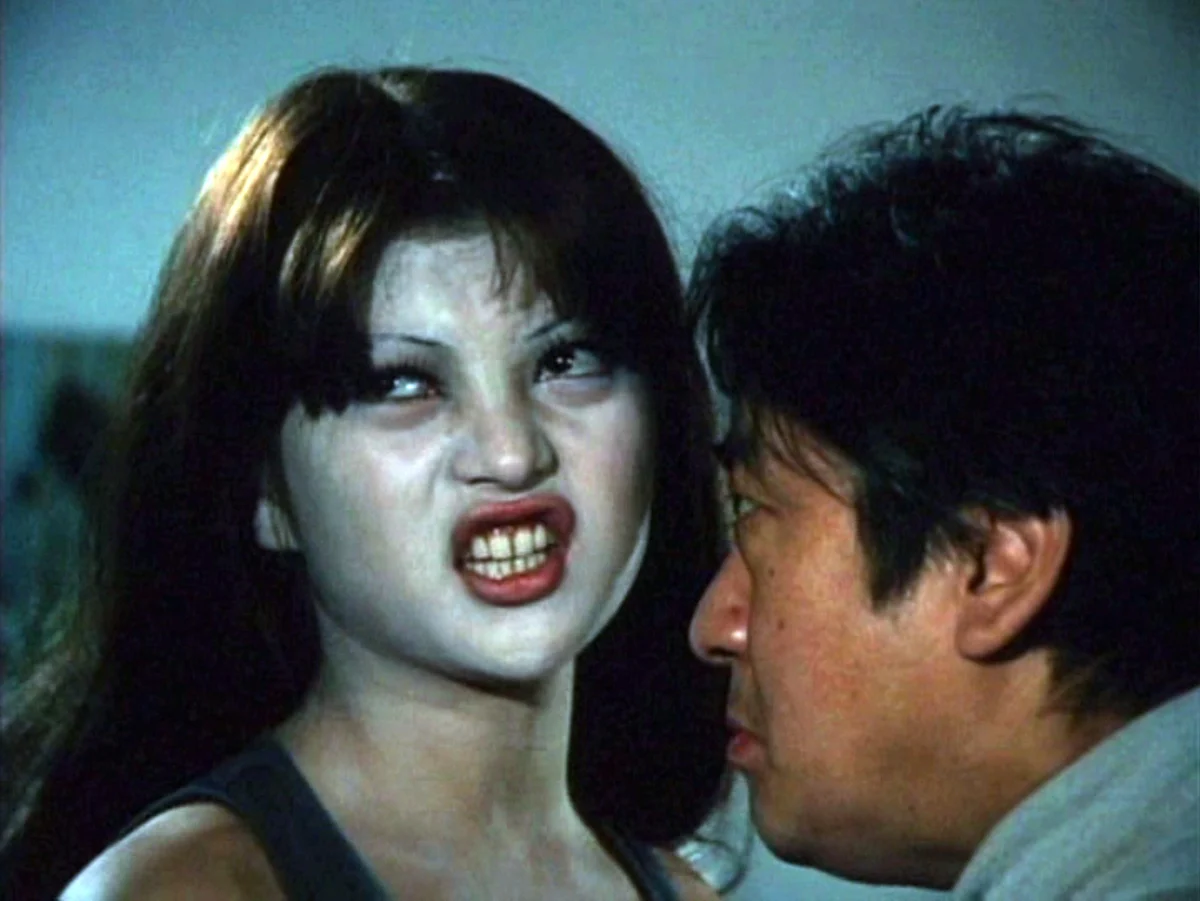
In the Heian period segment, the film introduces a middle-aged woman, portrayed with haunting intensity by Nobuko Otowa, who faces the devastating abandonment of her husband. He forsakes her for a younger woman, a societal affront that ignites within her a consuming, uncontrollable rage. Driven to the brink of despair and consumed by a thirst for retribution, she embarks upon the ritual of Ushi no Toki Mairi. This chilling traditional Japanese ritual, typically performed between 1:00 AM and 3:00 AM (the Hour of the Ox), involves nailing straw effigies (wara ningyō) of one’s enemy to a sacred tree, often at a Shinto shrine, most famously Kifune Shrine in Kyoto, as depicted in the film. The woman performs this ritual while adorned with a flaming iron crown, its three legs piercing her head, signifying a transformation into an onryō or kijo – a vengeful spirit or demoness. This act of black magic is intended to inflict a curse leading to the death of the betrayer. As her torment deepens and the ritual progresses, she physically and psychologically transforms into a monstrous, demon-like entity, her entire being now singularly focused on enacting a brutal and eternal revenge.
The contemporary narrative mirrors this ancient tragedy with unsettling precision. In modern Japan, a middle-aged man, whose identity is left somewhat ambiguous to emphasize his archetypal role, embarks on an extramarital affair with a younger woman, portrayed by the bold Flower Meg. Their illicit relationship is initially clandestine but soon becomes disrupted by a series of increasingly disturbing anonymous phone calls. These calls are not mere annoyances; they gradually escalate, evolving into a pervasive and suffocating sense of dread that infiltrates the couple’s lives. As the psychological torment intensifies, the boundaries between the past and present begin to dissolve with chilling fluidity. The insidious presence of the vengeful spirit from the Heian period appears to transcend temporal limitations, suggesting that the abandoned woman’s curse is not confined to a single era but is an eternal force, capable of manifesting across centuries to punish infidelity and betrayal. This interweaving of timelines creates a compelling narrative resonance, where modern anxieties are inextricably linked to ancient grievances, highlighting the timeless and inescapable nature of human passion and its darkest consequences.
Thematic Depth: Folklore, Obsession, and Autobiographical Echoes
Beyond its narrative surface, The Iron Crown functions as a profound thematic exploration of obsession, emotional violence, and the cyclical nature of human suffering. Shindo constructs a cinematic world where linear time becomes fluid, and deep-seated human emotions, particularly jealousy and vengeance, are portrayed as inescapable, primal forces. The film’s structure, which intercuts stylized Noh performances and direct references to traditional folklore with its narrative sequences, powerfully reinforces this idea. It posits that the story of betrayal and revenge is not merely a personal anecdote but an archetypal human experience, eternally replayed across generations and cultural contexts. Jealousy, in this framework, transcends a mere emotion; it becomes a destructive force as enduring and potent as the ancient traditions and rituals that represent it.
Thematically, The Iron Crown is deeply rooted in both classical