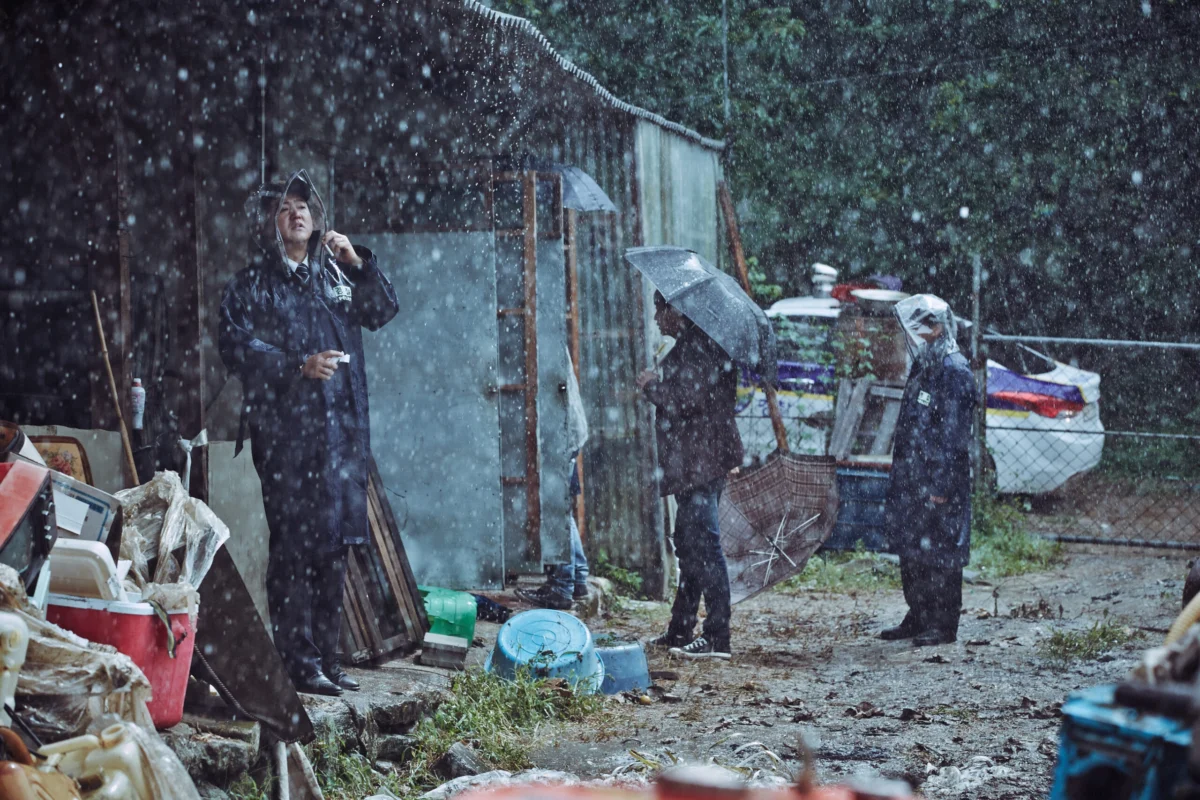
Ten years ago, in May 2016, South Korean filmmaker Na Hong-jin unleashed The Wailing upon an unsuspecting global audience. This cinematic descent into unadulterated dread, a departure from his previous, albeit dark, crime thrillers like The Chaser and The Yellow Sea, cemented its status as a benchmark in South Korean horror. The Wailing doesn’t offer the cathartic release of many genre films; instead, it plunges viewers into a maelstrom of supernatural terror, psychological unease, and primal fear, leaving them stranded in its suffocating atmosphere long after the credits roll.
Genesis of a Dread-Choked Nightmare
Na Hong-jin’s decision to pivot towards a more overtly supernatural narrative in The Wailing marked a significant evolution in his directorial career. While his earlier works explored the grim realities of human violence and societal decay, The Wailing delves into the abyss of the occult, questioning the very nature of belief, reason, and the human capacity for both good and evil. The film’s genesis can be traced to a period of intense creative exploration for Hong-jin, who meticulously crafted a narrative that would challenge audience expectations and explore complex thematic layers.
The film’s critical and commercial success, both domestically and internationally, was a testament to its compelling storytelling and masterful execution. It garnered numerous accolades, including being selected as South Korea’s submission for the Best Foreign Language Film at the 89th Academy Awards, though it was not nominated. Its enduring appeal lies in its ability to tap into universal fears, particularly the helplessness of a parent facing the inexplicable suffering of their child.

The Unraveling of Gokseong: A Community Under Siege
The narrative of The Wailing unfolds in the remote rural village of Gokseong, a seemingly idyllic setting that becomes the focal point of an inexplicable series of horrific events. The story centers on Police Sergeant Jong-goo (Kwak Do-won), a provincial officer whose pragmatic worldview is shattered by a gruesome murder that marks the beginning of a terrifying epidemic. The initial crime scene is a tableau of horror: multiple bodies, a pervasive sense of violence, and a killer in a state of apparent delirium, covered in peculiar blisters.
This incident is soon followed by a wave of similar inexplicable deaths, each accompanied by the unsettling appearance of mysterious blisters and a palpable sense of encroaching madness. Local whispers and rumors begin to circulate, pointing towards the arrival of a reclusive Japanese stranger (Jun Kunimura) in the vicinity, who is increasingly associated with the escalating malevolence. As the unexplained affliction spreads, Jong-goo’s own daughter, Hyo-jin (Kim Hwan-hee), falls victim to a similar demonic possession, manifesting in violent outbursts and physical deterioration. This personal stake transforms Jong-goo’s professional duty into a desperate, paternal quest for survival.
The Everyman Hero: Jong-goo’s Vulnerability
A key element that elevates The Wailing is its protagonist, Jong-goo. Unlike the archetypal fearless, unflappable heroes often found in horror cinema, Jong-goo is portrayed as a deeply human and relatable character. He is a man of simple pleasures, enjoying food and his family, but also demonstrably flawed, possessing a noticeable streak of cowardice. His fellow officers even mockingly refer to him as having "balls the size of peas."
Jong-goo’s initial skepticism towards the supernatural is rooted in his reliance on rational explanations. Even when confronted with the bizarre symptoms and ritualistic elements at crime scenes, he initially attributes the chaos to drugs or other conventional causes. This grounded, albeit hesitant, approach makes his eventual descent into the terrifying unknown all the more impactful. His fear and vulnerability are palpable, particularly when he experiences a deeply embarrassing incident where he soils himself at a crime scene, requiring his daughter to bring him a change of clothes in front of his superiors. This portrayal of a flawed, ordinary man thrust into extraordinary circumstances underscores the film’s central theme: the profound terror of facing forces far beyond one’s comprehension and control.

The Clash of Belief Systems: Superstition vs. Science
The Wailing masterfully explores the enduring conflict between rationalism and superstition, a theme deeply embedded in many cultures, including South Korea. Jong-goo’s initial steadfast adherence to scientific explanations is challenged by the escalating supernatural occurrences. His partner, Oh Sung-bok (Son Kang-kuk), however, is an immediate convert to the eerie folklore surrounding the Japanese stranger, creating a narrative tension that mirrors the audience’s own struggle to reconcile the inexplicable with logical understanding.
The film poses a critical question: how can one be certain of the supernatural without direct, undeniable evidence? Jong-goo grapples with this dilemma when his daughter falls ill. The uncertainty of whether Hyo-jin is suffering from a severe medical condition or a demonic possession fuels the pervasive dread. This ambiguity, this lack of definitive answers, is precisely what makes the film so terrifying. It mirrors the existential fear of being a small, insignificant entity in a vast, incomprehensible universe, where answers are elusive and vulnerability is paramount. Hyo-jin’s chilling accusation to her father, "You don’t even know what’s important," serves as a stark reminder of this human limitation.
Unearthing Deeper Horrors: Implied Violence and Parental Fear
Beyond the overt supernatural elements, The Wailing delves into darker, more disturbing implications, particularly concerning the potential sexual abuse of Hyo-jin by the Japanese man. The discovery of her shoe at an altar set up in his home, coupled with rumors of his assault on a woman, paints a grim picture. The scene where Jong-goo discovers a disturbing blistering rash on his sleeping daughter is particularly harrowing, amplifying any father’s deepest anxieties. These elements combine to create a sense of gut-wrenching horror, as Jong-goo’s worst fears for his family begin to manifest one devastating event after another. The film effectively utilizes these implied horrors to amplify the emotional stakes and deepen the audience’s sense of dread.
The Riddle of Gokseong: Unraveling the ‘Why’
The central mystery of The Wailing lies in its elusive ‘why’. The film eschews simple answers, weaving a complex tapestry of folklore, religious symbolism, and cultural anxieties. A pivotal moment occurs during the film’s emotionally charged climax, where a mysterious woman, Moo-myeong (Chun Woo-hee), reveals a crucial piece of information to Jong-goo. She identifies the Japanese stranger as a demon and exposes the local shaman, Il-gwang (Hwang Jung-min), as an accomplice. Moo-myeong explains that Jong-goo needs only to wait for her carefully laid trap to ensnare the entity.

However, in a tragic turn of events, Jong-goo, upon realizing Moo-myeong is a ghost, rushes back to his daughter, inadvertently thwarting the plan and sealing his family’s fate. This act of haste and misplaced belief leads to the horrific deaths of his loved ones at the hands of his possessed daughter. The raw, visceral screams of Jong-goo and the brutal murder of his family are enough to shatter any viewer.
Historical Echoes and Cultural Anxieties
The Wailing also intricately weaves in the historical context of the long-standing feud between Japan and South Korea, stemming from Japan’s colonial rule. While many South Korean horror films have explored the lingering trauma of this era, exemplified by the recent film Exhuma, Hong-jin’s approach is notably nuanced. Although the Japanese stranger is indeed a demonic entity, the film presents him with a degree of sympathy, particularly as he suffers at the hands of Jong-goo and an enraged mob who still perceive him as human.
In a shocking revelation, it is uncovered that the demon was, in fact, orchestrating events to punish Jong-goo for an anticipated act of violence: attempting to kill the Japanese man without concrete proof of wrongdoing. Jong-goo abandons his rational beliefs and succumbs to the allure of rumor, allowing himself to be convinced of the stranger’s evil. This descent into spiritual fervor, fueled by underlying racism and fear, transforms the stranger into a scapegoat for problems the villagers cannot comprehend. A particularly striking image of a sickle adorned with rosemary encapsulates the film’s theme of violence fueled by superstition. Ultimately, Jong-goo’s dismantling of reason in favor of hatred leads to his tragic downfall—a potent commentary on lessons that remain unlearned in the contemporary world.
A Lasting Legacy in the Pantheon of Horror
Over the past two decades, South Korean cinema has produced a remarkable array of globally recognized horror films, including Bong Joon-ho’s The Host, Yeon Sang-ho’s Train to Busan, and Kim Ji-woong’s Gonjiam: Haunted Asylum. Yet, The Wailing stands apart for its ability to tap into a profound, primal terror—the deep-seated dread that resides in the darkest corners of the human psyche.

Scary, suffocating, and ultimately devastating, The Wailing serves as a stark reminder of our inherent vulnerability in a vast and frightening world. The film’s unflinching exploration of fatherhood, cowardice, hatred, and the destructive tendencies of humanity when gripped by fear continues to resonate a decade later. It remains a testament to Na Hong-jin’s visionary storytelling and a chilling masterpiece that continues to scream its unsettling brilliance from the annals of South Korean cinema. The film’s enduring power lies in its refusal to offer easy answers, leaving audiences to grapple with its ambiguities and the chilling realization of their own smallness in the face of overwhelming, unknowable forces.