A seismic shift is reverberating through Hollywood, as the traditional studio model faces an unprecedented challenge from a new wave of creator-led cinema. This weekend, the landscape of independent film distribution, often synonymous with the acclaimed A24, witnessed a dramatic reordering. At the forefront of this disruption is 20-year-old filmmaker Kane Parsons, better known by his online moniker Kane Pixels, whose debut feature, Backrooms, has shattered box office expectations and redefined what constitutes a cinematic success.
A New Box Office King Emerges from the Digital Realm
Parsons, a burgeoning talent with over 3 million YouTube subscribers, has achieved a feat that has left industry veterans reeling. His film, Backrooms, a feature-length expansion of his viral horror shorts, grossed an astounding $90 million in its opening weekend, setting a new record for A24 and surpassing nearly every film in the studio’s celebrated history. To put this into perspective, Backrooms outearned critical darlings and commercial successes such as Alex Garland’s Civil War, Greta Gerwig’s Lady Bird, Ari Aster’s Midsommar, and the multi-Oscar-winning phenomenon Everything Everywhere All at Once. The only A24 title it has yet to overtake is Marty Supreme, a benchmark that industry analysts predict will fall within days. This monumental achievement is particularly striking given Parsons’ age; he was merely a second-grader when A24 released its inaugural film, underscoring the rapid and unconventional trajectory of his rise.
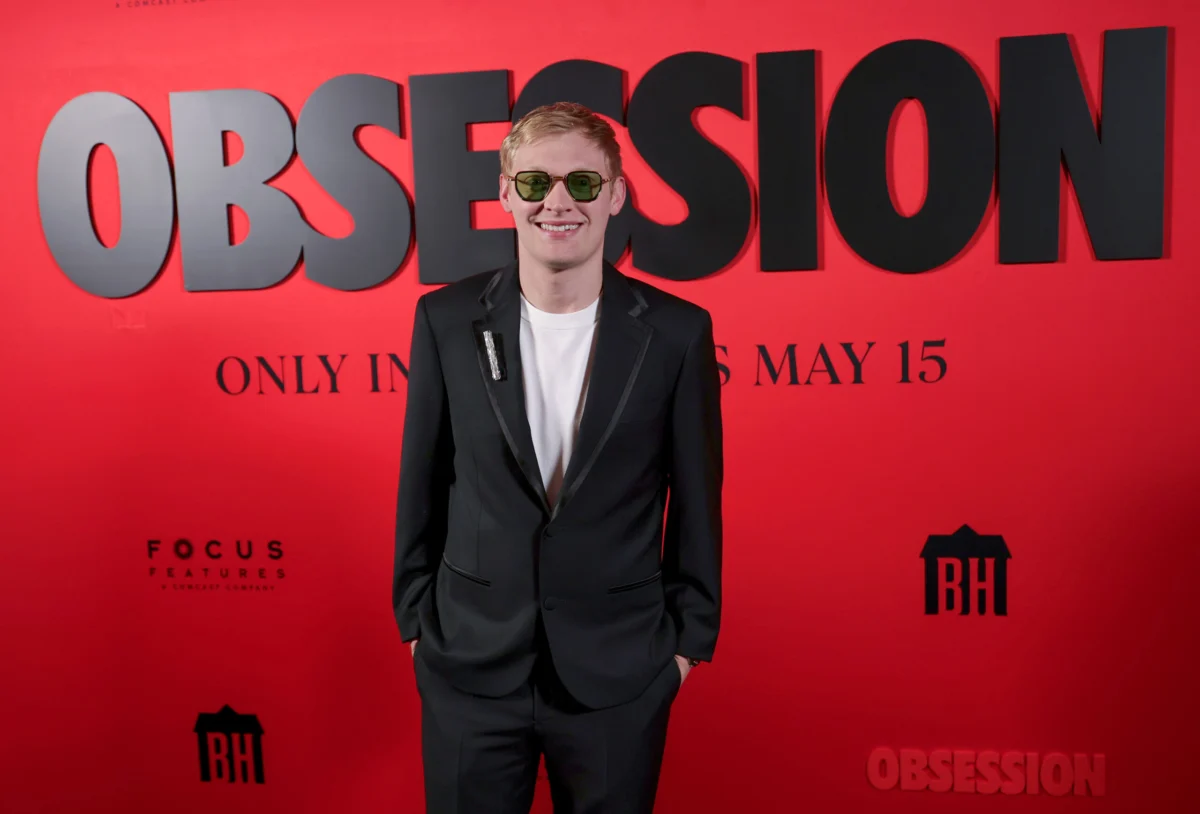
The success of Backrooms is not an isolated incident but rather a potent indicator of a broader, transformative trend. It arrives on the heels of other low-budget, creator-driven films making significant waves. Curry Barker’s Obsession has similarly carved out its own niche in the market, drawing substantial audiences. Just months prior, Markiplier, a YouTube titan with 38 million subscribers, leveraged his massive online following to propel his self-distributed horror film, Iron Lung, to record-breaking numbers for an independent release. Iron Lung is further capitalizing on its creator-driven model by launching exclusively for rental and purchase on YouTube this Sunday, a strategic move expected to generate a substantial windfall given Markiplier’s expansive audience.
The Erosion of the Legacy Studio System
To view these films as mere fortunate anomalies, transient breaths of fresh air in an otherwise static industry, would be a profound misinterpretation of the underlying tectonic shifts. What is unfolding is nothing less than the initial tremors, if not the incipient collapse, of a legacy-driven studio system that has dominated cinematic production and distribution for decades. This traditional, top-down, mega-budgeted gatekeeping model, solidified roughly a quarter-century ago with the advent of massive franchises like Lord of the Rings and Harry Potter, is now facing an existential challenge. These long-running sagas, still limping along via subscription television platforms in the late 2020s, represent a bygone era.
In their place, a fresh, bottom-up entertainment ecosystem is rapidly materializing. This new paradigm, critically enabled by Google, the world’s largest company, is paradoxically more capitalistic in its direct monetization strategies for creators, yet simultaneously more unruly and democratic than anything Hollywood has seen in half a century. The stark contrast was evident this past weekend: while Obsession and Backrooms commanded packed theaters, screening rooms for traditional corporate behemoths like Star Wars: The Mandalorian and Grogu reportedly sat empty. The power has decisively shifted from corporate franchises to personalities forged in the crucible of online engagement. The irony is not lost on observers, as Star Wars itself embodied rebellious youth when it first premiered 49 years ago. The guard, it seems, has irrevocably changed.
Echoes of the Past, Harbingers of the Future
Veteran producer Jason Blum, known for his groundbreaking work in low-budget horror, drew a compelling parallel on Saturday, comparing the current moment to the revolutionary cinematic landscape of the 1970s. While the artistic merits of this new wave may still be debated, the economic jolt delivered to a sclerotic system by a young generation attuned only to its own instincts feels undeniably resonant with that earlier period of industry upheaval.
The significance of this moment transcends mere talent discovery – it is not simply YouTube as the new film school, the new film festival, or the new music-video breeding ground. Such a perspective, while partially true, dramatically underplays the colossal implications. The notion that everything found on YouTube will simply be absorbed into the existing system, which will continue to churn merrily, fundamentally underestimates the immense gravitational pull of Google and the business earthquake that looms on the horizon.
YouTube: The New Hollywood
YouTube executives themselves are articulating an ambitious vision. Angela Courtin, YouTube’s VP for marketing, brand, creative, culture & media, emphatically declared, "We say YouTube is the new Hollywood. It’s where people go to connect with everything they love. We’re going to keep building that." These are not idle boasts. YouTube already eclipses all its competitors in television viewing time, boasting an estimated 1.86 billion active users globally as of 2024, translating to an unparalleled reach. Such pledges warrant serious consideration.
It is important to clarify YouTube’s immediate strategic intent. The platform currently has no aspirations to become a theatrical distributor itself, thus preserving a role for specialized entities like Focus Features and A24. Nor is YouTube directly interested in financing movies, though its parent company, Google, possesses virtually limitless capital. However, these qualifiers represent the extent of the traditional model’s reprieve. The ways in which this phenomenon will fundamentally alter the theatrical releasing model are profound and multifaceted.
Reshaping the Cinematic Ecosystem: Four Pillars of Change
-
Audience Ownership and Direct Engagement: YouTube holds the undeniable key to the entire audience for these creator-led films. The platform actively collaborates with creators, providing partner-managers who brainstorm every detail to help them build and sustain their subscriber bases. This direct, cultivated audience connection translates directly into box office power, a capability no other company in the traditional Hollywood ecosystem can rival. The loyalty and sheer volume of these digital communities are unparalleled, creating pre-built fanbases eager to support their favorite creators’ ventures onto the big screen.
-
Innovative Financing Models: The Rise of Brand Partnerships: YouTube facilitates creators in raising capital through strategic brand partnerships. This model is already prevalent in the digital content sphere, allowing creators like Alex Cooper to produce a slate of polished TV shows without traditional studio financing. While product placement has historically been less appealing to independent filmmakers, this is rapidly changing. Imagine a scenario where a filmmaker needs $1 million to produce a movie, and a brand like Doritos steps in with the cash (and complimentary snacks) in exchange for a few integrated placements. For digital creators, such deals are not only acceptable but often seen as badges of honor, demonstrating their marketability and influence. This marks a significant departure from conventional indie film financing, ushering in an era where sponsorships become a core component of production budgets.
-
Elastic Distribution Windows and Direct-to-Fan Release: While YouTube does not function as a traditional developer, granting creators wide latitude, it is undeniably a powerful distributor in both first and second windows. This poses a direct challenge to major buyers like Netflix and HBO. For creators, the allure of placing their post-theatrical movies exclusively on YouTube—either behind a paywall or as ad-supported content—and retaining a significantly larger share of the revenue is immense, far surpassing the often "measly cut" from traditional output deals. Markiplier’s strategy with Iron Lung exemplifies this shift. This flexibility means theatrical windows could become far more elastic: a film might debut in theaters one weekend and be available on YouTube the next, or embark on an extended, creator-led theatrical tour before a fall YouTube release. This direct-to-fan model empowers creators to dictate their own distribution strategies, bypassing many layers of traditional gatekeepers.
-
Accelerated Production and Evolving Formats: The rapid pace at which digital creators operate, coupled with younger audiences’ diminished concern for lengthy development cycles, is poised to dramatically shrink production timelines. Movies could transition from conceptualization to release in a fraction of the time typically required by studios. Furthermore, the traditional 90-minute feature film format may also undergo transformation. The serialized content prevalent on YouTube could usher in a return to episodic cinema, or a diversification of film lengths, catering to varied consumption habits. The advent of AI tools is only expected to further accelerate this production velocity, enabling creators to move from idea to execution with unprecedented speed.
The Oscars and A-List Talent: YouTube’s Grand Ambition
Perhaps the most ambitious implication lies with the Academy Awards. In just over 30 months, YouTube is slated to begin broadcasting the Oscars. Given the substantial investment in broadcasting rights and the platform’s burgeoning pool of theatrical hit-making talent, it is inconceivable that YouTube would not seek to engage directly with the awards ecosystem. While current creators like Kane Pixels may not yet be producing films in the vein of an Anora or The Odyssey, YouTube possesses the leverage and resources to attract established A-list filmmakers like Sean Baker or Christopher Nolan, or cultivate the next generation of such talent. A compelling pitch could be: "Keep half the money your movie makes in theaters, and speak directly to your audience in the run-up." This offers a powerful alternative to traditional studio deals.
Beyond simply broadcasting the ceremony, YouTube envisions the Oscars as a powerful flywheel for its entire ecosystem. Rather than merely using the platform to promote a single personality like MrBeast making a walk-on appearance, similar to how ABC promotes Jimmy Kimmel, YouTube could integrate the Oscars into its broader strategy. It would become a hub where A-list filmmaking talent circulates, connecting with the vast creator community and myriad channels, feeding back into the awards cycle year-round. YouTube aims to be "everything to all people everywhere all at once," and the Oscars could serve as a high-profile validation of its cinematic ambitions.
Industry Reactions and a Glimpse into the Future
Markiplier, a shrewd observer of this evolving landscape, offered prescient insights into the 2026 YouTuber theatrical trend. He predicts a proliferation of films from established creators, leveraging their millions of followers and innate understanding of what motivates fans to invest in a collective viewing experience. He believes this will elevate both the quality and financial viability of theatrical releases. "The more talent gets pushed into a smaller space," he noted, referring to theatrical slots, "the more it will either filter out the stuff that isn’t as good, or cause this space to grow, or both." Markiplier’s vision is optimistic: "People would love if the theatrical business grew really huge again. But the only way that will happen is a wealth of choice of great content. And YouTube is the only place that has that."
At this year’s TV upfronts, YouTube significantly encroached upon legacy television’s territory. While cinema presents a more formidable challenge, requiring specialized skills, time, and capital, Markiplier’s assessment holds weight. The sheer volume of creators on YouTube exponentially increases the probability of talented filmmakers emerging, leading to a higher percentage of creator-led films entering the theatrical market. And this transformation will unfold with remarkable speed. The current studio system took decades to construct; its dismantling, or at least radical reshaping, will likely occur in a fraction of that time.
The traditional indie model—discovering a filmmaker, sending them to a Sundance Lab, financing their movie, and reaping rewards from festival sales or box office success—may not vanish entirely. Similarly, the studio model of grand overall deals and franchise milking, already facing internal pressures, might not be solely undone by this external force. Instead, a dynamic co-existence is emerging, with the creator economy, hinted at this past weekend, playing an increasingly dominant role. Theatrical features are becoming the final frontier for creators who have already mastered scripted and unscripted television, branded content, music videos, and more. While some creators, like Barker, might be absorbed into the existing system through multi-million dollar deals, this often represents legacy thinking. These creators, fundamentally, do not need the old system. They need a new one: a YouTube-powered, grassroots, self-funded, profit-sharing model with a theatrical kicker. This benefits theaters by providing bankable product, but drastically diminishes the traditional roles of distributors, financiers, and studios as gatekeepers and producers.
Traditional Hollywood executives have largely expressed enthusiasm for the box office bonanza, viewing it as a sign of young audiences engaging with cinema. "This is very good. Young audiences loving movies. Going to see THEIR movies. Not their parents’ franchises," one executive at a large studio texted. However, the critical caveat is that "their movies" are decidedly not his movies. While savvy players like Chernin Entertainment did fund Backrooms, their role is one of participation, not leadership. This phenomenon is generated, driven, and controlled by creators and the unparalleled amplification capabilities of YouTube. This is unequivocally good news for exhibitors seeking product. For distributors, financiers, and legacy studios, their involvement in this new ecosystem will be fluid and often secondary. Some projects, like Iron Lung, will entirely bypass the traditional business; others, like Obsession and Backrooms, will selectively engage. Festivals, too, must re-evaluate their roles, with reports already indicating major gatherings negotiating partnerships with YouTube. The choice for the old guard is clear: adapt or become obsolete.
As Angela Courtin aptly summarized, "Exhibitors are paying attention to our creators, audiences are turning up to support them and YouTube is finding ways to connect people." Conspicuously absent from her assessment of this new "waterfall" are studios and distributors. This omission is deliberate, reflecting the core tenet of this new era: "Creators own their IP and can take it wherever they choose."
A Hybrid Model: Collective Ownership Meets Branded Personality
The phenomenon of Backrooms further illuminates this hybrid model. The original lore did not originate with Parsons but on 4chan in 2018, four years before he posted his now-seminal found-footage take. It has been collaboratively expanded and iterated upon by countless individuals since. While not all five million people who saw Backrooms this weekend actively contributed to its creation, enough did that the film felt inherently communal, a shared experience that brought others along. This democratic history might seem to contrast with the personality-driven nature of the YouTuber trend, but it is precisely this fusion—fierce, personality-driven culture melding with an unusual level of common ownership—that defines this new era. Hollywood has seen household-name upstart directors, but not with this level of direct, pre-existing audience connection. It has fostered collective fan participation, but never with this degree of organic, bottom-up genesis. And rarely, if ever, have both converged in a single film, operating outside the control of established studios.
In retrospect, the trajectory of internet culture always seemed destined for this outcome: radical, bottom-up creativity meeting the ultimate top-down gatekeeper, the movie theater. Though "meeting in the middle" might be too generous a term for the legacy players; "conquering" feels more accurate.
In the summer of 1999, as the Knicks and Spurs battled for the NBA title, a shoestring horror movie named The Blair Witch Project ingeniously harnessed the nascent power of the internet to forever alter movie marketing. The biggest hits of the subsequent quarter-century, from Borat to the Marvel Cinematic Universe, are unimaginable without the digital contagion Blair Witch inaugurated. With the summer of 2026 nearly upon us, and the Knicks and Spurs once again vying for the NBA title, a trio of shoestring horror movies is using the internet not just to change marketing, but to fundamentally transform film production and distribution. The crucial difference now is scale: it is not small indie companies at the center, but the biggest corporate giant in the world amplifying this revolution.
The full, upside-down impact of The Blair Witch Project was unforeseeable at the time, and similarly, we can only begin to conceive of the new order ushered in by the likes of Barker and Parsons. Some traditional structures will inevitably crumble. Yet, the enduring idea of people flocking into shared spaces to collectively experience a singular vision on a grand screen? That fundamental human desire, now invigorated by a new generation of creators and platforms, just might write us a happy ending, Heather.