The latest installment of Witch Hat Atelier delves into the profound themes of societal exclusion, the limitations imposed by perceived disabilities, and the transformative power of unwavering belief. The narrative arc centering on the character Tartah, a young apprentice struggling with colorblindness, offers a poignant exploration of how external perceptions can shape an individual’s self-worth and opportunities. This episode not only highlights Tartah’s personal journey of self-discovery but also implicitly critiques the rigid structures of witch society and broader societal norms that marginalize those who deviate from the perceived "norm."
The Weight of Perceived Limitations: Tartah’s Struggle with Silverwash
Tartah’s character serves as a powerful allegory for the experiences of neurodivergent individuals and those with physiological differences. His condition, described as "silverswash" rather than typical colorblindness, prevents him from perceiving colors accurately. This deficiency has been interpreted by the established witch hierarchy as a disqualifying factor, barring him from essential magical practices such as advanced spellcasting and the precise mixing of pigments required by magic stationers. The narrative effectively portrays the frustration and isolation that arise when an individual is told they are inherently incapable due to an immutable trait.
Historically, societies have often struggled with understanding and accommodating differences. From ancient philosophical debates on human variation to modern scientific advancements in understanding neurodiversity, the journey towards acceptance has been long and arduous. The witch society depicted in Witch Hat Atelier appears to have codified its prejudices, creating a system where adherence to specific abilities, such as color perception, dictates one’s place and potential. Qifrey’s earlier observations about the exclusionary nature of witch society are given tangible weight through Tartah’s lived experience. His struggle is not merely an individual one; it reflects a systemic issue within the magical community.
Tartah’s outward demeanor – his engagement with "Outsiders" and his inconsistent wearing of the traditional witch’s hat – signals his alienation from witch culture. These subtle details, as noted in the original review, speak volumes about his internal conflict. He carries the quiet burden of being deemed insufficient by the very community that should, by its nature, embrace the esoteric and the unique. His frustration, though often internalized, is palpable, particularly when faced with everyday challenges like Coco accidentally knocking over pigment jars, a situation he resigns himself to without seeking a definitive solution, believing his limitations render him incapable of contributing to a fix.
A Turning Point: Coco’s Illness and the Dawn of Possibility
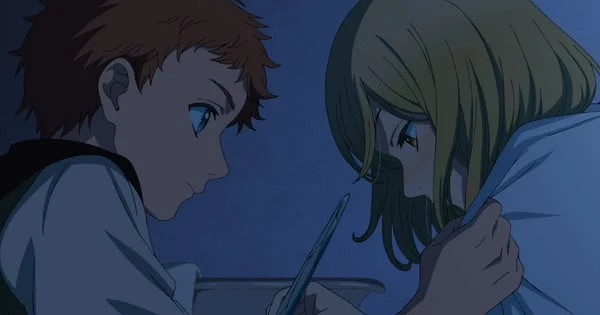
The narrative pivot occurs when Coco falls gravely ill, and the absence of immediate medical aid forces Tartah to confront his perceived limitations. Faced with the urgent need to reduce Coco’s fever, Tartah experiences a profound realization: his colorblindness, while a barrier to certain magical applications, does not render him entirely powerless. He possesses an innate understanding of plants and a grasp of rudimentary magic, skills that, when combined, offer a pathway to healing.
This critical juncture underscores a crucial element of the episode: the catalytic role of external belief. Tartah’s realization is not solely an internal shift; it is catalyzed by the necessity of action and, subsequently, by Coco’s belief in his capabilities. While he can identify medicinal plants and employ basic magical principles, the final step in crafting an effective remedy is hindered by what appears to be a deliberate withholding of knowledge regarding specific spells. The narrative suggests that the advanced magical curriculum, potentially including healing or precise potion-making, may have been intentionally obscured from apprentices like Tartah, further reinforcing the systemic exclusion he faces.
The climax of this sequence involves Coco’s innovative reversal of a pulverizing spell, a demonstration of her own unique magical aptitude. Tartah’s subsequent symmetrical redrawing of the spell signifies not just a technical application of magic but a profound breakthrough. It is not simply Coco’s specific skill that is required, but her faith in Tartah’s ability to contribute and to innovate. This moment signifies a paradigm shift for Tartah, opening up his world to possibilities he had previously deemed inaccessible. The implications are far-reaching: his perceived disability was not an insurmountable obstacle but a challenge that could be overcome with ingenuity and the support of a believing peer.
The Interconnectedness of Belief and Worth
The episode expertly weaves together the individual struggles of its characters, revealing a common thread: the profound impact of belief systems, both personal and societal, on an individual’s sense of worth. Tartah’s systematic repression, stemming from his "disability," has instilled in him a deep-seated doubt in his own capabilities. Similarly, Coco’s ostracization due to a cataclysmic cultural shift has left her isolated. Agott, another apprentice, grapples with feelings of worthlessness due to her family’s lack of faith in her magical potential.
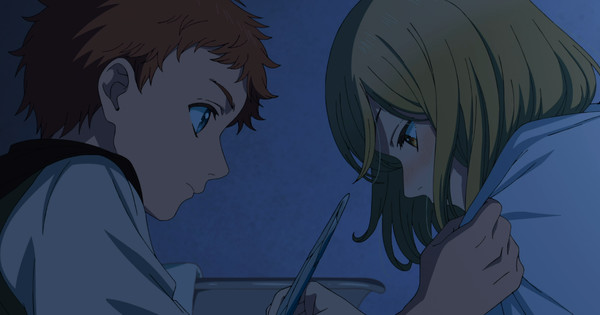
In each of these instances, the intervention of a steadfast believer serves as a catalyst for liberation. Coco, in particular, emerges as a pivotal figure, acting as that crucial source of belief for both Tartah and Agott. Her role in Tartah’s journey is transformative, demonstrating that his worth is not intrinsically tied to his ability to see color but to his inherent skills, such as his draftsmanship, which arguably makes him uniquely suited for intricate spellcrafting. This challenges the superficial criteria often used to judge capability and underscores the idea that diverse skill sets contribute to a richer and more effective whole.
The concept of "normalcy" is presented not as an inherent state but as a social construct that can be both limiting and oppressive. By breaking free from the imposed definition of what a witch should be, Tartah embodies the resilience and potential that lies within embracing individuality.
The Lingering Shadow of Lost Healing Magic
Beneath the immediate narrative of Tartah’s triumph, the episode subtly revisits the theme of lost healing magic. The brief exchange where a doctor withdraws an inquiry about Tartah’s interest in medicine upon seeing his witch’s cap suggests a deep-seated societal disconnect between "healing" and "witchcraft." This historical schism, potentially rooted in past conflicts or societal prejudices against magic users, has led to the elimination or suppression of healing magic.
The mention of medicines and the necessity for individual spellcrafting for each medication implicitly acknowledges the loss of more efficient, perhaps twinned jar spells. Coco’s illness, while treated through unconventional means, raises the question of whether more advanced medical magic could have expedited her recovery. This lost potential for healing magic adds another layer of tragedy to the world-building, hinting at a society that has sacrificed valuable knowledge and capabilities due to fear or ideological rigidity.
Furthermore, the episode offers a glimpse into the potential societal attitudes that might have contributed to the suppression of witch healers. The bar owner’s dismissive and demanding behavior towards Qifrey, implying that witches exist solely to serve, could be a vestige of how Outsiders perceived and treated magical practitioners. Such interactions might have played a significant role in the formation of the Pact, a historical agreement that likely imposed restrictions on witches and their practices. The episode thus prompts reflection on the historical forces that shaped the current status of witches and the erosion of their once-potent abilities.
Anticipating the Future: Agott’s Trial and the Network of Brimmed Caps
While the immediate focus remains on Tartah’s breakthrough, the narrative foreshadows future developments. Agott’s upcoming test is set to be a significant event, and the introduction of another Brimmed Cap, possibly employing invisibility magic, signals a new layer of intrigue. This suggests that the higher echelons of witch society, represented by the Brimmed Caps, are not monolithic and may possess their own internal networks and agendas. The potential for this new character to influence Qifrey’s apprentices, particularly Agott, raises questions about the choices and allegiances that will define their paths.
The existence of such a network implies a degree of coordination and potential manipulation within the witch hierarchy. Whether Agott will be swayed by the offerings or influence of this new Brimmed Cap remains a critical question, hinting at further challenges and revelations to come in the series. The implications of these hidden networks and potential power plays suggest that the struggle for acceptance and recognition within witch society is far from over. The series continues to explore the complex interplay of magic, societal structures, and individual destiny, promising a compelling continuation of its thematic explorations.
Rating: (Details omitted as they are not part of the core narrative)
Witch Hat Atelier is currently streaming on Crunchyroll.