Imax Corporation has reported a significant financial upswing in its second-quarter earnings, fueled largely by the unprecedented global demand for Christopher Nolan’s latest cinematic epic, The Odyssey. The film technology giant, which has become synonymous with the premium large format (PLF) moviegoing experience, saw its revenue climb to $102.8 million for the quarter ending June 30, 2026. This represents a 12 percent increase over the $91.7 million reported during the same period in the previous fiscal year. The surge in revenue was accompanied by a robust 30 percent rise in net income, which reached $15.9 million, up from $12 million a year earlier. Perhaps most impressively, the company’s adjusted earnings per share (EPS) reached 43 cents, marking a 65 percent leap compared to the 26 cents reported in the prior year’s second quarter.
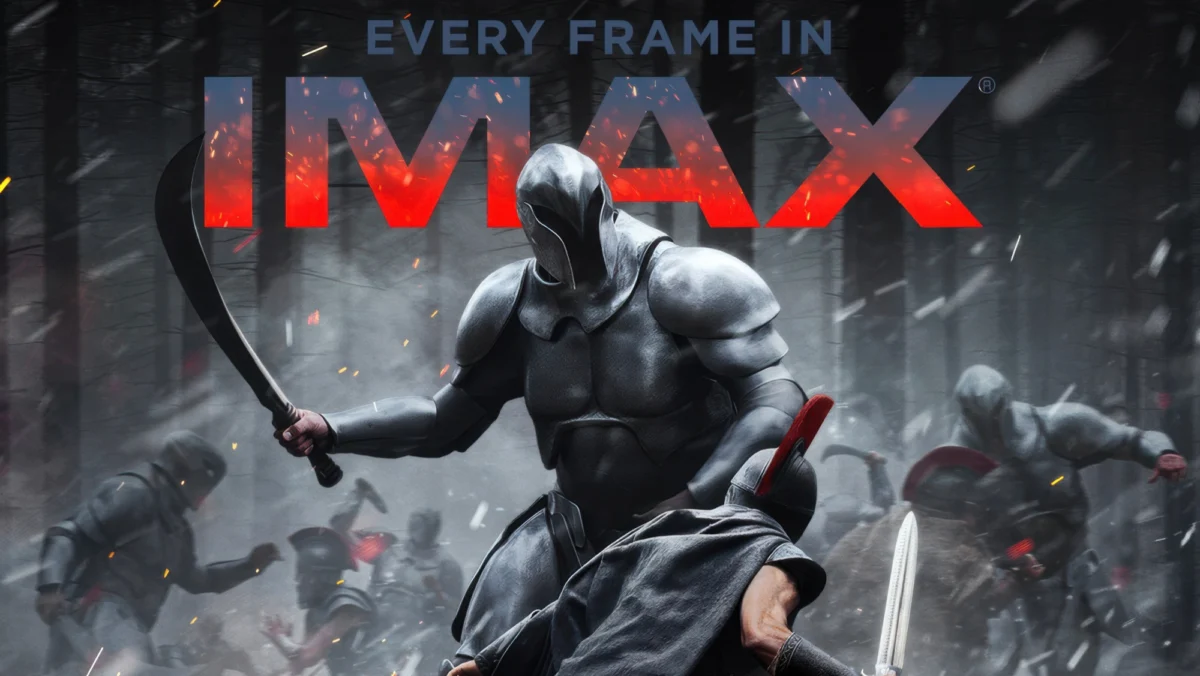
The catalyst for this financial acceleration is the strategic partnership between Imax and visionary filmmaker Christopher Nolan. His latest project, The Odyssey, distinguishes itself as the first full-length theatrical release to be filmed entirely with Imax film cameras. This technical milestone has not only captivated audiences but has also validated the company’s long-term investment in proprietary camera technology and high-end exhibition networks. As Hollywood continues to navigate the complexities of the post-pandemic box office, the "premium screen gold rush" has positioned Imax as a primary beneficiary of a shifting consumer preference toward "event" cinema that cannot be replicated in the home environment.
Financial Performance Breakdown: Content vs. Technology
The second-quarter results highlight two distinct but interconnected revenue streams for Imax: Content Solutions and Technology Products and Services. The Content Solutions division, which encompasses revenue-sharing arrangements with major Hollywood studios and filmmakers, saw a modest but steady increase of 2 percent, totaling $35 million. This segment reflects the performance of the films themselves and the fees associated with digitally remastering content into the Imax format.
However, the more dramatic growth occurred within the Technology Products and Services division. This segment, which includes the sale, lease, and ongoing maintenance of Imax’s global theater systems, generated $65 million in revenue, a 16 percent increase year-over-year. This growth indicates a broader industry trend: theater exhibitors are aggressively upgrading their facilities to include Imax systems to capture the higher ticket prices and increased foot traffic associated with premium formats. As exhibitors compete with streaming services, the installation of Imax’s laser projection systems and 15/70mm film projectors has become a critical defensive and offensive strategy for theater chains worldwide.
The Odyssey as a Transformational Milestone
Rich Gelfond, CEO of Imax, characterized the impact of The Odyssey as a "transformational event" for the company. In a statement accompanying the financial results, Gelfond noted that as the industry enters the second half of 2026, the film stands as the "purest and most complete expression yet of the power of our global platform." The film’s technical pedigree—being shot entirely on Imax film cameras—creates a visual fidelity that has driven audiences to seek out the largest possible screens, often traveling significant distances to view the film in its native 70mm Imax format.
The success of The Odyssey is being compared internally and by market analysts to the impact of James Cameron’s Avatar franchise. Just as Avatar catalyzed the industry’s transition to 3D and digital projection in the late 2000s, The Odyssey is being credited with revitalizing the demand for high-fidelity analog film and massive-scale cinematography. The film has proven to be a dual engine for the company, driving both high-margin ticket royalties and an increased demand for theater system installations from global exhibitors who do not want to miss out on the "Nolan effect."
Box Office Momentum and Market Dominance
The momentum generated in the second quarter has carried over into the third quarter with record-breaking results. The Odyssey delivered a staggering worldwide opening weekend for Imax, grossing $52 million. This figure is particularly noteworthy because it represents approximately 20 percent of the film’s total global first-weekend ticket receipts, despite Imax screens making up only a tiny fraction of the total screen count worldwide. This "over-indexing" highlights the disproportionate earning power of premium screens; audiences are increasingly willing to pay a significant premium for the Imax experience, leading to higher per-screen averages that far outpace standard multiplex offerings.
This dominance is not limited to domestic markets. Imax has seen aggressive growth in international territories, particularly in China, Southeast Asia, and the Middle East, where the construction of new high-end cinema complexes continues at a rapid pace. The company’s ability to secure exclusive windows for major releases ensures that it remains the destination of choice for "must-see" blockbusters.
A Chronology of the Premium Pivot
The path to Imax’s current financial health can be traced through a series of strategic shifts over the last several years:
- The Post-Pandemic Rebound (2022-2024): Following the global theater closures, Imax was among the first to see a recovery as audiences returned for tentpole features like Top Gun: Maverick and Avatar: The Way of Water. This period established the "quality over quantity" trend in moviegoing.
- The Nolan Partnership Expansion (2024-2025): Building on the success of previous collaborations, Imax and Christopher Nolan deepened their technical integration. Imax invested in the development of new, quieter film cameras to allow for more dialogue-heavy scenes to be shot on the format, a direct precursor to the production of The Odyssey.
- The Full-Film Commitment (2025-2026): Production of The Odyssey began with the explicit goal of utilizing Imax 15/70mm film for 100% of the runtime. This necessitated a massive logistical undertaking, including the manufacturing of record amounts of large-format film stock.
- The Q2 2026 Financial Surge: The release and subsequent global performance of the film, combined with a backlog of theater installation contracts, culminated in the 12 percent revenue growth and 65 percent EPS increase reported this Thursday.
Industry Reactions and Analyst Perspective
Market analysts have reacted favorably to the earnings report, noting that Imax’s business model is increasingly resilient to the fluctuations of the broader film industry. By focusing on the high-end "event" segment, Imax is less susceptible to the "fatigue" seen in mid-budget or standard-format releases.
"Imax has successfully decoupled itself from the volume-based struggles of traditional exhibition," said one senior media analyst. "They are no longer just a service provider; they are a brand that consumers specifically seek out. When a director like Nolan tells the public that a film ‘must’ be seen in Imax, it creates a supply-and-demand dynamic that favors Imax’s bottom line regardless of the total number of films released in a year."
Exhibitors have also expressed a renewed commitment to the format. Major chains have reported that their Imax auditoriums are often the first to sell out, with "The Odyssey" seeing sold-out screenings weeks in advance for its 15/70mm locations. This has led to a queue of theater operators looking to sign new lease agreements, further bolstering Imax’s "Technology Products" revenue for the coming quarters.
Technical Innovation and Future Outlook
The success of The Odyssey also serves as a proof-of-concept for the next generation of Imax technology. The company is currently in the process of rolling out its "next-generation" Imax film cameras, which are designed to be more portable and versatile than the models used by Nolan. These innovations are expected to lower the barrier to entry for other filmmakers to utilize the format, potentially expanding Imax’s proprietary content library.
Looking ahead to the remainder of 2026 and into 2027, Imax appears well-positioned to maintain its trajectory. With a pipeline of films from other high-profile directors specifically formatted for the Imax screen, the company is moving toward a model where "Imax DNA" is embedded in the production process from day one, rather than being an afterthought in post-production.
CEO Rich Gelfond’s optimistic outlook is supported by the company’s strong balance sheet and the increasing percentage of the global box office captured by premium formats. As the "premium screen gold rush" continues, Imax’s role as the gatekeeper of the highest-quality cinematic experience provides it with a unique competitive moat in the evolving entertainment landscape.
Conclusion and Strategic Implications
The second-quarter results are more than just a financial victory for Imax; they represent a validation of the "event cinema" philosophy. By providing a platform that offers a tangible, visceral difference from home viewing, Imax has secured its place at the top of the theatrical ecosystem. The 65 percent increase in adjusted earnings per share serves as a clear signal to investors that the company’s focus on high-margin technology and exclusive content partnerships is yielding significant returns.
As The Odyssey continues its record-breaking run, the focus for Imax will likely shift to expanding its global footprint even further. With $102.8 million in quarterly revenue and a growing backlog of theater installations, the company is not just riding a wave of success—it is building the infrastructure for the future of the motion picture industry. The synergy between a master filmmaker, a groundbreaking technical format, and a public hungry for spectacle has created a perfect storm of profitability that is likely to define the industry’s direction for years to come.