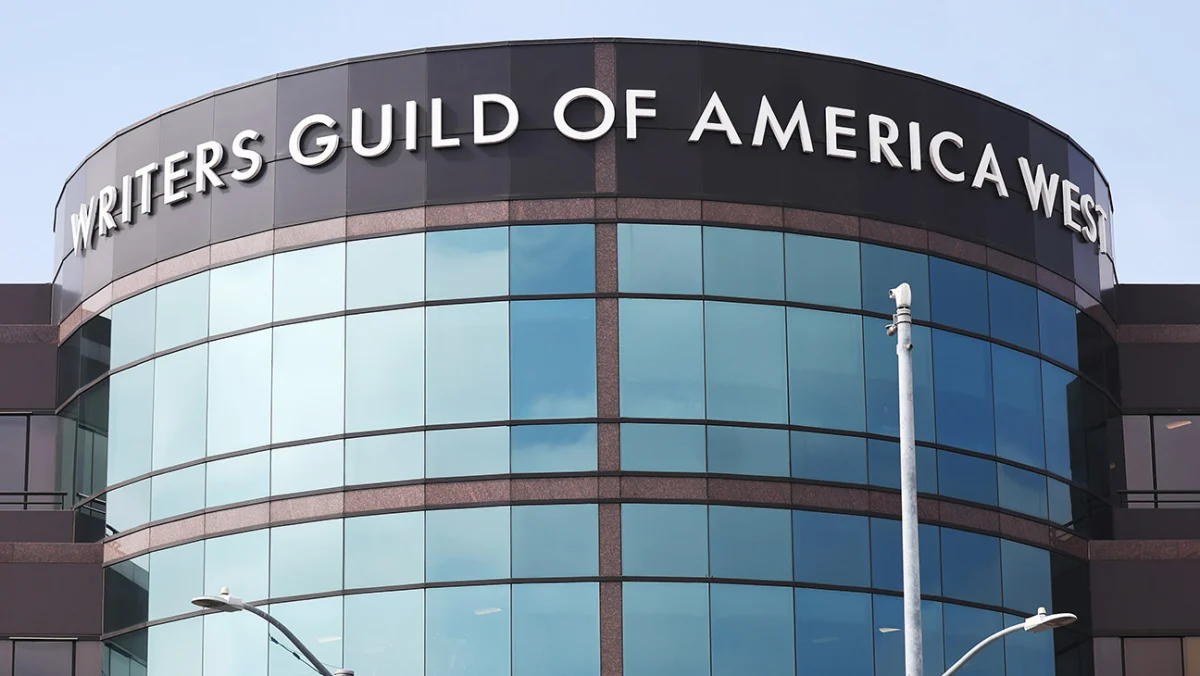
The Writers Guild of America West (WGAW) has officially announced the initial roster of candidates for its upcoming 2024 Board of Directors election, marking the first major leadership transition since the conclusion of the historic 148-day strike that reshaped the Hollywood labor landscape. On Thursday, the guild’s nominating committee released a list of 14 candidates who will compete for eight open seats on the board. This cohort represents a diverse cross-section of the industry, ranging from veteran showrunners of long-running procedural dramas to creators of contemporary adult animation and rising voices in independent screenwriting.
Among the prominent names entering the race are Andrew Goldberg, the co-creator and executive producer of the hit Netflix adult animated series Big Mouth; John Eisendrath, a seasoned showrunner known for his extensive work on The Blacklist and Alias; and Mark Swift, the screenwriter behind the 2024 release Send Help and the 2017 Baywatch film. These high-profile candidates are joined by a slate of writers including Nikita Hamilton, Aaron Wiener, Silpa Kovvali, Jeffrey Thompson, Morgan Dameron, and Mark Amato.
The election also features a strong contingent of incumbents seeking to retain their positions. Chris Hazzard, Cathryn Humphris, Danny Tolli, Raphael Bob-Waksberg (creator of BoJack Horseman), and Melinda Hsu have all declared their intent to run for reelection. Their presence on the ballot suggests a desire for continuity as the union moves from the adversarial phase of contract negotiation into the complex phase of contract enforcement and industry-wide implementation.
The Election Timeline and Procedural Mechanics
The announcement of the nominating committee’s selections serves as the formal opening of the election cycle, but the field of candidates may yet expand. Under the WGAW constitution, the guild maintains a democratic "petition" process that allows members not selected by the committee to join the ballot. To qualify, prospective candidates must secure at least 15 signatures from fellow guild members in good standing. The deadline for these petition entries is set for July 23, 2024.
Following the finalization of the candidate list, the guild will move into the active voting phase in late summer. According to the official schedule released by the WGAW, voting materials will be distributed to the membership starting August 26. Members will have several weeks to deliberate on the candidates’ platforms, with a final voting deadline of September 15. During this window, members can cast their ballots either through a secure online portal or via traditional mail-in ballots.
The eight candidates who secure the most votes will join the 16-member Board of Directors, a body that works alongside the guild’s top officers. Currently, the WGAW leadership is headed by President Michele Mulroney, Vice President Travis Donnelly, and Secretary-Treasurer Peter Murrieta. Notably, these three executive positions are not up for reelection this year, as they serve staggered terms that ensure leadership stability during board transitions.
Historical Context: The Shadow of the 2023 Strike
This election cycle is uniquely significant because it occurs in the immediate wake of the 2023 Writers Guild strike, one of the most consequential labor actions in the history of the American entertainment industry. The 148-day work stoppage, which began in May 2023 and concluded in September 2023, effectively halted television and film production across the United States.
The strike was predicated on fundamental shifts in the economics of the "streaming era." Writers argued that the transition from traditional broadcast models to subscription-based streaming had eroded their earnings, decimated the "middle-class" writer, and threatened the long-term viability of the profession. Key issues included the size of television writing rooms, the structure of residual payments for streaming content, and the existential threat posed by generative artificial intelligence (AI).
The current board and the candidates seeking to join it are operating in an environment defined by the "Minimum Basic Agreement" (MBA) ratified in October 2023. That contract was approved by a staggering 99 percent of the membership, a level of unity rarely seen in labor relations. The four-year deal, which the guild estimated to be worth approximately $233 million annually, secured significant wins:
- Wage Increases: A compounded 10.5 percent increase in most scale wages over the life of the contract.
- AI Protections: Strict regulations prohibiting studios from using AI to write or rewrite literary material, and ensuring that AI-generated content cannot be considered "source material" to undermine a writer’s credit or compensation.
- Streaming Residuals: A new bonus structure for high-budget streaming programs that reach a specific viewership threshold, alongside increased foreign streaming residuals.
- Staffing Minimums: Requirements for minimum staffing levels in television writers’ rooms, addressing the trend of "mini-rooms."
Candidate Profiles and Industry Representation
The 2024 candidate pool reflects the guild’s efforts to balance different sectors of the industry. Andrew Goldberg’s candidacy brings a focus on the burgeoning world of streaming animation, a sector that has faced unique challenges regarding jurisdiction and compensation. John Eisendrath represents the "traditional" powerhouse of network and cable television, where the complexities of long-running series management remain a central pillar of the WGA’s membership base.
Mark Swift’s inclusion highlights the perspective of feature film writers, who often face different economic pressures than their counterparts in episodic television, particularly concerning the "one-step" deal and the lack of pension and health contributions during long periods of development.
The incumbents, such as Raphael Bob-Waksberg and Melinda Hsu, provide a bridge to the leadership that navigated the 2023 strike. Their experience during the negotiations at the Sherman Oaks Galleria and their involvement in the high-stakes meetings with the Alliance of Motion Picture and Television Producers (AMPTP) are expected to be central themes in their campaigns for reelection.
Analysis of Implications: From Negotiation to Enforcement
The primary task of the board members elected this year will be the rigorous enforcement of the 2023 MBA. While the contract has been signed, the implementation of its more complex clauses—particularly those involving AI transparency and streaming data sharing—requires constant vigilance.
For the first time, studios are required to share confidential viewership data for streaming titles with the guild. The board will play a crucial role in overseeing how this data is analyzed and ensuring that the "streaming success bonus" is paid out accurately to eligible writers. Furthermore, as AI technology continues to evolve at a rapid pace, the board must interpret and defend the contract’s guardrails against potential studio loopholes.
There is also the matter of the "post-strike contraction." Since the end of the strike, the industry has seen a significant reduction in the number of greenlit projects—a phenomenon often referred to as "Peak TV" receding. The new board will need to address the high levels of unemployment among its members and the increasing difficulty of breaking into the industry as studios become more risk-averse and budget-conscious.
Broader Impact on the Hollywood Labor Movement
The WGAW election is also being watched closely by other Hollywood unions, including SAG-AFTRA (the actors’ union) and IATSE (the crew members’ union). The WGA’s success in 2023 emboldened other guilds to take a harder line in their own negotiations. The composition of the WGAW board often signals the union’s future appetite for militancy or collaboration.
If the membership favors incumbents and established showrunners, it may indicate a period of "labor peace" as the industry seeks to recover financially from the disruptions of 2023. Conversely, if petition candidates or those with more radical platforms gain traction, it could signal that the rank-and-file membership remains dissatisfied with the pace of change in the streaming economy.
Summary of the 2024 WGAW Board Election Process
| Key Milestone | Date |
|---|---|
| Initial Candidate Announcement | Thursday, June 2024 |
| Deadline for Petition Candidates | July 23, 2024 |
| Distribution of Voting Materials | August 26, 2024 |
| Voting Deadline | September 15, 2024 |
| New Board Seated | Late September 2024 |
As the industry moves toward the fall season, the WGAW election serves as a reminder that the "new normal" for Hollywood writers is still being defined. The 14 individuals currently on the ballot represent the diverse interests of a workforce that is more engaged and politically active than perhaps at any other point in the guild’s history. Whether they are protecting the health plan, auditing streaming numbers, or debating the ethics of machine learning, the next Board of Directors will hold the responsibility of safeguarding the profession of screenwriting in an era of unprecedented technological and economic flux.