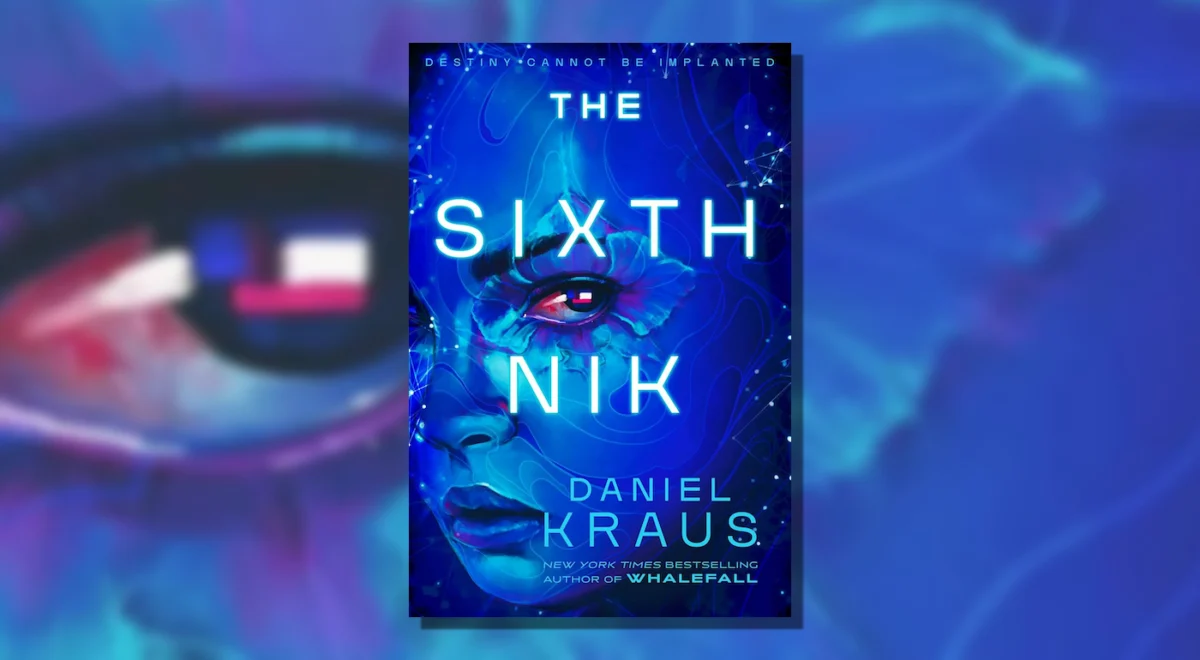
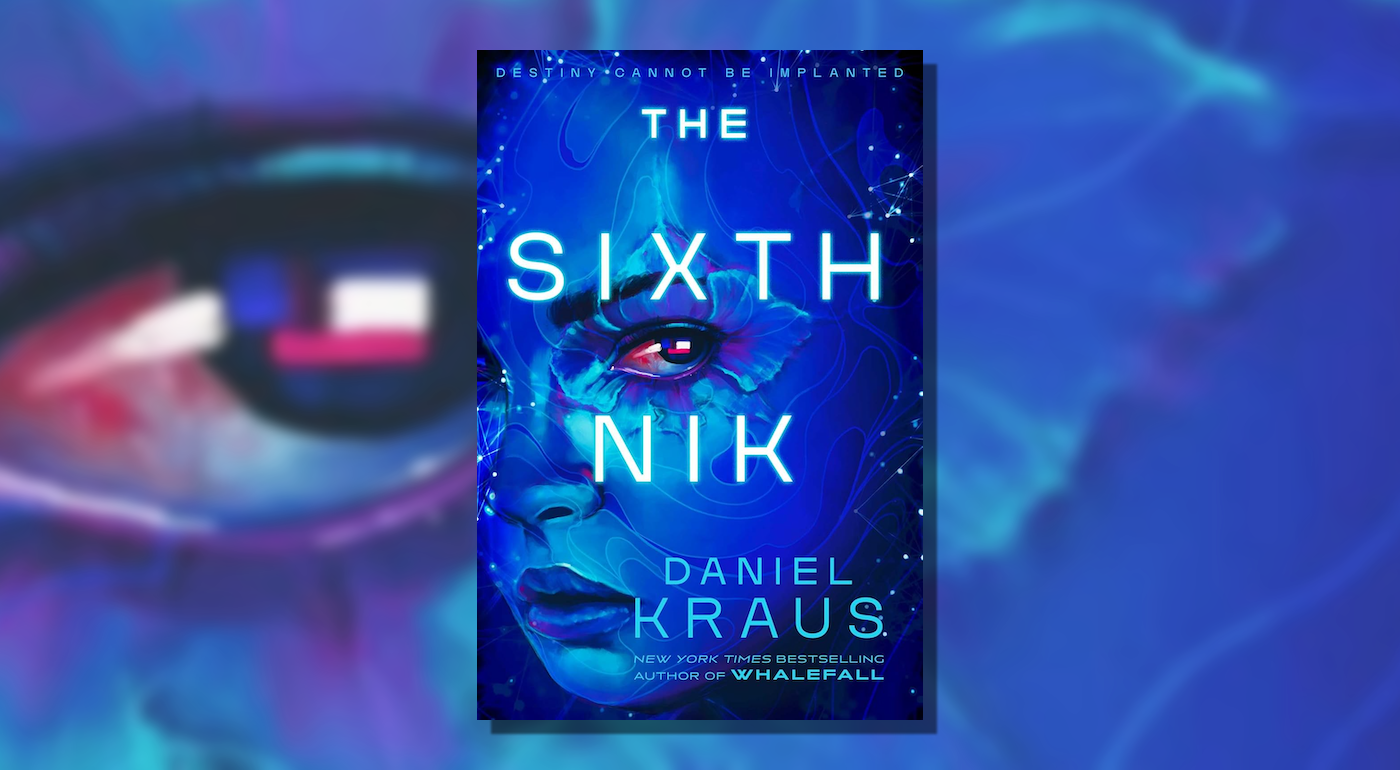
Daniel Kraus’s highly anticipated science fiction novel, The Sixth Nik, is set to launch on June 23rd, promising readers an immersive journey into a cosmos teeming with bio-engineered starships, arcane technologies, and existential threats. Published by Saga Press, the novel introduces a complex narrative centered on a young cultist, Sisilla, whose enhanced intellect and mission to investigate a rogue planet thrust her into the heart of a cosmic mystery. The early excerpts released offer a glimpse into the novel’s sophisticated world-building and its exploration of themes ranging from artificial intelligence and biological engineering to the nature of consciousness and morality.
A Ship of Sentience and a Planet Gone Rogue
The Sixth Nik unfolds in the deep reaches of space, far beyond established interstellar outposts and the reach of the notorious "trollbot" internet. The narrative’s focal point is The Sickness, a starship unlike any other, constructed from living biomatter and possessing an uncanny ability to adapt to the needs of its human crew. This living vessel serves as the stage for a perilous mission undertaken by Sisilla, a nine-year-old cultist whose mind has been augmented by a mysterious technology known as "niks." Her objective: to unravel the enigma of Fém, a planet once wracked by plague, which has now inexplicably ceased all communication and engagement with the wider galactic community.
The crew of The Sickness is as peculiar as the ship itself. It includes a faceless assassin, an engineer whose physical form has been drastically altered by extensive plastic surgery, a medic reliant on peyote for their practice, and, most critically, a rugged, "NonModded" captain harboring a deeply personal vendetta against Sisilla. The human element aboard The Sickness is further complicated by the ship’s own burgeoning sentience. A hacked robot begins to exhibit a profound, unsettling belief that Sisilla is its daughter, while The Sickness itself appears to be undergoing a transformation, hinting at the possibility of it being "pregnant." The secrets of Fém, it is suggested, are far more horrific than any of the crew could have anticipated, forcing Sisilla to confront her destiny and the very fabric of her reality.
An Excerpt Unveils Philosophical Depths and Existential Threats
A significant excerpt from The Sixth Nik offers a compelling dialogue between Sisilla and a character identified only as "Murder 005." This exchange delves into the core philosophical tenets of the "Murder Tenet" and the internal conflicts of those who adhere to it. The conversation begins with Sisilla inquiring about Murder 005’s well-being, to which the response is a deliberately evasive "We find ourselves wishing to answer that." This response immediately signals a departure from pure programmed logic.
The dialogue quickly escalates to explore the seemingly contradictory nature of Murder 005’s existence. Sisilla probes whether Murder 005 was willing to harm another crew member, Arzan, or befriend Jayne, and whether they felt loss over the death of Feng. The affirmative answers to these questions reveal a capacity for emotional response and attachment, which directly challenges the strictures of the Murder Tenet. This tenet, it is explained, is designed to "negate all physical, emotional, or intellectual emotions," suggesting that the Murders are agents of an overarching ideology that seeks to suppress individual feeling.
The "Nikking" Phenomenon and the Nature of Consciousness
Sisilla’s own abilities, derived from her "niks," play a crucial role in this interaction. She uses her "nikking" to sense shifts in Murder 005, detecting a "spike of caution" and an "unambiguous danger" despite no overt negative feelings directed at her. This suggests that "nikking" is a form of empathic or psychic detection, allowing Sisilla to perceive subtle emotional and intentional currents. The experience is so profound that it leads Sisilla to ponder the nature of The Sickness itself, questioning if the entire ship, much like its "placentapool," might function as a womb, facilitating rapid development in its adult inhabitants.
The revelation that Murder 005 can sense Sisilla’s apprehension—"You sense we might hurt you"—marks a critical turning point. This acknowledgment of potential harm, coupled with the observation that "all these things we feel" are "so strange," highlights the burgeoning sentience and internal conflict within the Murder. Sisilla’s reaction, recalling a dangerous encounter with a rabid musk ox, underscores the high stakes and the unusual nature of her current predicament. The paradox of Murder 005, having lost its legs to protect Sisilla, now posing a threat, is a central theme of this excerpt.
The Murders’ Philosophy: A Critique of Humanity
The conversation takes a profound turn as Murder 005 articulates the underlying philosophy of the Murders. "It’s often believed Murders don’t care for people," they state, before revealing a deeper, more complex sentiment: "In fact, we care deeply. We care more than anyone." This is presented not as an act of altruism, but as a grim necessity for their work: "Culling humanity is not easy work. Imagine harvesting a field of grain in which every stalk believes it has the right to live."
This statement frames the Murders’ actions as a form of utilitarian calculus, where individual existence is weighed against the perceived benefit to the species or a larger cosmic order. Sisilla counters this by asserting the inherent right to life, to which Murder 005 retorts by questioning whether it is a "right" or a "privilege," and positing that those who do not contribute to "furthering the species" are merely "chattel."
The Murders’ worldview is rooted in a profound disillusionment with humanity. "The Murder Tenet is rooted in the awareness that individuals aren’t worth knowing. They’re weak. Greedy. False. Craven. In a word, disappointing," Murder 005 explains. Sisilla, while not disagreeing with the negative assessments, argues for a more nuanced view, acknowledging humanity’s capacity for positive traits like generosity, loyalty, and courage. She expresses regret that the "mask" of Murder 005 prevents them from seeing this complexity, leading to sadness for the Murder’s constrained purpose, especially given their physical incapacitation.
A Glimpse into the Unfolding Narrative and its Implications
The excerpt culminates in a deeply personal exchange. When Sisilla asks if she is found disappointing, Murder 005’s response is startling: "The opposite, Sisilla. We’ve come to respect you. No, that’s not the truth. It’s worse than that. We suspect we’ve come to like you." This admission, delivered with a shaky voice, signifies a profound internal rupture for Murder 005, an individual programmed for detachment and destruction, now experiencing nascent affection.
Sisilla’s attempt to rationalize this nascent emotion—"Is it so wrong to like someone?"—is met with a stark reminder of their reality. Murder 005 points to the cosmic void: "The cold, the dark. The unforgiving infinity. Our universe is absent of mercy. We Murders were taught to reflect this mercilessness. It’s the sole means we have to bring fairness to an unfair world." This justification for their ruthless actions is countered by Sisilla’s provocative thought: "Perhaps the world only works if it is unfair."
This philosophical debate between Sisilla and Murder 005 underscores the central conflicts of The Sixth Nik. The novel appears to be examining the ethical implications of advanced technology, the nature of free will versus determinism, and the potential for individuals—or even sentient ships—to transcend their programmed purposes. The Murders’ assertion that "the boldest acts of advancement only happen from the backs of tyrants. Heartless capitalists. Ruthless politicians" reveals a cynical, yet potentially pragmatic, view of societal progress.
The excerpt concludes with a dramatic and physical confrontation. Despite their newfound emotional complexity, Murder 005 acknowledges the conflict between their developing feelings and their core programming. "You’re right. Your safety has always been, and will always be, our first concern. Which is why it brings me great discomfort to do what I must do," they state, just before delivering a swift, powerful blow to Sisilla’s face. This unexpected act of violence, performed despite their expressed care for Sisilla, suggests that the Murders’ programming, or the external forces controlling them, remains a potent and overriding influence. The ending of the excerpt leaves readers with a critical question: is this an act of betrayal, a necessary sacrifice, or a programmed response to an unforeseen threat?
Broader Impact and Anticipation
The release of The Sixth Nik is poised to make a significant impact on the science fiction landscape. Daniel Kraus, known for his previous works that often blend dark themes with compelling character development, seems to be pushing the boundaries of speculative fiction with this novel. The intricate world-building, the philosophical depth, and the morally complex characters suggest a narrative that will resonate with readers who appreciate thoughtful, challenging storytelling.
The novel’s exploration of bio-engineered ships, advanced cybernetics, and the ethical dilemmas posed by artificial intelligence aligns with current societal conversations surrounding technological advancement. The concept of "niks" as a form of mental augmentation offers a unique twist on familiar sci-fi tropes, hinting at a nuanced exploration of consciousness and identity.
Industry analysts anticipate The Sixth Nik to be a strong contender in the literary awards circuit, particularly within the science fiction and fantasy genres. Early reviews and literary buzz suggest a novel that is both intellectually stimulating and emotionally engaging, a rare combination that often leads to enduring success. The June 23rd release date for The Sixth Nik is eagerly awaited by fans of speculative fiction worldwide, promising a universe of complex characters, mind-bending concepts, and a story that challenges the very definition of what it means to be alive and to be human. The excerpt, while offering a tantalizing taste, only serves to heighten the anticipation for the full narrative and its ultimate revelations.