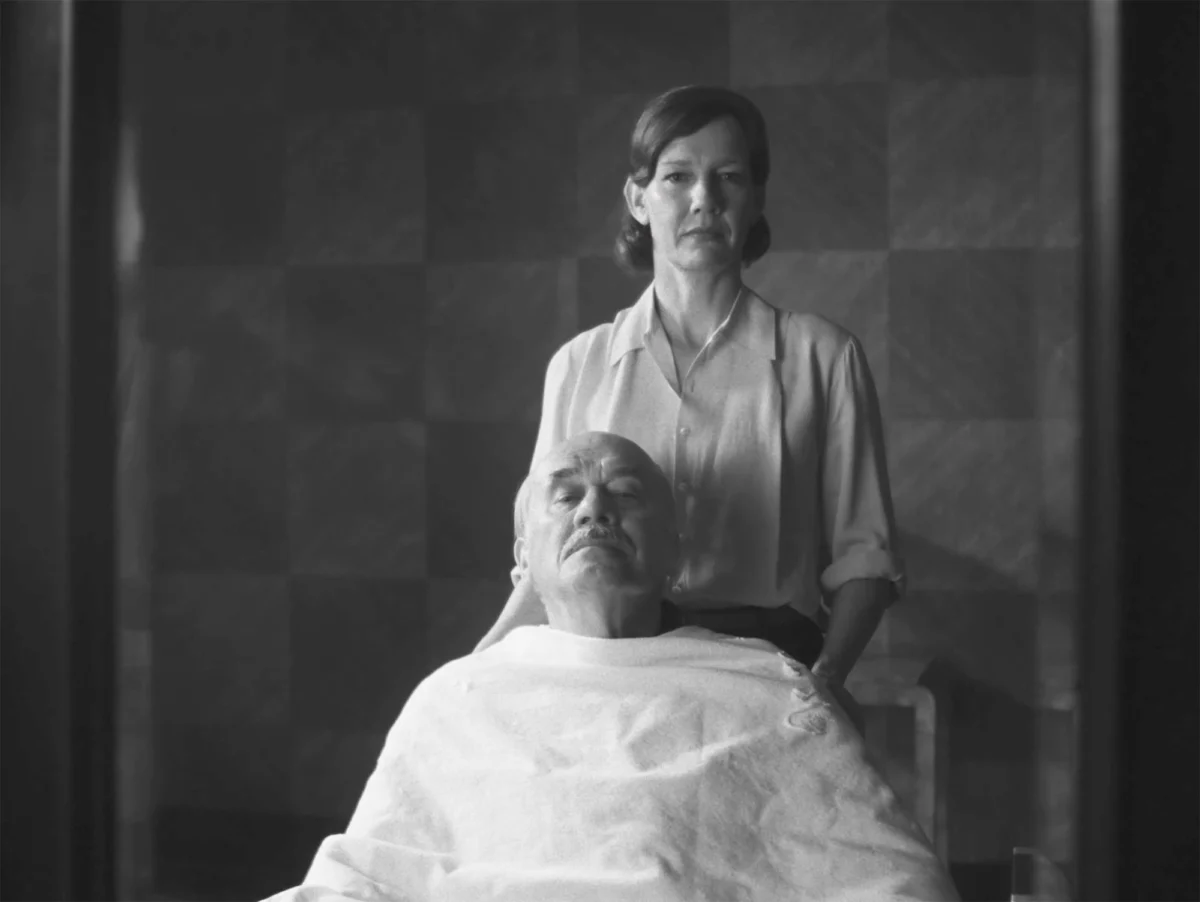
Distributor Mubi has officially unveiled the second theatrical trailer and primary promotional poster for Fatherland, the highly anticipated post-World War II drama directed by acclaimed Polish filmmaker Paweł Pawlikowski. The film, which secured a tied Best Director prize at the 2026 Cannes Film Festival earlier this year, serves as a poignant exploration of historical trauma, familial fracture, and national division. Starring Academy Award nominee Sandra Hüller alongside veteran actor Hanns Zischler, Fatherland is scheduled for a limited U.S. theatrical release through Mubi on October 23, 2026, following anticipated festival presentations at the New York Film Festival (NYFF) and the BFI London Film Festival.
Main Facts and Narrative Premise
Set in the tumultuous summer of 1949, Fatherland chronicles a deeply complex and emotionally fraught road trip undertaken by Nobel Prize-winning author Thomas Mann, portrayed by Hanns Zischler, and his daughter Erika Mann, played by Sandra Hüller. Erika, a multifaceted figure recognized in history as an actress, writer, and rally driver, accompanies her father as they navigate the desolate landscape of a shattered Germany in a vintage black Buick cruiser.
The narrative explores their journey from the American-dominated zones of Frankfurt into the Soviet-controlled sectors of Weimar. For Thomas Mann, the journey marks a profound homecoming after enduring sixteen years of political and cultural exile in the United States. Upon his return, the literary icon is forced to confront not only the geopolitical fragmentation of his native homeland—splintered by the emerging architecture of the Cold War—but also the deep-seated psychological and personal fractures within his own family unit.

The film’s ensemble cast features prominent European actors, including August Diehl, Devid Striesow, and Anna Madeley. Visually, the production is defined by the striking cinematography of Lukasz Zal, a frequent collaborator of Pawlikowski whose monochrome and high-contrast visual stylings previously earned critical acclaim on the director’s Oscar-winning features Ida and Cold War. The screenplay was co-written by Paweł Pawlikowski and Henk Handloegten. The production team comprises an expansive international roster of producers, including Edward Berger, Lorenzo Gangarossa, Mario Gianani, Lorenzo Mieli, Ewa Puszczynska, Dimitri Rassam, and Jeanne Tremsal.
Chronology and Festival Circuit Timeline
The developmental and festival timeline of Fatherland highlights its status as a major international prestige picture:
- 1949 (Historical Setting): The narrative timeline takes place during the summer months, immediately following the blockade of Berlin and the formal establishment of the Federal Republic of Germany (West Germany) and the German Democratic Republic (East Germany) on the horizon.
- May 2026: Fatherland (alternatively known by its German title, Vaterland) holds its world premiere in the Main Competition section at the 2026 Cannes Film Festival. The film receives substantial critical praise for its deliberate pacing, evocative musical integration, and thematic resonance.
- May 2026 (Cannes Awards Ceremony): At the closing ceremonies of the festival, the jury awards Paweł Pawlikowski the Best Director prize, which he shares in a rare tie.
- September 10, 2026: Mubi releases the second official trailer and promotional poster, providing broader narrative context regarding the father-daughter dynamic and the physical span of their post-war journey.
- Fall 2026: The film enters the autumn international festival circuit, securing high-profile screenings at the New York Film Festival and the London Film Festival.
- October 23, 2026: Mubi deploys Fatherland into select U.S. art-house cinemas, initiating its commercial theatrical rollout.
Background Context and Artistic Lineage
Paweł Pawlikowski has established a distinct cinematic signature defined by elliptical storytelling, rigorous framing, and profound explorations of historical displacement. Fatherland functions as a thematic continuation of his previous masterworks, Ida (2013), which won the Academy Award for Best Foreign Language Film, and Cold War (2018), which earned Pawlikowski the Best Director prize at the 2018 Cannes Film Festival alongside three Oscar nominations.
While Ida investigated the hidden traumas of post-Holocaust Poland through the lens of a young novitiate nun discovering her Jewish heritage, and Cold War tracked a volatile romance across the iron curtain over two decades, Fatherland shifts its focus to the psychological burden carried by cultural elites returning to a morally and physically bankrupt nation. The dynamic between Thomas and Erika Mann provides a micro-level analysis of a society attempting to reconcile collective guilt with individual survival. Thomas Mann, who famously used radio broadcasts to denounce Nazi Germany from his American exile, represents the intellectual conscience of a generation forced to survey the literal ruins of their philosophy. Erika Mann, navigating her own complex legacy as a non-conformist woman in a rigid post-war environment, anchors the narrative in physical mobility—driving through checkpoints that mirror the hardening boundaries of the ideological divide.

Critical Reception and Early Analysis
Following its premiere on the French Riviera, Fatherland drew widespread acclaim from international critics, who singled out the central performances of Sandra Hüller and Hanns Zischler. Hüller, whose recent credits include Anatomy of a Fall and The Zone of Interest, has cemented her reputation as one of contemporary European cinema’s most versatile performers. Reviewers at Cannes noted that Hüller brings a relentless energy and emotional precision to Erika Mann, balancing the pragmatism required to drive across a decimated infrastructure with the sorrow of a fractured familial lineage.
Critics have also praised the deliberate integration of period-accurate soundscapes and musical cues, which function not merely as background accompaniment but as an active psychological mirror for the characters. The collaboration between Pawlikowski and cinematographer Lukasz Zal continues to yield striking visual compositions, utilizing framing to emphasize the isolation of the characters against vast, ruined backdrops and oppressive bureaucratic checkpoints.
Broader Impact and Industry Implications
The distribution strategy employed by Mubi for Fatherland highlights the shifting landscape of prestige art-house cinema. By positioning the film for a targeted autumn theatrical release following prominent festival placements in Cannes, New York, and London, Mubi aims to capture both the awards-season momentum and the discerning arthouse demographic.
Financially and culturally, Fatherland contributes to an ongoing cinematic conversation regarding the legacy of the Second World War and the architecture of the modern European state. At a time when geopolitical borders and national identities are subjects of renewed global tension, Pawlikowski’s examination of a divided Germany in 1949 resonates beyond historical reenactment. The film offers a stark meditation on the difficulties of reconciliation—both political and personal—suggesting that the physical reconstruction of cities is far swifter than the mending of ideological and familial divides.

As the October 23 theatrical release approaches, industry analysts will be monitoring how the film performs commercially in the North American market, particularly given the combined box-office drawing power of its acclaimed director and its star, Sandra Hüller. With strong critical backing and a prestigious festival pedigree, Fatherland stands as one of the definitive European cinematic exports of the 2026 film calendar.