A legal battle has erupted over the origins of one of Hollywood’s most successful action franchises, as screenwriter J.R. Wicker has officially filed a copyright infringement lawsuit against the production entities and creators behind the John Wick series. The complaint, filed on Monday in California federal court, alleges that the 2014 hit film John Wick and its 2017 sequel, John Wick: Chapter 2, were derived from Wicker’s original screenplay titled Blood for Escobar. The lawsuit names Lionsgate Entertainment, production company Thunder Road Films, and screenwriter Derek Kolstad as defendants, seeking at least $10 million in damages and a share of the franchise’s substantial profits.
The litigation centers on the claim that the John Wick films contain "strikingly and substantially similar" elements to Blood for Escobar, a script Wicker asserts was authored and circulated within industry circles well before the first John Wick film entered production. According to the filing, both works feature a remarkably specific narrative architecture: a middle-aged, widowed former assassin who has attempted to leave his violent past behind, only to be forcibly drawn back into a criminal underworld following a personal tragedy. Wicker argues that the similarities extend far beyond general genre tropes, encompassing specific character beats, plot sequences, and world-building mechanics.
Detailed Comparative Allegations and Narrative Parallels
The core of Wicker’s complaint rests on a series of narrative overlaps that his legal team, led by R. Terry Parker and Steven Lowe, argues cannot be dismissed as mere coincidence. The lawsuit points to the opening act of both works, where the protagonist—named Alex in Blood for Escobar and John in the film—is the victim of a violent home invasion. In both instances, the intruders kill the protagonist’s pet, an act that serves as the primary emotional catalyst for a relentless quest for vengeance.
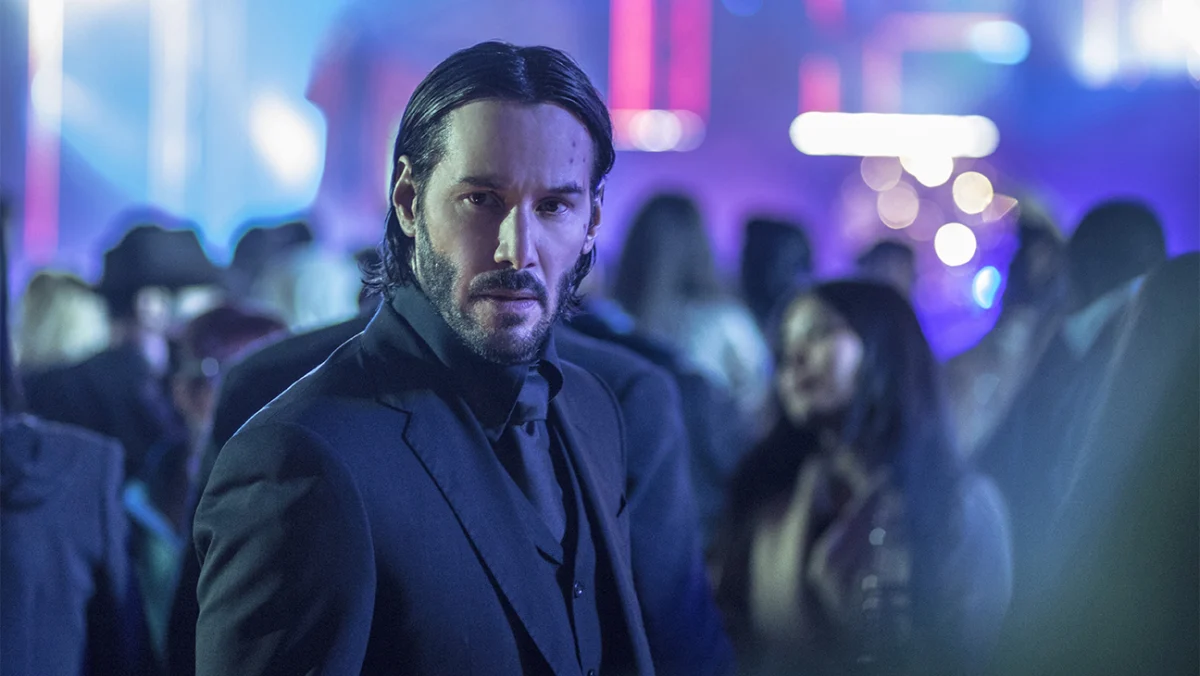
Following this inciting incident, both scripts depict the protagonist unearthing a hidden cache of weaponry and tactical gear concealed within their home—a ritualistic "return to form" that signals the character’s transition back into a professional killer. The lawsuit further highlights a "pulsating action sequence" set within a high-end nightclub, where the protagonist confronts the primary antagonist amidst a crowd of oblivious civilians.
Beyond plot points, the complaint alleges that the fundamental world-building of the John Wick universe was lifted from Wicker’s work. Both stories feature a highly structured, international secret society of assassins governed by rigid rituals, codes of conduct, and a pervasive bureaucracy. While the John Wick films utilize "The Continental" and "The High Table," Wicker’s script features an organization known as "The Company." A notable distinction mentioned in the filing is that Wicker’s organization facilitates "Kevorkian killings"—assisted suicides for clients wishing to ensure their families receive life insurance payouts—though the overarching structure of a regulated hitman economy remains a central point of contention.
Specific aesthetic and character details are also cited as evidence of infringement. These include:
- The Vehicle: Both protagonists possess a treasured, vintage Ford Mustang, described as a "silver-screen era" classic that serves as a symbol of their past life.
- The Conflicted Ally: Both works feature a supporting character—a fellow assassin—who is initially contracted to kill the protagonist but ultimately decides to assist him.
- The Climax: The lawsuit asserts that in both works, the primary antagonist is eventually cornered and executed in a public location at night while drinking, a moment where the villain’s guard is finally lowered.
- The Exile: Both narratives conclude with the protagonist being turned upon by the very organization they once served, resulting in a status of exile or being "excommunicado" after refusing to adhere to the organization’s orders.
The Question of Access and Industry Circulation
A critical component of any copyright infringement case is proving that the defendants had "access" to the plaintiff’s work. Wicker’s lawsuit outlines two primary channels through which his script allegedly reached the creators of John Wick.
First, the complaint alleges that Derek Kolstad, the credited writer of John Wick, may have obtained the script through Mike Goldberg, the founder of Abstract Entertainment. Goldberg served as a judge in a screenwriting competition where Blood for Escobar was submitted for review. The lawsuit notes that Kolstad has publicly credited Goldberg with being a pivotal figure in the launch of his professional career, suggesting a professional proximity that could have allowed for the exchange of materials.
Second, Wicker claims he submitted copies of his scripts, including Blood for Escobar, to United Talent Agency (UTA). Specifically, he points to agent Charlie Ferraro, who is recognized as one of the architects of the deal that brought John Wick to the screen. Wicker alleges that he sent requested copies of his work to the agency, providing a secondary potential point of contact between his intellectual property and the production team. Wicker, whose previous credits include low-budget features such as Sick People and The Sick, contends that his work was systematically mined for the foundational elements that turned John Wick into a global phenomenon.
Financial Context and Franchise Valuation
The $10 million sought by Wicker represents only a fraction of the total economic impact of the John Wick franchise. Since its debut in 2014, the series has evolved into a multi-billion-dollar intellectual property powerhouse for Lionsgate and Thunder Road Films.
The first film, produced on a modest budget of approximately $20 million, grossed over $86 million worldwide and became a massive hit on home video and streaming platforms. Its success paved the way for three sequels:
- John Wick: Chapter 2 (2017): Grossed $171.5 million worldwide.
- John Wick: Chapter 3 – Parabellum (2019): Grossed $327.3 million worldwide.
- John Wick: Chapter 4 (2023): Grossed $440.1 million worldwide.
In total, the theatrical releases have generated over $1 billion in global box office revenue. This figure does not include the significant income from television spin-offs like The Continental: From the World of John Wick, the upcoming film Ballerina, merchandise, video games, and licensing deals. Wicker’s claim for a portion of the profits reflects the immense "long-tail" value of the franchise, which he argues was built upon the narrative foundation of his original script.
Legal Precedents and the "Discovery Rule"
The timing of the lawsuit—filed nearly a decade after the release of the first film—presents a potential hurdle regarding the statute of limitations. Generally, copyright claims must be brought within three years of the infringing act. However, Wicker invokes the "discovery rule," asserting that he only viewed John Wick for the first time last year. Under this rule, the clock for the statute of limitations begins when the plaintiff discovers, or reasonably should have discovered, the infringement.
Furthermore, the legal landscape for copyright in Hollywood has shifted recently. Federal appeals courts, particularly the Ninth Circuit, have recently expressed a renewed caution against the early dismissal of copyright suits. In several recent cases, including those involving M. Night Shyamalan’s series Servant and Disney’s Moana, appellate courts have suggested that the question of "substantial similarity" is often a matter of fact that should be decided by a jury rather than a judge at the summary judgment stage.
Despite this trend, the burden of proof remains high for plaintiffs. Defendants often rely on the doctrine of "scènes à faire," which holds that certain elements of a story are indispensable or standard to a particular genre and therefore cannot be copyrighted. For example, a "retired assassin" or a "revenge motive" might be considered generic tropes. Wicker’s success will depend on convincing a jury that the combination and specific expression of these elements in Blood for Escobar are unique and were directly replicated by Kolstad and Lionsgate.
Industry Implications and Official Responses
Lionsgate has declined to comment on the pending litigation, a standard practice for the studio in the early stages of a legal dispute. However, the outcome of this case could have broader implications for the "spec script" market in Hollywood. If Wicker is successful, it may lead to more stringent vetting processes at agencies and production companies regarding how unsolicited or contest-submitted scripts are handled.
The John Wick franchise has been credited with revitalizing the "gun-fu" action subgenre and cementing Keanu Reeves’ status as a modern action icon. The revelation of a potential copyright dispute strikes at the heart of the franchise’s identity as an "original" property in an era dominated by comic book adaptations and reboots.
As the case moves forward in California federal court, the discovery phase will likely involve a deep dive into the development history of Derek Kolstad’s original spec script, Scorn (the working title for John Wick), and an examination of any communication logs between Abstract Entertainment, UTA, and the production team. For now, the "Baba Yaga" of the action world faces a different kind of adversary—one armed with a legal complaint and a demand for a decade’s worth of back-end profits.