In a recent exclusive interview with Radio Times, David Hine, the celebrated comic creator behind the gritty "Spider-Man Noir" series, shared his candid reflections on the recently launched Prime Video adaptation of his iconic character. Hine expressed a distinct sense of admiration for the production’s cohesive world-building, noting that the on-screen rendition of the noir universe possesses a more profound "noir" sensibility than his original comic creations. While acknowledging the necessity of appreciating the adaptation for its own merits, Hine expressed his pleasure that the series is poised to introduce a wider audience to the character and the rich tapestry of the comics.
However, this praise was tempered by a significant point of contention for Hine: the perceived lack of a strong, explicit political voice in the Prime Video series, a hallmark of his original work. "Our version was explicitly political," Hine stated. "We named names. We referenced the Friends of New Germany and the rise of actual Nazism in the US. Everything referenced was historical reality, except for the obvious elements of pulp weirdness."
The Political Underpinnings of Spider-Man Noir Comics
To fully appreciate Hine’s critique, it is essential to understand the deeply political roots of the "Spider-Man Noir" comic series. The narrative, set in an alternate 1930s United States, was not merely a pulp adventure but a pointed social commentary. Uncle Ben, a pivotal figure in Hine’s creation, was depicted as a disillusioned World War I veteran and a fervent political activist. His influence on a young Peter Parker was profound, famously imparting wisdom such as, "If those in power can’t be trusted, it’s the responsibility of the people to remove them." This ethos extended to Aunt May and Peter themselves, who actively galvanized the populace to unite and rise against the oppressive industrialist, Norman Osborn. The comic series unflinchingly tackled the socio-political issues that defined the struggles of the working class during that era, presenting a version of Spider-Man and his family who were explicitly aligned with radical communist ideals.
Hine articulated this stark contrast with the television adaptation: "Our Peter Parker was a radical communist along with Aunt May and Uncle Ben. The politics of the show are soft left. Aunt May would have been scathing. I’d have been overjoyed if they took a more courageous political stance." This sentiment highlights a fundamental divergence in thematic emphasis between the source material and its visual translation.
Clarifying the Adaptation: Ben Reilly Takes Center Stage
It is crucial to note a significant distinction that shapes the narrative of the Prime Video series: the central character is not Peter Parker, but Ben Reilly. This choice places the adaptation within a different narrative stream and universe, meaning it is neither a direct retelling of Hine’s original "Spider-Man Noir" story nor a direct continuation of the character as seen in the acclaimed "Spider-Verse" films. While the television show does engage with some of the socio-political themes present in the comics, such as race relations during the 1930s, Hine suggests that its exploration is less pervasive and lacks the fervent, intentional drive of his comic book iterations. The implication is that the show leans more towards a classic pulp detective aesthetic, akin to "Dick Tracy," rather than the overtly revolutionary spirit Hine infused into his work.
A World Built on Shadow and Disillusionment
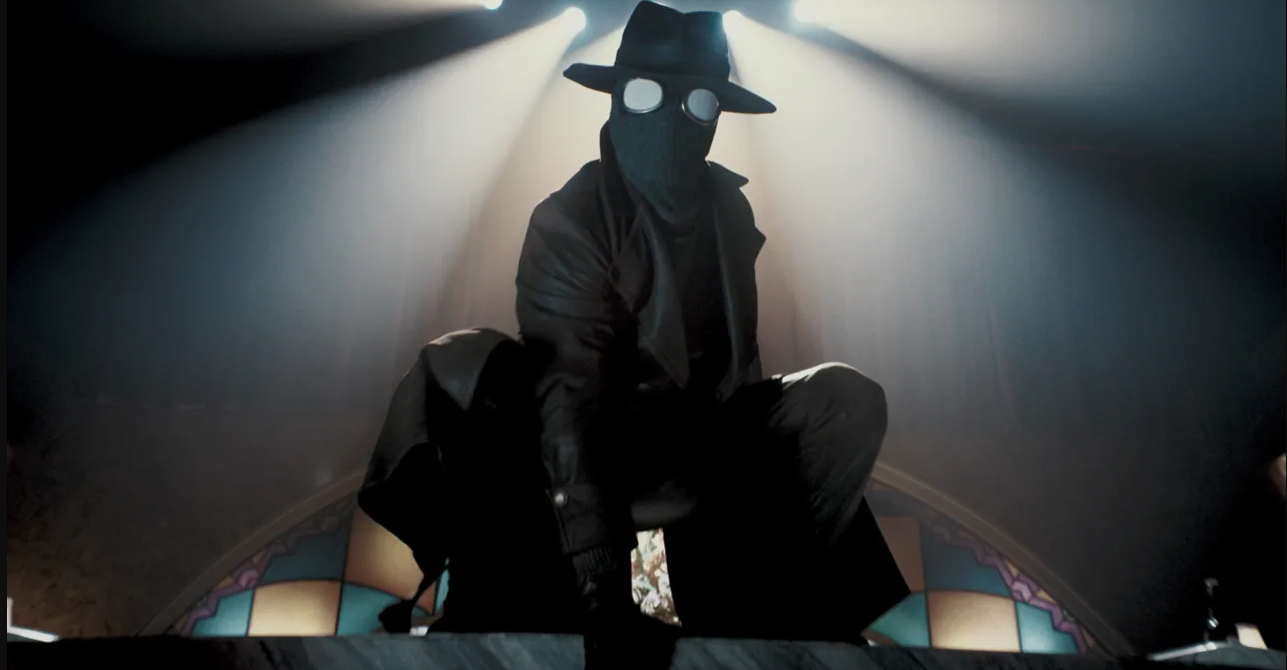
The Prime Video series, which premiered on March 8, 2024, immediately plunges viewers into a rain-slicked, perpetually twilight New York City of 1938. The adaptation’s strength, as Hine noted, lies in its meticulously crafted atmosphere. This rendition of Spider-Man, embodied by Ben Reilly (played by Nicholas Cage), operates not in the brightly lit, optimistic Marvel Cinematic Universe, but in a world steeped in chiaroscuro and moral ambiguity. The series taps into the visual language of classic film noir, employing stark contrasts, low-key lighting, and a pervasive sense of dread to establish its distinct identity. The narrative unfolds as a mystery, with Ben Reilly investigating a series of murders that threaten to expose the city’s deeply entrenched corruption.
The choice to feature Ben Reilly instead of Peter Parker allows the adaptation to forge its own path, independent of the established Spider-Man mythology. This creative decision enables the showrunners to explore themes of identity, trauma, and redemption through a character with a complex history within the broader Marvel canon, while simultaneously anchoring him in the specific anxieties of the 1930s. The series’ commitment to a palpable sense of place and time is evident in its production design, costume work, and the deliberate pacing that mirrors the deliberate unfolding of a classic detective story.
The Absence of Explicit Political Discourse: A Missed Opportunity?
Hine’s critique regarding the lack of explicit political commentary is particularly poignant given the historical context of the 1930s. This decade was a crucible of ideological conflict, marked by the Great Depression, the rise of fascism in Europe, and burgeoning social movements within the United States. The "Friends of New Germany," a pro-Nazi organization active in the U.S. during that era, was a tangible threat, and Hine’s comics directly confronted this reality. By naming such entities and referencing actual historical events, the comics provided a potent allegory for contemporary political anxieties.
The Prime Video series, while touching upon issues like racial tensions, does so with a lighter touch. The struggles of marginalized communities, the exploitative practices of industrialists, and the undercurrent of political radicalism that defined the era are present, but they do not form the driving force of the narrative in the same way they did in the comics. Hine’s expectation was for a more direct engagement with these forces, a willingness to name and critique the systems of power that oppressed the working class. The "soft left" politics he identifies in the show suggest a more mainstream, less confrontational approach to these complex issues.
Reimagining the Spider-Man Mythos: A Pulp Detective Emerges
The adaptation’s focus on Ben Reilly and its divergence from the overt political messaging of the comics can be interpreted as a strategic choice to appeal to a broader audience while still honoring the core essence of the Spider-Man character. Ben Reilly, often seen as an imperfect clone of Peter Parker, brings his own set of internal conflicts and a unique perspective to the role of a masked vigilante. His journey in the series is one of uncovering not only the perpetrators of murder but also the truth about his own past and his place in this shadowy world.
The "noir" genre itself, while often imbued with social commentary, is primarily defined by its atmosphere, its archetypal characters, and its exploration of crime and corruption. The Prime Video series appears to lean heavily into these genre conventions, crafting a visually striking and narratively compelling detective story. The decision to simplify or soften the political messaging might be seen by some as a necessary concession to make the character more accessible and to focus on the intricate plot and character development.
The Broader Impact: A New Audience for Noir and Spider-Man
Regardless of Hine’s reservations about the political depth, the "Spider-Man Noir" series on Prime Video undoubtedly serves as a significant cultural touchstone. Its release has the potential to reignite interest in the original comic series, drawing new readers to David Hine’s work and the foundational narratives that inspired the adaptation. For fans of the genre, the show offers a fresh, Marvel-infused take on the classic noir aesthetic, blending the familiar elements of superhero storytelling with the dark allure of detective fiction.
The success of the series could also pave the way for further exploration of darker, more thematically complex corners of the Marvel multiverse. As Hine himself suggested, the show’s ability to bring attention to the character is ultimately a positive development. The differing interpretations—one overtly political and radical, the other a more atmospheric and character-driven mystery—demonstrate the enduring versatility of the Spider-Man mythos and its capacity to resonate across various creative visions and audience expectations. The conversation initiated by Hine’s critique underscores the ongoing dialogue between creators, adaptations, and audiences about the essential nature of beloved characters and the messages they convey.