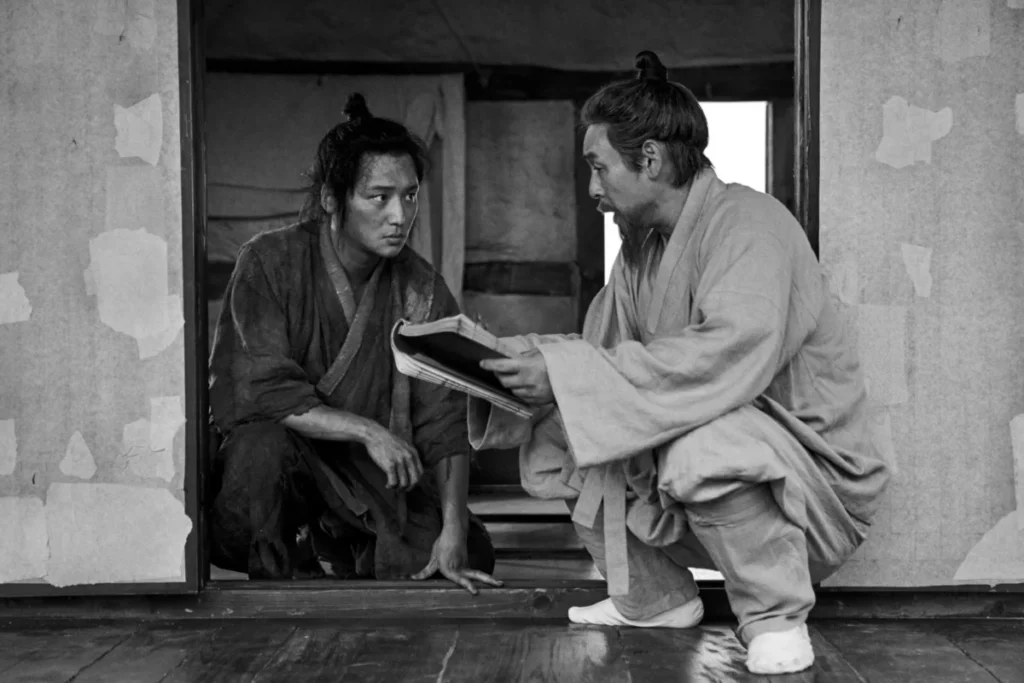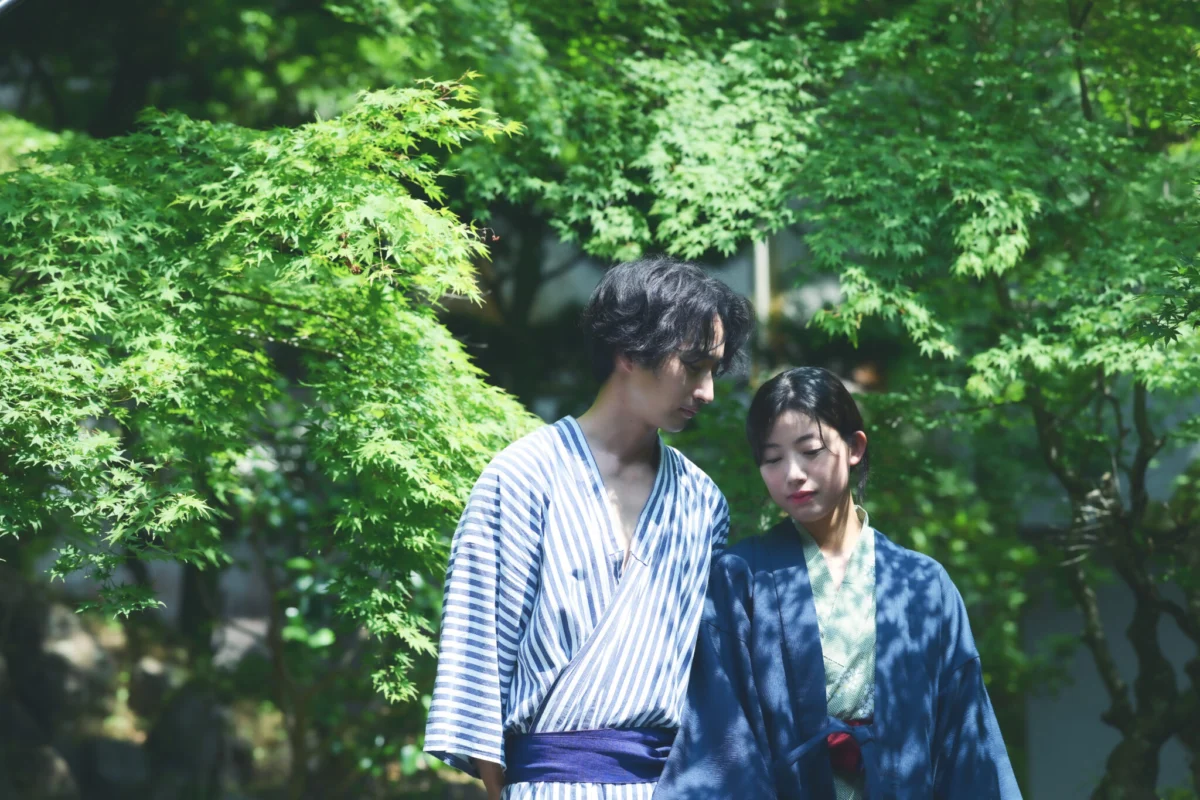
Kishu Izuchi stands as a distinguished Japanese film director and screenwriter, renowned for his unflinching cinematic explorations of desire, violence, marginality, and the intricate psychological boundaries of human relationships. His oeuvre consistently delves into the darker, more complex facets of the human condition, earning him a unique and respected position within contemporary Japanese cinema and on the international festival circuit.
Izuchi’s journey into filmmaking began after his studies at Hosei University’s Faculty of Literature, where he cultivated a keen academic and artistic sensibility. His early involvement in the alternative film exhibition culture, particularly through the screening collective Theatre Zero, provided a foundational understanding of film curation and audience engagement. This experience was further solidified during his tenure as a projectionist and programmer at the prestigious Athénée Français Cultural Center in Tokyo, working under the esteemed curator Hosaku Yasui. These formative years immersed him in a diverse range of cinematic expressions, shaping his distinctive vision and appreciation for film as a powerful medium for social commentary and psychological introspection.
Emerging prominently from Japan’s vibrant yet often overlooked independent and pink film scene of the 1990s, Izuchi quickly garnered recognition for his bold approach. His early works, such as "Daiichi Apartment" (1992), which received a Special Prize at the Tokyo Student Film Festival, and "Hyakunen no Zesshō" (A Hundred Years’ Lament, 1998), screened at the Tokyo International Film Festival and subsequently acclaimed internationally, established his reputation as a director unafraid to tackle challenging themes with artistic integrity. The 1990s pink film revival, a period characterized by a surge in low-budget, artistically driven erotic films, proved to be a fertile ground for Izuchi and his contemporaries, allowing them creative freedom to experiment with narrative and visual styles outside the mainstream studio system.
As both a director and screenwriter, Izuchi has meticulously developed a distinctive body of work that traverses various genres and thematic landscapes. His filmography includes politically charged independent cinema, such as "Left Alone" (2005), thought-provoking documentaries, and a series of acclaimed literary adaptations. Among his recent triumphs are his interpretations of literary giants like Junichiro Tanizaki, with films such as "Manji" (2023) and "Naomi / Chijin no Ai" (2024), alongside his latest project, an adaptation of Masao Yamakawa’s lesser-known novel, "Ai no Gotoku" (Like Love).
Simultaneously, Izuchi has become one of the defining screenwriters associated with the post-1990s evolution of Japanese pink cinema. His collaborative spirit is evident in his partnerships with influential directors like Takahisa Zeze, notably on "Raigyo" (1997), a film widely regarded internationally as a seminal work of the era. Beyond the pink film genre, Izuchi’s versatile writing credits span a wide spectrum, including mainstream productions such as "Moon Child" (2003) and "Drowning Love" (2016), numerous television dramas, and his signature psychologically charged erotic cinema. His films have been showcased at esteemed international festivals, including Rotterdam, Montreal, and Nippon Connection, affirming his global appeal. Critics and audiences alike recognize his work for its compelling blend of literary sensibility, incisive social critique, raw eroticism, and a deeply theatrical understanding of performance and identity.
The Genesis of "Ai no Gotoku": A Long-Awaited Adaptation
The inspiration for adapting Masao Yamakawa’s "Ai no Gotoku" (Like Love) into a film traces back nearly three decades. Izuchi recounts discovering the novel around thirty years ago in a second-hand bookstore in Japan. Even then, he harbored a vague but persistent conviction that it was a fascinating narrative ripe for cinematic translation. The opportunity to bring this long-held vision to fruition materialized approximately two years ago, following the completion of his acclaimed adaptations of Junichiro Tanizaki’s "Manji" and "Naomi." Asked about his next project, Izuchi instinctively felt that the time was finally right for "Ai no Gotoku." This demonstrates a director with a deep connection to his source material, often allowing ideas to marinate for years before finding the opportune moment for production.
Shifting Perspectives: Reclaiming the Female Narrative
A hallmark of Izuchi’s literary adaptations, including those of Tanizaki and now Yamakawa, is a deliberate and profound shift in narrative perspective. In the original novels, male protagonists often find themselves ensnared within patriarchal or male-centered viewpoints. Izuchi’s cinematic interpretations, however, consciously elevate the woman’s perspective, amplifying the "femme fatale" dimension. This intentional reorientation is rooted in several influences. Izuchi notes Tanizaki’s fundamental fascination with, almost worship of, women, and the emotional resonance he finds in the masochistic aspects of their relationships. This appreciation for the power dynamics inherent in desire is further informed by his enduring love for film noir, a genre where men frequently succumb to self-destruction through their entanglement with dangerous, alluring women.
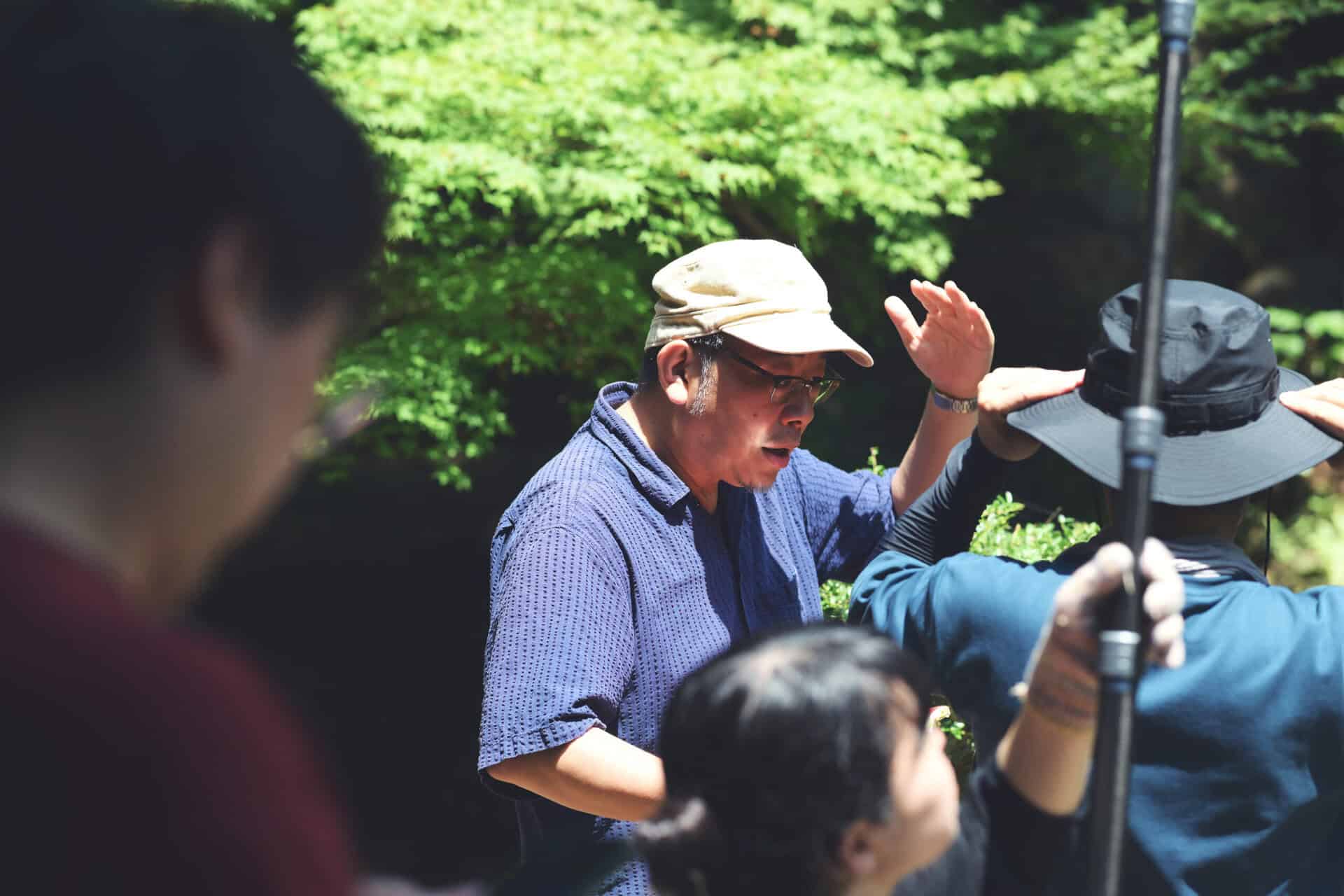
This modernization process is not merely a stylistic choice but a collaborative and essential component of his filmmaking philosophy. Izuchi emphasizes the critical importance of extensive discussions during screenplay development, working closely with female screenwriters and producers. This collaborative model is crucial, as many older Japanese novels, particularly from the era in which they were written, contain strong patriarchal elements that require careful reconsideration for contemporary audiences. The result is a portrayal of women in his films who are more active, independent, and strong, transcending their original literary confines. Establishing this empowered female perspective during the scriptwriting process is, for Izuchi, paramount.
Navigating Subjectivity: The Cinematic Translation of Inner Worlds
The adaptation of "Ai no Gotoku" presented a significant cinematic challenge: translating the protagonist’s deeply self-contained and subjective inner world into a compelling visual narrative. In the original novel, the protagonist’s unwillingness to allow others to intrude into his internal sphere naturally leads to a highly subjective, almost monologue-like narrative structure. To transform this into cinema, Izuchi sought to introduce more dialogue, both literally and structurally. The involvement of female screenwriters was again pivotal in this endeavor. The woman, often simply described as "the woman" in the novel, emerges as a fully realized subject in her own right within the film, endowed with her own voice and agency. This strategic decision allowed Izuchi to move the story away from pure subjectivity, steering it towards something closer to an objective, novelistic perspective, thereby enriching the narrative and making it more accessible and engaging for a cinematic audience.
The Echo of Postwar Literature and the Uncanny Coincidence
While preparing for the adaptation, Izuchi delved into the postwar literary context surrounding Masao Yamakawa. He noted Yamakawa’s significant role as editor-in-chief of "Mita Bungaku," and his strong "producer-like sensibility." Yamakawa was known for encouraging other writers, writing plays and screenplays himself, and fluidly moving between different creative forms. While exploring this rich background, Izuchi ultimately had to reshape the material to resonate with contemporary audiences and align with the film’s specific locations and atmosphere.
A particularly haunting aspect of "Ai no Gotoku" is the uncanny correspondence between the novel’s plot and the author’s fate. The protagonist in Yamakawa’s novel dies in a traffic accident, a chilling parallel to Yamakawa himself, who tragically passed away in a traffic accident before the book was even published. Izuchi views this as ultimately a coincidence, yet he acknowledges the powerful and "strangely haunting" impression it leaves. The knowledge of Yamakawa’s premature death profoundly alters the way one reads and interprets the work, adding a layer of poignant irony and fatalism to the narrative. This adds a unique depth to the background context of the film, connecting the creative work directly to the life of its creator in a most unusual way.
Theatricality, Performance, and the Aestheticization of Cruelty
Izuchi’s films frequently explore the highly theatrical quality inherent in the performance of identities, where characters often appear as almost objectified figures subjected to violence. In "Naomi," for instance, Izuchi was consciously interested in depicting layers of performance, with the characters Joji and Naomi meta-textually performing Tanizaki’s novel. He confesses a strong fondness for this kind of "doubled structure," where individuals are simultaneously performing roles and yet are inextricably trapped within those very roles, highlighting the societal and psychological constructs that shape human behavior.
His works also contain clear sadomasochistic motifs, a thematic area he approaches with intellectual curiosity rather than explicit advocacy. While not claiming expertise in Japanese SM culture, Izuchi acknowledges its unavoidable presence in discussions of Tanizaki’s work, which led him to read critical texts like Deleuze’s studies on Sade and Masoch, as well as Masoch’s own writings. He posits that SM is fundamentally psychological, distinguishing it from the historically more physical, visually pornographic portrayals that Japanese audiences have often encountered.
Similarly, he recognizes Shibari, the Japanese art of decorative rope bondage, as an important motif in Japanese literature and cinema, seeing its connection to an "aestheticization of cruelty." He traces links back to Edo-period grotesque or violent imagery and forms of visual culture associated with punishment and spectacle, acknowledging these historical connections without claiming deep knowledge. These insights underscore Izuchi’s nuanced understanding of complex cultural and psychological phenomena, integrating them into his narratives to explore deeper human truths.
-scaled.jpg)
Navigating Erotic Cinema in a Changing Climate
In the contemporary climate of compliance regulations and heightened political correctness, the creation of genuinely erotic cinema presents unique challenges. Izuchi, however, believes it has not necessarily become more difficult. He stresses that the most crucial elements during filming are clear communication with the actors and thorough preparation. The advent of intimacy coordinators and other professionals has streamlined the process, ensuring that sensitive scenes are guided appropriately and ethically.
More profoundly, Izuchi emphasizes the importance of how these stories are conceived and written at the script level. Historically, many narratives, especially erotic ones, were entirely framed through a male gaze. He finds immense value in the inclusion of women in the creative process, such as female screenwriters, who provide a necessary "sense of otherness." He recounts instances where a female screenwriter might challenge his perspective, stating, "No woman would actually find that appealing," leading to crucial revisions that ensure authenticity and broader appeal. These conversations are, for him, "extremely valuable," contributing to a more balanced and resonant portrayal of desire.
The Indelible Influence of Takahisa Zeze: Landscape as Narrative
Izuchi’s long-standing collaboration with director Takahisa Zeze, particularly on "Raigyo" (1997), proved to be profoundly influential. One of the most significant lessons Izuchi learned from Zeze was the art of location hunting. In the low-budget world of 1990s pink films, Zeze famously imparted the philosophy: "Landscape is free." This meant that when resources were scarce – no famous actors, no large budgets – filmmakers had to use their own feet. The directive was to "search for places that ordinary people never see," to "find landscapes that contain distortions or scars of Japanese society itself." This philosophy profoundly shaped Izuchi’s approach to filmmaking, and even today, he considers location one of the most vital elements in crafting his cinematic narratives, imbuing settings with psychological and social resonance.
Casting "Ai no Gotoku": A Blend of Experience and Discovery
The casting process for "Ai no Gotoku" involved a thoughtful blend of established talent and fresh discovery. Robin Furuya, cast as the male lead, came through a conventional agency route after the producer presented the script, with Furuya himself expressing a strong desire for the role. The search for the female lead proved more intricate, leading the production to hold an open casting call through social media. This unconventional approach led them to Remi Miyamori. Izuchi recalls being unaware at the time that Miyamori was also a film producer herself. However, during her audition, she immediately stood out. Her "tremendous energy, brightness, and presence," combined with her excellent acting, led to an almost unanimous agreement that she was the ideal choice for the role. This highlights Izuchi’s willingness to seek talent beyond traditional avenues, valuing raw ability and compelling presence.
"Ai no Gotoku": The Melancholy of Youth’s End
When asked if "Ai no Gotoku" is a youth film, Izuchi offers a nuanced perspective. He concedes that, in a way, it is – but perhaps more accurately, it is a film about "the end of youth." It doesn’t capture youth at its vibrant peak, but rather its "lingering afterimage." He describes it as imbued with nostalgia and melancholy, ultimately feeling like a film about "the dead end of youth." This thematic focus resonates with a universal human experience of transition and the bittersweet reflections on what has passed, adding an emotional layer that transcends a simple genre classification.
Tanizaki’s Legacy and Evolving Femininity in Japan
.jpg)
The discussion of Tanizaki’s "Pygmalion à rebours" motif – where men attempt to sculpt women to their ideals only to be dominated or destroyed by their own fantasies – prompts reflection on contemporary Japanese society. Izuchi admits he hasn’t considered whether modern Japan has moved closer to or further from Tanizaki’s ideal of liberated femininity in those exact terms. However, he acknowledges Tanizaki’s surprisingly modern and direct views. For example, Tanizaki was a vocal critic of traditional kabuki onnagata culture, advocating for the use of actresses rather than men playing female roles.
Compared to Tanizaki’s era, women in Japan today are significantly more active and visible socially, with some even "overpowering men completely." Izuchi muses that Tanizaki would likely find this development interesting, perhaps even pleasing, suggesting a progressive streak in the literary master that aligns with Izuchi’s own thematic concerns. This analysis provides a sociological lens through which to view Izuchi’s adaptations, situating them within a broader cultural evolution.
The Centrality of Crossing the Line: Izuchi’s Enduring Artistic Theme
A core, unwavering artistic theme in Izuchi’s work is the fascination with characters crossing irreversible emotional boundaries. Whether the catalyst is love, murder, infidelity, or obsession, what captivates him most is "the precise moment when a human being crosses a line." He meticulously portrays the hesitation, the self-doubt, the retreat, and the internal struggle that precede this pivotal moment. But it is "the instant they finally step beyond that boundary" that he most profoundly desires to capture on film.
He offers vivid examples: in "Naomi," the scene where Naomi physically mounts George signifies such a boundary crossing. Similarly, in "Ai no Gotoku," the intimate moment when the woman suddenly sucks the man’s fingers covered with cake cream represents a transgression of emotional barriers. These are the moments that define his cinematic pursuit, a fascination he believes will remain with him for the rest of his life.
A Message on Love, Cinema, and Art: The Irresistible Pull Beyond Boundaries
In his concluding thoughts, Izuchi offers a potent message about the forces that drive human existence and his art. While perhaps not love itself in its purest form, he believes that "love – or murderous desire, or obsession – pushes people beyond the boundaries they normally cannot cross." It is this powerful, transformative, and often dangerous impetus that he will "probably continue trying to film forever." This encapsulates Kishu Izuchi’s artistic credo: a relentless exploration of the human psyche at its most vulnerable, most extreme, and most compelling, forever drawn to the precipice where ordinary lives confront extraordinary passions.