There’s a potent synergy between the realms of music and horror, a connection that manifests in various forms. This includes the theatrical pageantry adopted by certain musical acts that inherently evoke the genre’s aesthetic, the strategic casting of music icons in horror cinema, and the utilization of songs as conduits for what could be interpreted as occult rituals. A growing corpus of music-centric horror films is actively blurring the lines between these two distinct yet interconnected artistic spheres. Examples such as Rob Zombie’s The Lords of Salem, Deathgasm, Studio 666, Hellbender, and Green Room each explore this intersection from vastly different perspectives, yet all acknowledge music’s intrinsic link to dark, often inexplicable phenomena. Sam Scott’s Turn It Up! joins this sonic exploration, presenting itself as a meditation on the profound power of sound and its capacity to generate cosmic vibrations capable of transcending reality through specific harmonic arrangements.
The Sonic Apocalypse: Premise and Execution
Turn It Up! immediately establishes its central premise, gradually building a sense of mounting dread as the band’s performance approaches a supposed sonic apocalypse. The film effectively navigates these thematic elements, only to pivot towards an original narrative that subverts audience expectations. This unexpected turn propels Turn It Up! into an engaging and unforeseen trajectory, serving as a potent allegory for the arduous journey artists undertake in their pursuit of success, even at the potential cost of their very souls, both metaphorically and literally.
The film delves into the perennial theme of the price of fame and the ethical considerations surrounding shortcuts to superstardom. This resonates deeply as a modern iteration of the Faustian bargain, particularly pertinent in an era dominated by social media influence, where the pressure to maintain trend status is unprecedented. AC (portrayed by Justine Nelson), the frontwoman of a struggling independent rock band, is depicted as a deeply repressed individual teetering on the edge of an emotional breakdown. She grapples with pervasive apathy and the sting of failure, making her fervent passion for music feel increasingly elusive. Turn It Up! excels at capturing the monotonous reality and inherent struggles of a band on a dilapidated tour, adeptly using this mundane backdrop to foreshadow a far grander, more unsettling narrative.
A Faltering Band’s Cosmic Revelation
For AC, who has seemingly never experienced a significant breakthrough, the sudden prospect of escaping her ordinary existence arrives with overwhelming force. Her band stumbles upon a unique sound with demonstrable paranormal properties. This discovery leads them to be manipulated into believing they represent a singular generational voice. What follows is an unnerving experiment designed to invoke an otherworldly event, a descent into what the film terms "the next phase of quadraphonic entitlement." This can be succinctly described as a journey "Beyond the Black Metal Rainbow." Intriguingly, AC’s pre-existing tinnitus, often perceived as a hindrance, emerges as a pivotal asset, uniquely equipping her to confront this paranormal phenomenon. What was once a personal affliction might now hold the key to averting global catastrophe.
A Distinct Vision with Retro Charm
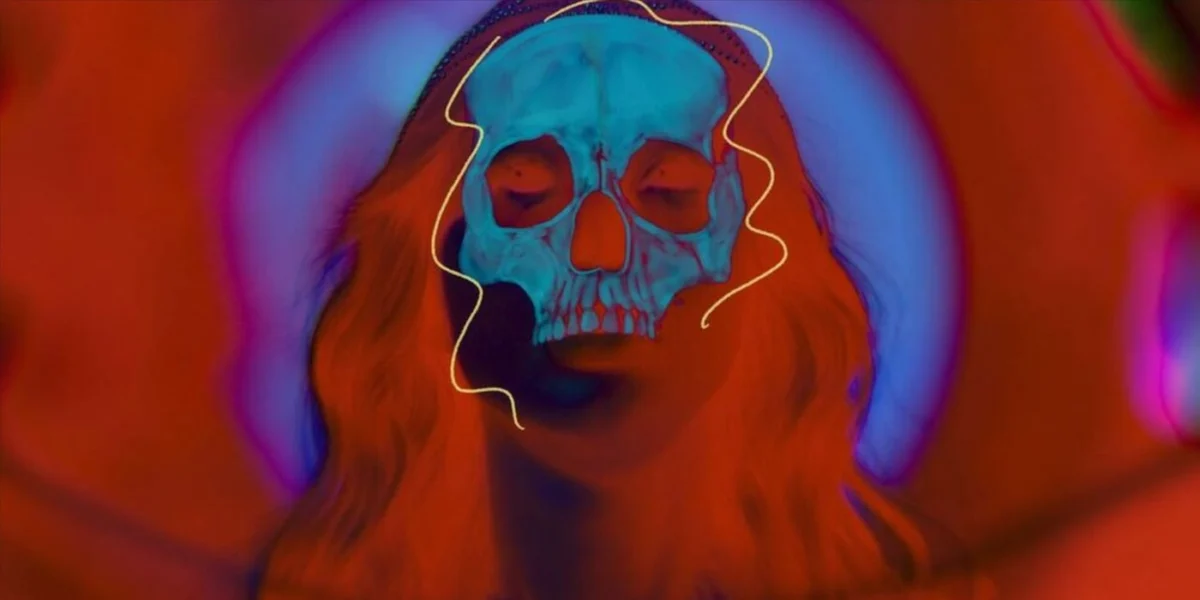
Turn It Up! showcases a remarkably distinct artistic voice from writer-director Sam Scott, marking a promising debut feature. The film possesses a creative, retro, DIY sensibility that imbues it with a punk-rock EC Comics aesthetic. This stylistic choice not only enhances the already entertaining narrative but also injects the film with a palpable personality and an authentic, anarchic energy. At times, Turn It Up! evokes the feeling of a film directed by John Carpenter, if he were to have helmed Scott Pilgrim.
![‘Turn It Up!’ Review: Cosmic Horror/Comedy Mostly Hits The Right Notes [Tribeca]](https://www.dreadcentral.com/wp-content/uploads/2026/06/Turn-It-Up-Skull-Band-Ritual.jpg)
Balancing Levity and Dread
While a pervasive sense of darkness permeates Turn It Up!, the film is surprisingly replete with moments of levity. A deeply relatable camaraderie among the band members is amplified by a playful sense of humor, with comedic beats that largely land successfully. It is worth noting that Turn It Up! appears to prioritize its comedic elements over its horror aspects, a decision that might disappoint some viewers. However, this balance ultimately works, even as many of the humorous situations arise from the pronounced ineptitude of the shadowy government organization attempting to orchestrate events from behind the scenes.
Pacing and Potential for More
Clocking in at a brisk 91 minutes, Turn It Up! offers a breezy and accessible viewing experience. Nevertheless, the film occasionally falters by dedicating too much screen time to the characters engaged in studio improvisation. While these scenes are enjoyable, they ultimately contribute to a sense of narrative stagnation. The build-up to the film’s climactic sequence feels protracted, and the payoff, while significant, arrives after a considerable journey. The film’s concluding act might have been more impactful if it had been positioned as the second act, allowing for further escalation and mayhem to follow. Turn It Up! arguably departs the scene just as it begins to reach its most compelling juncture, suggesting that an encore performance would have been beneficial.
A Promising Debut with Room to Grow
Despite these minor criticisms, Turn It Up! delivers an enjoyable take on cosmic horror that avoids taking itself too seriously while still conveying a meaningful message. It stands as a solid statement piece from debut filmmaker Sam Scott, though it does exhibit some limitations in terms of narrative depth. It can be likened to an excellent EP that doesn’t quite achieve the scope of a full LP, but the foundational elements are undeniably present. Turn It Up! holds the promise of being a formative stepping stone for Scott, paving the way for more ambitious genre endeavors. In the interim, the film offers a welcome opportunity to become immersed in its sonic landscape, even if the occasional frustrating feedback is present.
Summary
Sam Scott’s Turn It Up! is a commendable yet imperfect directorial debut that skillfully navigates the intersection of indie band mumblecore comedy and existential cosmic horror spectacle. The film, which premiered at the Tribeca Film Festival in 2026, garnered attention for its unique blend of genres and its exploration of artistic ambition. The narrative centers on AC, the lead singer of a struggling band, who, along with her bandmates, discovers a sonic anomaly with paranormal capabilities. This discovery thrusts them into a clandestine operation orchestrated by a mysterious organization that seeks to harness the power of their music for otherworldly purposes. Justine Nelson delivers a compelling performance as AC, anchoring the film with her portrayal of a character grappling with artistic frustration and unexpected supernatural involvement. The film’s retro aesthetic, reminiscent of 1970s and 80s cult horror films, further enhances its distinctive charm. While Turn It Up! may benefit from a tighter narrative in its latter half, it remains a noteworthy contribution to the music-horror subgenre and a strong indicator of Sam Scott’s potential as a filmmaker.