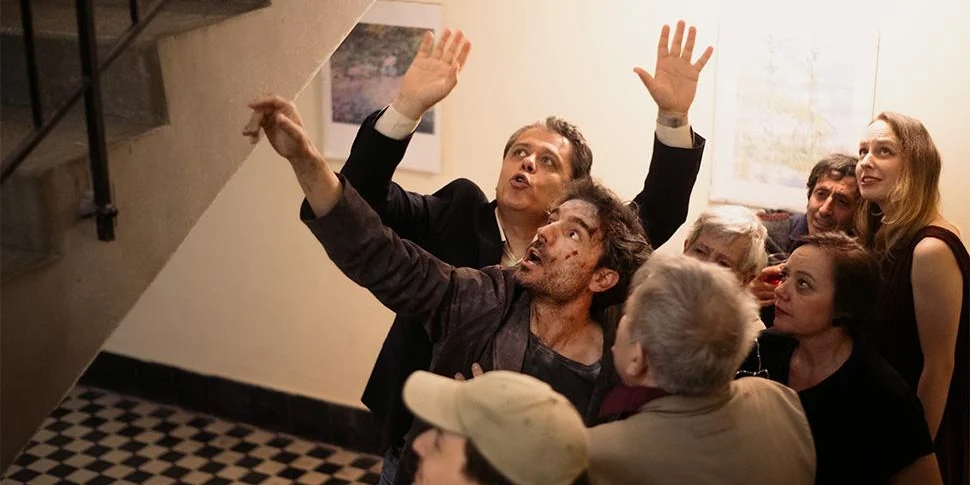
Rain Reign marks a significant addition to the contemporary landscape of family-oriented cinema, offering a nuanced exploration of neurodivergence through the lens of a twelve-year-old protagonist named Rose Howard. Directed and written by Erika Burke Rossa, the film is an adaptation of the critically acclaimed 2014 novel of the same name by Ann M. Martin, an author best known for the seminal The Baby-Sitters Club series. The production serves as a centerpiece in the growing movement toward authentic representation in Hollywood, particularly regarding the portrayal of individuals on the autism spectrum. By casting neurodivergent actress Felice Kakaletris in the lead role, the production aligns with modern industry standards that emphasize "nothing about us without us," a mantra within the disability advocacy community that demands authentic casting for characters with specific lived experiences.
Narrative Overview and Character Dynamics
The story centers on Rose Howard, a young girl whose life is defined by a rigid adherence to rules, schedules, and the linguistic complexities of homonyms. For Rose, the world is a chaotic place that can only be navigated through the safety of order. Her obsession with words that sound the same but have different meanings—such as "rein," "rain," and "reign"—serves as both a comfort and a primary method of processing her environment. This internal structure is anchored by her relationship with her dog, Rain, a name carefully chosen for its homonymic properties.
The narrative tension escalates when a massive superstorm strikes her rural town, leading to the disappearance of Rain. This event serves as the catalyst for Rose’s emotional journey, forcing her to venture outside her comfort zone and confront a world that does not follow her established rules. The film meticulously tracks the chronological fallout of the storm: the initial panic, the logistical challenges of a search-and-rescue effort in a devastated community, and the eventual moral dilemma Rose faces when the search for her dog leads to a discovery that challenges her sense of justice and ownership.
Supporting Rose is a complex family unit. Her father, Wesley, portrayed by Jeremy Sisto, is a single parent struggling with economic instability and unresolved personal trauma. Wesley’s character provides a stark look at the difficulties faced by low-income families navigating the complexities of raising a neurodivergent child without adequate social or financial safety nets. In contrast, Paul Rudd plays Uncle Weldon, Wesley’s brother. Rudd’s character offers the emotional stability and patience that Wesley, burdened by his own history and the loss of his wife, often lacks. The film marks a notable reunion for Sisto and Rudd, who previously appeared together in the 1995 cult classic Clueless, providing a layer of meta-textual interest for adult viewers.
Chronology of Production and Source Material
The journey of Rain Reign from page to screen reflects a decade of development in the young adult (YA) literary and film markets. Ann M. Martin’s novel was published in 2014 to immediate critical success, earning a place on the New York Times bestseller list and receiving the Schneider Family Book Award, which recognizes authors for their portrayal of the disability experience.
The adaptation process, led by Erika Burke Rossa, focused on maintaining the "frank tone" of the novel while translating Rose’s internal monologue into a visual medium. Production began with a commitment to sensitivity, involving consultations with neurodiversity advocates to ensure the depiction of Rose’s sensory sensitivities and social challenges was grounded in reality rather than stereotype.
- 2014: Publication of the novel Rain Reign by Ann M. Martin.
- 2018-2021: Script development and securing of production rights, with a focus on finding a neurodivergent lead.
- 2022-2023: Principal photography, featuring on-location filming to capture the atmospheric tension of the superstorm sequences.
- 2024: Official release and festival circuit appearances, highlighting the film’s educational and family-friendly appeal.
Supporting Data: Representation of Disability in Media
The release of Rain Reign occurs at a time when data suggests a slow but steady increase in disability representation in film and television. According to the 2023 Hollywood Diversity Report by UCLA, characters with disabilities remain underrepresented relative to the general population. While approximately 26% of adults in the United States live with some form of disability, fewer than 5% of speaking characters in top-grossing films are depicted as having a disability.
Furthermore, the "Authentic Representation" study by the Geena Davis Institute on Gender in Media highlights that when disability is portrayed, it is frequently played by non-disabled actors. Rain Reign addresses this disparity directly. Industry analysts suggest that films like Rain Reign, Wonder (2017), and the recent Out of My Mind (2024) are part of a "new wave" of disability cinema that prioritizes the internal life of the character over the "inspiration porn" tropes that dominated the 1990s and early 2000s.
Data indicates that family-friendly films featuring neurodivergent leads have a significant secondary market in educational settings. Schools and libraries often utilize these films to foster empathy and understanding among neurotypical students, suggesting that Rain Reign will have a long-term impact beyond its initial theatrical or streaming window.
Socio-Economic and Psychological Analysis
A critical element of the film is its refusal to sanitize the difficulties of Rose’s home life. The character of Wesley Howard, as played by Sisto, represents the intersection of blue-collar struggle and parental burnout. Wesley is a mechanic whose employment is precarious; when Rose is removed from the school bus due to a behavioral incident, the resulting childcare crisis threatens his livelihood.
Psychological experts note that the film accurately depicts "secondary trauma" in parents. Wesley’s grief over his deceased wife—which he has hidden from Rose by telling her her mother simply left—compounds the stress of his daily life. The film suggests that Wesley’s "gruffness" is not a lack of love, but a lack of resources. This adds a layer of social commentary on the need for better support systems for families of children with special needs.
The inclusion of Uncle Weldon (Rudd) serves as a narrative foil. Weldon possesses the emotional bandwidth to engage with Rose’s homonyms and routines, illustrating that neurodivergent children often thrive when they have a "village" of support rather than a single, overwhelmed caregiver. The film’s exploration of these dynamics offers a realistic portrayal of how family systems adapt—or fail to adapt—to the needs of their most vulnerable members.
Technical Execution and Artistic Flourishes
While the filmmaking is largely characterized by a straightforward, empathetic realism, Erika Burke Rossa utilizes specific animated flourishes to visualize Rose’s thought processes. When Rose identifies a homonym, the words often appear on screen, bridging the gap between her internal linguistic world and the viewer’s perspective. This technique is similar to the visual strategies used in films like The Curious Incident of the Dog in the Night-Time (stage play) or A Beautiful Mind, though tailored for a younger audience.
However, the film also employs a voice-over narration that has drawn mixed reactions from industry observers. While narration is a standard tool in YA adaptations to preserve the "voice" of the book, some analysts argue that Kakaletris’s physical performance is so expressive that the verbal explanations of her feelings are occasionally redundant. Despite this, the narration ensures that the film remains accessible to younger children who may need explicit guidance to understand Rose’s non-traditional emotional responses.
Broader Impact and Industry Implications
The broader implications of Rain Reign extend into the realms of policy and social advocacy. The film highlights the importance of the Individuals with Disabilities Education Act (IDEA) and the challenges of implementing "Reasonable Accommodations" in rural school districts. Rose’s struggle with the school bus system is a real-world issue faced by thousands of families annually, where transportation barriers can lead to educational exclusion.
Moreover, the film’s focus on a superstorm taps into contemporary anxieties regarding climate change and its disproportionate impact on vulnerable populations. For a child like Rose, for whom routine is a survival mechanism, the environmental displacement caused by a natural disaster is not just a physical threat but a psychological one.
In the context of the film industry, Rain Reign reinforces the commercial viability of "middle-grade" adaptations that do not rely on fantasy or superheroes. It proves that there is a dedicated audience for quiet, character-driven stories that tackle complex moral questions. The film concludes not with a simple happy ending, but with a testament to Rose’s growth and her ability to make a difficult, moral choice regarding her dog—a choice that reflects a high level of integrity and emotional maturity.
As the film moves into wider distribution, it is expected to be a staple in discussions regarding inclusive storytelling. By centering a neurodivergent girl’s perspective during a moment of crisis, Rain Reign contributes to a more diverse and empathetic cinematic canon, challenging audiences to see the world—and its homonyms—through a different lens.