The Cannes Film Festival, renowned globally as the pinnacle of high-minded cinema and a crucible for bold, searing visions from the world’s foremost auteurs, often presents a curated selection that delves into profound social upheavals, existential explorations, and complex historical narratives. Audiences accustomed to cinematic journeys through contemporary Romania, the vibrant fringes of Tokyo and Seoul, the lonely foothills of Anatolia, the bustling streets of Dakar, or the fraught history of Chile anticipate an enriching experience, witnessing the latest dreams of the planet’s premier and emerging film artists. However, amidst this august tradition of intellectual and artistic rigor, there occasionally emerges a project that offers a distinct, albeit equally significant, counterpoint. This year, that role was filled by the French animated comedy Jim Queen, directed by Nicolas Athane and Marco Nguyen, which premiered in the festival’s Midnight Screenings section, providing a decidedly crass, profane, and giddily stupid romp through a heap of stereotypes about gay life in Paris.
A Departure from Cannes’ Arthouse Grandeur
The inclusion of Jim Queen in the Cannes lineup, particularly within the Midnight Screenings, underscores the festival’s occasional embrace of films that diverge sharply from its main competition’s often serious, contemplative fare. These late-night slots are historically reserved for genre pictures, cult films, or works that challenge conventional narrative and thematic boundaries with a more visceral, often provocative, approach. It is here that audiences are invited to experience a different kind of cinematic daring, one that prioritizes shock, spectacle, or, in this case, unbridled comedic excess. The film’s content, teeming with explicit jokes about prostate orgasms, the dynamics of tops and bottoms, various fetishes, bodily fluids, and "G’d out party bois," certainly delivered a welcome shock to the system within the typically black-tie environs of the festival. While offering a much-needed break from the weightier subject matter dominating other sections, initial critical responses, including that of The Hollywood Reporter, suggested that its execution, while audacious, did not always translate into consistently fresh or funny material, likening it to "reheated nachos, minus the carbs."
Cannes’ enduring legacy as a platform for cinematic excellence is built on its commitment to artistic integrity and the discovery of groundbreaking talent. Its selection process, overseen by figures like Thierry Frémaux, aims to reflect the global landscape of cinema, balancing established masters with emerging voices. While the main competition and Un Certain Regard sections often highlight films with deep socio-political commentary or innovative artistic forms, sections like the Midnight Screenings and Special Screenings allow for broader programming that acknowledges the diversity of cinematic expression, including works that are purely for entertainment, albeit often with an edgy twist. This flexibility ensures that Cannes remains relevant to a wider industry, from art house purists to those interested in more commercial or niche genres.
Animation’s presence at the festival has steadily evolved over the decades, moving from occasional curiosities to critically acclaimed contenders. Films like Marjane Satrapi and Vincent Paronnaud’s Persepolis (2007) and Ari Folman’s Waltz with Bashir (2008) both competed for the Palme d’Or, demonstrating animation’s capacity for serious storytelling. More recently, Jonas Poher Rasmussen’s Flee (2021) also garnered significant attention. Even animated blockbusters, such as Shrek, have made appearances, often out of competition. Jim Queen, however, represents a particular strain of adult animation, one that is less concerned with mainstream appeal or high-art aspirations and more focused on specific subcultural humor and explicit themes. Its screening signals a recognition of the growing diversity within animation and its potential to explore subjects previously confined to live-action R-rated comedies, particularly within the context of French cinema, which has a strong tradition of adult animation, often characterized by its distinctive visual styles and willingness to tackle unconventional narratives.
Unpacking the Premise: Satire and Stereotypes
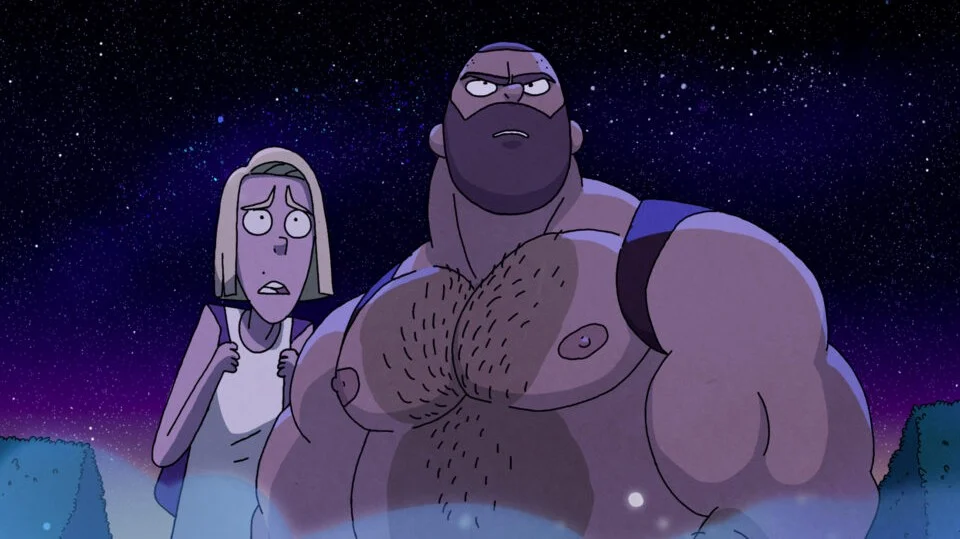
Jim Queen centers on the travails of Jim Parfait (voiced by Alex Ramirès), an Instagram hunk who embodies the apex of the gay social hierarchy in Paris. Possessing an ideal physique, meticulously groomed facial, chest, and head hair, Jim is presented as the epitome of the "alpha gay," desired by all who encounter him, whether online or in real life. His character is designed to be as bitchy and cliquey as one might expect from someone at the top of such a pecking order, a figure whose position is only dared to be questioned by a steroid-addled rival, Pavel (voiced by gay porn icon François Sagat, a casting choice that directly speaks to the film’s intended audience and its immersion in specific facets of gay culture).
At the opposite end of this rigid social structure, or perhaps entirely outside its ranking system, is Lucien (Jérémy Gillet). Lucien is portrayed as a fey, cosseted twink of privilege, longing desperately to meet Jim. However, he is confined to his home, shielded from anything overtly gay by his domineering mother. A musical number, amusingly evoking "Part of Your World" from Disney’s The Little Mermaid, reveals Lucien’s impressive collection of "props of gay life," predominantly sex toys, which he has no one to use with. His insecurity and sheltered existence leave him seemingly destined to remain in a virginal, satin-lined closet, pining hopelessly for Jim and the out-and-proud existence he represents. This setup immediately establishes the film’s intent to satirize the tribalism and superficiality often perceived within certain segments of the gay male community.
The narrative takes a fantastical turn with the onset of a pandemic sweeping the gay community, a disease dubbed "Heterosis." This affliction transforms the infected into what the film deems "shockingly hideous": straight men. This central conceit provides the film’s most consistently chuckle-worthy moments, as it playfully imagines the symptoms of turning straight: a sudden, inexplicable interest in football, an urgent desire to "breed" (in the biological sense), and a complete ignorance of queer culture. Jim tests positive for Heterosis, and to his horror, his coveted abs begin to disappear one by one, leading to his swift ostracization from the scene that once adored him. In a reversal of fortunes, only Lucien, still harboring a massive crush, is willing to help Jim on his wacky and dangerous quest to track down a cure. This journey forms the core of the film’s plot, pushing the unlikely duo into a series of comedic misadventures.
The Craft Behind the Comedy: Animation and Voice Talent
The directorial team of Nicolas Athane and Marco Nguyen, alongside writers Simon Balteaux and Brice Chevillard, crafted Jim Queen with a specific aesthetic and comedic sensibility in mind. While the film’s narrative content is undeniably provocative, the animation itself has received commendation for its vibrant artistry. Critics noted the bright, energetic visual style, which draws comparisons to contemporary adult animation hits such as Steven Universe and Rick and Morty. These influences suggest a deliberate choice for a dynamic, often surreal, visual language that can effectively convey the film’s exaggerated humor and fantastical elements.
Despite operating with what is described as "a fraction of the average Pixar movie’s budget," Athane and Nguyen manage to achieve a visually engaging experience. This speaks to the ingenuity and resourcefulness often found in independent animation, particularly in France, where artists frequently leverage unique styles and efficient production methods to maximize impact. The animation, though not deemed "terribly sophisticated" in a technical sense, effectively serves the story’s comedic and dramatic beats. A particular flair was noted in the action sequences towards the film’s conclusion, which reportedly take on "true cinematic heft in convincing mock-blockbuster fashion." This demonstrates the filmmakers’ ability to adapt their animation style to different narrative demands, elevating the comedic romp into moments of genuine visual excitement.
The voice cast plays a crucial role in bringing the film’s caricatured characters to life. Alex Ramirès as Jim Parfait and Jérémy Gillet as Lucien form the central comedic duo, tasked with conveying the exaggerated personalities and evolving dynamic of their characters. The inclusion of François Sagat as Pavel is a deliberate cultural nod, leveraging his iconic status within the gay porn industry to add another layer of authenticity and specific humor for audiences familiar with that niche. Shirley Souagnon also lends her voice, contributing to the ensemble that populates the film’s satirical vision of gay Paris. The choice of voice actors, many of whom are known for their comedic work or their presence within the LGBTQ+ community, reinforces the film’s targeted appeal and its immersion in specific cultural references. The production, lasting 1 hour and 30 minutes, is a testament to the dedication of the creative team in bringing this unique animated vision to the Cannes stage, a process that typically involves years of development, character design, storyboarding, and animation cycles, even for lower-budget productions.
Navigating Nuance: Critical Reception and Thematic Challenges
The critical reception of Jim Queen at Cannes highlighted the inherent challenges of employing crass, provocative humor, particularly when tackling sensitive subjects. While the film was welcomed as a "shock to the system" and a departure from the festival’s more somber fare, many critics expressed a desire for it to be "funnier and fresher." This suggests a common pitfall in satire: the line between edgy provocation and mere repetition of familiar tropes. The film’s reliance on broad stereotypes, while intentional for comedic effect, sometimes veered into territory that felt less inventive and more like a rehash of established gay comedic material. The original review, for instance, suggested that audiences familiar with "any edition of Drag Race from anywhere in the world in the last 17 years" would already know many of the jokes by heart, indicating a lack of originality in its comedic approach to "homosocial taxonomy."
One of the most significant thematic challenges the film faces is its handling of the "Heterosis" pandemic as an allegory for AIDS. Critics noted that this narrative choice "clangs badly against the movie’s otherwise silly, lighthearted demeanor," suggesting a careless trafficking in such a sensitive historical parallel. The HIV/AIDS epidemic has left an indelible mark on the LGBTQ+ community, and its representation in media carries a heavy weight. Modern narratives often seek to address the epidemic with nuance, historical accuracy, and a deep understanding of its social and emotional impact. Jim Queen‘s lighthearted, almost flippant, approach to a similar "gay plague" risked trivializing a period of immense suffering and activism. While the filmmakers may have aimed for the "edgy, point-driven provocation" of shows like South Park, the critique indicates that their comedic prowess was not "sharp enough to thread that tricky needle," resulting in a narrative element that felt discordant rather than incisive.
Furthermore, the film’s "curiously conservative streak" regarding drug use also raised questions, appearing to undermine its broader "egalitarian, one-love message." In a film that otherwise seeks to dismantle rigid social hierarchies and promote acceptance within the gay male community, a condemnatory tone towards drug use felt contradictory. Many within the LGBTQ+ community advocate for harm reduction and a non-judgmental approach to such issues, and a conservative stance within a film aiming for liberation could be perceived as out of step with progressive ideals. This tension highlights the difficulty of creating satire that is both broad in its humor and nuanced in its social commentary.
Ultimately, Jim Queen‘s chief mission is noble: to "tear down the walls that, in the film’s rigid schematic, hopelessly divide the gay (male) world." Jim must learn to accept someone like Lucien, while Lucien learns that "Instagram hotness is sometimes attached to a vain, rotten personality." This core message, promoting a "healthy kind of pluralism for all M4Ms," is commendable. However, the film’s reliance on "the most obvious of clichés" meant that this parable "might register more potently if Athane and Nguyen looked beyond" the familiar. While providing a "101 primer for straight people" with its bluntness about sexual mechanics, it left many gay audiences craving "more nuance and originality," having seen versions of its basic "homosocial taxonomy many, many times before." The film’s comedic and thematic framework, while ambitious, ultimately struggled to transcend the very stereotypes it aimed to dismantle, leaving critics to ponder what the talented animation team might achieve next with a fresher narrative.
Broader Implications for LGBTQ+ Cinema and Animation
The screening of Jim Queen at the Cannes Film Festival carries broader implications for the landscape of LGBTQ+ cinema and animation. Its presence, regardless of mixed critical reception, signifies a continued push for diverse representation on major international stages. For an openly gay-themed animated feature, particularly one as explicit and culturally specific as Jim Queen, to be showcased at Cannes, indicates a growing acceptance and recognition of queer narratives within mainstream festival programming. This can inspire other filmmakers to explore LGBTQ+ themes through animation, a medium that offers unique opportunities for symbolic storytelling, visual metaphor, and heightened comedic effect, potentially opening doors for more nuanced and original animated stories that move beyond established tropes.
The film also contributes to the ongoing evolution of French cinema, which has a long tradition of pushing boundaries and embracing artistic freedom. French animation, in particular, has often distinguished itself from its Hollywood counterparts by venturing into more adult, experimental, or socially charged territories. Jim Queen fits within this tradition of irreverence and cultural specificity, demonstrating how local industries can produce content tailored to particular audiences while still gaining international visibility. Its production with a relatively modest budget also highlights the potential for independent animation studios to create impactful feature-length films that resonate with specific communities, without requiring the massive financial backing typically associated with major animation houses.
However, the film’s critical reception also invites important reflections on the effectiveness of satire in addressing complex social issues within the LGBTQ+ community. While aiming to promote pluralism and dismantle internal hierarchies, Jim Queen‘s reliance on familiar stereotypes and its sometimes clumsy handling of sensitive allegories sparked debate. This underscores the ongoing challenge for creators: how to use humor and provocation to initiate meaningful dialogue without alienating audiences or inadvertently reinforcing the very clichés they seek to critique. The question of whether "crass, profane, giddily stupid" satire ultimately serves its "one-love message" or merely offers "reheated nachos" remains a crucial point of discussion for the future of gay storytelling in cinema.
As directors Nicolas Athane and Marco Nguyen look to their next projects, the hope expressed by critics is that they will leverage their evident artistic talent and flair for animation to "break new ground, rather than sifting through the waste bin of decades of gay comedy and pulling out the hoariest bits." The desire for more originality, nuance, and fresh perspectives in LGBTQ+ narratives is strong, particularly from an audience that has extensively consumed and critiqued its own cultural representations. The inclusion of Jim Queen at Cannes is a milestone for visibility, but the path forward for truly impactful and innovative queer animation will likely require moving beyond the well-trodden comedic paths, offering stories that resonate with deeper authenticity and artistic invention.