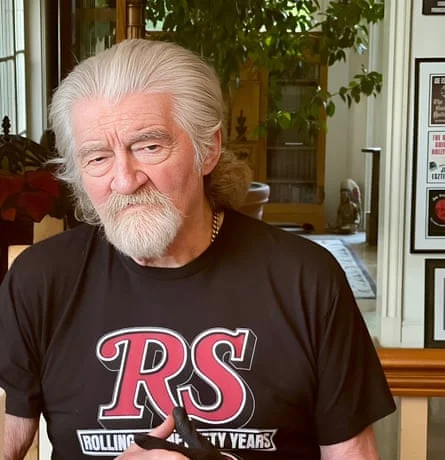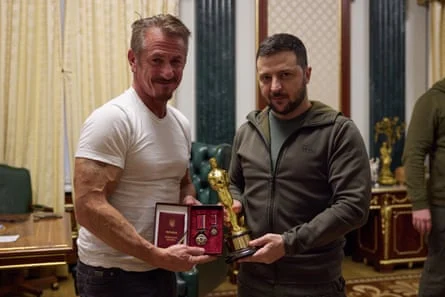
The recent Academy Awards ceremony, typically a glittering spectacle of cinematic achievement, was marked by a notable absence: Sean Penn, who had been awarded the Best Supporting Actor Oscar. While the win itself was met with critical acknowledgment of his performance, Penn’s decision not to attend the event, and the subsequent revelation of his reasoning, has sparked considerable discussion, moving beyond the usual speculation about celebrity feuds or scheduling conflicts. The star’s pointed refusal to participate in the festivities, now attributed to a profound dislike of selfies, has opened a dialogue about celebrity interaction in the digital age and the evolving nature of public engagement.
The Unseen Award: A Ceremony Without a Recipient
Sean Penn’s absence from the Oscars stage was, for many, a surprising development. While his performance in the nominated film was widely praised, his non-attendance shifted the focus from his acting prowess to his personal choices. Initially, theories abounded, with many positing that Penn’s presence in Ukraine at the time was a deliberate political statement, a poignant commentary on the perceived triviality of awards ceremonies amidst global crises. This interpretation suggested a profound moral stance, highlighting the stark contrast between Hollywood’s celebratory rituals and the harsh realities faced by those in conflict zones. However, this sophisticated geopolitical reading has since been superseded by a far more personal, and arguably more startling, explanation.
The "Soul-Sucking" Selfie: A Star’s Candid Confession
During a recent conversation at the Tribeca Festival with CNN anchor Kaitlan Collins, Sean Penn elaborated on his decision to bypass the Academy Awards. He began by articulating a general discomfort with large crowds, a sentiment that extends beyond the specific context of an awards show. "It’s not just [that it’s] an awards show," Penn explained, "It would be the same if this group was going to an afterparty and one stepped into that. That always represented social discomfort for me; too many people." This admission suggests a preference for more intimate social settings, with Penn stating that he now consciously limits his engagement to groups of no more than eight individuals.
This revelation, however, immediately raised questions about his attendance at other high-profile events, most notably the Golden Globe Awards earlier in the year. The Golden Globes, known for its more informal and celebrity-dense atmosphere, seemingly contradicts Penn’s stated aversion to large gatherings. Investigations into his experience at that event reveal it to have been a catalyst for his broader withdrawal from such ceremonies. Reports from the Golden Globes indicate a challenging evening for Penn, including pointed remarks from host Nikki Glaser and a smoking incident at his table, culminating in a loss to Stellan Skarsgård.
Yet, the primary driver behind his Oscars no-show, and his increasing disinclination towards awards circuits, appears to be a deep-seated aversion to the ubiquity of the selfie. Penn described being inundated with requests for photographs following the Golden Globes, a situation that evidently intensified his resolve to avoid similar scenarios.
His direct condemnation of the practice was stark: "People should not do selfies ever with anyone," Penn told Collins. "It’s bad for you. It’s bad for everyone. It’s a soul-sucker.” This forceful statement underscores a philosophical opposition to the act of capturing a photograph with a celebrity, framing it not merely as an inconvenience, but as a detrimental practice with negative consequences for both the subject and the requester.
The Uncompromising Stance: A "Hard No" for All
Penn’s antipathy towards selfies is not a mild preference; it is an absolute. He has articulated an uncompromising stance, illustrating the extremity of his position with a provocative hypothetical. When pressed on the matter, he stated, "The Holocaust grandmother and her six-year-old paraplegic wheeling over? It’s a hard no.” This statement, deliberately invoking one of the most horrific events in human history and a scenario of profound vulnerability, serves to emphasize the absolute nature of his refusal. It suggests that even in situations that might evoke empathy or a sense of moral obligation, his personal boundary regarding selfies remains inviolable.

This extreme example highlights a growing trend among public figures who are re-evaluating their engagement with fans in the age of social media. Other celebrities have voiced similar sentiments, albeit with different justifications. Paul McCartney has spoken of a prepared speech to deter selfie requests, likening the act to a specific primate’s exploitative tourist interactions. Emilia Clarke shared an experience of being approached for a photo during a panic attack, leading her to cease such interactions. Emma Watson, meanwhile, cited privacy concerns, opting out of selfies to avoid inadvertently broadcasting her location to the internet.
However, Sean Penn’s pronouncement stands out for its visceral intensity and its audacious use of historical tragedy to underscore his point. It suggests a fundamental objection to the transactional nature of celebrity encounters facilitated by the selfie, viewing it as an invasion that transcends mere inconvenience.
The Broader Landscape: Celebrities and the Selfie Culture
Penn’s declaration places him at the forefront of a discernible shift in celebrity-fan dynamics. The rise of smartphones and social media has democratized photography, blurring the lines between public and private life for well-known figures. What was once a rare autograph or a posed photograph now manifests as an immediate, often unsolicited, digital capture.
Supporting Data and Trends:
- Ubiquity of Smartphones: As of 2023, smartphone penetration globally exceeds 6.9 billion users, meaning a significant portion of the world’s population carries a camera capable of instant photo sharing.
- Social Media Engagement: Platforms like Instagram, TikTok, and X (formerly Twitter) thrive on visual content, making selfies a dominant form of online self-expression and interaction. Celebrities often leverage these platforms, but the constant demand for personal interaction can become overwhelming.
- Rise of "Parasocial Relationships": The digital age has fostered a sense of intimacy between fans and celebrities, often termed "parasocial relationships." This perceived closeness can lead fans to feel entitled to more direct and personal interactions, including selfies.
- Mental Health Impact on Celebrities: Studies and anecdotal evidence suggest that the constant scrutiny and demands of fame, including persistent requests for interaction, can contribute to significant stress, anxiety, and burnout among celebrities.
The implications of Penn’s stance are multifaceted. On one hand, it offers a stark, albeit controversial, model for celebrities seeking to reclaim personal space and assert boundaries. His "hard no," amplified by his extreme hypothetical, is designed to be memorable and deter future approaches. The article notes the stark contrast with other celebrities who might offer more nuanced explanations, suggesting that Penn’s approach is intentionally provocative.
On the other hand, his methodology has drawn criticism for its insensitivity. Invoking the Holocaust to justify a personal preference, however strongly felt, is seen by many as a disproportionate and inappropriate comparison. This raises questions about the ethical considerations of using such profound historical trauma in personal arguments, even if the intent is to emphasize the seriousness of a particular stance.
Analysis and Future Implications
Sean Penn’s outspoken rejection of selfies and his dramatic reasoning have ignited a conversation about the responsibilities and rights of both celebrities and their admirers in the digital era.
- Reclaiming Agency: Penn’s actions can be viewed as an assertion of personal agency in an environment where celebrity is often commodified and public figures are expected to be perpetually accessible. His refusal to engage in what he deems a "soul-sucking" activity is a radical act of self-preservation.
- Ethical Boundaries of Fan Interaction: The incident compels a broader discussion on the acceptable forms of fan interaction. While admiration is a natural response to public figures, the expectation of immediate, often intrusive, personal engagement, as epitomized by the selfie, warrants re-examination.
- The Power of Provocation: Penn’s use of the Holocaust to illustrate his point, while ethically questionable, is undeniably effective in conveying the absolute nature of his aversion. This tactic, however, risks alienating potential allies and overshadowing the core message about personal boundaries. It also raises concerns about the normalization of using extreme historical events to frame mundane personal preferences.
- Brand and Persona: For an actor like Sean Penn, known for his intense roles and often unvarnished public persona, this uncompromising stance on selfies may, paradoxically, reinforce his established brand. It aligns with a perceived authenticity and a willingness to speak his mind, regardless of conventional expectations.
- Potential for Empathy or Backlash: While some may empathize with the desire for privacy and a respite from constant public demands, others will undoubtedly find his comparison offensive and his attitude aloof. The long-term impact on his public image will depend on how this incident is received and whether it leads to wider dialogue or simply becomes another headline about celebrity eccentricities.
In conclusion, Sean Penn’s Oscar snub, driven by an intense dislike for selfies, has transcended a simple celebrity anecdote. It has become a focal point for discussions about the evolving relationship between public figures and their audience, the ethics of fan interaction in the digital age, and the often-contentious use of historical events to articulate personal viewpoints. His declaration, while controversial, has undeniably made his position clear: for Sean Penn, the era of the casual selfie is over, with consequences that extend far beyond the red carpet.