The Tibetan drama, directed and written by Khabu, recently marked its world premiere at the Bishkek International Film Festival (BIFF), captivating audiences with a deeply moving narrative rooted in a true story from the director’s own hometown. Titled "Released," the film intricately weaves themes of tradition, personal freedom, profound loss, and the enduring human spirit of survival against the majestic yet challenging backdrop of the Tibetan plateau. Khabu, a filmmaker known for his commitment to authentic storytelling, first encountered the incident that inspired the film during his formative years in the region. The harrowing experience of a young woman immediately resonated with him, compelling him to transform her journey into a cinematic exploration. This commitment to authenticity extended to his production process, as he meticulously interviewed the real-life inspiration to refine the script, ultimately casting her as one of the six young women who appear on screen, lending an unparalleled layer of verisimilitude to the production.
Filmed entirely in Litang, a historically and culturally significant center within the Kham region of Eastern Tibet, "Released" masterfully utilizes its geographical setting to underscore the intrinsic connection between the iconic Tibetan horses, the distinct local identity, and the daily rhythms of life on the high-altitude plateau. The film is not merely a story but an immersive cultural experience, reflecting the nuanced interplay between ancient customs and the aspirations of a new generation.
The Narrative Core: A Story of Defiance and Forbidden Love
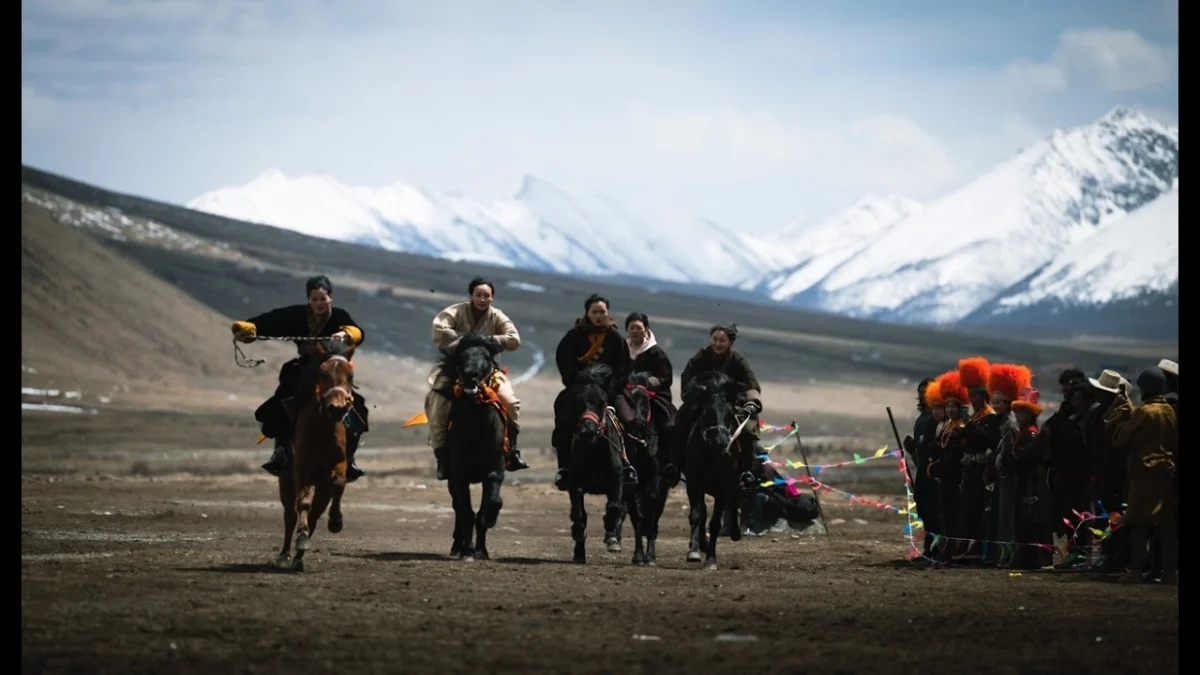
At the heart of "Released" lies the compelling story of Sonam Lhamo, a young woman whose unwavering determination sets her on a collision course with deeply entrenched societal norms. In her small, traditional Tibetan village, women have historically been barred from participating in major horse races, particularly those contested alongside men. These races are not mere sporting events; they are vital cultural ceremonies, expressions of regional pride, and showcases of masculine prowess, shaping the community’s identity for generations. Sonam Lhamo’s audacious decision to enter the competition transcends personal ambition; it becomes a powerful act of defiance against customs that have long dictated the roles and expectations for women. Her journey to secure a place in the race forces her to confront widespread skepticism, the immense pressure exerted by the tightly-knit village community, and the heavy burden of traditional expectations regarding a woman’s designated place and capabilities. Her struggle is a microcosm of the larger societal shifts occurring in many traditional communities worldwide, grappling with evolving gender roles.
Parallel to Sonam Lhamo’s quest for liberation runs the story of Tsering, a young man who embodies a different kind of modernity. Much to the growing exasperation of his father, Dundrop, who also serves as the respected leader of the community, Tsering prefers the roar of his motorcycle to the thunder of hooves. This generational divide is emblematic of the film’s broader exploration of tradition versus innovation. Tsering is also deeply enamored with Sonam Lhamo, visiting her diligently every day at her home. However, their burgeoning romance faces an insurmountable obstacle in Dundrop, who vehemently opposes their union. He views Sonam Lhamo not just as an unsuitable match for his son, but as a young woman who disrespects and undermines the very traditions he is sworn to uphold, making her an unacceptable prospective daughter-in-law. As Sonam Lhamo and Tsering strive to carve out a space for their individual identities and their blossoming relationship within the rigid confines of their community, their aspirations are tragically shattered, introducing a profound element of loss and further challenging the fabric of their lives.
Behind the Lens: Director Khabu’s Vision and the Pursuit of Realism
Director Khabu’s approach to "Released" is defined by an intense focus on realism, a choice that profoundly shapes the film’s aesthetic and emotional impact. His decision to cast local villagers and herders in the majority of the roles, rather than professional actors, imbues the film with an unparalleled sense of authenticity. This unconventional casting choice transforms the film into a vivid ethnographic portrait, where the faces and lived experiences of the community members become integral to the narrative. This emphasis is not merely on showcasing a particular way of life, but on immersing the audience in its texture and rhythm, where horses are not just animals but pivotal figures, deeply intertwined with both the cultural identity and the practical realities of survival on the plateau.
Khabu’s directorial vision extends beyond casting. He meticulously crafted the narrative to reflect the nuances of Tibetan society, ensuring that the conflict between tradition and individual aspiration feels organic and deeply personal. His interviews with the real-life inspiration for Sonam Lhamo were not just for script development but were a process of deep engagement, ensuring that the portrayal was respectful, accurate, and emotionally resonant. This commitment to depicting the truth of the experience, rather than romanticizing or dramatizing it for commercial appeal, is a hallmark of Khabu’s filmmaking style. He navigates the delicate balance between celebrating the rich heritage of his culture and critically examining its more restrictive aspects, offering a nuanced perspective on a community in transition.
The Canvas of Litang: Setting and Cultural Significance
The choice of Litang as the primary filming location is crucial to the authenticity and visual grandeur of "Released." Litang, nestled in the vast expanse of the Kham region, is not just a scenic backdrop but a character in itself. Geographically, it is situated at an elevation of over 4,000 meters (approximately 13,000 feet) in Sichuan province, China, historically part of the larger Tibetan cultural area of Kham. This high-altitude environment presents both stunning vistas and formidable challenges, deeply influencing the local way of life. The region is renowned for its vibrant nomadic culture, its devout Buddhist traditions, and particularly, its legendary horses and horsemanship.
Horses in Litang and throughout the Tibetan plateau are more than beasts of burden or symbols of status; they are extensions of the riders, integral to herding, travel, and cultural festivals. The annual Litang Horse Racing Festival, for instance, is a centuries-old tradition that draws thousands of spectators and participants, celebrating the region’s equestrian heritage with elaborate costumes, daring races, and cultural performances. By highlighting these horse races within the film, Khabu not only captures a visually spectacular aspect of Tibetan culture but also uses it as a powerful metaphor for freedom, competition, and the assertion of identity. The snow-laden landscapes, often captured in wide, sweeping shots from a distance, further amplify the sense of isolation and the formidable natural forces that shape the lives of the villagers. This connection between the harsh, beautiful environment, the robust horse culture, and the resilient human spirit forms the bedrock of the film’s powerful atmosphere.
Crafting the Visuals and Soundscape: Cinematography, Editing, and Music
The technical execution of "Released" plays a pivotal role in its immersive quality. Chen Hong’s cinematography is consistently highlighted as one of the film’s strongest assets, contributing significantly to the appealing amalgam of realism and cinematic beauty. His masterful use of natural light and the vast, untamed landscapes of Litang creates a visual poetry that enhances the narrative. The long shots of horse races, often filmed from a distance, not only convey the scale and excitement of these events but also emphasize the individual’s place within a grander, more powerful natural and cultural landscape. Sequences depicting the stark realities of life and death, such as those involving a dead body or an accident, are handled with a raw, unflinching honesty that reinforces the film’s commitment to realism, carrying the movie’s dramatic weight for the majority of its duration. Chen Hong’s ability to capture both the intimate emotions of the characters and the epic sweep of the Tibetan environment speaks volumes about his skill and sensitivity.
However, the film’s technical prowess is not without its noted areas for refinement. While Cui Jian’s editing generally maintains a pace that mirrors the unhurried rhythm of life on the plateau, it faces criticism regarding certain narrative segments. The latter part of the film, in particular, is suggested to be somewhat prolonged, and a touch of forced sentimentality reportedly creeps into the storytelling as it progresses, leading to a slight deterioration in narrative quality. This suggests a challenge in sustaining the initial dramatic tension and realistic portrayal throughout the entire runtime. Despite these critiques, the execution of the horse racing scenes is universally praised for its excellence and evident difficulty, showcasing the technical department’s exceptional capability in handling complex action sequences.
The film’s soundscape, particularly the almost constant musical score, is another element that draws mixed reactions. While music often serves to enhance emotional resonance and cultural atmosphere, its continuous presence in "Released" is perceived by some as occasionally overwhelming, suggesting that a more sparing and deliberate use could have allowed for moments of quiet reflection and greater impact when the score does emerge. Tibetan music, rich in spiritual and cultural significance, can be incredibly powerful, but its overuse risks diminishing its effect and occasionally overshadowing the natural sounds of the environment and the subtle emotional cues of the performances.
Performances that Resonate: Yangchuk Tso and the Ensemble Cast
The strength of "Released" is significantly bolstered by its performances, particularly that of Yangchuk Tso in the lead role of Sonam Lhamo. She stands out not only for her acting prowess but also for her undeniable charisma, embodying the fierce determination and vulnerability of her character with compelling conviction. Her portrayal anchors the film, making Sonam Lhamo’s struggle against tradition deeply empathetic and relatable. The film’s reliance on non-professional actors from the local community, while contributing to its realism, could pose challenges for consistent performance quality. However, the overall consensus is that the acting, even from the non-professionals, is maintained at a high level, a testament to Khabu’s direction and the natural authenticity brought by the villagers and herders. This ensemble approach creates a tapestry of genuine human experience, where each face tells a story, contributing to the film’s immersive and truthful depiction of life on the Tibetan plateau.
Critical Reception and Thematic Depth: Implications for Tibetan Cinema
"Released" emerges from its premiere as a beautifully shot movie that tackles a significant and timely topic: the enduring tension between ancient traditions and the burgeoning desire for individual freedom, particularly within the context of gender roles in a patriarchal society. The film’s approach skillfully connects this weighty theme with a powerful dramatic core, making it accessible and emotionally engaging for a global audience. Its exploration of Sonam Lhamo’s defiance in the face of deeply ingrained patriarchal structures resonates far beyond the specific cultural context of Tibet, speaking to universal themes of self-determination and the pursuit of equality.
While the film is lauded for its artistic merit and profound subject matter, critical assessments note certain issues that prevent it from achieving true greatness. The aforementioned pacing problems in the latter half, along with instances of forced sentimentality, are cited as minor blemishes in an otherwise strong work. Despite these imperfections, "Released" unequivocally establishes itself as a competent and important cinematic endeavor. Its ability to combine breathtaking visuals with a culturally rich and emotionally resonant narrative positions it as a significant contribution to both Tibetan cinema and broader world cinema.
Broader Impact and Future Outlook
The premiere of "Released" at an international festival like BIFF holds considerable implications for the visibility and understanding of Tibetan culture and storytelling on a global stage. The Bishkek International Film Festival, known for its focus on Central Asian and often underrepresented national cinemas, provides an ideal platform for such a film. By selecting "Released," BIFF not only showcases a compelling piece of filmmaking but also highlights the rich cultural narratives emerging from the Himalayan region. This exposure is crucial for Tibetan filmmakers like Khabu, who often operate within challenging production environments and seek to share their unique perspectives with a wider audience.
The film’s exploration of gender equality within a traditional society is particularly salient in contemporary global discourse. It contributes to a growing body of work that challenges preconceived notions about women’s roles in various cultures, advocating for their right to self-expression and participation in all facets of community life. "Released" serves as a powerful artistic statement on the necessity of balancing cultural preservation with progressive social change. Its focus on the real experiences of ordinary people, amplified by Khabu’s commitment to realism, offers a valuable window into the complexities and beauties of Tibetan life, fostering greater understanding and appreciation. As "Released" continues its festival run and seeks wider distribution, it has the potential to spark important conversations, inspire further cinematic explorations of diverse cultures, and solidify its place as a significant work that bridges cultural divides through the universal language of human experience.