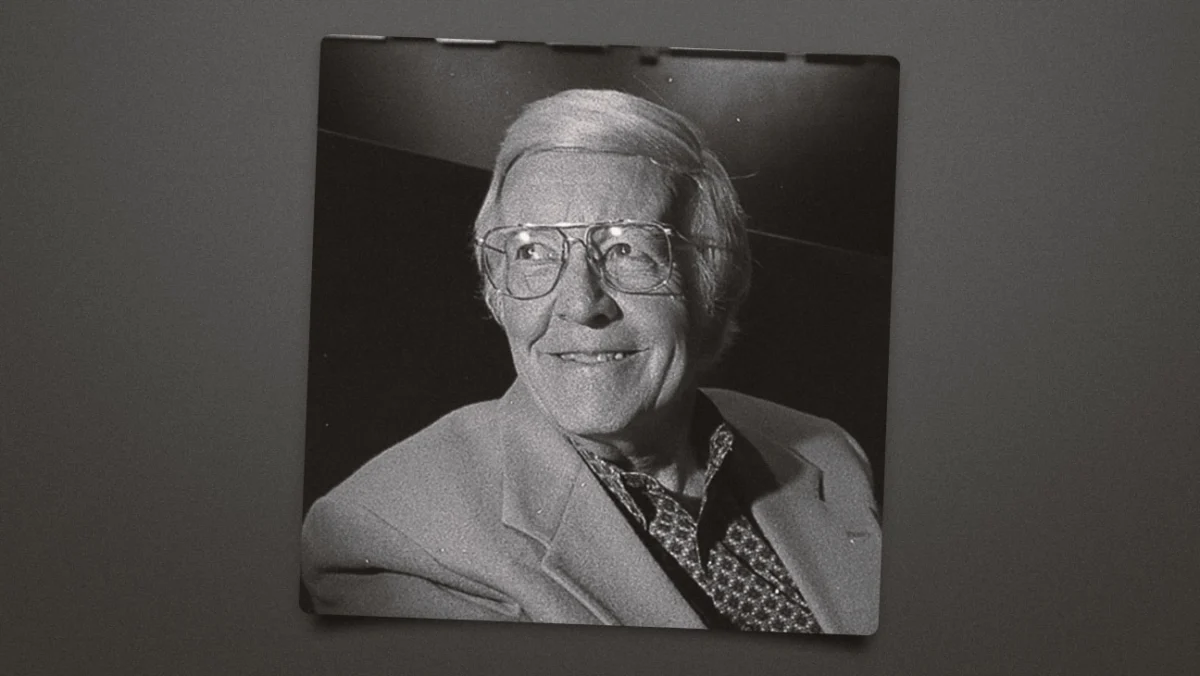
The Walt Disney Company announced the passing of Don Iwerks on Thursday evening, marking the end of an era for a family whose name has been synonymous with Disney innovation for nearly a century. Iwerks, a pivotal figure in the technological advancements that defined Disney’s films and theme parks, passed away at the age of 96, leaving behind a legacy of groundbreaking contributions that continue to shape the entertainment industry.
A statement shared on Disney D23’s Instagram account underscored the profound impact of Iwerks’ work: “It is with great sadness that we report that Disney Legend Don Iwerks has passed away at the age of 96. Iwerks was an innovator whose work brought The Walt Disney Company to new technological heights, aiding in perfecting the sodium vapor process used in 1964’s Academy Award®-winning Mary Poppins, developing the 360-degree Circle-Vision camera used to film America the Beautiful for Disney Parks, and implementing the projection system for the fan-favorite Star Tours attraction, among numerous other advancements. The achievements of Don Iwerks and his family have shaped Disney’s creative ethos and will forever be part of the company’s history.” This tribute highlights the breadth and depth of his technical prowess, which extended from motion picture visual effects to immersive theme park experiences.
A Legacy Forged in Innovation: The Iwerks Family Connection
Born on July 24, 1929, Don Iwerks was born into a lineage deeply intertwined with the genesis of The Walt Disney Company. He was the son of fellow Disney Legend Ub Iwerks, a legendary animator and technician himself, renowned as the co-creator of Mickey Mouse alongside Walt Disney. Ub Iwerks was instrumental in the early days of Disney animation, particularly for his speed and technical skill, animating the first Mickey Mouse cartoons and developing crucial animation camera technologies. This familial connection provided Don with an early exposure to the pioneering spirit of Walt Disney Productions, where innovation was not just encouraged but essential for pushing the boundaries of storytelling.
Don Iwerks officially began his career at Walt Disney Productions in 1950, stepping into the role of a special photographic processes laboratory technician. This initial position laid the groundwork for his future endeavors, immersing him in the intricacies of film and photographic technology. His early career was briefly interrupted when he was drafted into the Korean War, serving his country for two years. Upon his return, however, he promptly rejoined Disney, demonstrating his unwavering commitment to the company and its vision.
Early Career and Feature Film Contributions
In 1953, Iwerks transitioned into a camera technician position, a move that would define much of his subsequent work. His first major feature film project in this capacity was 20,000 Leagues Under the Sea, released in 1954. This seminal live-action adventure film was a significant undertaking for Disney, featuring groundbreaking special effects for its time, including the iconic giant squid sequence and the realistic depiction of Captain Nemo’s submarine, the Nautilus. Working on such a complex production provided Iwerks with invaluable experience in practical effects, advanced cinematography, and the technical challenges of bringing ambitious cinematic visions to life. His involvement in this film demonstrated his early capability to contribute to projects requiring sophisticated technical solutions.
As his career progressed, Iwerks’ leadership and technical acumen led him to assume increasingly responsible roles within the company. He went on to lead the machine shop department, a critical division responsible for fabricating custom equipment and precision components for both film production and theme park development. Following this, he managed the camera service department, ensuring the optimal performance and maintenance of the specialized camera systems used across Disney’s diverse projects. Ultimately, he ascended to lead the technical engineering and manufacturing division, a testament to his comprehensive understanding of the technical infrastructure required for Disney’s creative output. This progression through various technical leadership roles underscored his versatility and deep expertise in the engineering aspects of filmmaking and entertainment technology.
Pioneering Technological Advancements: Defining Disney’s Visual Language
Don Iwerks is perhaps most celebrated for his instrumental role in developing and perfecting several groundbreaking technologies that became synonymous with the Disney experience. His contributions profoundly impacted both the silver screen and the burgeoning world of theme parks.
One of his most significant innovations was the development of the 360-degree Circle-Vision camera system. This revolutionary technology allowed for the capture and projection of immersive, panoramic films, effectively wrapping the audience in the visual experience. The Circle-Vision system debuted with America the Beautiful at Disneyland in 1955, showcasing stunning vistas of the United States on nine screens arranged in a circular theater. The audience stood in the center, completely surrounded by the projected images, creating an unprecedented sense of immersion. This technology was later refined and became a staple in Disney parks worldwide, featuring in attractions like O Canada! and China: Reflections of China at Epcot, and Wonders of China at EPCOT Center (now Epcot). The technical challenges involved in synchronizing multiple cameras during filming and multiple projectors during exhibition were immense, requiring meticulous engineering and precise calibration, all spearheaded by Iwerks and his teams. Circle-Vision 360 not only entertained but also set a new standard for immersive storytelling, influencing the development of future large-format and virtual reality experiences. It demonstrated Disney’s commitment to pushing technological boundaries to enhance guest experiences.
In collaboration with his father, Ub Iwerks, Don also played a crucial role in perfecting the sodium vapor process, often referred to as the "yellow screen" technique. This advanced compositing method was a significant leap forward from earlier blue screen or matte painting techniques, offering unparalleled precision in combining live-action footage with animated elements. The process involved filming actors in front of a screen illuminated by sodium vapor lamps, which emit light in a very narrow yellow spectrum. A special prism camera then separated this yellow light from the rest of the visible spectrum, allowing for the creation of an extremely clean matte that could be used to seamlessly integrate live actors into animated backgrounds. This innovation was famously and extensively utilized in the 1964 musical fantasy film Mary Poppins, which garnered five Academy Awards, including one for Best Visual Effects. The iconic sequences where live-action characters interact with animated penguins and other cartoon figures would not have been possible with such fluidity and believability without the sodium vapor process. It was a technical marvel that allowed Disney to achieve a level of visual integration previously thought impossible, setting a benchmark for future visual effects work in Hollywood.
Another hallmark of Iwerks’ career was his implementation of the projection system for the highly anticipated Star Tours attraction. Debuting in 1987 at Disneyland, Star Tours was a groundbreaking motion simulator ride that transported guests into the Star Wars universe. The attraction combined sophisticated hydraulic motion bases with a seamless film projection system to create the illusion of a thrilling space journey. Iwerks’ expertise was critical in developing and refining the projection technology that ensured the film segments were perfectly synchronized with the simulator’s movements, providing a convincing and exhilarating experience. This intricate interplay of film and physical motion was revolutionary for its time, setting a new standard for theme park attractions and solidifying Disney’s reputation as a leader in immersive entertainment technology. The success of Star Tours paved the way for numerous other simulator rides and continues to influence attraction design globally.
Beyond Disney: Entrepreneurship and Continued Innovation
After dedicating 35 years to The Walt Disney Company, Don Iwerks embarked on a new chapter, founding Iwerks Entertainment Inc. in 1986. This venture allowed him to continue his passion for innovative entertainment technology on a broader scale. Iwerks Entertainment specialized in the development and production of large-format films, simulation rides, and virtual reality attractions for theme parks, museums, and entertainment venues worldwide. The company became known for its cutting-edge projection systems and immersive experiences, further cementing Don Iwerks’ reputation as a visionary in the field. His entrepreneurial spirit showcased his desire to not only develop technology but also to bring it to a wider audience, shaping the future of out-of-home entertainment. The company’s innovative approach and success eventually led to its acquisition by SimEx Inc. in 2001, integrating Iwerks’ technological prowess into a larger global entertainment solutions provider.
Accolades and Enduring Recognition
Don Iwerks’ unparalleled contributions to motion picture technology and entertainment were recognized with some of the industry’s most prestigious honors. In 1997, he received the Gordon E. Sawyer Award from the Academy of Motion Picture Arts and Sciences’ Board of Governors. This special Oscar is presented to an individual whose technological contributions have brought credit to the industry, signifying a lifetime of outstanding achievement in motion picture science and technology. It is a rare and distinguished honor, underscoring the profound and lasting impact of his work on filmmaking.
Further cementing his legendary status, Iwerks was named a Disney Legend in 2009. The Disney Legends award is a program that recognizes individuals who have made extraordinary and lasting contributions to the Walt Disney Company. This honor placed him among a select group of individuals whose creativity, innovation, and dedication have fundamentally shaped the company’s rich history and future. The induction ceremony celebrated his enduring legacy and the indelible mark he left on Disney’s creative and technological landscape, echoing the achievements of his pioneering father.
Tributes and Lasting Impact
The news of Don Iwerks’ passing prompted heartfelt tributes from across The Walt Disney Company. Disney CEO Josh D’Amaro issued a statement acknowledging Iwerks’ unique blend of talent and spirit: “Don embodied that rare combination of heart, ingenuity and passion that has always defined Disney. Through his innovative contributions to some of our most iconic films and attractions, he helped create experiences that have delighted generations of fans around the world. All of us at The Walt Disney Company will miss him deeply, and we send our most heartfelt condolences to his family, whose enduring connection to Disney has helped shape its legacy for over a century.” D’Amaro’s words emphasize not only Iwerks’ technical genius but also the human element and dedication he brought to his work, qualities that resonate deeply with Disney’s core values.
The Iwerks family’s connection to Disney is indeed a remarkable narrative of multi-generational impact. From Ub Iwerks’ foundational work in animation and character creation to Don Iwerks’ advancements in film effects and immersive attractions, their collective contributions have been integral to Disney’s evolution as a global entertainment powerhouse. Their innovative spirit helped establish Disney’s reputation for pushing technological boundaries in service of storytelling and audience engagement.
Don Iwerks’ work continues to influence contemporary entertainment. The principles behind Circle-Vision 360 can be seen in today’s multi-screen presentations, virtual reality environments, and dome theaters, which seek to create fully immersive experiences. The precision compositing techniques he helped perfect laid groundwork for modern green screen and digital effects, enabling filmmakers to blend disparate elements into seamless cinematic realities. Furthermore, the sophisticated projection and motion synchronization he engineered for attractions like Star Tours set the stage for the advanced simulation rides and interactive experiences found in theme parks around the world today. His legacy is not just in the specific technologies he developed but in the mindset of relentless innovation and the pursuit of magical, believable experiences for audiences.
Don Iwerks’ passing marks the end of an extraordinary life dedicated to advancing the art and science of entertainment. His ingenuity, passion, and tireless pursuit of technological excellence not only enriched The Walt Disney Company but also left an indelible mark on the broader landscape of film and theme park industries. His contributions will continue to inspire new generations of innovators and delight countless audiences for decades to come, ensuring that the magic he helped create lives on.