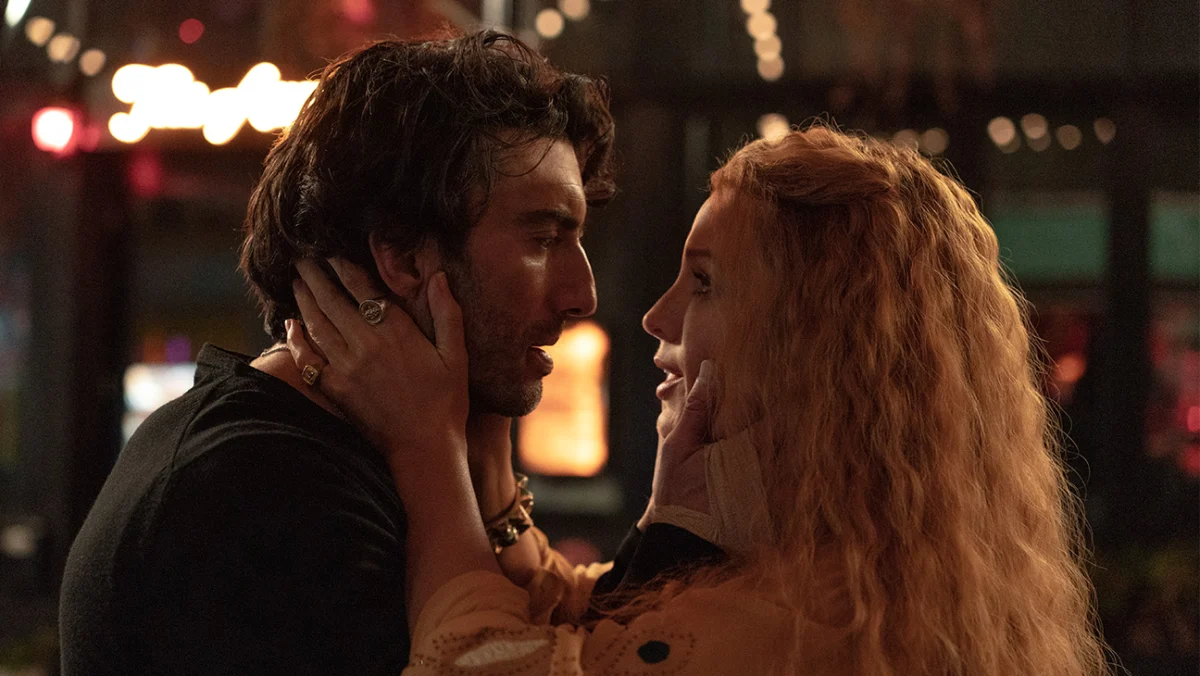
U.S. District Judge Lewis Liman ruled on Friday that while actress and producer Blake Lively is entitled to have her legal fees reimbursed by Justin Baldoni, she cannot claim compensatory or punitive damages related to his defamation claims. The decision marks the final legal chapter in a contentious and highly publicized dispute that originated on the set of the film It Ends With Us, a production that became as famous for its behind-the-scenes friction as for its box-office performance. The ruling centers on the application of a specific California statute designed to protect victims of sexual harassment from retaliatory litigation, a law the court found provides a path for fee recovery but does not bypass federal procedural standards for broader financial awards.
The court’s order follows a settlement reached between the parties last month, which effectively ended a $400 million lawsuit Baldoni had filed against Lively. As part of that agreement, Baldoni waived his right to appeal a previous court order from the prior year that had dismissed his claims. However, the settlement intentionally left a narrow window for Lively to pursue the recovery of her legal costs and seek additional damages under California Civil Code Section 47.1. While Judge Liman validated Lively’s status as a prevailing defendant entitled to fees, he drew a firm line regarding the scope of the relief available under that specific statute.
The Legal Threshold of California Section 47.1
The crux of the Friday ruling rested on the interpretation of California’s Section 47.1, a law that went into effect at the start of 2024. The statute was crafted to shield individuals who report sexual harassment or assault from being silenced by "strategic lawsuits against public participation" (SLAPP) or retaliatory defamation claims. To qualify for protection under this law, a defendant must demonstrate that their original report of misconduct was made in good faith and without "actual malice"—meaning they did not knowingly make false statements or act with reckless disregard for the truth.
In his written opinion, Judge Liman clarified that the statute serves as a specific shield rather than a general sword for litigation. He noted that the law "does not create an end run around the entire set of carefully crafted federal procedural rules designed to protect the rights of the parties." Instead, the judge characterized it as a "narrow exception" to standard litigation processes. By denying Lively’s bid for treble and punitive damages, the court affirmed that such compensatory measures do not fall within the specific carve-out provided by the statute for this type of procedural motion.
The court did, however, find that Lively acted "without malice" when she initially filed her sexual misconduct complaints against Baldoni. Judge Liman emphasized that mere allegations from the opposing side are insufficient to prove malice. "That determination requires some evidence," the judge wrote, noting that Baldoni’s team failed to provide the necessary proof to suggest Lively’s claims were fabricated or intended to cause harm outside the pursuit of justice.
Chronology of the Dispute: From Set to Settlement
The rift between Blake Lively and Justin Baldoni began during the production of the film adaptation of Colleen Hoover’s best-selling novel, It Ends With Us. Baldoni, who directed the film and starred as Ryle Kincaid, and Lively, who starred as Lily Bloom and served as an executive producer, reportedly clashed over the creative direction and post-production editing of the project.
Early 2023: Production Friction
Rumors of a "creative divide" began to circulate within the industry during principal photography. Sources close to the production suggested that two different cuts of the film existed: one championed by Baldoni and another commissioned by Lively. The tension reportedly escalated during the editing process, leading to a breakdown in communication between the two leads.
Mid-2023: Allegations and Retaliation
As the film moved toward its release, reports surfaced regarding Lively’s discomfort on set. Allegations emerged involving an incident during a scene where Baldoni allegedly made Lively feel uncomfortable regarding her postpartum body, as well as concerns over a lingering kiss scene. In response to these internal complaints, Baldoni and his production company, Wayfarer Studios, eventually initiated legal maneuvers that Lively’s team characterized as a "smear campaign" and a "retaliatory lawsuit."
Late 2023: The $400 Million Lawsuit
Baldoni filed a massive $400 million lawsuit against Lively, alleging defamation and interference with his professional reputation. He claimed that Lively had orchestrated a coordinated effort to tarnish his image and diminish his role in the film’s success. Lively’s legal team moved to dismiss the suit, arguing it was a classic example of a powerful figure using the legal system to intimidate a subordinate who had reported misconduct.
January 2024: New Legislation Takes Effect
The implementation of California’s Section 47.1 provided Lively’s team with a new legal tool. They argued that because Baldoni’s lawsuit was a direct response to her reports of on-set harassment, she was entitled to the protections of the new law.
Late 2024: Dismissal and Settlement
A federal court dismissed Baldoni’s $400 million suit in late 2023, citing a lack of merit. Facing the prospect of a high-profile trial that would delve into the specifics of the on-set allegations, the parties reached a settlement last month. The deal saw Baldoni walk away from his appeal rights, while Lively maintained her right to seek legal fees.
The Financial Implications of the Ruling
While the court denied the request for treble damages—which could have reached into the hundreds of millions based on the scale of the original lawsuit—the legal fees alone are expected to be substantial. Lively was represented by a "pedigree" legal team featuring Michael Gottlieb and Esra Hudson, both heavyweights in the field of entertainment litigation and high-stakes defamation defense.
The court has now moved into the assessment phase, where Lively’s attorneys will submit a comprehensive breakdown of their hourly rates and the total hours logged over the course of the multi-year dispute. Given the complexity of the case, the international profile of the parties involved, and the sheer volume of motions filed, industry analysts estimate the bill could reach several million dollars.
This financial burden now shifts to Baldoni and Wayfarer Studios. For Baldoni, the ruling is a double-edged sword; while he avoided a massive damages payout, he is now legally obligated to subsidize the very defense team that defeated his claims.
Official Responses and Statements
Following the ruling, both legal teams issued statements that reflected the deeply polarized nature of the case.
Lively’s legal team, led by Gottlieb and Hudson, hailed the decision as a victory for the principle of the law. "Today’s ruling makes it clear that Ms. Lively brought her claims in good faith, that there was no evidence she acted with malice, and that she is the prevailing defendant," the statement read. They further emphasized that the case serves as a precedent for others in the industry. "Ms. Lively is gratified to show how the statute creates a path for survivors to hold accountable those who weaponize online attacks and retaliatory lawsuits to intimidate and silence survivors."
In contrast, Bryan Freedman, representing Justin Baldoni, framed the outcome as a successful defense against a "smear campaign." Freedman pointed out that the majority of Lively’s original claims had been dismissed and that she failed to secure the hundreds of millions in damages she had initially sought. "We fought and won against a coordinated effort built on allegations of sexual harassment, retaliation, and a smear campaign that never happened," Freedman said. "Ms. Lively demanded over 300 million in fees and damages, had 10 of her 13 claims dismissed, she then chose to settle and received nothing."
Freedman’s statement remained defiant, insisting that "innocent people had their reputations unfairly tarnished" and that the court’s denial of damages proved Lively’s mission was "fruitless."
Broader Impact on Hollywood and Employment Law
The Lively-Baldoni case is being closely watched by legal experts and Hollywood executives alike. It represents one of the first major tests of California’s Section 47.1 in the context of high-budget film production. The ruling suggests that while the law provides a robust mechanism for recovering the costs of defending oneself against retaliatory suits, it is not a "shortcut" to obtaining massive damage awards without following traditional litigation paths, such as counterclaims or separate tort actions.
For the entertainment industry, the case highlights the increasing legal risks associated with on-set disputes. In the "Me Too" era, the transition from creative differences to legal allegations of harassment is swifter and carries more significant financial and reputational consequences. The court’s validation of Lively’s "good faith" reporting provides a level of reassurance to performers who might fear that reporting misconduct will lead to ruinous legal battles.
Furthermore, the ruling leaves open the possibility for Lively to seek additional damages through a separate lawsuit or a counterclaim, should she choose to continue the legal offensive. While the current case is largely resolved, the "reservation of rights" mentioned in the settlement and the judge’s commentary suggest that the door is not entirely closed on future litigation.
As the court begins the process of auditing the legal bills, the industry remains focused on how this precedent will affect future contracts and the handling of internal complaints at major studios. For now, the "It Ends With Us" saga concludes with a legal fee award that serves as both a financial penalty for Baldoni and a symbolic vindication for Lively, even as both sides claim a version of victory in the court of public opinion.