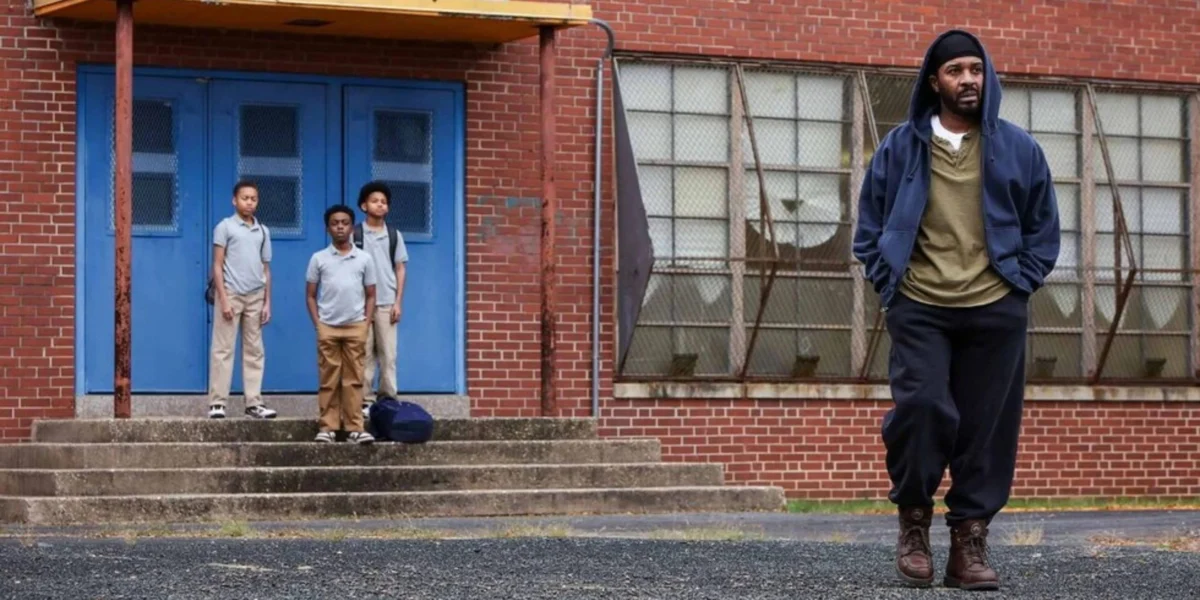
Sheldon Candis’s narrative feature They Fight explores the intersection of post-incarceration rehabilitation and the transformative power of amateur athletics within the socio-economic landscape of Washington, D.C. The film, which runs 93 minutes, stars André Holland as Walter Manigan, a man attempting to navigate the complexities of reentry into society while mentoring a group of aspiring adolescent boxers. Based on the 2018 documentary of the same name, the production seeks to blend the grit of urban drama with the traditional beats of an inspirational sports movie. The narrative centers on Manigan’s struggle to reconcile his past mistakes with his current aspirations, primarily his desire to be a consistent presence in the life of his young son and his commitment to guiding the youth at a local community center.
Narrative Overview and Chronological Development
The story commences with the release of Walter Manigan from prison after serving three and a half years of a five-year sentence. His immediate priority is the restoration of his familial ties, specifically with his ex-partner, Ketta (played by Samira Wiley), and their young son. The path to redemption is depicted as an uphill struggle, characterized by the systemic and personal hurdles common to the formerly incarcerated. Manigan’s initial interactions in his Southeast D.C. neighborhood highlight the precariousness of his situation as he searches for employment and stable housing, often facing the skepticism of those who knew him prior to his conviction.
The narrative pivot occurs outside a local community center, where Manigan witnesses an incident involving a young boy named Peanut (Anthony B. Jenkins). Peanut is portrayed as a vulnerable youth, struggling with self-assertion. Drawing on his own history as a former boxer, Manigan intervenes, advising the boy on the necessity of self-defense. This encounter leads Peanut to seek formal boxing instruction at the center, bringing Manigan into the orbit of Coach Slim (Wendell Pierce). Slim, an experienced figure in the local boxing scene, recognizes Manigan’s latent talent and his underlying need for purpose. In a gesture of community solidarity, Slim offers Manigan a position helping at the gym and a place to sleep in his office, provided the center remains operational.
As the timeline progresses, the film follows the dual trajectories of Manigan’s personal growth and the athletic development of his trainees. The coaching staff focuses on a "ragtag" team of adolescents, including Peanut, Quincey (Toussaint Francois Battiste), and Twin (Tory Jacqui Malone), as they prepare for a national championship. This period is marked by intense training sequences and participation in various tournaments, serving as a backdrop for Manigan’s internal battle with his "demons," including his efforts to maintain sobriety after three years of being clean.
Production Origins and the 2018 Documentary
The narrative feature is a dramatized adaptation of the 2018 documentary They Fight, which was directed by Andrew Renzi and executive produced by Common and Corbin Bernsen. The original documentary followed the real-life journey of the "Lyfe Style" boxing program in Washington, D.C. It chronicled the lives of young boxers and their coach, Walt Manigan, as they navigated the challenges of poverty and violence while pursuing success in the ring.
By transitioning this story into a scripted drama, director and writer Sheldon Candis—known for his work on the 2012 film LUV—aimed to deepen the character studies of its protagonists. However, the transition from documentary to narrative film introduces specific creative choices, such as the dramatization of Manigan’s past and the inclusion of a "third-act reveal" intended to provide emotional weight to his character arc. The adaptation retains the core message of the original source material: the role of mentorship in providing a constructive outlet for youth in underserved communities.
Performance Analysis: Holland and the Ensemble Cast
André Holland’s portrayal of Walter Manigan is central to the film’s emotional resonance. Holland, recognized for his work in Moonlight and The Knick, brings a subdued intensity to the role of a man haunted by his history. Critics have noted that Holland excels in the film’s quieter moments, particularly during the first act where his character must navigate the humiliation of rebuilding a life from scratch. His performance captures the hesitance of a man who feels he may no longer deserve the kindness extended to him.
Wendell Pierce provides a grounded performance as Coach Slim, a character who serves as the moral anchor for both the gym and Manigan. While the role follows several established tropes of the "grizzled mentor," Pierce’s presence adds a layer of gravitas to the production. Samira Wiley’s performance as Ketta offers a necessary counterpoint to Manigan’s journey, representing the realistic caution and weariness of those left behind during a loved one’s incarceration.
The younger cast members, particularly Anthony B. Jenkins and Toussaint Francois Battiste, are credited with providing the film’s heart. Their performances highlight the vulnerability and resilience of youth in Southeast D.C., making the stakes of the boxing tournaments feel personal rather than merely procedural. A notable cameo by Andre Royo as Peanut’s absent father adds a brief but impactful exploration of the themes of masculinity and parental responsibility.
Socio-Economic Context of Southeast Washington, D.C.
The setting of the film is not merely a backdrop but a critical component of the narrative. Southeast D.C., particularly the areas surrounding Ward 8, has historically faced significant socio-economic challenges, including high rates of poverty and limited access to youth recreational programs. In this context, the community center and boxing gym function as "third places"—essential social environments separate from the home and the street that provide safety, discipline, and a sense of belonging.
The film touches upon the fragility of these institutions. The threat of the center’s doors closing looms over the narrative, reflecting a broader reality for many urban community programs that rely on inconsistent funding and local volunteers. By focusing on boxing, the film taps into D.C.’s rich pugilistic history, which has produced numerous world champions and served as a vehicle for social mobility for decades.
Structural Challenges and the 93-Minute Constraint
A significant point of analysis for They Fight is its 93-minute runtime. Observers have noted that the film attempts to balance two distinct narrative arcs: a gritty drama about a man’s post-prison redemption and an inspirational sports movie about youth empowerment. The brevity of the film has been cited as a limiting factor, as it necessitates the use of narrative shortcuts and montages to cover extensive ground.
The script’s reliance on sports movie clichés during the middle act—specifically during training sequences—has been identified as a weakness. While these tropes are designed to elicit an emotional response, they can sometimes feel at odds with the nuanced character work established in the film’s opening. Furthermore, the decision to withhold specific details of Manigan’s past until late in the film arguably prevents a deeper exploration of his character in the earlier stages of the story. Analysts suggest that a longer runtime might have allowed the thematic elements regarding masculinity and systemic struggle more room to breathe.
The Intersection of Sport and Rehabilitation
Thematically, They Fight explores how the discipline of boxing serves as a metaphor for the discipline required for life after prison. For Manigan, the ring is a space where he can regain a sense of control and agency. For the boys he trains, it is a classroom where they learn to "fight back" against the circumstances of their environment in a controlled and constructive manner.
The film’s exploration of masculinity is particularly relevant. It posits that true strength is found not in aggression, but in the ability to be a role model and to take responsibility for one’s actions. This is reflected in the quiet, introspective moments where Manigan grapples with his fitness to lead these young men while still unsure of his own moral standing.
Broader Impact and Implications
They Fight contributes to a growing subgenre of cinema that focuses on the realities of the American carceral system and the difficulties of reentry. By focusing on a character who is not a "hero" in the traditional sense, but a flawed individual trying to do better, the film offers a humanizing look at a demographic often marginalized in mainstream media.
From a community perspective, the film underscores the vital importance of mentorship. The relationship between Manigan and Peanut illustrates how a single positive influence can alter the trajectory of a young person’s life. While the film may suffer from structural pacing issues, its commitment to portraying the "pure kindness of others" and the resilience of the human spirit remains its most significant contribution.
In conclusion, They Fight serves as both a character study and a social commentary. It highlights the systemic challenges facing residents of Southeast D.C. while celebrating the local heroes who work to provide hope through sport. Despite its limitations in runtime and occasional reliance on genre conventions, the film remains a poignant reminder of the ongoing struggle for redemption and the power of community-based intervention.