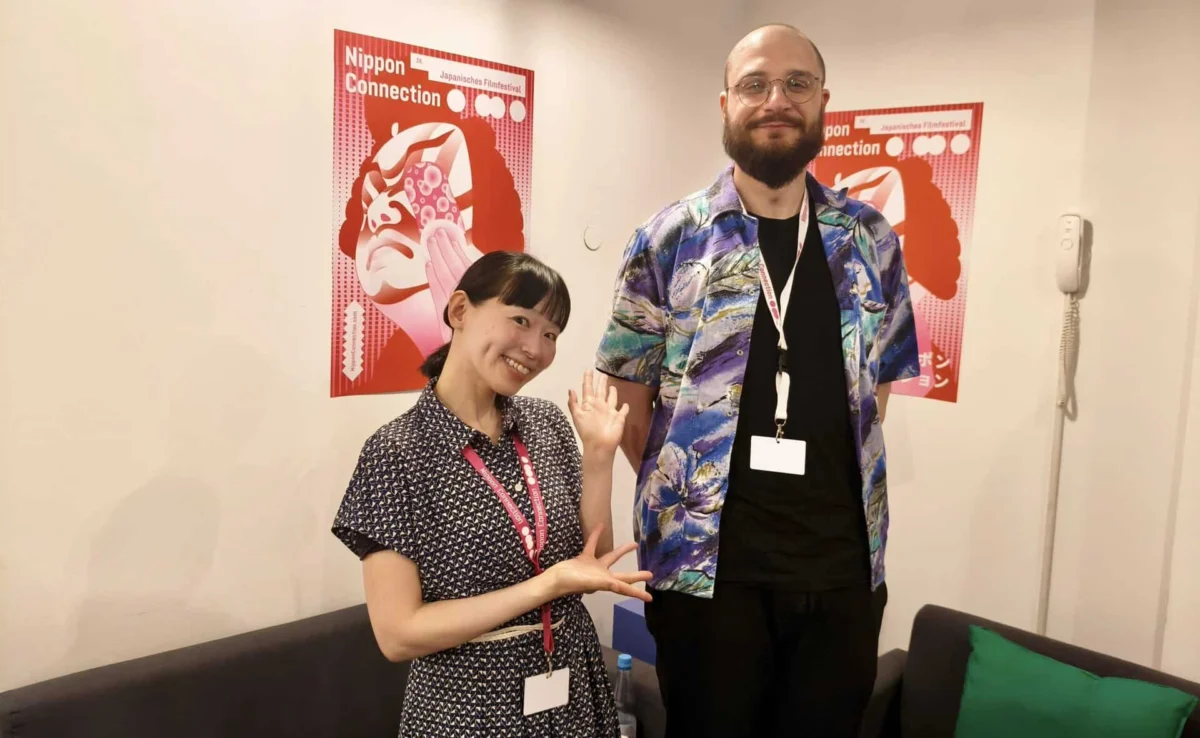
Japanese actress Ami Chong, recognized for her compelling performances in films such as "Dawning on Us" (2021) and the upcoming "The Scary House" (2025), recently engaged in a candid interview at the Nippon Connection film festival. The occasion marked the international premiere of her latest collaboration with director Kenji Yamauchi, "A Unique Country in Asia." Chong delved into a range of pertinent topics, offering insights into her enduring professional relationship with Yamauchi, the nuanced attitudes towards nudity in Japanese society, the indispensable role of politics in art, and her personal perspectives on historical education and global humanitarian crises. Her remarks underscored a commitment to leveraging her platform for social commentary and fostering dialogue on issues often sidestepped in mainstream Japanese discourse.
A Decades-Long Creative Partnership with Kenji Yamauchi
At the heart of "A Unique Country in Asia" lies the potent creative synergy between Ami Chong and director Kenji Yamauchi, a collaboration that spans nearly two decades. Chong revealed that their professional relationship began almost immediately after she embarked on her acting career, fostering a bond built on deep trust and mutual respect. "I met him as soon as I started acting, so we have known each other for 19 years," Chong stated, emphasizing the strength of their connection. "Our relationship is strong and we trust each other. I also love his work, of course." This enduring partnership is a testament to Yamauchi’s distinctive directorial vision and Chong’s ability to interpret and embody his complex characters. Their shared history likely contributes to the nuanced performances and challenging themes that characterize their joint projects, allowing for an artistic shorthand and a willingness to explore uncomfortable truths. The director, known for his often provocative and socially critical films, finds a willing and capable collaborator in Chong, who consistently embraces roles that demand both vulnerability and intellectual engagement.
Nippon Connection: A Gateway for Japanese Cinema
The international premiere of "A Unique Country in Asia" at Nippon Connection provided a significant platform for the film to reach a global audience. Nippon Connection, one of the largest festivals dedicated to Japanese cinema worldwide, annually showcases a diverse array of films, from independent productions to major studio releases. Held in Frankfurt, Germany, the festival plays a crucial role in promoting Japanese culture and cinematic artistry beyond its national borders. For a film like "A Unique Country in Asia," which tackles sensitive societal and political issues, a premiere at such a prestigious international event offers invaluable exposure and facilitates cross-cultural dialogue. The festival’s reputation for championing diverse narratives aligns well with the film’s thematic depth, providing an ideal environment for its critical reception and fostering discussions among international film critics, industry professionals, and cinephiles. The selection for an international premiere signifies the film’s perceived artistic merit and its potential to resonate with audiences globally, particularly given the universal nature of some of the topics it addresses.
Navigating Nudity and Societal Conservatism in Japan
One of the most striking elements of "A Unique Country in Asia," as highlighted by Ami Chong, is its inclusion of significant nudity, a choice that invariably sparks public discussion in Japan. Chong candidly addressed the prevailing conservative attitudes within Japanese society regarding such content. "I think Japanese society is still quite conservative when it comes to nudity," she observed. She noted a common knee-jerk reaction, where "many people react negatively as soon as they hear it contains nude scenes, even without watching it." This immediate dismissal underscores a cultural reticence that often prioritizes decorum over artistic expression, particularly when the human body is depicted.
Chong further elaborated on a distinct gender disparity in audience reactions to nudity, a phenomenon she believes reflects deeper societal biases. "And yes, there is a clear difference in how audiences react to male and female nudity," she explained. "When a male actor appears naked, people often laugh. When I appear in a nude scene, the reaction is usually silent shock." This observation is critical, suggesting that while male nudity might be seen as comical or less threatening, female nudity is often met with discomfort, moral judgment, or a sense of transgression. This differential treatment points to entrenched gender norms and expectations surrounding the female body in public and artistic representations. Historically, Japanese cinema has a complex relationship with nudity, particularly through genres like pink films (softcore pornography with artistic aspirations) which emerged in the 1960s. While these films pushed boundaries, their mainstream acceptance remained limited, and the general public’s comfort level with overt nudity in non-erotic, artistic contexts has progressed slowly.
Chong interprets director Kenji Yamauchi’s persistent inclusion of nudity in his works as a deliberate artistic strategy, serving as "a form of ironic social commentary." By repeatedly challenging these conservative sensibilities, Yamauchi implicitly critiques the very societal norms that dictate such reactions. His films, through their use of nudity, provoke audiences to confront their own biases and the often-unspoken rules governing public and private spheres. This artistic choice transforms what might be seen as controversial content into a powerful tool for social critique, forcing viewers to engage with the material on a deeper, analytical level rather than merely reacting on an emotional or moral one. It suggests that the nudity is not gratuitous but integral to the film’s message, designed to expose the hypocrisies or double standards within Japanese society’s perception of the human form.
The Indivisible Link: Art and Politics
The interview ventured into the contentious debate surrounding the intersection of art and politics, a theme directly referenced by Chong’s character in "A Unique Country in Asia" who states, "I don’t really want to get into economics or politics." Ami Chong, however, unequivocally rejects this separation, particularly within the context of Japanese society. She noted that in Japan, "films are often separated from politics. It is even unusual to be asked a question like this!" This observation highlights a prevalent cultural tendency to compartmentalize artistic expression from political discourse, perhaps stemming from a desire to maintain social harmony or avoid direct confrontation with potentially divisive issues. Many within the Japanese public, Chong suggests, "want movies to not have political messages."
However, Chong’s personal conviction stands in stark contrast to this sentiment. "Personally, I think that approach is wrong," she asserted. For her, "Art and politics are connected, and I think it is important to tackle social issues while creating something." This stance positions Chong among a growing number of artists globally who view their work as a vital platform for social commentary and activism. In many democratic societies, art has historically served as a mirror to society, reflecting its triumphs and failures, and often challenging the status quo. From protest songs to politically charged theatre, the arts have frequently been at the forefront of social movements. In Japan, while there is a rich tradition of socially conscious filmmaking, overt political messaging in popular culture can sometimes be met with resistance, making Chong’s assertion particularly significant.
The implications of an artist openly advocating for the integration of politics and art are multifaceted. It can inspire audiences to think critically about the world around them, but it can also attract criticism from those who believe art should remain apolitical. Chong’s perspective suggests a belief in the transformative power of art—its capacity not only to entertain but also to educate, provoke thought, and catalyze change. By consciously intertwining social issues with narrative and character development, artists like Chong and Yamauchi contribute to a broader public discourse, challenging viewers to consider their own roles and responsibilities within their communities and the world at large. Their work becomes a form of soft power, influencing opinions and potentially shaping societal values over time.
Reflecting on Shinzo Abe’s Legacy and Historical Education
The film also touches upon Japan’s political landscape, specifically referencing the legacy of former Prime Minister Shinzo Abe. Chong’s character expresses a sentiment that "since Abe’s death things didn’t get better." When asked about her preparation for the role, Chong revealed that the character was partly based on herself and conversations with Kenji Yamauchi, minimizing the need for extensive research into Abe’s policies directly. This approach suggests that the character’s perspective on Abe is an organic reflection of contemporary Japanese sentiment rather than a scholarly critique.
Chong’s most poignant remarks on this topic centered on the broader issue of historical education in Japan. She expressed surprise that Abe’s death, a profoundly impactful event in recent Japanese history, "didn’t lead to a discussion about Japan’s history and politics." This observation points to a perceived reluctance within Japanese society to engage in deep, critical introspection regarding national narratives. To foster a "more balanced perspective," Chong advocates for changes in education, specifically urging a more comprehensive approach to Japan’s wartime history. "Japanese schools focus heavily on Japan’s own suffering during and after the war, but much less attention is given to what happened in other Asian countries," she stated.
This critique resonates with long-standing international debates, particularly with Japan’s neighbors like South Korea and China, who often accuse Japan of downplaying or omitting its wartime aggressions and atrocities in its historical textbooks. For instance, discussions surrounding comfort women, the Nanjing Massacre, and forced labor have been continuous points of contention. While Japan has issued apologies, the perception in neighboring countries is that these apologies are often diluted or contradicted by official narratives and textbook content. Chong’s call for educational reform implies a desire for a more holistic historical understanding that acknowledges the suffering inflicted by Japan, not just the suffering experienced by Japan. This approach, she believes, is crucial because "many people grow up without a full understanding of history," leading to potential misunderstandings and hindering reconciliation with other Asian nations. A more balanced historical education could foster greater empathy, promote regional stability, and equip younger generations with a nuanced understanding of their nation’s past.
Global Crises and Personal Activism: The Gaza Conflict
"A Unique Country in Asia" also courageously addresses current global humanitarian crises, with Chong’s character mentioning "the genocide in Gaza, children and civilians getting killed." This inclusion highlights the film’s commitment to reflecting contemporary global realities. Chong explained that her character, being "very thoughtful," constantly processes political and world events, balancing these concerns with her immediate life within the film’s narrative.
Beyond her character, Ami Chong revealed a profound personal commitment to activism, particularly concerning the Israel-Gaza conflict. Her interest in the topic dates back to her high school years, during which she focused on charity work and education. However, the escalation of events in October 2023 marked a turning point in her engagement. "After the events of October 2023, I felt that it was no longer enough," Chong disclosed. "Since then, I have become much more active in my support and I take part in demonstrations every week." This personal transformation from charitable involvement to direct political activism underscores the profound impact of recent global events on individuals, particularly those with a pre-existing awareness of complex geopolitical issues.
Chong’s public declaration of her weekly participation in demonstrations is significant in a society where public figures often maintain a more reserved stance on contentious international politics. It signifies a growing willingness among some Japanese artists and public figures to use their visibility to advocate for causes they deeply believe in, even if it entails potential professional risks or public scrutiny. Her activism aligns with a broader global movement of artists, academics, and citizens who are increasingly vocal about humanitarian crises, using their platforms to raise awareness and demand action from governments and international bodies. This move from passive observation or traditional charity to active protest reflects a heightened sense of urgency and moral imperative, demonstrating her conviction that silence is not an option in the face of widespread suffering.
Hopes for Japan’s Future: Dialogue and Progressive Ideas
The film’s title, echoed by one of its characters, "I hope it becomes a small unique country in Asia," serves as a poignant reflection on Japan’s identity and future aspirations. Ami Chong elaborated on her personal hopes for her nation, advocating for a significant shift in its political and social landscape. "I would like to see more influence from progressive and left-leaning ideas," she articulated. This desire suggests a yearning for a departure from the long-dominant conservative political currents in Japan, which have largely shaped its post-war trajectory. Progressive ideas often encompass social liberalism, environmental protection, gender equality, and a more robust welfare state, areas where Japan has faced criticism for lagging behind some other developed nations.
Crucially, Chong emphasized the importance of fostering an environment where diverse political viewpoints can coexist and engage in constructive exchange. "More importantly, I hope people with different political views can have open discussions and exchange opinions in a healthy way," she stated. This call for enhanced dialogue and compromise is particularly pertinent in a political climate that can sometimes appear polarized or characterized by a lack of genuine cross-party engagement. In many societies, the ability of opposing factions to find common ground and engage in respectful debate is seen as fundamental to democratic health and progress. Chong believes that "compromise and dialogue are essential for a better future," suggesting that a more inclusive and less rigid approach to political discourse could unlock solutions to some of Japan’s most pressing challenges.
Her vision for Japan is not one of radical upheaval but of gradual, thoughtful evolution, driven by a commitment to open communication and a willingness to consider alternative perspectives. By advocating for greater influence of progressive ideas and robust public dialogue, Ami Chong positions herself not just as an actress but as a thoughtful citizen deeply invested in the democratic health and future trajectory of her country. Her hopes for Japan reflect a broader aspiration for a society that is both unique in its cultural identity and universally committed to principles of openness, progress, and mutual understanding.