Chie Shinohara’s acclaimed historical fiction manga, Red River, offers a compelling narrative that, while taking creative liberties, anchors itself firmly in the rich tapestry of the ancient Hittite Empire. The series masterfully blends time-travel fantasy with meticulously researched historical elements, creating a world that, despite its fantastical premise, resonates with a striking degree of authenticity. Shinohara’s dedication to historical fidelity is evident in her portrayal of key figures and events, even as she artfully navigates the demands of a captivating narrative. While minor adjustments are made to accommodate the story’s time-traveling protagonist, Yuri Suzuki, the core of the Hittite world and its tumultuous political landscape are rendered with impressive accuracy, drawing from established archaeological and textual evidence.
Historical Anchors and Narrative Liberties
The historical bedrock of Red River is firmly established in the reign of Mursili II, a significant ruler of the Hittite Empire who governed from approximately 1330 to 1295 BCE. This period was marked by considerable upheaval, including a devastating plague in 1330 BCE that claimed the life of Mursili II’s father, Suppiluliuma I, and his stepmother. Shinohara incorporates these seismic events, lending a palpable sense of gravitas to her fictionalized account. While the inspiration for the character of Yuri is believed to be Puduhepa, the influential wife of one of Mursili II’s successors, and certain names are altered for narrative convenience—such as Nakia’s historical counterpart, Malnigal—the broader historical context remains remarkably intact. This commitment to factual grounding allows the narrative to explore the complexities of ancient Hittite society, its political machinations, and the harsh realities of life in the Late Bronze Age.
However, the very nature of a time-travel story necessitates certain historical concessions. Shinohara acknowledges these adjustments, stating that alterations are made to facilitate Yuri’s journey and integration into the ancient world. These modifications, while crucial for the plot, mean that some historically documented events, such as the fate of Prince Zannanza, remain immutable within the narrative, serving as stark reminders of the protagonist’s displacement and the unyielding nature of certain historical trajectories.
The Unvarnished Realities of Ancient and 1990s Shoujo Manga
The historical accuracy of Red River extends beyond political and geographical details; it delves into the social customs and power dynamics of the era, which, when viewed through a modern lens, can present challenging themes. The series, originating as shoujo manga in the 1990s, reflects the more permissive and often explicit storytelling conventions of that decade’s publications, particularly those found in magazines like Sho-Comi and its sister publication, Cheese!. Creators of that era, such as Mayu Shinjo and Mashin Osakabe, were known for pushing boundaries, and Red River is no exception.
This confluence of ancient societal norms and 1990s shoujo sensibilities results in the inclusion of sensitive content. The narrative grapples with themes of nonconsensual sexual contact and dubious consent (noncon and dubcon), reflecting both the historical treatment of women in antiquity and the editorial standards of the time. Yuri, the protagonist, frequently faces sexual assault from various characters, including her eventual romantic interest, Kail. While some of these assaults are attributed to the influence of dark sorcery wielded by the antagonist Nakia, others are depicted as stemming from a lack of regard for consent. Kail, in particular, is shown to repeatedly disregard Yuri’s boundaries and comfort levels, though he often stops short of completing an assault. It is not until volume fourteen, appearing in the fourth omnibus edition, that truly consensual intimacy is depicted, with a near-rape incident occurring as late as volume twelve (omnibus three). This aspect of the series necessitates a significant content warning for potential readers, highlighting the stark contrast between historical realities, past storytelling conventions, and contemporary expectations.
Yuri: A Force of Unconventional Strength
A significant part of Yuri’s appeal within the narrative lies in her stark contrast to the women of the ancient world depicted in the story. She refuses to be a mere plaything or a trophy, consistently asserting her agency and free will. This unwavering spirit leads to her being hailed as a manifestation of the goddess Ishtar, celebrated for her strength and refusal to yield. In Yuri’s world, women are recognized as individuals with inherent autonomy. Unlike characters like the antagonist Nakia, who relies on guile and sorcery, Yuri’s approach is direct and action-oriented. She wields her sword and rides her horse with a ferocity that bypasses subtle power plays, embodying a warrior spirit that resonates with the powerful goddess of war.
Furthermore, Yuri hails from a more globally interconnected era and exhibits a broad perspective, refusing to discriminate against individuals based on their social standing or origin. While her rapid mastery of swordsmanship and horseback riding might strain credulity, it serves as a narrative device to portray her as an impossibly capable figure to the people she encounters, defying expectations based on her perceived status and gender.
A Character Forged in Adversity: Yuri’s Transformative Journey
It is crucial to clarify that Red River does not present Yuri as a "not like other girls" trope. Her perceived uniqueness stems directly from her temporal displacement. Instead, the series offers a deeply realized character arc, charting Yuri’s evolution from a kidnapped victim to a formidable gal meshedi (commander-in-chief) over the course of many volumes. Upon her arrival in the Hittite Empire, Yuri is not eager to be there; she is a pawn in Nakia’s schemes. However, her journey is one of transformation—from a victim to a survivor, and eventually, to an individual who claims ownership of her choices.
When she is first transported, Yuri is a mere fifteen-year-old girl. By volume eighteen, she is seventeen, having undergone significant maturation during these two years. Throughout this period, she grapples with the profound loss of her family and friends in Japan, yet she learns to make critical decisions informed by her surroundings and her evolving worldview. The narrative meticulously chronicles Yuri’s growth, allowing readers to witness her coming-of-age in a deeply impactful manner. Paramount to her development is her ability to make choices that are authentically her own. While she considers the well-being of others, the ultimate decisions she makes are driven by her personal desires and convictions, not by the expectations of Kail Mursili or anyone else.
A Sweep of History and Emotion
The narrative arc of Red River encompasses a vast expanse of both emotional depth and historical detail. The majority of the events are situated around 1300 BCE, with historical conflicts involving the Hittites forming a significant part of the plot. The series does not shy away from depicting numerous deaths, though some are less grim than the fate of Tito in the first omnibus. Yuri herself becomes a soldier, actively participating in these wars and contributing to the Hittite war effort. However, the most pervasive dangers she encounters are of a sexual nature, a reality that aligns with the societal context of the period. For those seeking further insight into the lives of women during this era, Emily Hauser’s Penelope’s Bones is highly recommended.
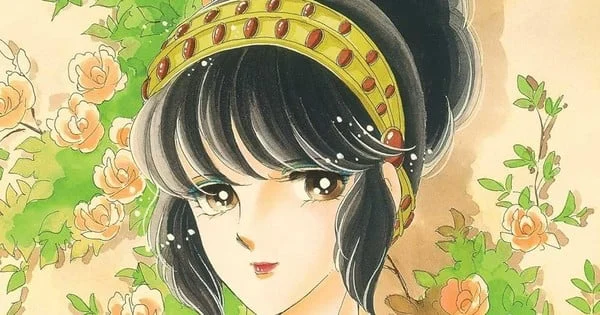
Shinohara’s commitment to historical authenticity is further evidenced by her extensive research, including extensive travel throughout the Middle East, as mentioned in her author’s notes. This research translates into a remarkably accurate depiction of the period’s architecture, weaponry, and daily life. While certain visual elements, such as the relative scarcity of bare-breasted attire or the presence of underwear, might be concessions to modern sensibilities or artistic interpretation, the overall milieu feels instantly recognizable. An interesting observation regarding the artwork is the noticeable stylistic difference in characters drawn by assistants compared to Shinohara’s own distinctive style, particularly evident in the portrayal of background figures.
Legacy and Enduring Appeal
Regardless of whether one classifies time travel as isekai, Red River stands as an exceptional narrative about a protagonist thrust into an unfamiliar world. By incorporating elements of Puduhepa’s historical actions into Yuri’s character, Shinohara grounds her protagonist within the actual events of the period, forging an impressive synergy between history and fantasy. For those who may have missed its initial release by Viz, the series remains a compelling read, deserving of attention even three decades after its original publication. Red River is a testament to the power of epic historical fiction, presented through the unique lens of shoujo manga, and its enduring appeal continues to captivate readers.