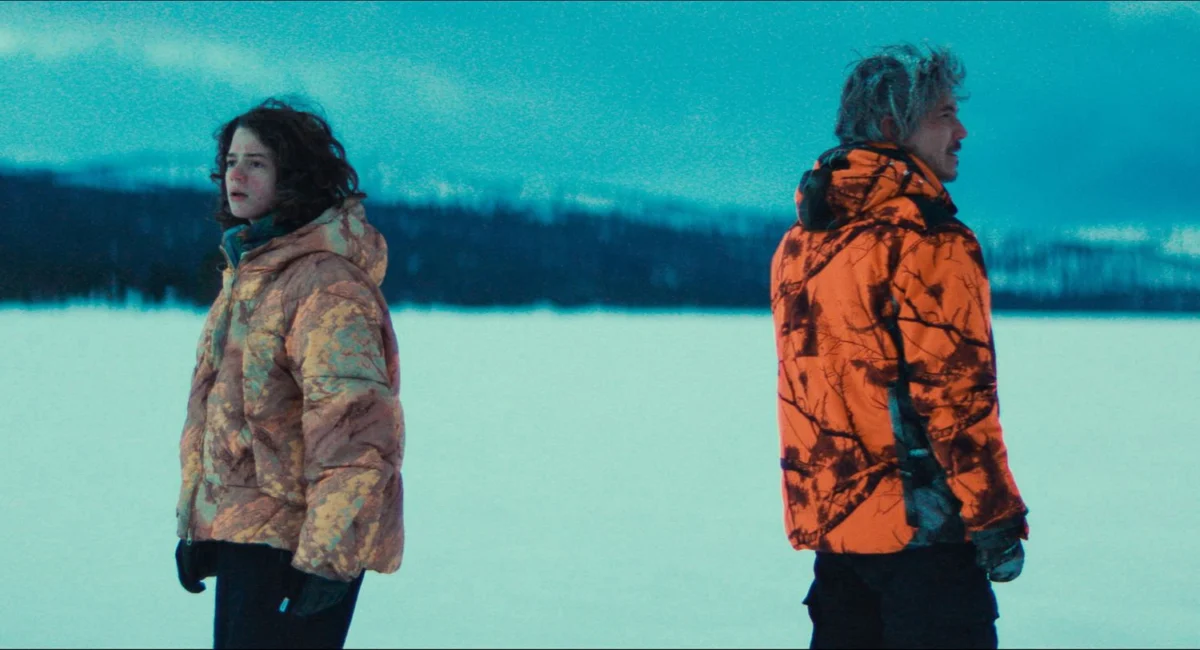
The cinematic landscape of 2026 continues to be shaped by evocative independent dramas, and the latest entry to garner significant attention is Vladimir de Fontenay’s My Father’s Island. Curzon, the prominent UK-based distributor, has officially unveiled the trailer and poster for this psychological survival drama, which is slated for a theatrical release in the United Kingdom on July 3, 2026. The film, which also carries the alternative title Sukkwan Island, represents an ambitious international co-production that seeks to blend the stark beauty of the Norwegian wilderness with a harrowing exploration of the paternal bond. Having initially premiered at the 2025 Sundance Film Festival, the film’s journey to the screen has been marked by critical debate regarding its unconventional narrative structure and its unflinching look at domestic trauma.
A Narrative of Isolation and Reconciliation
The story of My Father’s Island centers on Roy, a 13-year-old Londoner portrayed by Woody Norman. In an attempt to bridge the emotional chasm between himself and his estranged father, Jim (Swann Arlaud), Roy agrees to spend a full year living in the remote fjords of Norway. The premise begins with the promise of a rugged, formative adventure—a chance for a father and son to reconnect through shared labor and the simplicity of nature. However, the initial optimism of their "year in the wild" quickly dissolves.
As the harsh realities of the Norwegian environment set in, the isolation begins to take a psychological toll on both characters. The film shifts from a coming-of-age story into a tense survivalist drama where the primary threat is not merely the elements, but the unresolved turmoil and historical trauma that define their relationship. Ten years prior to the events of the film, a traumatic incident fundamentally altered their family dynamic, and the isolation of the island forces a confrontation that neither character is fully prepared to handle. The narrative explores whether the bonds of blood are strong enough to withstand the weight of past failures or if some bridges are too damaged to be rebuilt.
From Page to Screen: Adapting David Vann’s Sukkwan Island
The film is an adaptation of the acclaimed and controversial novel Sukkwan Island by American author David Vann. Originally published as part of the collection Legend of a Suicide, Vann’s work is noted for its semi-autobiographical elements and its exceptionally dark, visceral tone. The book won several prestigious awards, including the Prix Médicis étranger in France, which likely contributed to the French interest in the production led by filmmaker Vladimir de Fontenay.

Adapting Vann’s prose presents unique challenges for any filmmaker. The source material is known for a shocking mid-narrative pivot that challenges the reader’s expectations of a traditional survival story. De Fontenay, who also wrote the screenplay, appears to have leaned into the atmospheric dread that Vann’s writing evokes. While the film moves the setting to Norway—whereas the original novel was set on a remote island in Alaska—the core themes of geographic isolation mirroring internal psychological states remain central to the adaptation. The shift in location allows the production to utilize the specific, haunting visual palette of the Scandinavian fjords, a choice that aligns with the "Scandi-noir" aesthetic that has remained popular in international cinema.
The Creative Vision of Vladimir de Fontenay
Director Vladimir de Fontenay has built a reputation for crafting intimate, often gritty portraits of marginalized individuals and fractured families. His previous feature, Mobile Homes, which premiered at the Cannes Film Festival’s Directors’ Fortnight in 2017, explored the precarious lives of a young mother and her son drifting through the American Rust Belt. In My Father’s Island, de Fontenay continues his exploration of parental responsibility and the effects of environment on the human psyche.
De Fontenay’s directorial style is characterized by a preference for naturalism and a focus on the tactile details of his characters’ surroundings. By choosing to shoot on location in the wilds of Norway, he has ensured that the environment acts as a third protagonist in the film. The production utilized long takes and natural lighting to emphasize the scale of the fjords against the smallness of the human characters. This approach aims to create a sense of immersion for the audience, though some early critics have suggested that this focus on atmosphere sometimes comes at the expense of narrative momentum.
Performance Profiles: A Stellar International Cast
The success of a two-hander drama like My Father’s Island relies heavily on the chemistry and caliber of its lead actors. Swann Arlaud, who plays the father, Jim, is one of France’s most respected contemporary actors. A two-time César Award winner—for his roles in Bloody Milk (Petit Paysan) and By the Grace of God—Arlaud has a proven track record of portraying complex, often fragile men. His casting suggests a character study that avoids simple archetypes of "the difficult father," instead opting for a nuanced portrayal of a man struggling with his own internal demons.
Opposite Arlaud is Woody Norman, the young British actor who rose to international fame following his breakout performance in Mike Mills’ C’mon C’mon (2021). Norman’s ability to hold his own alongside established veterans like Joaquin Phoenix established him as a significant talent. In My Father’s Island, Norman is tasked with a more physically and emotionally demanding role, portraying Roy’s transition from a hopeful child to a young man forced into a brutal survival situation.

The supporting cast includes Alma Pöysti, who recently gained international acclaim for her role in Fallen Leaves, as well as Ruaridh Mollica and Tuppence Middleton. While the focus remains on the father and son, these supporting players provide the necessary context for the characters’ lives back in society, highlighting the contrast between the civilization they left behind and the primitive conditions of the island.
Critical Reception and the Sundance Premiere
The film’s debut at the 2025 Sundance Film Festival was met with a polarized response from critics. On the review aggregator Rotten Tomatoes, early notices have been described as mixed. Several critics praised the film’s visual ambition and the powerful performances of Arlaud and Norman, noting that the "stunning wilds of Norway" are captured with "harrowing beauty."
However, other reviews were less favorable, with some festival-goers noting that the film "meanders" and leaves "viewers more confused than moved." The primary criticism appears to stem from the film’s pacing and its refusal to provide easy answers to the psychological puzzles it presents. This reaction is not uncommon for adaptations of David Vann’s work, which often eschews traditional catharsis in favor of a more relentless, uncompromising realism. The "confusing" nature cited by some critics may also refer to the narrative structure, which reportedly utilizes flashbacks or non-linear sequences to reveal the traumatic events of ten years prior.
The Role of the Norwegian Landscape in Visual Storytelling
The choice of Norway as a filming location is a significant departure from the source material’s Alaskan setting, yet it serves a clear artistic purpose. The Norwegian fjords offer a specific type of isolation—grand, ancient, and indifferent to human suffering. The production, led by producers Eliott Khayata and Carole Scotta, sought to capture the "haunted" quality of the landscape.
From a technical standpoint, filming in such remote areas presents significant logistical hurdles. The crew had to contend with unpredictable weather patterns and the difficulty of transporting equipment to locations accessible only by boat. This physical struggle often translates onto the screen, providing a level of authenticity to the characters’ survival efforts. The cinematography emphasizes the verticality of the fjords, creating a sense of being trapped even in a vast, open space. This visual metaphor is central to the film’s exploration of trauma; despite the absence of walls, the characters are imprisoned by their shared history.

Distribution Strategy and the 2026 Independent Film Market
Curzon’s acquisition of the UK distribution rights for My Father’s Island reflects the company’s continued commitment to challenging, auteur-driven cinema. As a distributor that also operates its own chain of cinemas, Curzon is uniquely positioned to nurture "slow-burn" independent films that might struggle in a traditional multiplex environment.
The July 3, 2026, release date places the film in the heart of the summer season, a time usually dominated by high-budget blockbusters. This counter-programming strategy targets an adult audience seeking substantial drama as an alternative to franchise entertainment. However, as of mid-June 2026, a US distributor has yet to be announced. The mixed critical reception at Sundance may have led to a more cautious approach from American distributors, who are currently operating in a highly selective market for foreign-language and independent dramas. The film’s performance in the UK and on the international festival circuit (including its screening at the San Francisco Film Festival) will likely determine its path to North American audiences, whether through a limited theatrical run or a direct-to-streaming debut.
Thematic Exploration: The Weight of Shared Trauma
At its core, My Father’s Island is an examination of the "inheritance of grief." The film posits that trauma is not merely an individual experience but something that can be passed down and shared between generations. The father’s attempt to "never leave" his son again is portrayed not just as an act of love, but as a desperate attempt at atonement that may inadvertently stifle the child’s own development.
The film joins a long tradition of "wilderness as a crucible" stories, where characters are stripped of the comforts and distractions of modern life to reveal their true selves. By removing the safety nets of London, Roy and Jim are forced to confront the "unresolved turmoil" mentioned in the film’s synopsis. The survival elements—finding food, maintaining shelter, enduring the cold—serve as a physical manifestation of their internal struggle to survive the psychological damage of their past.
As the July release approaches, My Father’s Island stands as a testament to the enduring power of the father-son narrative in cinema. While its uncompromising tone and meditative pace may not appeal to all audiences, its pedigree of talent and its roots in David Vann’s powerful prose suggest a film that will spark discussion and linger in the minds of those who seek out its challenging story. Whether it will ultimately be viewed as a masterpiece of atmospheric tension or a flawed experiment in narrative ambiguity remains to be seen, but its arrival marks a significant moment in the 2026 independent film calendar.