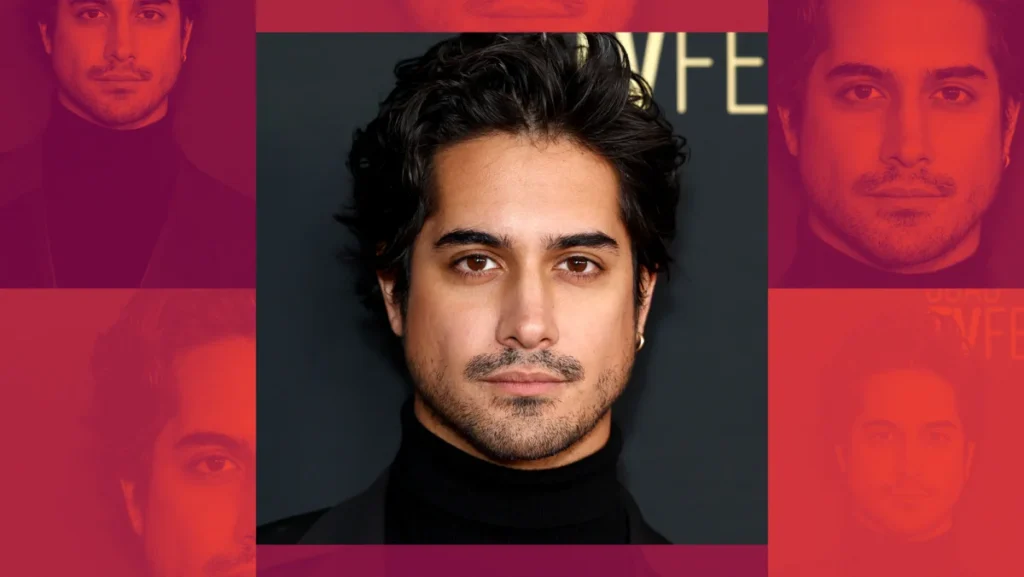
In a cinematic twist befitting a Hollywood script, 26-year-old writer-director Curry Barker found himself at the epicenter of an industry celebration, marking an unprecedented box office triumph for his low-budget horror film, Obsession. What Barker believed to be a routine meeting at the Focus Features offices in Universal City last week unfolded into a surprise tribute, with 250 employees raising champagne glasses in his honor. Focus Chairman Peter Kujawski heralded the moment, declaring, "Congratulations on the biggest movie Focus has ever had!" The applause that followed underscored a success story that has captivated Hollywood and redefined expectations for emerging filmmakers.
The culmination of this extraordinary journey was marked by a symbolic gift: a gold-plated, glass-encased replica of the One Wish Willow, the central spell-casting prop from Obsession. This artifact echoed a prescient press stunt during the film’s pre-release marketing, where Barker, snapping a toy willow, publicly wished for his movie to be "a huge hit at the box office." His wish, delivered with an almost supernatural irony, has since materialized into a phenomenon, transforming a $750,000 production into a global sensation, rocketing towards a staggering $300 million in worldwide earnings. Barker’s overnight ascent has crowned him as one of the industry’s most sought-after young horror directors, already having completed his follow-up, Anything But Ghosts, and inked a deal with A24 to write and direct a reboot of the iconic Texas Chainsaw Massacre. The industry’s eagerness to capitalize on his newfound Midas touch is palpable, with one company reportedly extending a $10 million offer for his next pitch, whatever it may be.
The Unforeseen Box Office Ascent
Barker’s journey to box office dominance began unconventionally, rooted in sketch comedy and horror shorts shared online while he worked in a coffee shop. Producer James Harris recognized his talent, taking a chance on the Obsession script, which Focus Features subsequently acquired at the Toronto International Film Festival. The film’s theatrical release defied all initial projections, embarking on a trajectory that left industry analysts and seasoned executives stunned.

Initially, Obsession was slated for a modest opening weekend of $8 million to $10 million. Barker himself admitted to a degree of disappointment with these forecasts, having hoped for an opening closer to the film’s $15 million acquisition cost, a figure he was told was generally unrealistic for a debut feature. However, the first day of release delivered a surprising $7 million, prompting a mix of excitement and disbelief from Barker, who had vowed to monitor the numbers obsessively. This strong start set the stage for what would become a historic run.
The second weekend proved to be the turning point, as Obsession achieved the near-impossible feat of increasing its box office gross, a rarity in the film industry. Surpassing expectations, the film pulled in an astounding $27 million, demonstrating robust word-of-mouth momentum. This upward trend continued into its third week, when Obsession tied a nearly four-decade-old record for week-over-week growth, previously held by Steven Spielberg’s 1982 classic, E.T. the Extra-Terrestrial. This achievement solidified its status as a cultural talking point, attracting audiences who sought out the film based on widespread positive buzz rather than initial marketing campaigns. Barker himself, eager to experience the phenomenon firsthand, confessed to sneaking into theaters multiple times to watch the film with "in the wild" audiences, finding renewed excitement in their reactions.
The film’s performance has been a testament to the power of original storytelling and grassroots engagement, particularly among the Gen Z demographic, now the largest moviegoing population. Obsession‘s success, alongside Kane Parsons’ Backrooms which opened to $118 million globally around the same time, has ignited a wider industry discussion on the rising influence of online content creators transitioning to mainstream cinema.
A New Generation of Filmmakers and Industry Lessons
Barker’s trajectory, while seemingly aligned with the "rise of the YouTubers" narrative, presents a nuanced perspective. He emphasizes that his journey—moving from Alabama to Los Angeles at 18, attending film school, making short films, and persistently honing his craft—aligns more closely with the traditional path of revered filmmakers like Spielberg. For Barker, platforms like YouTube and TikTok served as accessible tools for showcasing his work, not as the sole genesis of his filmmaking identity. He views his experience as a modern iteration of the classic Hollywood dream, driven by ambition and a relentless pursuit of cinematic storytelling.

The unprecedented success of Obsession has not only elevated Barker’s profile but also triggered a "feeding frenzy" within Hollywood, with studios scouring his past short films for potential feature adaptations. Projects like The Chair, a horror concept, and Milk and Serial, about a serial killer with a YouTube prank channel, are now being actively considered for development. Barker, however, is contemplating a producing role for some of these, seeking to nurture other talents while focusing on his directing commitments.
The film’s triumph has also sparked critical conversations within the industry, particularly regarding fair compensation for crew members on low-budget productions. An Instagram post from Obsession‘s art director, Sally Choi, brought to light the disparity between the film’s monumental financial success and the relatively meager pay ($6,741) received by some of its key contributors. While Barker was not involved in the film’s production finances, he expressed profound respect for the art department’s extraordinary work and hoped that the film’s success would translate into significant career opportunities and financial benefits for all involved, mirroring his own experience. This incident underscores a broader industry debate about the financial structures of independent films and ensuring equitable returns for all who contribute to a project’s success.
Barker’s primary lesson for Hollywood is straightforward: trust the filmmaker and grant creative freedom. He argues that the low-stakes nature of Obsession allowed him to take the reins without excessive studio interference, leading to an authentic and resonant product. He specifically recalled battling for the "money dropping from the ceiling" scene, which some deemed "silly," but he defended as crucial to the film’s unique tone. His insistence on depicting complex moral ambiguities, such as the nuanced handling of consent and the decision to portray the character Bear as flawed rather than a conventional hero, further demonstrates his commitment to artistic integrity, even when offered more money to compromise. This stance resonates with Gen Z audiences, who, according to Barker, are "tired of slop" and crave original, well-crafted stories that transcend established intellectual properties (IPs).
Expanding Horizons: Future Projects and Personal Reflections
With Obsession‘s success firmly established, Barker’s slate of upcoming projects is diverse and highly anticipated. He has already completed Anything But Ghosts, a buddy comedy with horror elements starring himself and his longtime collaborator, Cooper Tomlinson (who is also his YouTube channel partner and an actor in Obsession). The film features established talents like Aaron Paul and Bryce Dallas Howard, presenting Barker with the unique challenge of acting opposite and directing seasoned professionals while also being a lead. He admitted to initial nervousness but quickly overcame it, driven by a desire to prove his capabilities as both an actor and filmmaker. The experience of editing Ghosts post-Obsession‘s success has brought introspective moments, as he consciously worked to ensure the film maintained its distinct voice, aiming for something "scary and messed up" yet different from his breakout hit.

Perhaps his most high-profile upcoming project is the A24 reboot of Texas Chainsaw Massacre. Barker acknowledges the challenge of reinterpreting a franchise with a convoluted canon, emphasizing his goal to honor the original’s rawness and grounded terror while creating a fresh experience for a new generation. His research involved watching all ten previous films, leading him to conclude that simply depicting a "guy with a chainsaw chasing a person around" is ineffective. His vision focuses on believable scenarios and avoiding logical inconsistencies that detract from the horror.
Despite his meteoric rise, Barker remains grounded, continuing to share an apartment with Cooper Tomlinson and Anthony Pavone, another collaborator. While an upgrade to a larger space is planned, he prioritizes his work over extravagant displays of wealth. He also maintains a passion for eyewear, boasting a collection of "60 or 70" pairs, influenced by films like Kingsman and Harry Potter.
Barker envisions a continued creative partnership with Tomlinson, with plans to form their own production company. He actively seeks guidance from established figures in the horror genre, including Zach Cregger (Weapons), Ari Aster (Hereditary), and Fede Álvarez (Alien: Romulus), highlighting a growing sense of community among directors. He acknowledges that success, while glorious, brings its own set of challenges, particularly the pressure of deciding his next move—whether to pursue an original IP or delve deeper into established franchises. He is resolute, however, in his decision not to immediately pursue Obsession 2, believing that a return to that world would be more impactful after a period of further creative exploration.
Curry Barker’s journey from an aspiring filmmaker posting online shorts to a record-breaking director at Focus Features embodies the evolving landscape of Hollywood. His success story underscores the enduring power of original, character-driven horror, the critical importance of creative autonomy, and the undeniable influence of a digitally native generation on the future of cinema. As he navigates the whirlwind of opportunities, Barker remains a humble yet determined voice, poised to leave an indelible mark on the industry.