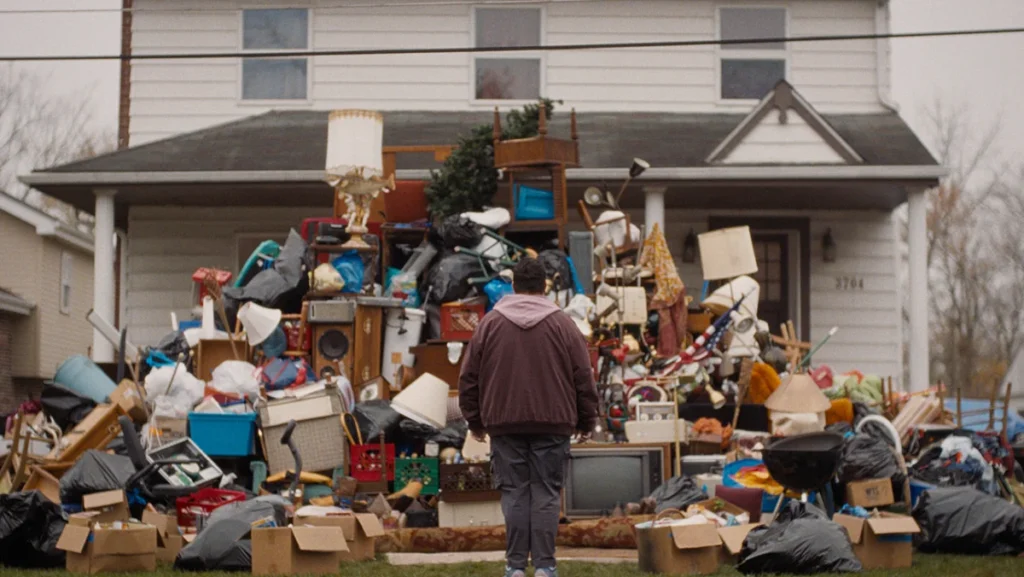
Oscar-winning cinematographer Linus Sandgren continues to demonstrate a meticulous approach to visual storytelling, allowing the inherent demands of a narrative to dictate his choice of film format. This philosophy is evident in his recent work on Emerald Fennell’s reimagining of Emily Brontë’s classic novel, Wuthering Heights, which leverages a blend of traditional 35mm and the historically significant VistaVision, starkly contrasting with his strategic application of IMAX for Denis Villeneuve’s impending epic, Dune: Part Three. Sandgren’s commitment to celluloid and his nuanced understanding of each format’s emotional and technical capabilities underscore a broader industry conversation about artistic vision, technological evolution, and the enduring power of film.
The Tactile Vision of Wuthering Heights: Marrying Impressionism with Detail
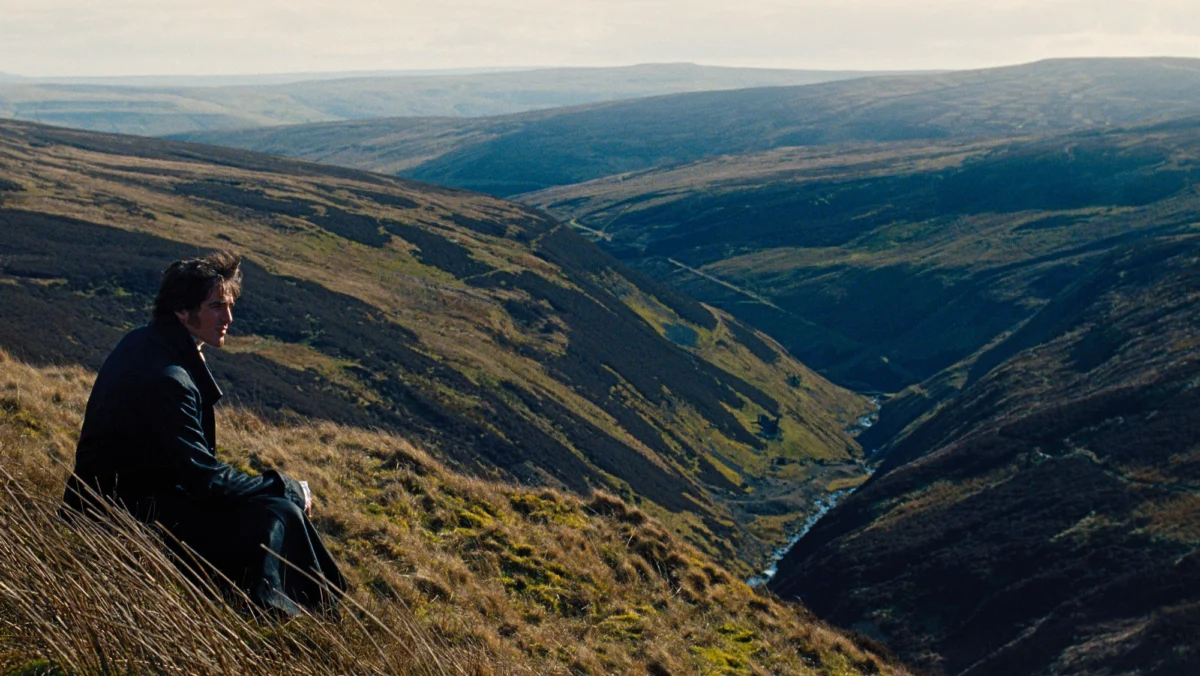
For Wuthering Heights, Emerald Fennell’s ambition for a "tactile, impressionistic quality" demanded a departure from the grand scale often associated with modern blockbusters. Sandgren, known for his versatility and willingness to adapt, embraced this vision wholeheartedly. The core of the film’s visual language was established through standard 3-perf 35mm film, a choice that inherently imbues the imagery with a subtle grain and a naturalistic texture, perfectly suiting the tragic period romance starring Margot Robbie as Cathy Earnshaw and Jacob Elordi as Heathcliff. This format provided the desired organic feel, allowing the raw emotions and stark realities of the characters’ lives on the windswept Yorkshire Moors to resonate with a palpable authenticity.
However, certain sequences necessitated a different technical approach to capture specific details without compromising the overall aesthetic. When depicting the expansive, brooding landscapes of the Moors or the opulent yet often desolate interiors of Edgar Linton’s (Shazad Latif) decadent manor, the filmmakers sought a higher resolution. The challenge lay in achieving this enhanced detail while preserving the cherished film grain that defined the rest of the production. Traditional 65mm film, while offering superior resolution, often presents a finer, less pronounced grain structure that might have created an unwanted visual discontinuity. Similarly, the ultra-clean, high-contrast imagery of IMAX, while unparalleled in scope, would have strayed too far from the desired impressionistic texture.
The solution emerged in VistaVision, a large-format 35mm film system. As Sandgren explained to The Hollywood Reporter in anticipation of Wuthering Heights‘ 4K release, "Each format will affect the emotions, and there’s a huge difference to me within the film formats. We tested 65, but Emerald was missing the grain, so we went for 35 to see the grain." He elaborated on the precise application of VistaVision: "Our technical reason for VistaVision was to capture the landscape shots in a high resolution [with a finer grain] because they include small details that you want to see better. Basically, all real exteriors and wide-shot interiors were VistaVision." This strategic blend allowed Sandgren and Fennell to achieve both the gritty intimacy of standard 35mm and the breathtaking detail of a larger format, ensuring a cohesive and deeply immersive visual experience for the audience.

VistaVision: A Resurgent Legacy in Cinematography
VistaVision, a proprietary widescreen film format developed by Paramount Pictures in the 1950s, ingeniously utilized standard 35mm film stock but ran it horizontally through the camera, exposing an 8-perforation frame. This orientation provided a negative area approximately 2.5 times larger than standard 35mm (which typically runs vertically with a 4-perforation frame). The larger negative area translated directly into a finer grain structure and significantly higher resolution when projected, offering a visual quality that rivaled 70mm prints of the era.
Its initial dominance saw it employed in cinematic masterpieces such as Alfred Hitchcock’s Vertigo (1958) and North by Northwest (1959), Cecil B. DeMille’s The Ten Commandments (1956), and George Stevens’ Giant (1956). However, the format gradually fell by the wayside with the rise of anamorphic widescreen processes like CinemaScope, which allowed for widescreen images using standard 4-perf 35mm film, offering economic advantages despite lower image quality.
For decades, VistaVision remained largely dormant, its equipment scarce and its use relegated mostly to visual effects work in films like Star Wars (1977), where its large negative facilitated superior optical printing. The format’s recent resurgence, however, marks a fascinating return to filmic texture and resolution in an increasingly digital landscape. Brady Corbet’s 2024 film The Brutalist is credited with seemingly spearheading its contemporary comeback, paving the way for a string of high-profile directors to embrace its unique qualities.
Following The Brutalist, VistaVision has been strategically deployed in acclaimed productions such as Paul Thomas Anderson’s Oscar-winning One Battle After Another, Yorgos Lanthimos’ Bugonia, and upcoming features from cinematic heavyweights like Alejandro González Iñárritu (Digger), M. Night Shyamalan (Remain), and Greta Gerwig (Narnia: The Magician’s Nephew). This renewed interest underscores a growing desire among filmmakers for formats that offer a tangible, almost nostalgic cinematic quality, standing apart from the hyper-sharp, often sterile aesthetic of purely digital productions.
Sandgren highlights a key selling point for this revival: "People started shooting digital, and they got used to the sharp quality of the image. So directors who like the sharpness of shooting on digital cameras can maintain that very sharp image with film formats like VistaVision." This suggests that VistaVision offers a compelling hybrid solution, delivering the clarity and detail that contemporary audiences and filmmakers appreciate from digital, but infused with the organic texture and tonal richness inherent to film.

The Grandeur of IMAX: "Dune: Part Three" and the Evolution of Scale
In stark contrast to the intimate, textured world of Wuthering Heights, Sandgren’s work on Denis Villeneuve’s Dune: Part Three, slated for a December release, leans into the colossal scale and immersive spectacle that only IMAX can deliver. Having previously applied IMAX cameras to select, pivotal sequences in films like Damien Chazelle’s First Man (2018) and Cary Joji Fukunaga’s No Time to Die (2021), Sandgren is no stranger to the format’s unique capabilities. For the trilogy capper of Villeneuve’s ambitious adaptation of Frank Herbert’s science fiction saga, IMAX is employed strategically to fully realize the epic vistas of Arrakis, the monumental sandworms, and the sweeping battles that define the Dune universe.
IMAX, short for "Image Maximum," utilizes a 70mm film stock run horizontally through the camera, exposing a 15-perforation frame. This creates a negative area roughly ten times larger than standard 35mm film, resulting in unparalleled resolution, clarity, and an expansive aspect ratio that fills gargantuan screens, offering an immersive experience unlike any other. While VistaVision provides a higher resolution than standard 35mm with a finer grain, IMAX pushes this further, delivering an even larger and clearer image, albeit often with a less pronounced, almost invisible grain, emphasizing pure visual information and spatial grandeur.
Historically, one of the primary challenges of shooting with IMAX cameras has been their sheer size, weight, and operational noise. The mechanical whirring of the film transport system made them notoriously difficult, if not impossible, to use during dialogue-heavy scenes, forcing filmmakers to limit their application to non-dialogue sequences or wide shots where sound could be captured separately and synced in post-production. Sandgren himself has been a vocal contributor to IMAX’s ongoing efforts to refine its technology, providing feedback aimed at reducing these limitations.
A significant breakthrough, however, occurred in preparation for Christopher Nolan and DP Hoyte van Hoytema’s upcoming epic, The Odyssey. IMAX engineers successfully developed and implemented a sound blimp – a specialized, sound-dampening encasement that surrounds the camera – effectively mitigating the noise issue. This innovation has opened the door for shooting entire films with IMAX cameras, including dialogue-driven scenes, a prospect that has deeply intrigued Sandgren. While he acknowledges the advancements, he remains grounded in his core philosophy: "I absolutely love films that are epic and big and use IMAX correctly. Some films shouldn’t be IMAX, and some films should be IMAX. We used it a lot on Dune: Part Three." He further notes the continued complexity: "Of course, you want those IMAX cameras to be quiet, and we have all offered input on their new cameras to try to make them quieter. Still, a blimp is needed, and it’s as cumbersome as it looks. It’s a complicated device. Maybe there are AI ways of somehow filtering [the noise], but you want the authenticity of the audio as well." This highlights the ongoing balance between technological innovation and the pursuit of authentic cinematic artistry.
The Enduring Appeal of Celluloid: Artistic Vision vs. Economic Realities
Linus Sandgren is a staunch champion of celluloid, a preference evident across his entire feature filmography preceding Wuthering Heights. His work on critically acclaimed films like La La Land (2016), for which he won an Academy Award for Best Cinematography, and First Man, both shot predominantly on film, exemplifies his mastery of the medium. While he remains open to digital cinematography if a project explicitly calls for it, his default inclination is towards film, driven by its unique aesthetic qualities, dynamic range, and the tactile nature of its image.

However, advocating for film in today’s industry often presents significant hurdles. Shooting on film typically entails higher production costs due to the expense of film stock, processing, and telecine for digital intermediates. It also involves longer processing times, requiring more meticulous planning and a slightly different workflow compared to the immediate feedback loop of digital capture. These factors frequently make film a tough sell to studios and financiers, who are perpetually focused on maximizing efficiency and minimizing budgets.
Sandgren openly shares his experiences battling for his preferred medium: "I’ve been in situations where I had to pitch to the studio, by myself, why we should shoot on film and not digital. Once, I had already talked with the director and the studio about shooting on film, and then suddenly they pulled that back. So it felt like a breach of contract, in my opinion." This anecdote underscores the persistent tension between artistic intent and the economic pressures of large-scale film production.
Despite these challenges, Sandgren largely considers himself fortunate to have collaborated with supportive directors and producers who understand and value the artistic merits of film. He also asserts that the perceived cost barrier can often be overcome through creative financial management across various departments. "Obviously, you need to compromise to make the budget work. But if you open your eyes across all departments, then perhaps there’s a way to save the money that film costs in production," he suggests. This implies that if the collective will and desire to shoot on film exist, resourceful solutions can often be found, rather than defaulting to digital solely for budgetary reasons.
Cinematography as Storytelling: A Guiding Philosophy
Sandgren’s overarching philosophy remains unwavering: the choice of film format should never be a marketing gimmick or a rigid stylistic dictate, but rather an organic extension of the story itself. Each narrative possesses its own unique requirements, its own emotional landscape, and its own inherent visual language. The cinematographer’s role, in this view, is to act as a translator, selecting the tools that best serve to bring that story to life on screen.
"The format doesn’t decide what the format should be. It’s the story that asks for a format. It’s a tool to serve the story," Sandgren succinctly states. This principle is vividly illustrated by his diverse choices: the textured, impressionistic VistaVision for the intimate tragedy of Wuthering Heights, and the expansive, hyper-real IMAX for the galactic spectacle of Dune: Part Three. These decisions are not arbitrary; they are deeply considered artistic judgments, made in service of the director’s vision and the emotional core of the narrative.

Broader Implications and the Future of Cinematic Exhibition
Sandgren’s work and his articulate defense of film formats like VistaVision and IMAX resonate within a larger industry trend. In an era where streaming services dominate home entertainment and the theatrical experience faces increasing competition, large formats offer a marketable differentiation. They promise a "unique moviegoing experience" that cannot be replicated on smaller screens, urging audiences back into cinemas for a spectacle that transcends the ordinary.
The resurgence of film, coupled with the continued innovation in formats like IMAX, signifies a renewed appreciation for the craft of filmmaking and the distinct aesthetic qualities that celluloid provides. It also reflects a desire to preserve and enhance the communal, immersive experience of cinema. As digital cameras continue to advance, the debate between film and digital is no longer about superiority, but about choice, nuance, and the deliberate application of diverse tools to achieve specific artistic goals. Linus Sandgren stands at the forefront of this movement, embodying a commitment to cinematic excellence where technology is always a servant to the story, ensuring that each film finds its perfect visual expression.
Wuthering Heights is now available on 4K.