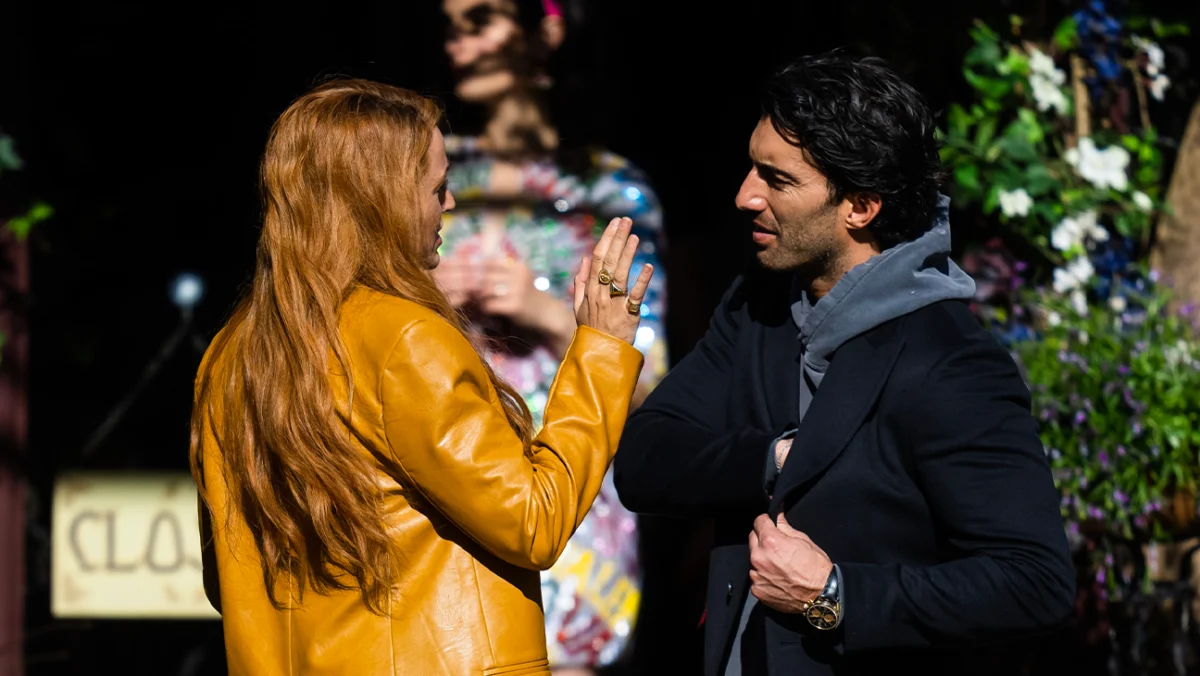
The protracted legal battle between Hollywood actress Blake Lively and director Justin Baldoni has reached a definitive conclusion in the courtroom, though the debate over who emerged victorious continues to simmer in the court of public opinion. Following an eleventh-hour settlement designed to avert a high-profile trial, a federal judge’s ruling on Friday has effectively shuttered Lively’s final avenue for a significant financial payout. The dispute, which originated from allegations of sexual harassment and retaliatory defamation on the set of the blockbuster film It Ends With Us, has evolved into a complex study of celebrity litigation, public relations maneuvering, and the intersection of state protections with federal procedural law.
The resolution comes after years of legal wrangling that began in earnest in 2024, when Lively initiated a lawsuit against Baldoni and his production company, Wayfarer Studios. Lively’s initial claims alleged that Baldoni had fostered a hostile work environment characterized by misconduct and that he subsequently orchestrated a campaign to undermine her professional reputation after she voiced her concerns. While the settlement announced last month ostensibly ended the primary litigation, it left a single, high-stakes legal question open: whether Lively could recover damages and legal fees under a specific California statute designed to protect victims of sexual harassment from retaliatory defamation. On Friday, U.S. District Judge Lewis Liman provided the answer, ordering Baldoni to cover Lively’s legal fees but flatly rejecting her bid for compensatory and punitive damages.
The Genesis of the Conflict: Production Tension and Public Rifts
The friction between Lively and Baldoni first became public knowledge during the promotional cycle for It Ends With Us, the film adaptation of Colleen Hoover’s best-selling novel. Despite the movie’s eventual commercial success—grossing over $340 million worldwide—the press tour was notably marked by the absence of joint appearances by the lead stars. Observers noted that Lively and Baldoni conducted separate interviews and attended separate screenings, fueling speculation of a deep-seated creative and personal rift.
Behind the scenes, the tension was more than just creative differences. Lively’s legal team asserted that the environment on set was fraught with "unprofessional conduct" and "harassment" that targeted the actress. When Lively attempted to address these issues internally, she claimed that Baldoni and Wayfarer Studios responded by "weaponizing" the media and legal system against her. The resulting litigation became a multi-year saga of claims and counter-claims, with Wayfarer Studios eventually filing a defamation lawsuit against Lively, branding her allegations as false and damaging to the production company’s brand.
Chronology of the Legal Battle
The timeline of the dispute illustrates the escalating stakes and the shifting strategies employed by both legal teams:
- Early 2023: Principal photography for It Ends With Us begins. Reports of onset tension surface, though they are largely dismissed by the studio as standard creative friction.
- Early 2024: Blake Lively files her initial lawsuit, alleging sexual harassment and a hostile work environment. She names both Justin Baldoni and Wayfarer Studios as defendants.
- Mid-2024: Wayfarer Studios files a retaliatory defamation lawsuit against Lively, seeking to clear Baldoni’s name and claiming that Lively’s allegations were a strategic move to gain more creative control over the film’s final cut.
- Late 2024: The core sexual harassment claims are dismissed by the court due to a lack of sufficient evidentiary backing to meet the high bar for federal harassment litigation. Lively’s team pivots to focusing on "retaliatory defamation."
- May 2025: As the trial date approaches, both parties enter intense mediation. An eleventh-hour settlement is reached to avoid a public trial, but Lively preserves one specific claim under California law.
- June 2025: Judge Lewis Liman issues the final ruling on the preserved claim, awarding legal fees to Lively but denying all other damages, effectively ending the litigation.
The Legal Gambit: California Law in Federal Court
The final phase of the case centered on a novel and risky legal strategy employed by Lively’s lead attorney, Michael Gottlieb. After the primary harassment claims were dismissed, Lively surrendered her chances on several other counts to focus entirely on a California state law intended to shield victims from "SLAPP" (Strategic Lawsuits Against Public Participation) suits and retaliatory defamation.
The strategy was built on the premise that Wayfarer’s defamation suit was a frivolous attempt to silence Lively. By invoking this California-specific protection, Lively hoped to not only recover her astronomical legal costs—estimated by opposing counsel to be between $30 million and $60 million—but also to secure punitive damages that would serve as a public rebuke of Baldoni’s conduct.
However, Judge Lewis Liman’s ruling highlighted the limitations of applying state-specific procedural shields in a federal context. Liman wrote that while the law provides a "narrow exception" for certain types of relief, it does not allow a plaintiff to bypass the "carefully crafted federal procedural rules" that govern how damages are awarded. By ruling that compensatory and punitive damages were not applicable under this specific exception, the court essentially stripped the settlement of its financial "teeth" for Lively.
Official Responses and the PR War
In the wake of the ruling, both sides have engaged in a vigorous effort to frame the outcome as a victory. Bryan Freedman, representing Justin Baldoni, has been vocal in his criticism of Lively’s strategy. Speaking on The Megyn Kelly Show, Freedman questioned why Lively would settle a case with no guaranteed financial payout if her evidence was as strong as she claimed.
"All Blake Lively needed to do was to say, ‘No, I’m not settling. Let’s go to the trial and the jury of our peers, and let’s see what we can get,’" Freedman stated. "If it was so good, why do you settle a case exchanging no money? It doesn’t make any sense. It doesn’t pass the smell test." Freedman further characterized Lively’s focus on the remaining procedural claim as an attempt to "parade around and call a loss a victory."
Conversely, Lively’s legal team and spokesperson have focused on the moral implications of the settlement. They pointed to the joint statement released last month, in which Baldoni acknowledged that Lively’s claims "deserved to be heard." For Lively, this acknowledgment, combined with the court-ordered payment of her legal fees, represents a form of accountability.
Michael Gottlieb, speaking on industry podcasts, maintained that the goal was never primarily about a windfall of cash, but about exposing what he described as a "smear machine." He argued that the shift in public sentiment against Lively was a direct result of Wayfarer’s "press tour branding her a liar," and that holding them accountable for the legal fees incurred while fighting that narrative was a "core issue."
Financial Implications and Industry Impact
The financial toll of the litigation is significant, even for stars of Lively and Baldoni’s caliber. With legal fees estimated in the tens of millions, the court’s decision to have Baldoni cover Lively’s costs is a substantial financial hit to the director and his production company. However, the lack of damages means Lively likely walked away with a net loss when considering the time, reputational damage, and indirect costs associated with a multi-year legal battle.
From an industry perspective, the case serves as a cautionary tale regarding the "Me Too" era’s legal evolutions. It demonstrates the difficulty of proving harassment in a way that survives federal dismissal and the limitations of using state-level anti-retaliation laws as a "silver bullet" in complex litigation. The case also underscores the power of the "litigation PR" machine, where the narrative established in the media can be just as impactful as the rulings delivered in court.
Broader Implications and the Path Forward
While the court case is technically over, the "It Ends With Us" saga leaves a lasting mark on the careers of both individuals. For Justin Baldoni, the settlement and the judge’s rejection of Lively’s damages claim offer a path toward professional vindication, though the cloud of the original allegations remains. For Blake Lively, the case cements her reputation as a formidable player who is willing to engage in high-stakes legal combat to protect her interests, even if the financial outcome is not an outright win.
The last remaining task for the court is to determine the exact amount Baldoni must pay in legal fees. While Lively’s team will likely push for the maximum possible reimbursement, Baldoni’s lawyers are expected to contest the necessity and reasonableness of the $30M+ figure.
Legal experts suggest that while Lively could theoretically pursue a separate lawsuit for damages under a different legal theory, such a move is unlikely. The "time to move on," as Freedman suggested, has likely arrived for both parties. The film It Ends With Us will remain a case study not only for its box office performance but as a landmark instance of how the internal pressures of a high-profile production can explode into a legal and public relations firestorm that outlasts the theatrical run of the movie itself.