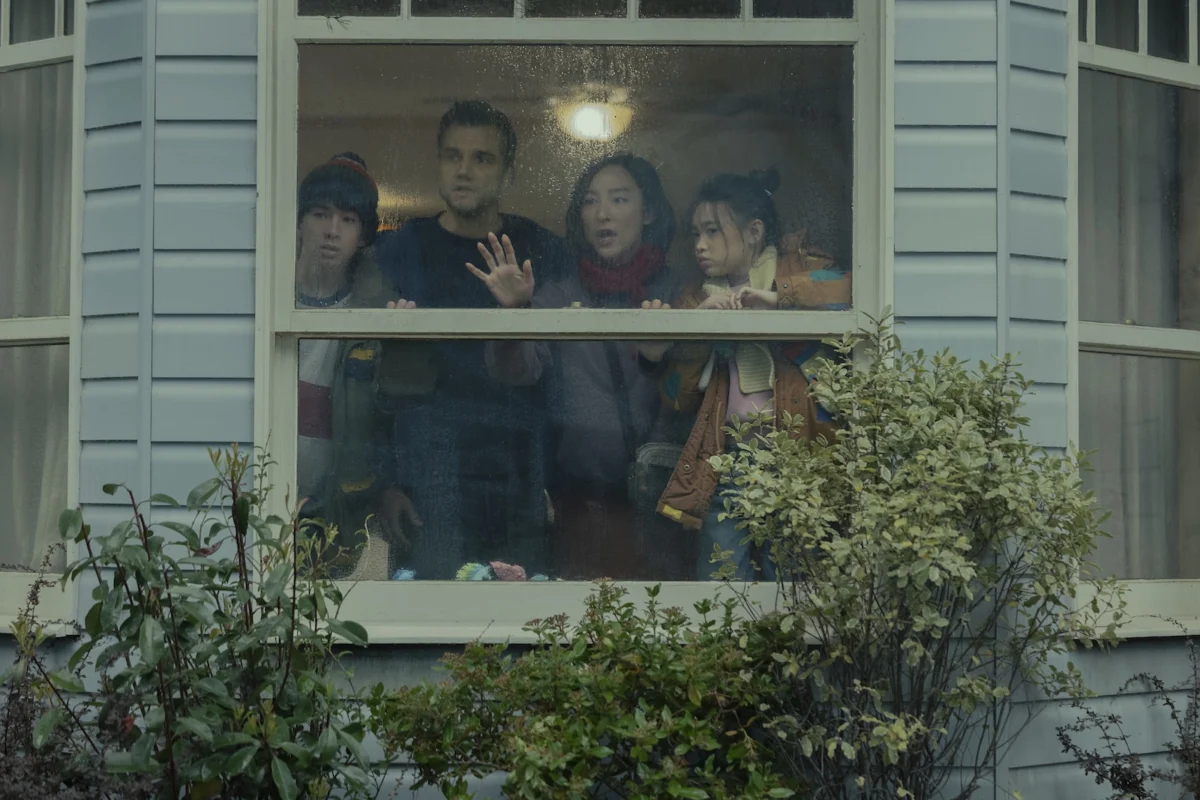
A new horror film, "The Last House," has emerged from Netflix, its trailer igniting conversations about its thematic resonance, particularly in light of recent global events. The film, starring Wagner Moura and Greta Lee, presents a chilling premise: a family finds themselves inexplicably sealed within their home by an unknown force. While the initial reveal in the trailer might evoke comparisons to the COVID-19 pandemic, the narrative quickly pivots, hinting at a far more sinister and unpredictable threat lurking beyond the confines of domestic safety.
The trailer, released today, begins with a stark depiction of isolation. As the family grapples with their newfound confinement, the unsettling realization dawns that they are not alone in their predicament; the entire world seems to be under a similar, enforced lockdown. This pervasive sense of being trapped, coupled with a poignant line from Moura’s character, the father, suggesting that this ordeal will eventually end, and a cut to over a thousand days later, initially solidifies the impression of a pandemic-inspired narrative. The visual cues and the prolonged duration of the confinement strongly echo the collective experience of extended lockdowns and the psychological toll they exacted.
However, "The Last House" appears determined to subvert audience expectations. The trailer’s trajectory shifts dramatically as the doors of the house are forced open, revealing a malevolent force that actively preys on humans. This sudden escalation introduces an element of supernatural or extraterrestrial horror, moving beyond the realm of socio-political commentary into a more traditional genre space. The ambiguity surrounding the nature of this external threat leaves the film’s ultimate thematic core open to interpretation, a deliberate choice by the filmmakers.
Unforeseen Twists and Genre Subversion
Wagner Moura, in an interview with Netflix’s Tudum, elaborated on the film’s narrative complexity. "The storyline will evolve in ways that the audience certainly will not expect, but that is what makes this film so interesting," Moura stated. "There are layers and twists that I can’t wait for everyone to see." This assurance from the lead actor suggests that the initial pandemic parallels are merely a launching pad for a more intricate and surprising plot. The film seems poised to explore not just the anxieties of isolation but also the primal fear of an unknown, predatory entity.
Director Louis Leterrier, known for his work on "Lupin" and "Fast X," described the film’s ambition to challenge conventional notions of security. "The Last House challenges the idea of a safe haven, turning a family home into a hostile environment where survival demands unity," Leterrier told Tudum. He further emphasized the film’s focus on a relatable family unit facing an extraordinary nightmare. "This is an ordinary family’s worst nightmare, pushing them to their limits to protect each other and exposing the fragility of security—and the desperate fight to reclaim it." This statement underscores the film’s intention to explore themes of resilience, familial bonds, and the fundamental human drive for safety in the face of overwhelming adversity.
A Stellar Cast and Creative Team
The film’s ensemble cast is a significant draw. Alongside Moura, who has garnered critical acclaim for his roles in "Narcos" and "Elite Squad," and Greta Lee, a respected actress known for her work in "Past Lives" and "The Morning Show," the film features a promising group of emerging talent. Riley Chung, who recently appeared in "The Hunger Games: The Ballad of Songbirds & Snakes," Emma Ho from "The Baker," Noah Alexander Sosnowski of "Section 8," and Gabriel Barbosa, who starred in "May December," round out the principal cast.
The creative team behind "The Last House" brings a wealth of genre experience. The screenplay is penned by Matthew Robinson, whose previous credits include the sci-fi comedy "Love and Monsters." The directing duties are handled by Louis Leterrier, whose dynamic visual style has been a hallmark of his diverse filmography. Leterrier’s experience with action, suspense, and even fantastical elements, as seen in "The Dark Crystal: Age of Resistance," suggests a capability to blend different tones and genres effectively, which will be crucial for a film aiming to transition from pandemic allegory to supernatural horror.
Context and Potential Implications
The release of a film centered on forced confinement and an unknown external threat, even if it evolves beyond pandemic themes, inevitably taps into a collective consciousness shaped by recent global experiences. The COVID-19 pandemic, which began in late 2019 and led to widespread lockdowns and social disruptions throughout 2020 and 2021, left an indelible mark on global society. Data from the World Health Organization (WHO) indicated that by early 2023, over 670 million confirmed cases of COVID-19 had been reported globally, with millions of deaths. The psychological impact of prolonged isolation, uncertainty, and the disruption of daily life has been extensively documented, with studies highlighting increased rates of anxiety, depression, and post-traumatic stress disorder.
Therefore, a film that begins with a premise mirroring these experiences is likely to resonate deeply with audiences, even as it pivots to a more fantastical narrative. The initial relatability of the family’s confinement could serve as a powerful hook, drawing viewers into a story that then explores deeper fears. The film’s exploration of a "safe haven" turning into a "hostile environment" directly addresses the paradoxes of domesticity that were amplified during the pandemic, where homes became both sanctuaries and prisons for many.
Timeline of Anticipation
The announcement of "The Last House" and its subsequent trailer release mark a significant point in the film’s promotional cycle. While specific production timelines are not detailed in the provided information, the trailer’s debut indicates that the film is nearing its release. The premiere is slated for August 7, 2026, on Netflix, providing a clear window for audiences to mark their calendars. This strategic release date allows ample time for further promotional activities, including potential behind-the-scenes featurettes, cast interviews, and additional promotional clips, which can further build anticipation and clarify the film’s genre and thematic intentions.
The protracted lead-up to the release date suggests a deliberate marketing strategy, allowing the film to gain traction and discussion in the lead-up to its debut. This extended promotional period is common for major streaming releases, aiming to sustain audience interest over a significant period.
Broader Societal Reflections
The film’s narrative structure, which begins with a seemingly familiar scenario and then introduces an unexpected, genre-bending element, could be interpreted as a commentary on how societies adapt to crises. The initial response to the pandemic was characterized by a collective effort to create safe spaces and adhere to public health guidelines. However, as the pandemic evolved and new challenges emerged, the nature of the threat and the societal responses became more complex and often more frightening. "The Last House" may aim to mirror this evolution, suggesting that even within the perceived safety of our own homes, unforeseen and potentially more terrifying dangers can manifest.
The film’s exploration of the "fragility of security" is particularly relevant in an era marked by increasing global instability, from geopolitical conflicts to climate change. The idea that our most trusted spaces can become sites of danger is a potent fear, and "The Last House" appears to capitalize on this primal anxiety. The need for "unity" in the face of such threats, as highlighted by Leterrier, also resonates with the importance of collective action and mutual support during times of crisis.
The casting of Wagner Moura, an actor who has consistently gravitated towards complex and often morally ambiguous characters, suggests that the father figure in "The Last House" might not be a straightforward hero. His portrayal, coupled with Greta Lee’s role as the mother, will likely explore the pressures and sacrifices inherent in protecting a family when the very foundations of safety have crumbled. The inclusion of a diverse young cast also hints at the possibility of exploring generational perspectives on fear and resilience.
Analysis of Thematic Resonance
The film’s initial connection to the pandemic experience is a shrewd narrative choice. It allows the filmmakers to tap into a shared, recent trauma and use it as a relatable entry point into a more fantastical horror landscape. This approach can amplify the emotional impact of the film, as audiences might project their own pandemic-related anxieties onto the characters’ initial predicament. However, the film’s success will hinge on its ability to transcend this initial comparison and deliver a compelling, original horror narrative.
The transition from a perceived real-world threat to a supernatural one could serve to heighten the sense of helplessness and the unknown. If the pandemic felt overwhelming due to its scale and unpredictability, an unknown, malevolent force adds another layer of existential dread. The question of whether this force is a metaphor for something else, or a literal entity, will likely be a key element of the film’s unfolding mystery.
The choice of Netflix as the distribution platform is also noteworthy. The streaming giant has become a significant player in the horror genre, consistently releasing a wide array of films that cater to diverse tastes. "The Last House" will join a growing catalog of horror content, and its success could depend on its ability to stand out through its unique blend of thematic depth and genre thrills. The global reach of Netflix also means the film’s themes, particularly its commentary on isolation and fear, could resonate with audiences worldwide, potentially sparking broader discussions about societal preparedness and the human condition.
The inclusion of a trailer with embedded elements like the YouTube embed code suggests a modern approach to film promotion, leveraging digital platforms to reach a wide audience. The fact that the trailer is presented with a placeholder src="about:blank" and data-lazy-src indicates it’s a deliberate embedding for later content loading, a common practice for enhancing user experience and page load times. This attention to detail in the promotional materials reflects a sophisticated understanding of online media engagement.
Ultimately, "The Last House" appears to be more than just a simple horror film. It’s a narrative that seeks to engage with contemporary anxieties while delivering the visceral thrills of the genre. By starting with a scenario that feels eerily familiar and then venturing into the unknown, the film promises an unpredictable and potentially thought-provoking cinematic experience. The collective trauma of the pandemic has undoubtedly altered our perception of safety and vulnerability, and "The Last House" is positioned to explore the profound psychological and existential implications of these shifts in a terrifying new light. The anticipation for August 7, 2026, is building, as audiences await the opening of the doors to this enigmatic last refuge.